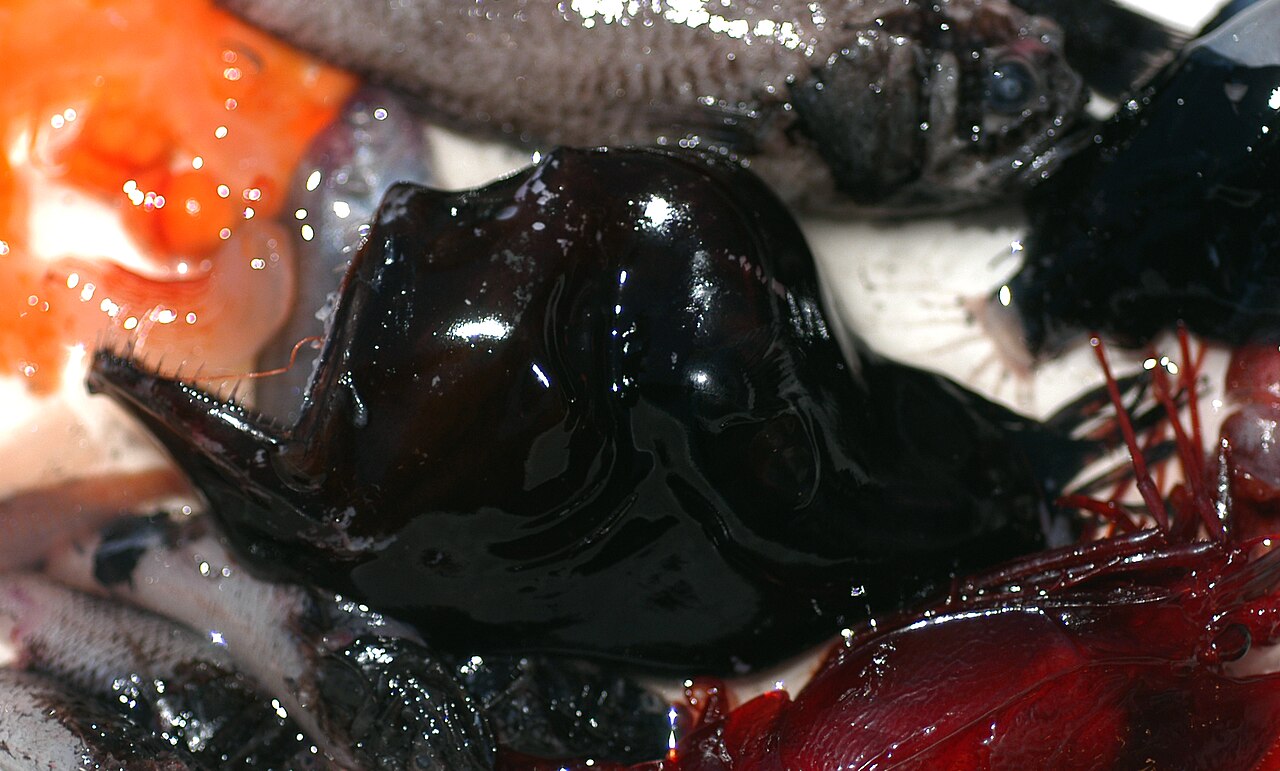
- What Exactly Is an Anglerfish, and Where Does It Live?
- The Anatomy Behind the Light
- How Does the Anglerfish Glow? The Science of Bioluminescence
- Why Blue-Green Light?
- The Main Reason Anglerfish Glow: Hunting in the Dark
- Ambush, Not Chase
- Beyond Hunting: Other Reasons Anglerfish Glow
- Mate Attraction and the Bizarre Mating Strategy
- Counterillumination and Camouflage
- Defense and Startle
- Do All Anglerfish Glow?
- Studying the Glow: How Scientists Know What They Know
- What About the "Glowing Bait" Myth?
- Why the Anglerfish Glow Matters for the Ocean
- Conclusion: The Deep Sea Truth Revealed
- ❓ Frequently Asked Questions
The eerie blue-green light of a lone anglerfish drifting through the midnight zone is one of the most striking sights in nature, and the question of why do anglerfish glow has fascinated scientists and ocean lovers for centuries. Long before researchers ever saw a living specimen, fishermen hauled up strange, bulbous fish with a dangling lure and needle-sharp teeth, and sailors spun tales of sea monsters that carried their own lanterns through the dark. Today we know that this glow is not magic but biology — a finely tuned system of light-producing organs, symbiotic bacteria, and evolutionary pressure operating in one of the harshest environments on Earth. This article unpacks the deep sea truth behind the anglerfish's famous light, from the chemistry that creates the glow to the surprisingly cunning ways these fish use it to hunt, hide, and find a mate.
What Exactly Is an Anglerfish, and Where Does It Live?
Anglerfish are a diverse order of fish — the Lophiiformes — containing more than 300 known species. They are named for the fleshy growth on their heads called the illicium, which functions much like a fishing rod, tipped with a bait-like structure called the esca. Most people picture the deep-sea varieties, but anglerfish actually inhabit a huge range of depths. Shallow-water species such as the monkfish (goosefish) live on coastal seabeds, while the famous glowing species patrol the bathypelagic and abyssopelagic zones, roughly 200 to 2,000 meters (650 to 6,500 feet) below the surface, where sunlight never reaches.
Deep-sea anglerfish are generally small — many are only 2 to 18 centimeters (about 1 to 7 inches) long, though some, like the Atlantic footballfish, can reach 60 centimeters (2 feet). The deep ocean is brutally cold, often just 2 to 4°C (35 to 39°F), pitch black, and under enormous pressure. Food is scarce, and encounters with prey or mates can be rare events. Almost every bizarre feature of the anglerfish — the glowing lure, the enormous mouth, the elastic stomach, the extreme sexual dimorphism — is an adaptation to these conditions.
The Anatomy Behind the Light
The glow itself comes from the esca, the bulb at the end of the illicium. In many species the esca is packed with photophores, specialized light-emitting organs, and in some cases it also houses dense colonies of bioluminescent bacteria. The illicium can be waved, twitched, and even retracted, allowing the fish to dangle its light directly in front of its cavernous mouth like a fishing lure. Some species, such as the Pacific black seadevil, carry a translucent "rod" that glows at the tip, while others have esca shaped like shrimps, worms, or small fish — mimicry that makes the bait even more convincing.
How Does the Anglerfish Glow? The Science of Bioluminescence
Bioluminescence is the production of light by a living organism through a chemical reaction. In most glowing creatures, a light-emitting molecule called luciferin reacts with oxygen in the presence of an enzyme called luciferase, releasing energy almost entirely as light rather than heat — a phenomenon often called "cold light." The reaction is extraordinarily efficient; nearly all the energy goes into photons, which is why a glowing fish doesn't cook itself.
Anglerfish achieve their glow in two main ways, and the distinction matters for understanding the "deep sea truth."
- Bacterial symbiosis: Many deep-sea anglerfish do not produce light themselves. Instead, their esca hosts colonies of luminous bacteria, often species of Vibrio or Photobacterium, that the fish cultivates like a living lantern. The fish provides nutrients and shelter; the bacteria provide light.
- Intrinsic photophores: Some species possess their own light organs, and certain anglerfish also have photophores along their bodies and fins, which can be used for camouflage or communication.
Remarkably, the fish can control the glow. Some species possess a pigment "shutter" or can alter blood flow to the esca, effectively switching the light on and off or dimming it. This control is crucial: a lure that glows constantly would advertise the hunter's position to predators as well as prey.
Why Blue-Green Light?
Most bioluminescence in the ocean is blue or blue-green, with wavelengths around 470 to 490 nanometers. Seawater transmits these wavelengths best, so blue light travels farther through the deep ocean than red or yellow light. Deep-sea fish have evolved eyes highly sensitive to blue light to match. The anglerfish's glow is therefore tuned to the physics of its environment — a light that can be seen from a distance in the very medium it must travel through.
The Main Reason Anglerfish Glow: Hunting in the Dark
The primary function of the anglerfish glow is predation. In the midnight zone, there is no sunlight, and many prey animals — small fish, crustaceans, and squid — are themselves attracted to light or at least curious about it. The anglerfish exploits this with a strategy called aggressive mimicry: it holds its glowing esca motionless or twitches it gently, imitating a small morsel drifting in the water. When a curious fish or shrimp approaches to investigate or eat the "bait," the anglerfish strikes.
The strike is astonishingly fast. The anglerfish's jaws are lined with long, inward-curving teeth that interlock like a cage, and its mouth can open so wide and so quickly that the resulting suction pulls prey in. Its stomach is highly elastic, allowing it to swallow prey nearly as large as itself — a vital adaptation in a habitat where meals may be separated by weeks or months. Once prey is inside, the inward-pointing teeth make escape nearly impossible.
Ambush, Not Chase
Deep-sea anglerfish are ambush predators, not pursuit hunters. They conserve energy by drifting or lying in wait, often using their pectoral and pelvic fins to "walk" or rest on the seafloor, depending on the species. The glowing lure does the work of drawing dinner within reach. This low-energy hunting style suits an environment where food is sparse: a fish that burns calories chasing prey across the abyss may starve, while one that waits with a glowing trap can afford to be patient.
Beyond Hunting: Other Reasons Anglerfish Glow
Hunting is the headline reason, but the anglerfish glow serves several other purposes — and in some species, the light has nothing to do with luring prey at all.
Mate Attraction and the Bizarre Mating Strategy
In many deep-sea anglerfish species, the males are dramatically different from the females. Males are tiny — often just 1 to 3 centimeters long — and lack a functioning lure. Finding a mate in the vast, dark ocean is nearly impossible by chance, so males rely on their highly developed sense of smell to detect chemical signals from females, and some researchers believe the female's glow or body photophores may also play a role in attraction. Once a male finds a female, he bites into her body, and in many species the two fuse permanently: his tissues merge with hers, his circulatory system connects to her bloodstream, and he becomes a permanent sperm supply, fed by her. A single female may carry several attached males. The glow, in this context, is part of a reproductive system as strange as anything in the animal kingdom.
Counterillumination and Camouflage
Some anglerfish and their relatives use light for the opposite of display: counterillumination. By emitting light from photophores on their undersides that matches the faint downwelling light from above, they erase their silhouette and become nearly invisible to predators looking up from below. This is a defensive use of bioluminescence, and it shows that the anglerfish glow is not a single trick but a versatile tool.
Defense and Startle
In some species, sudden flashes of light can startle or confuse predators, buying the anglerfish a moment to escape. Other deep-sea animals use "burglar alarm" bioluminescence to attract even larger predators that might attack their attacker — a strategy anglerfish relatives sometimes employ.
Do All Anglerfish Glow?
No — and this is a common misconception. The shallow-water anglerfish, including the commercially fished monkfish, do not glow. Their lures are fleshy and used as visual or tactile lures in sunlit coastal waters. Bioluminescence is concentrated among the deep-sea families, such as the Ceratiidae (sea devils), Melanocetidae (black seadevils), and Himantolophidae (footballfish). Even among deep-sea species, the details of the glow — color, intensity, whether it comes from bacteria or intrinsic photophores — vary widely. The anglerfish glow is thus a family of adaptations, not a single uniform trait.
Studying the Glow: How Scientists Know What They Know
Studying deep-sea anglerfish is notoriously difficult. Bringing them to the surface is often fatal; the change in pressure and temperature destroys their delicate tissues. Much of what we know comes from deep-sea submersibles and remotely operated vehicles (ROVs), which have captured the first footage of living anglerfish in their habitat. In 2018, researchers filming with an ROV in the waters off the Azores recorded a remarkable encounter with a female anglerfish, and similar footage has since revealed how the lure is moved and how the fish orient themselves in the dark.
Scientists also study the bacteria that live in the esca, using genetic sequencing to identify the species involved and to understand how the fish selects and maintains its microbial partners. Laboratory work on bioluminescent chemistry has even inspired applications in medicine and biotechnology, where luciferase reactions are used as markers in research. The anglerfish glow, in other words, is not just a curiosity — it is a window into some of the most fundamental chemistry of life.
What About the "Glowing Bait" Myth?
Popular culture often exaggerates anglerfish behavior, depicting them as giant monsters that swallow ships or divers. In reality, most glowing anglerfish are small, and none are dangerous to humans. Their light is a delicate, low-intensity glow, not a blazing beacon. The truth is stranger and more elegant than the myth: a fish that has turned a colony of bacteria into a lantern and a body into a trap, all to survive in a world without sun.
Why the Anglerfish Glow Matters for the Ocean
Bioluminescence is not a rare oddity — it is the norm in the deep sea. An estimated 76% of deep-sea animals produce light, and many more can detect it. The anglerfish glow is part of a vast, interconnected system of light-based communication, camouflage, and predation that shapes life in the largest habitat on Earth. Understanding it helps scientists map food webs, track how deep-sea ecosystems function, and assess how human activities — from deep-sea fishing to potential seabed mining — might disrupt them.
It also reminds us how much remains unknown. New anglerfish species are still being described, and the behaviors of many species have never been observed alive. Each expedition into the midnight zone returns with footage that overturns old assumptions. The glow that once seemed like a simple lure turns out to be a multi-purpose survival tool — for hunting, for hiding, for finding a mate, and for reasons we may not yet fully understand.
Conclusion: The Deep Sea Truth Revealed
The question of why anglerfish glow has a layered answer. At its core, the glow is a hunting tool: a bioluminescent lure that exploits the curiosity of prey in a world of total darkness. But the anglerfish glow is also a mating signal, a camouflage device, and a defensive flash, produced through an elegant partnership between fish and bacteria or through the fish's own photophores. These adaptations exist because the deep sea is a place of scarcity and darkness, where every photon is an opportunity and every calorie counts. The next time you see a picture of that bulbous fish with its dangling lantern, remember: you are looking at one of evolution's most ingenious solutions to the problem of surviving where the sun never shines — and at a reminder that the ocean still holds secrets we are only beginning to illuminate.
❓ Frequently Asked Questions
💬 Why do anglerfish glow?
Anglerfish glow mainly to hunt: the lure dangling in front of their mouth is lit by bioluminescent bacteria, and in the dark deep sea this light attracts prey close enough to grab. Some species may also use their glow for camouflage or to signal mates.
💬 How does the anglerfish's light work?
The glow comes from symbiotic bacteria that live in a specialized bulb called the esca at the tip of the anglerfish's illicium, or fishing rod. The fish can't produce the light alone; it houses and feeds the bacteria, which emit light through a chemical reaction.
💬 Can anglerfish see their own light?
Yes, but their eyes are adapted to the dim deep sea, and the lure is positioned so it doesn't blind them. Some deep-sea anglerfish also have special eye adaptations that make them especially sensitive to the blue-green light their lure produces.
💬 Is the anglerfish's glow dangerous to humans?
No, the glow itself is harmless, and most anglerfish live far too deep for people to encounter. The real danger is their large teeth and powerful jaws, though deep-sea anglerfish are rarely seen by humans at all.