- The Marvel of Axolotl Regeneration: More Than Just a Party Trick
- Not Just Limbs: The Full Repertoire
- The Genetic Secrets Behind Axolotl Regeneration
- The Role of “Junk” DNA
- How Axolotls Regrow Limbs: A Step-by-Step Biological Process
- The Speed of Regrowth
- Why Humans Can’t Regrow Limbs (But Axolotls Can)
- The Axolotl’s Natural Habitat and Life History
- Neoteny: The Secret to Their Permanent Youth
- What Axolotl Regeneration Means for Human Medicine
- Current Research Frontiers
- The Incredible Truth: A Living Blueprint for Healing
- Conclusion: The Future Written in a Salamander’s Cells
- ❓ Frequently Asked Questions
If you’ve ever marveled at a salamander that can regrow a lost limb, a chunk of its heart, or even parts of its brain, you’ve already encountered the astonishing phenomenon of axolotl regeneration. This rare aquatic creature, often called the “Mexican walking fish” (though it is not a fish at all), possesses the most powerful regenerative abilities in the animal kingdom. Unlike humans, who form scar tissue after an injury, the axolotl rebuilds perfect, functional replacements—limbs, tails, gills, jaws, skin, and even internal organs—without leaving a trace of damage. The question isn’t just *if* they can do it, but *how*, and the answer is rewriting the rules of biology and medicine.
The Marvel of Axolotl Regeneration: More Than Just a Party Trick
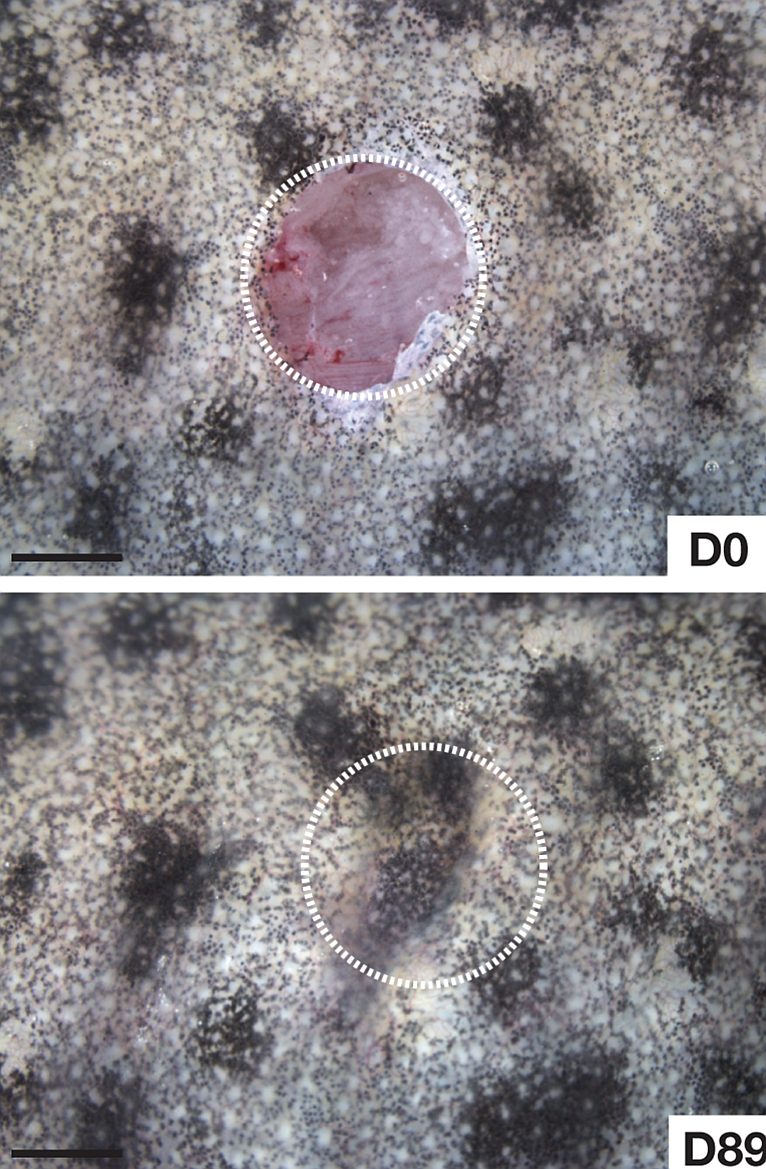
When you cut off an axolotl’s leg, it doesn’t just heal over a stump. Within 24 hours, a layer of skin cells migrates across the wound, not to close it with scar tissue, but to create a specialized signaling center called the wound epidermis. Over the next few days, the cells beneath this cap begin to “dedifferentiate”—they forget their original job (muscle, bone, or skin) and revert to a stem-cell-like state. This mass of undifferentiated cells, called a blastema, is the engine of regeneration.
From this blastema, the axolotl grows a perfectly proportioned limb over the course of 4 to 8 weeks. The new limb includes bones, muscles, nerves, and blood vessels, all arranged exactly as before. It can even regenerate a limb that has been amputated multiple times, each time producing a flawless copy. Scientists have observed axolotls regrowing the same limb over 50 times in laboratory settings without any decline in quality or speed. This is not a simple repair; it is a complete, three-dimensional reconstruction that defies our usual understanding of vertebrate biology.
Not Just Limbs: The Full Repertoire
The scope of axolotl regeneration is breathtaking. Beyond arms and legs, they can regenerate:
- Tail and spinal cord: A severed tail regrows with a new skeleton, muscles, and even the nerve cells of the spinal cord, restoring full swimming function.
- Gills: Their feathery external gills, which are crucial for breathing, can be completely regrown if damaged.
- Jaw and facial tissue: They can regenerate the lower jaw, including teeth and bone, after severe injury.
- Skin and muscles: Large patches of skin and underlying muscle regenerate without scarring.
- Internal organs: They can repair damage to the liver, and even regenerate parts of the heart muscle (ventricle) and the brain (telencephalon) after injury.
This isn’t a survival trick for show; it’s a fundamental aspect of their biology that has been perfected over millions of years of evolution. For an animal that lives in predator-filled waters, the ability to escape with a lost limb and regrow it is a matter of life and death.
The Genetic Secrets Behind Axolotl Regeneration
So, what makes the axolotl’s cells so special? The answer lies in their genome—which is enormous. The axolotl’s DNA is about 10 times larger than the human genome, containing roughly 32 billion base pairs. For decades, this massive genome made genetic sequencing incredibly difficult. However, with modern technology, scientists have begun to unlock its secrets, and they’ve found that the axolotl uses the same genes we have, but with different instructions.
One of the most critical genes is PAX7, which is essential for muscle regeneration. In humans, PAX7 helps maintain satellite cells (muscle stem cells), but they are limited. In axolotls, PAX7 is expressed at high levels in the blastema, allowing for the creation of new muscle tissue. Another key player is the mTOR pathway, which controls cell growth and proliferation. When scientists block mTOR in axolotls, they lose their ability to regenerate limbs, proving this pathway is essential.
But perhaps the most fascinating discovery involves the immune system. In humans, inflammation after an injury leads to scar formation. Axolotls, however, have a unique immune response that is heavily regulated and anti-inflammatory. They produce a specific type of macrophage (a white blood cell) that clears away dead tissue without triggering fibrosis. This “quiet” immune response is crucial, as it allows the blastema to form without the disruptive signals that cause scarring in other animals.
The Role of “Junk” DNA
Axolotls also possess a vast amount of non-coding DNA, often called “junk” DNA. Recent research suggests that this isn’t junk at all. These long non-coding RNAs (lncRNAs) act as master regulators, turning on and off thousands of genes at the right time and place during regeneration. They orchestrate the complex dance of cell dedifferentiation, proliferation, and re-patterning. Without these regulatory elements, the process would be chaotic. This discovery is shifting the focus of regenerative medicine from simply adding stem cells to understanding how to control the existing genetic software.
How Axolotls Regrow Limbs: A Step-by-Step Biological Process
To truly understand axolotl regeneration, you must visualize the timeline of events. It’s a symphony of cellular activity that unfolds in predictable stages.
1. Wound Healing (Hours 0-12): Within minutes, the axolotl’s blood clots rapidly. Unlike mammals, they do not rely on a scab. Instead, keratinocytes (skin cells) migrate from the edges of the wound to cover the surface in a single thin layer. This is the critical first step that sets the stage for regeneration.
2. Blastema Formation (Days 1-7): Under this new skin cap, the cells begin to break down their extracellular matrix (the structural support around them). This releases growth factors and signals that cause mature cells to dedifferentiate. Muscle fibers fragment, and their nuclei become free. Cartilage cells lose their rigid structure. These dedifferentiated cells accumulate at the tip of the stump, forming a visible bulge—the blastema. This cluster of cells is pluripotent, meaning it can become any type of tissue needed.
3. Patterning and Growth (Weeks 2-4): The blastema begins to express genes similar to those used during embryonic development. It establishes a “positional identity,” meaning the cells at the top know they need to become hand bones, while the cells at the bottom know they are shoulder. This is guided by gradients of molecules like Retinoic Acid and FGF (Fibroblast Growth Factor). The blastema then begins to grow outward, forming a cone-like structure.
4. Differentiation and Maturation (Weeks 4-8): As the new limb grows to its correct size, the cells begin to redifferentiate. The blastema cells turn back into muscle, cartilage, bone, and nerve cells, arranging themselves in the correct anatomical order. The final stage involves the growth of blood vessels and the refinement of the tissue structure until the limb is functionally indistinguishable from the original.
The Speed of Regrowth
The speed of this process is highly dependent on temperature and age. Axolotls are ectothermic (cold-blooded), so their metabolic rate is tied to their environment. At their ideal temperature of 16-18°C (60-64°F), a juvenile axolotl can regrow a limb in about 40 days. However, adult axolotls regenerate more slowly, often taking 2 to 3 months. The size of the limb also matters; a toe might regrow in just a couple of weeks, while an entire leg takes significantly longer.
Why Humans Can’t Regrow Limbs (But Axolotls Can)
The central question that drives millions of dollars in research is: why do we lose this ability? The comparison between human and axolotl wound healing reveals profound differences.
When a human loses a limb, the body’s priority is to stop bleeding and prevent infection. This triggers a massive inflammatory response. Fibroblasts (connective tissue cells) rush to the wound and deposit collagen, forming a dense scar. This scar acts as a permanent barrier, physically blocking any attempt at regeneration. The wound is “sealed,” but the functional tissue is lost forever.
Axolotls have evolved to bypass this scar-forming pathway entirely. Their inflammatory response is minimal and short-lived. They do not rely on fibroblasts to close the wound; instead, they use their skin cells to cover it, which promotes regeneration. Furthermore, humans have a limited supply of stem cells in their limbs, whereas axolotls can create new stem cells on demand from differentiated tissue.
Another critical difference is the nerve supply. For an axolotl to regenerate a limb, it requires a functional nerve bundle at the amputation site. Nerves secrete factors like nAG (newt Anterior Gradient), which are necessary for blastema cell proliferation. If a nerve is severed or removed, regeneration fails. In humans, while nerves are present, they do not produce the same regenerative signals, and the environment of a scarred wound is hostile to nerve growth.
The Axolotl’s Natural Habitat and Life History
To appreciate why this animal evolved such a unique ability, we must look at its home. The axolotl (Ambystoma mexicanum) is native to only two high-altitude freshwater lakes in Mexico City: Lake Xochimilco and, historically, Lake Chalco. These lakes are situated at an elevation of over 2,200 meters (7,200 feet).
In the wild, axolotls are critically endangered. Their population has plummeted due to urbanization, water pollution, and the introduction of invasive species like tilapia and perch, which eat their young. It is estimated that fewer than 1,000 individuals remain in the wild, making them a conservation priority. The water in their natural habitat is cool, shallow, and often murky, providing them with a dark environment where they can hide from predators.
Axolotls are carnivorous predators. In the wild, their diet consists of small invertebrates, worms, insect larvae, crustaceans, and small fish. They are opportunistic feeders, using a suction method to engulf their prey whole. In captivity, they thrive on a diet of bloodworms, blackworms, brine shrimp, and small pellets of salmon food. They have poor eyesight but possess an excellent sense of smell and use lateral line organs (like fish) to detect vibrations in the water.
Their lifespan is also noteworthy. In the wild, they live for 5 to 10 years, but in captivity, with proper care, they can live for 15 to 20 years. They are solitary creatures and prefer to be left alone, only interacting during mating season. Their behavior is largely nocturnal; they are most active at night when they search for food.
Neoteny: The Secret to Their Permanent Youth
One of the most bizarre and important facts about axolotls is that they are neotenic. This means they retain their juvenile, aquatic features throughout their entire adult lives. Unlike other salamanders, which undergo metamorphosis to become terrestrial lung-breathing adults, axolotls remain aquatic, keeping their feathery external gills and a fin-like tail. They reach sexual maturity while still in this “larval” form.
Interestingly, this neoteny is linked to their regenerative powers. The thyroid gland in axolotls does not produce enough thyroxine to trigger metamorphosis. If scientists inject axolotls with thyroxine, they will undergo metamorphosis into a terrestrial form, losing their gills and developing eyelids. Remarkably, even these transformed axolotls retain their ability to regenerate limbs, but the process is slower and less efficient. This suggests that the regenerative capability is tied to their juvenile cell state, which is maintained throughout life.
What Axolotl Regeneration Means for Human Medicine
The potential applications of axolotl regeneration research are staggering. If we can unlock the molecular blueprint that allows axolotls to regrow limbs, we could potentially apply it to human medicine to treat a wide range of injuries and diseases.
The most obvious application is in regenerative medicine for traumatic injuries. Imagine a soldier who lost a leg in combat or a child who lost a finger in an accident. Currently, their only options are prosthetics or complex reconstructive surgery. Research into axolotl regeneration aims to develop therapies that could stimulate a patient’s own cells to regrow the missing tissue, eliminating the need for artificial limbs.
Beyond limbs, this research could help treat spinal cord injuries. Axolotls can regenerate a severed spinal cord, restoring full function. By studying how they do this, scientists hope to develop treatments that prevent the formation of scar tissue in the human spinal cord and encourage nerve cells to regrow, potentially helping paralyzed individuals regain movement.
Similarly, the axolotl’s ability to regenerate heart tissue is a major focus. In humans, a heart attack causes irreversible damage to the heart muscle, which is replaced by scar tissue. Axolotls can regenerate up to 20% of their heart’s ventricle without any loss of function. Understanding the signaling pathways that allow for this could lead to new therapies for heart failure.
Current Research Frontiers
Scientists are currently using cutting-edge tools like CRISPR gene editing and single-cell RNA sequencing to map the exact genetic changes that occur during axolotl regeneration. They are comparing the gene expression of axolotls to that of other animals that cannot regenerate, like mice, to identify the specific “regeneration genes” that are missing or silenced in non-regenerating species.
One promising avenue is the study of senescent cells. In humans, these are “zombie” cells that stop dividing and secrete inflammatory molecules, contributing to aging and preventing tissue repair. Axolotls accumulate very few senescent cells at their amputation sites, and they clear them rapidly. Drugs that mimic this effect, known as senolytics, are already being tested in humans for age-related diseases, and they may also enhance regenerative capacity.
The challenge is immense. The axolotl’s genome is 10 times larger than ours, making it complex to work with. However, the fundamental cellular machinery is similar. We share the same genes for limb development; we just don’t activate them in adulthood. The goal is to find the “switch” that can turn these genes back on in a controlled, safe way without triggering cancer.
The Incredible Truth: A Living Blueprint for Healing
The incredible truth about axolotl regeneration is not just that they can regrow body parts—it’s that they do so using the same basic genetic toolkit as humans. They are not aliens or mystical creatures; they are a highly specialized salamander whose biology has unlocked a secret that we are only beginning to understand.
Their ability to regenerate without scarring, to create a perfect blastema, and to re-pattern complex structures is a testament to the power of evolution. They have solved a problem that human biology considers impossible. While it may be decades before we can regrow a human limb, every year brings new discoveries from the axolotl’s genome that inch us closer to therapies that can heal spinal cords, repair damaged hearts, and potentially even reverse some forms of degenerative disease.
The axolotl is more than just a fascinating pet with a permanent smile; it is a living, swimming repository of biological knowledge. Protecting this species from extinction is not just a conservation issue; it is a scientific imperative. As we continue to decode the secrets of axolotl regeneration, we are essentially reading a manual for how to rebuild the human body. And for that, we owe this humble, critically endangered amphibian a tremendous debt of gratitude.
Conclusion: The Future Written in a Salamander’s Cells
Axolotl regeneration stands as one of the most remarkable phenomena in the natural world. From a tiny blastema of dedifferentiated cells, they can rebuild entire limbs, tails, and organs with flawless precision, a feat that has captivated scientists for over a century. Their neotenic nature, keeping them young forever, may be the key to their extraordinary healing powers. While the journey to applying this knowledge to humans is long and complex, the axolotl has already provided us with a clear roadmap. By studying this “salamander of immortality,” we are not just learning about biology; we are learning about the latent potential that lies dormant within our own cells, waiting for the right instructions to be unlocked. The future of regenerative medicine is being written in the genome of a smiling, feathery-gilled creature swimming in the canals of Mexico City.
❓ Frequently Asked Questions
💬 Can an axolotl regrow its heart or brain?
Yes, axolotls can regenerate their heart, brain, and other vital organs, not just limbs. They can even regrow parts of their spinal cord and eyes with full functionality, which is why scientists study them for regenerative medicine.
💬 How long does it take for an axolotl to regrow a limb?
A typical limb regrowth takes about 2 to 3 months, depending on the axolotl's age, health, and water temperature. Younger axolotls regenerate faster, and the new limb is usually a perfect replica with no scar tissue.
💬 Do axolotls regrow body parts without scars?
Yes, axolotls regenerate tissue without forming scars. Instead of sealing the wound with collagen like mammals do, they create a mass of stem cells called a blastema, which then grows into the missing body part.
💬 Can axolotls regenerate the same body part multiple times?
Absolutely, axolotls can regenerate the same limb or organ repeatedly throughout their lives. Even after multiple amputations, they continue to regrow the part perfectly, making them unique among vertebrates.