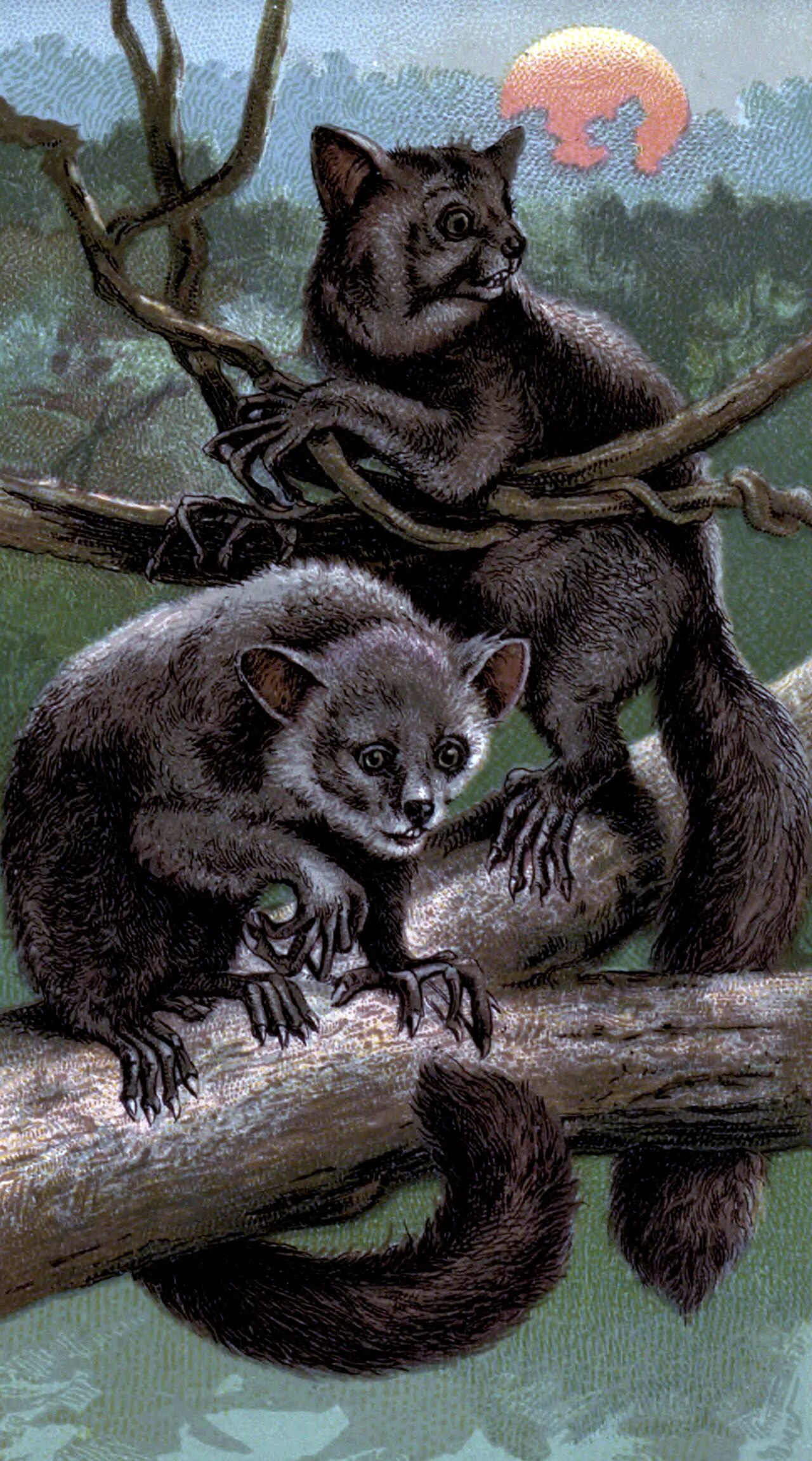
- Meet the Aye-Aye: Madagascar's Strangest Primate
- A Primate That Looks Like Nothing Else
- What Is the Aye-Aye Long Finger Actually For?
- Tap Foraging: Echolocation by Knuckle
- Extraction: The Finger as a Fishing Rod
- How the Aye-Aye Long Finger Compares to Other Digits
- Why the Aye-Aye Long Finger Looks So Creepy to Humans
- From Superstition to Science
- Diet, Habitat, and Daily Life
- Breeding and Lifespan
- How the Aye-Aye Long Finger Evolved
- A Finger Built by Natural Selection
- Frequently Asked Questions About the Aye-Aye Long Finger
- Is the aye-aye's long finger dangerous to humans?
- Can the aye-aye move its long finger independently?
- Do other animals have similar adaptations?
- Why is the aye-aye endangered?
- Conclusion: A Finger Worth Protecting
- ❓ Frequently Asked Questions
With its enormous saucer eyes, bat-like ears, and a skeletal-looking middle finger that can be nearly three times the length of its other digits, the aye-aye long finger is the feature that gives this rare Madagascan primate its famously unsettling reputation. Locals on the island once believed the animal was a harbinger of death, and visiting naturalists in the nineteenth century weren't much kinder, calling it a "malformed" creature and placing it in a group of its own. The truth, as so often happens in biology, is far more fascinating than the folklore. That spindly finger is not a curse or an accident of evolution — it is one of the most precise foraging tools in the animal kingdom, a biological probe that lets the aye-aye find food hidden inside solid wood where almost nothing else can reach.
Meet the Aye-Aye: Madagascar's Strangest Primate
The aye-aye (Daubentonia madagascariensis) is a strepsirrhine primate endemic to Madagascar, the giant island off the southeast coast of Africa. It is the only living member of the family Daubentoniidae, which means it has no close living relatives — its lineage split from other lemurs tens of millions of years ago. Genetic and morphological studies suggest its ancestors colonized Madagascar roughly 60 million years ago, and it has been evolving on its own ever since.
A full-grown aye-aye measures about 30 to 40 centimeters (12 to 16 inches) in body length, with a bushy tail that can be longer than the body itself — up to 60 centimeters (24 inches). Adults weigh between 2 and 3 kilograms (4.4 to 6.6 pounds), with males generally slightly heavier than females. Their fur is coarse, shaggy, and dark brown to black, with a paler face and a scattering of white guard hairs that give them a slightly frosted appearance.
A Primate That Looks Like Nothing Else
What sets the aye-aye apart from every other primate is a suite of features that look more like a woodpecker, a squirrel, and a bat stitched together than a lemur. It has:
- Rodent-like incisors that grow continuously throughout life, unlike the teeth of any other primate
- Large, mobile, leathery ears that can rotate independently to pick up faint sounds
- Enormous, yellowish eyes adapted for seeing in near-total darkness
- A long, thin, highly mobile third and fourth finger — the famous "aye-aye long finger" — used for tapping and extracting
- Claw-like nails on most digits, with only the big toe bearing a true flat nail
These traits are a textbook example of what biologists call "mosaic evolution" — different body parts evolving specialized shapes at different times in response to different pressures. The finger, in particular, is a masterpiece of biomechanical engineering.
What Is the Aye-Aye Long Finger Actually For?
The aye-aye's hands have five fingers, but they are not remotely equal. The fourth finger (sometimes counted as the third in some anatomical descriptions) is thin, wiry, and can be up to 20 centimeters (8 inches) long — roughly three times the length of the other digits. It has three joints and an extraordinary range of motion, and it is used for two distinct jobs: tap foraging and extractive foraging.
Tap Foraging: Echolocation by Knuckle
The aye-aye hunts for wood-boring insect larvae that live deep inside tree trunks and branches. Because it cannot see or smell them through the wood, it uses a technique called tap foraging or percussive foraging. The animal creeps along a branch, raises its elongated finger, and taps the surface rapidly — up to eight taps per second — while its huge ears swivel to catch the returning sound.
This is not true echolocation, because the aye-aye does not produce a call and listen for the echo. Instead, it listens for the subtle differences in resonance between solid wood and wood that has been hollowed out by a grub tunnel. A hollow section "sounds different" — it has a lower, more resonant pitch. Experiments in captivity have shown that aye-ayes can detect hollow cavities as small as 1 centimeter across, and can distinguish between cavities at different depths. That is roughly the equivalent of a human tapping a wall and hearing a termite tunnel behind the plaster.
Extraction: The Finger as a Fishing Rod
Once the aye-aye has located a grub, it uses its rodent-like incisors to gnaw a hole into the wood. Then comes the payoff: it inserts the long, thin finger into the hole, hooks the grub with a curved claw, and pulls it out. The finger is so flexible that it can bend at angles that would break a human finger, and the claw at the tip acts like a tiny fishhook.
This two-step process — locate, then extract — is why the aye-aye long finger is so extreme. A shorter finger would not reach the grubs; a stiffer finger would not bend around the curves of a tunnel; a thicker finger would not fit through the hole. Evolution has optimized the digit for a single, highly specialized task.
How the Aye-Aye Long Finger Compares to Other Digits
To appreciate how unusual the aye-aye's hand is, it helps to compare it to other primates. In most lemurs, monkeys, and apes, the fingers are relatively similar in length and are used for grasping branches, manipulating food, and grooming. The aye-aye's hand is different in almost every respect.
- Length ratio: The elongated finger is roughly 2.5 to 3 times the length of the other fingers — a proportion unmatched in any other primate.
- Thickness: It is thinner than a pencil, with very little muscle mass, allowing it to be inserted into narrow tunnels.
- Joints: It has a ball-and-socket joint at the base that allows it to swivel in almost any direction.
- Claw: The tip bears a sharp, curved claw rather than a flat nail, ideal for hooking prey.
- Nerve endings: The fingertip is densely innervated, giving the aye-aye a highly sensitive sense of touch inside the tunnel.
The other fingers are not useless, of course. The aye-aye uses them to grip branches and to hold food. But the long finger is the star of the show — and the reason the animal is so often described as "creepy."
Why the Aye-Aye Long Finger Looks So Creepy to Humans
There is a real psychological reason the aye-aye's hand unsettles people. Humans are wired to recognize other primates by their faces and hands, and the aye-aye's hand violates almost every expectation we have. The fingers are too long, too thin, and too bony. The middle digit looks like a spider leg or a witch's finger. When the animal taps on a branch, it moves with a jerky, mechanical rhythm that seems more insect than mammal.
Add the huge, reflective eyes, the bat-like ears, and the fact that the aye-aye is nocturnal and rarely seen, and you have a recipe for superstition. In parts of Madagascar, the aye-aye is called hay-hay or ahay and is believed to bring bad luck. Some communities historically killed aye-ayes on sight, fearing that the animal would use its long finger to point at a villager and mark them for death. This superstition, combined with habitat loss, has made the aye-aye one of the most threatened primates in the world.
From Superstition to Science
Modern conservationists have worked hard to change the aye-aye's reputation. Organizations such as the Madagascar Fauna and Flora Group and the Duke Lemur Center, which maintains a captive breeding colony, have promoted the aye-aye as a unique and harmless insect-eater rather than a bad omen. Educational programs in Madagascar now teach villagers that the animal does not point at people and that it actually helps control wood-boring pests. The shift in attitude has been slow but real, and aye-ayes are now protected by law throughout Madagascar.
Diet, Habitat, and Daily Life
Aye-ayes live in a variety of forest types across Madagascar, from tropical rainforests in the east to dry deciduous forests in the west and north. They are solitary foragers, spending the night alone and sleeping during the day in spherical nests woven from twigs and leaves. A single aye-aye may build several nests within its home range and rotate among them.
Their diet is dominated by insect larvae — especially the grubs of longhorn beetles and wood-boring moths — but they also eat seeds, nuts, fruit, nectar, and fungi. They have been observed raiding coconut plantations, using their incisors to gnaw through the husk and their long finger to scoop out the flesh. This habit has earned them a mixed reputation among farmers, though the damage is usually minor compared to the pest control they provide.
Breeding and Lifespan
Aye-ayes reach sexual maturity at around 2 to 3 years of age. Females give birth to a single infant after a gestation period of about 160 days, usually between October and December. The infant stays with its mother for about two years, learning the complex foraging techniques it will need to survive. In captivity, aye-ayes have lived up to 23 years, and wild individuals are thought to live 15 to 20 years.
Because they reproduce slowly and have a low population density, aye-ayes are especially vulnerable to habitat destruction. The clearing of Madagascar's forests for agriculture and charcoal production has fragmented their range, and they are currently listed as Endangered by the International Union for Conservation of Nature (IUCN).
How the Aye-Aye Long Finger Evolved
The aye-aye's finger is a classic example of adaptive radiation — the process by which a single ancestral species diversifies into many forms to fill different ecological niches. When the ancestors of Madagascar's lemurs arrived on the island, they found a continent-sized laboratory with few competing mammals. Different lineages evolved to fill roles that elsewhere would be filled by woodpeckers, squirrels, or even anteaters. The aye-aye took the woodpecker niche.
Fossil evidence suggests that the aye-aye's lineage once included a larger species, Daubentonia robusta, which went extinct within the last 1,000 years — likely hunted by humans. The surviving species is the last of its kind, a living relic of an evolutionary experiment that has been running for tens of millions of years.
A Finger Built by Natural Selection
Natural selection favors traits that improve an animal's ability to survive and reproduce. For an aye-aye, the ability to find and extract grubs is directly tied to survival, especially during the dry season when fruit and nectar are scarce. Individuals with slightly longer, thinner, more flexible fingers would have had a small advantage over their peers, and over many generations that advantage compounded into the extreme digit we see today. The finger is not "creepy" by design — it is efficient by design, and our own aesthetic reaction is simply a mismatch between human expectations and the realities of island evolution.
Frequently Asked Questions About the Aye-Aye Long Finger
Is the aye-aye's long finger dangerous to humans?
No. The aye-aye is a shy, nocturnal animal that avoids humans whenever possible. Its long finger is used only for finding and extracting insect larvae and for scooping out fruit. There is no evidence that it ever uses the finger to harm people, and the superstition that it points at villagers is folklore, not fact.
Can the aye-aye move its long finger independently?
Yes. The elongated finger has a specialized ball-and-socket joint at its base that allows it to move in almost any direction, independently of the other fingers. The aye-aye can tap with it, probe with it, and hook with it, all while the rest of the hand stays still.
Do other animals have similar adaptations?
Several animals have convergently evolved similar tools. The striped possum of New Guinea has an elongated fourth finger used for extracting insects from bark. The proboscis monkey and the tarsier have specialized digits, though for different purposes. The woodpecker finch of the Galápagos uses a cactus spine as a tool, but it is not part of its body. The aye-aye is unique in having the tool built directly into its hand.
Why is the aye-aye endangered?
The main threats are habitat loss from deforestation, hunting driven by superstition, and the animal's naturally slow reproductive rate. Conservation efforts focus on protecting forest habitat, educating local communities, and maintaining captive breeding populations. The Duke Lemur Center in North Carolina, for example, has bred aye-ayes successfully and uses them as ambassadors for Madagascar's unique wildlife.
Conclusion: A Finger Worth Protecting
The aye-aye long finger is one of the most remarkable adaptations in the primate world — a precision instrument that evolved to solve a specific problem: how to find and extract food hidden inside solid wood. It is not a sign of disease, a curse, or a freak of nature. It is the product of millions of years of natural selection on an island where evolution took a strange and wonderful turn. Understanding the finger helps us see the aye-aye not as a creepy oddity but as a highly specialized survivor, and one that deserves our protection. The next time you see a photograph of that spindly digit, remember: it is not pointing at you. It is pointing at dinner.
❓ Frequently Asked Questions
💬 Why does the aye-aye have such a long thin middle finger?
The aye-aye's wire-thin middle finger is a specialized tool for finding and extracting food. It taps on tree bark to locate hollow tunnels made by wood-boring insect larvae, then hooks the grubs out. This foraging trick is called percussive foraging.
💬 Is the aye-aye's long finger dangerous to humans?
No, the aye-aye is not dangerous to humans. It is a shy, nocturnal primate that avoids people, and its long finger is used for tapping and probing wood, not for attacking. Local folklore sometimes calls it a bad omen, but that is superstition rather than a real threat.
💬 How does the aye-aye use its finger to find food?
It taps its long middle finger rapidly on tree trunks and listens for the echoes that reveal hollow spaces where insect larvae live. Once it detects a tunnel, it gnaws a hole in the wood and inserts the finger to pull the grub out. The finger is also used to scoop out fruit and coconut flesh.
💬 Does the aye-aye have a long finger on each hand?
Yes, the elongated tapping finger is the middle digit on both hands. It is supported by a ball-and-socket joint that lets it swivel in many directions, which helps the aye-aye probe tunnels at odd angles. The other fingers are shorter and used for gripping branches.