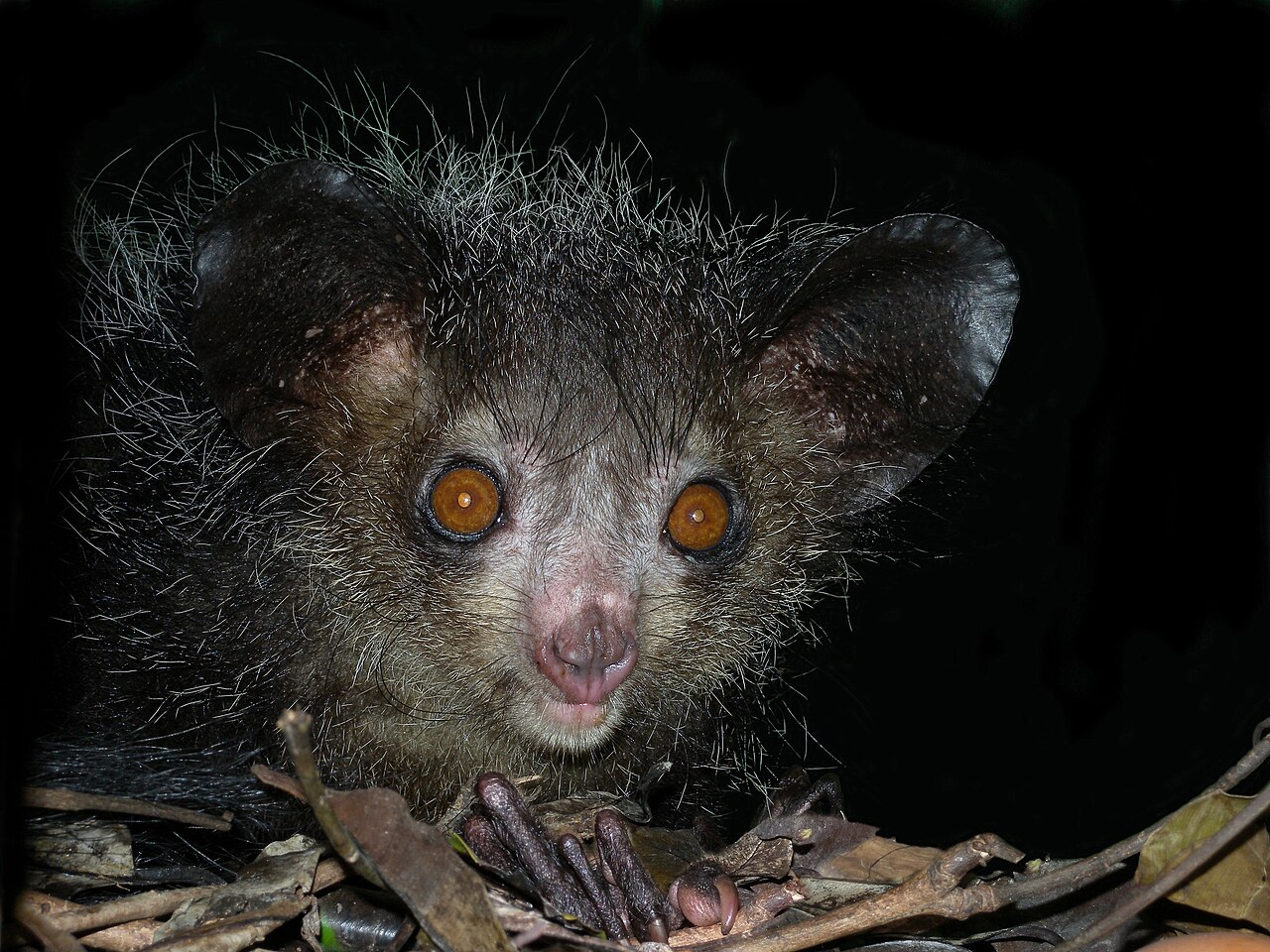
- The Anatomy of Aye-Aye Fingers: A Skeletal Surprise
- The "Pick" and the "Paddle": A Tale of Two Hands
- Aye-Aye Fingers and the Art of Percussive Foraging
- Not Just Wood: A Varied Diet Demands Versatile Digits
- The Misunderstood Finger: From Omen to Protected Species
- Comparative Anatomy: Why Other Primates Don't Have Aye-Aye Fingers
- The Role of the Incisors and Ears
- Conservation Status and the Future of the Aye-Aye
- The Science of the Tap: Acoustic Imaging in Aye-Ayes
- Conclusion: The Finger of Evolution
- ❓ Frequently Asked Questions
The aye-aye's fingers are arguably the most bizarre and misunderstood appendages in the entire animal kingdom, and the story of these aye-aye fingers is a masterclass in evolutionary problem-solving. Found only on the island of Madagascar, this nocturnal primate looks like a cross between a bat, a rodent, and a gremlin, but its hands are not a mistake of nature—they are a highly specialized tool that allows it to exploit a food source no other mammal can reach. To truly understand why the aye-aye has such freaky fingers, we must look beyond the spooky appearance and into the mechanics of percussive foraging, a technique that relies on a combination of echolocation-like tapping and a skeletal digit that defies conventional primate anatomy.
The Anatomy of Aye-Aye Fingers: A Skeletal Surprise
When you first look at an aye-aye, your eyes are immediately drawn to its middle fingers, which are long, thin, and almost desiccated in appearance. These digits are not just slightly elongated; they are dramatically different from the other fingers on the hand. The third finger, which is the primary foraging tool, is incredibly slender and can be up to 8 to 10 centimeters long, making it nearly as long as the entire hand itself. But the real secret lies in the skeletal structure, which is unlike any other primate's hand.
In most primates, including humans, the joints in the fingers are ball-and-socket or hinge joints that allow for a wide range of movement. The aye-aye's third finger, however, has a ball-and-socket joint at the metacarpophalangeal joint (the knuckle) that allows for almost 360-degree rotation, but the middle phalanx (the middle bone) is extremely thin and fragile-looking. This is not a weakness; it is a design for speed and precision. The finger is essentially a biological pick, and it is powered by a unique arrangement of tendons that allow it to be flicked at a rate of up to eight to nine times per second. This rapid-fire tapping is not a random twitch; it is a deliberate, controlled movement used to locate hollow chambers beneath the bark of trees.
Furthermore, the aye-aye's hand is wider than it is long, a trait shared with other climbing primates, but the thumb is opposable and the other fingers are equipped with sharp, continuously growing claws. The exception is the thumb, which has a flat nail. This combination of a clawed, gripping hand and a super-specialized, skeletal middle finger makes the aye-aye's hand a true anatomical anomaly. The finger is so thin that, in some specimens, it appears almost translucent at the tip, lacking the fleshy pad that characterizes other primate fingers.
The "Pick" and the "Paddle": A Tale of Two Hands
It is crucial to note that the aye-aye does not use both hands equally. The left hand and right hand are not symmetrical in function. Typically, an aye-aye will use its specialized, thin middle finger on one hand to tap and extract grubs, while the other hand's broader, more robust fingers are used for gripping and stabilizing the branch. This lateralization is not just a behavioral quirk; it is reflected in the brain's motor cortex, where the area dedicated to the foraging finger is significantly enlarged. This means the "freaky" finger is not a freak accident but a deeply integrated part of the animal's neurology, taking up valuable cortical real estate to ensure the rapid, precise movements required for survival.
The finger's tip is also covered in a dense array of mechanoreceptors and nerve endings, making it incredibly sensitive to vibrations and changes in pressure. While the aye-aye uses auditory cues (the sound of hollow space) to locate grubs, it also uses the tactile feedback from the finger to detect the slight movement of a larva inside a tunnel. Once it detects a cavity, it uses its powerful, rodent-like incisors to gnaw through the wood, creating a hole. Then, it inserts its thin finger into the hole, hooks the grub with its sharp claw-like nail, and pulls it out. This entire process, from tap to extraction, can take less than a minute.
Aye-Aye Fingers and the Art of Percussive Foraging
The primary reason for the aye-aye's unusual digits is a feeding strategy known as percussive foraging, a behavior that is remarkably similar to that of the woodpecker. In fact, the aye-aye occupies a niche in Madagascar that woodpeckers fill elsewhere in the world. However, instead of using a beak, the aye-aye uses its ears and its fingers. The process begins with the aye-aye moving along a branch, tapping the wood with its skeletal middle finger. This tapping is not random; it is a form of acoustic imaging. The aye-aye is listening for the specific resonance that indicates a hollow space beneath the bark, a space where a beetle larva or a grub might be hiding.
This method is so effective that the aye-aye can detect a tunnel that is only a few millimeters in diameter, even if the grub is hidden deep within the wood. This is a far more efficient method than simply chewing through bark blindly. The tapping frequency is also critical. The aye-aye taps at a rate that maximizes the acoustic contrast between solid wood and hollow air, essentially creating a sonar map of the branch. Studies have shown that the aye-aye can differentiate between a solid block of wood and one with a small air-filled cavity with almost perfect accuracy, even when the cavity is sealed and invisible to the naked eye.
Once a cavity is located, the aye-aye uses its ever-growing incisors, which are similar to those of a rat, to gnaw a hole in the wood. The incisors are hard enough to penetrate the tough bark and the wood beneath, and the aye-aye will often leave behind distinct, oval-shaped gnaw marks on trees, which are a key indicator of its presence in a forest. After gnawing the hole, the aye-aye inserts its incredibly thin, flexible middle finger into the tunnel. The finger is so thin that it can navigate the narrow, winding corridors of a beetle larva's tunnel without getting stuck. The claw at the tip acts like a hook, spearing the grub and pulling it out to be eaten.
Not Just Wood: A Varied Diet Demands Versatile Digits
While the aye-aye is famous for eating wood-boring larvae, its diet is surprisingly diverse, and its fingers are adapted for more than just drilling. A significant portion of its diet consists of nectar and fruit pulp, particularly from the seeds of the travel palm and the ramy nut. To access these food sources, the aye-aye uses its thin middle finger in a completely different way. When feeding on nectar, it will insert its finger into a flower and use a rapid, licking motion to draw the nectar out, much like a hummingbird's tongue. The finger acts as a straw, and the aye-aye's long, pointed tongue helps to collect the sugary liquid.
For the ramy nut, the aye-aye uses its powerful incisors to gnaw through the hard outer shell, creating a small hole. Then, it uses its middle finger to scoop out the soft, oily pulp inside. This is a slower process than eating grubs, but it provides essential fats and calories. This dietary flexibility is crucial for survival in Madagascar's seasonal environment, where insect larvae may be scarce during the dry season. The aye-aye's fingers, therefore, are not just a tool for one specific task but a multi-purpose instrument that allows it to switch between protein-rich insects and carbohydrate-rich fruits as the seasons change.
Interestingly, the aye-aye is also known to eat fungus and even sugarcane, and it has been observed using its finger to scoop out the insides of eggs. This opportunistic feeding behavior highlights the evolutionary advantage of having such a specialized appendage. It is not a one-trick pony; it is a Swiss Army knife for the forest, capable of performing delicate tasks that require both incredible finesse and brute force.
The Misunderstood Finger: From Omen to Protected Species
For centuries, the aye-aye's fingers have been the source of superstition and fear among the Malagasy people. In local folklore, the aye-aye is considered a harbinger of death and evil. The long, thin middle finger is often described as the finger of a ghost, and it is believed that if an aye-aye points its finger at a person, that person is marked for death. Some myths also claim that the aye-aye can kill a person by piercing their heart with its finger, or that it is a witch that takes the form of a lemur at night.
These beliefs have had a devastating impact on the aye-aye population. For generations, aye-ayes were killed on sight, often with their bodies burned or hung from trees to ward off bad luck. Villagers would also destroy aye-aye nests, not out of malice, but out of a genuine fear for their safety and the safety of their community. This persecution, combined with the destruction of its rainforest habitat, drove the aye-aye to the brink of extinction. By the early 20th century, the aye-aye was thought to be extinct, a legend that had been wiped out by superstition.
Fortunately, the aye-aye was rediscovered in the 1950s, and a concerted conservation effort began. Today, the aye-aye is protected by law in Madagascar, and conservation organizations are working with local communities to change perceptions. Education programs are teaching people about the aye-aye's crucial ecological role as a natural pest controller, explaining that the animal is not a demon but a shy, harmless creature that plays a vital role in the health of the forest. The aye-aye's bizarre fingers, once a reason for its persecution, are now a symbol of its unique evolutionary heritage and a flagship species for conservation in Madagascar.
Comparative Anatomy: Why Other Primates Don't Have Aye-Aye Fingers
To fully appreciate the weirdness of the aye-aye's fingers, it is helpful to compare them to those of other primates. The aye-aye is a member of the lemur family, but it is the only primate in the world that has a specialized, elongated finger for percussive foraging. Other primates, like the slender loris or the tarsier, have long fingers for grasping, but they do not have the same skeletal adaptations for tapping and hooking. The aye-aye's finger is an evolutionary novelty, meaning it is a trait that has evolved independently in a single lineage and is not found in any close relatives.
The reason for this uniqueness lies in the specific ecological niche that the aye-aye occupies. In Madagascar, there are no woodpeckers, and the aye-aye has evolved to fill this gap. The absence of competition from a bird that could drill into wood created a vacant niche, and the aye-aye's ancestors evolved the necessary adaptations to exploit it. This is a classic example of adaptive radiation, where a single ancestral species evolves into a variety of forms to fill different ecological roles. The aye-aye is a testament to the power of natural selection, demonstrating how a species can radically alter its anatomy to survive in a unique environment.
The finger's development also differs from other primates. In a developing aye-aye embryo, the middle finger initially grows like a normal primate finger, but during the later stages of gestation, the bone cells in the middle phalanx stop growing at a normal rate, causing the finger to become elongated and thin. The claw at the tip also develops differently, becoming a pointed, nail-like structure rather than the flat nail of a typical primate. This developmental pathway is controlled by a specific set of genes, and mutations in these genes are likely what gave rise to the aye-aye's ancestral finger millions of years ago.
The Role of the Incisors and Ears
It is important to remember that the fingers do not work in isolation. The aye-aye's entire head is adapted for its foraging strategy. Its ears are large, mobile, and bat-like, capable of swiveling independently to focus on the sounds of tapping. The ears are so sensitive that they can detect the faint echo of a grub moving inside a tunnel. The incisors are also crucial; they are open-rooted, meaning they grow continuously throughout the animal's life, just like a rodent's teeth. This constant growth is necessary because the aye-aye uses its teeth so aggressively to gnaw through wood, and without continuous growth, the teeth would quickly be worn down.
The coordination between the ears, the teeth, and the fingers is a marvel of biological engineering. The aye-aye will tap the wood with its finger, listen with its ears, then use its teeth to break through the surface, and finally use its finger to extract the prey. This sequence of actions requires complex neural integration, and the aye-aye has evolved a brain that is specifically wired to handle this task. The motor cortex, the auditory cortex, and the somatosensory cortex all work together in a tightly orchestrated feedback loop, allowing the aye-aye to perform this complex behavior with incredible speed and accuracy.
Conservation Status and the Future of the Aye-Aye
Today, the aye-aye is listed as Endangered on the IUCN Red List, with an estimated population of only a few thousand individuals remaining in the wild. The primary threats to its survival are deforestation and habitat fragmentation. Madagascar has lost over 80% of its original forest cover, and the aye-aye is dependent on large, contiguous areas of forest to find enough food. As forests are logged for timber and cleared for agriculture, the aye-aye's habitat shrinks, and populations become isolated, making them more vulnerable to inbreeding and local extinction.
Conservation efforts are focused on protecting remaining forests, creating corridors between fragmented habitats, and working with local communities to promote sustainable land use. There are also several captive breeding programs in zoos around the world, including the Duke Lemur Center in the United States, which have been successful in breeding aye-ayes and studying their behavior. These programs are crucial for maintaining a genetic safety net and for educating the public about this remarkable animal.
Despite the challenges, there is hope for the aye-aye. The increasing awareness of its unique ecological role and the growing ecotourism industry in Madagascar are helping to shift public perception. As more people learn about the aye-aye's fascinating fingers and its clever foraging techniques, the old superstitions are slowly being replaced by a sense of wonder and a desire to protect this extraordinary creature. The aye-aye is not a demon; it is a survivor, a testament to the incredible diversity of life on our planet.
The Science of the Tap: Acoustic Imaging in Aye-Ayes
Research into the aye-aye's tapping behavior has revealed that it is not just a simple act of listening. The aye-aye is performing a sophisticated form of active acoustic imaging, similar to echolocation in bats and dolphins, but using sound waves transmitted through solid material rather than through air or water. When the aye-aye taps the wood, it creates vibrations that travel through the substrate. The way these vibrations are reflected and attenuated depends on the density and structure of the wood. A hollow cavity will cause the vibrations to resonate differently than solid wood, and the aye-aye's sensitive ears are able to detect these subtle differences.
This is not a passive hearing process; it is an active one. The aye-aye controls the rate and force of its taps to optimize the acoustic signal. It will often tap multiple times in rapid succession, then pause and tilt its head, as if listening for the echo. This behavior is remarkably similar to a woodpecker's drumming, but the aye-aye has taken it a step further by adding a tactile component. The finger is not just a sound generator; it is also a sensor. The nerve endings in the finger can feel the vibrations, providing a second channel of information that complements the auditory input.
This dual sensory system is what makes the aye-aye's foraging so effective. It can use its ears to locate a potential cavity, then use its finger to confirm the presence of a grub by feeling the subtle movements of the larva inside. This is a level of sensory integration that is rarely seen in the animal kingdom, and it is a testament to the power of natural selection to produce highly specialized solutions to ecological challenges. The aye-aye's finger is not just a tool; it is a sensory organ in its own right, blurring the line between touch and hearing.
Conclusion: The Finger of Evolution
The aye-aye's freaky fingers are far more than a curiosity; they are a window into the relentless power of evolution. What appears to us as a grotesque anomaly is, in reality, a perfectly adapted tool that allows a small, nocturnal primate to thrive in a challenging environment. The skeletal middle finger, with its ball-and-socket joint and rapid-flicking capability, is a biological pick that has no parallel among other primates. Combined with its echolocation-like tapping, its ever-growing incisors, and its bat-like ears, the aye-aye's fingers form the centerpiece of a truly remarkable foraging strategy.
From being feared as a demon to being celebrated as a conservation icon, the aye-aye's journey reflects our own changing understanding of the natural world. The finger that was once a symbol of death is now a symbol of hope for biodiversity in Madagascar. As we continue to study this extraordinary animal, we are not just learning about a single species; we are learning about the incredible adaptability of life itself. The aye-aye reminds us that evolution does not always produce the most beautiful or conventionally pleasing forms, but it always produces the most effective ones. In the end, the aye-aye's freaky fingers are a masterpiece of natural engineering, a testament to the fact that in nature, there is no such thing as "freaky"—only perfectly adapted.
❓ Frequently Asked Questions
💬 Why do aye-ayes have such long, thin middle fingers?
Aye-ayes use their elongated, skeletal middle fingers for a feeding technique called percussive foraging: they tap on wood to locate hollow chambers where insect larvae hide, then hook the larvae out with the same finger. This specialized digit acts like a combination of a drumstick and a fishing hook, allowing them to access food that other lemurs can't reach.
💬 What is the purpose of the aye-aye's skinny third finger?
The skinny third finger is primarily used for extracting grubs and insects from deep crevices in trees. It can also be used to scoop out the pulp of fruits like coconuts, and to drink water by dipping the finger into a source and licking it off.
💬 Are aye-aye fingers actually that freaky, or is it just a myth?
They are genuinely unique—the middle finger is about three times the length of the other digits and has a ball-and-socket joint that allows it to rotate in any direction, making it highly flexible. The finger is also covered in sensitive nerve endings, helping the aye-aye detect vibrations from moving larvae beneath the bark.
💬 Do aye-ayes use their fingers for anything besides eating?
Yes, aside from feeding, aye-ayes use their long fingers for grooming, probing into bark to build nests, and even for communication by tapping on branches to signal others. The specialized finger is also used to test the firmness of fruit before biting into it.