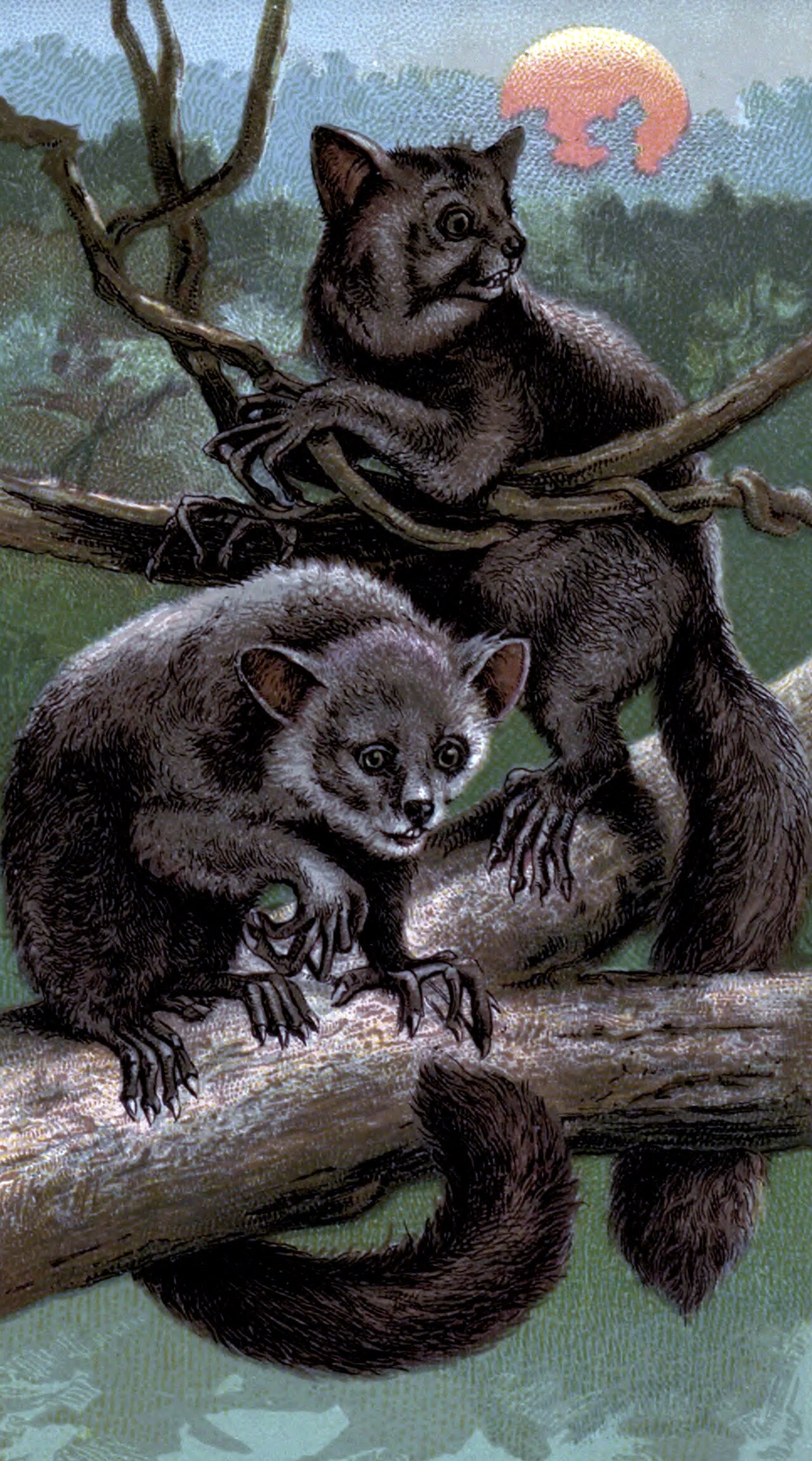
- Meet the Aye-Aye: Madagascar's Most Misunderstood Primate
- Why the Aye-Aye Middle Finger Is So Long: The Percussive Foraging Hypothesis
- How Tap Foraging Works
- The Finger as an Extraction Tool
- Not Just Bugs: What Aye-Ayes Actually Eat
- More Than a Food Tool: Other Uses of the Aye-Aye Middle Finger
- Grooming
- Communication and Social Behavior
- Feeding on Nectar
- The Anatomy Behind the Aye-Aye Middle Finger
- Why the Aye-Aye Looks Creepy — And Why That Reputation Is Dangerous
- How Rare Is This Adaptation? The Aye-Aye Middle Finger in Context
- Frequently Asked Questions About the Aye-Aye Middle Finger
- Is the aye-aye middle finger actually used like a finger?
- Do aye-ayes have long fingers on both hands?
- Why do aye-ayes tap on trees?
- Are aye-ayes dangerous to humans?
- Conclusion: The Creepy Truth Is Also the Brilliant Truth
- ❓ Frequently Asked Questions
The aye-aye middle finger is one of the strangest appendages in the animal kingdom: a spindly, skeletal-looking digit that can make up nearly two-thirds of the animal's hand length and looks like it belongs on a horror-film creature rather than a lemur. That eerie finger is the key to one of the most unusual feeding strategies evolved by any mammal, and it explains why this nocturnal primate from Madagascar has been feared, hunted, and misunderstood for centuries.
Meet the Aye-Aye: Madagascar's Most Misunderstood Primate
The aye-aye (Daubentonia madagascariensis) is a lemur — a type of strepsirrhine primate — but it looks almost nothing like its relatives. Adults weigh roughly 2 to 3 kilograms (about 4.5 to 6.5 pounds), with a body length of around 30 to 40 centimeters and a bushy tail that can be longer than the body itself. They are covered in coarse, shaggy black or dark brown fur, with a face that seems assembled from spare parts: enormous amber eyes for night vision, oversized bat-like ears that swivel independently, and a blunt muzzle housing continuously growing, rodent-like incisors.
Aye-ayes are found across much of Madagascar, from rainforests on the east coast to dry deciduous forests in the west, though they occur at low population densities everywhere. They are strictly nocturnal and spend the day curled in a spherical nest woven from twigs and leaves, often wedged high in a tree fork. Their lifespan in the wild is estimated at 10 to 20 years, and captive individuals have lived into their early twenties. The species is classified as Endangered, primarily due to habitat loss and persecution.
What truly sets the aye-aye apart, though, is its hand. Each of the five digits is specialized, but the fourth finger — the elongated middle digit — is extraordinary. It is thin, wiry, and mobile in ways no other primate's finger is, and it sits at the center of the aye-aye's entire way of life.
Why the Aye-Aye Middle Finger Is So Long: The Percussive Foraging Hypothesis
The leading explanation for the aye-aye middle finger's extreme length is a feeding technique called percussive foraging — more colloquially, "tap foraging." The aye-aye is the only primate known to locate food this way, and it is one of only a handful of mammals worldwide to do so, alongside woodpeckers (which use beaks) and a small number of marsupials.
How Tap Foraging Works
The animal creeps along branches and tree trunks, then rapidly taps the surface with its thin middle finger, striking several times per second. Each tap sends a tiny acoustic signal into the wood. If a hollow cavity lies beneath — a tunnel carved by a wood-boring grub — the sound changes subtly. The aye-aye's enormous ears and highly sensitive hearing pick up that difference, allowing it to build an acoustic map of the interior of the tree.
Researchers have described the aye-aye's tapping as a biological form of echolocation, though it is technically passive acoustic location rather than true echolocation. Laboratory studies have shown the animals can distinguish between solid and hollow substrates and can even detect differences in cavity depth. The long finger is the tapping tool: its length and thinness let the aye-aye reach into narrow spaces and strike surfaces at angles the rest of the hand cannot manage.
The Finger as an Extraction Tool
Tapping only finds the prey — it doesn't catch it. Once the aye-aye locates a grub tunnel, it uses its powerful incisors to gnaw a hole into the wood. Then the middle finger goes to work again. The digit is so long, so flexible, and so slender that it can be inserted deep into the tunnel, hooked around the grub, and withdrawn. The finger's ball-and-socket joint at the base of the hand gives it an exceptional range of motion, and the animal can rotate and angle it with remarkable precision.
This two-part use of the same finger — first as a sensor, then as a probe — is what makes the aye-aye middle finger so remarkable. It is essentially a combined stethoscope and forceps, evolved from a standard primate digit into a highly specialized tool.
Not Just Bugs: What Aye-Ayes Actually Eat
Wood-boring insect larvae — especially the grubs of longhorn beetles and other xylophagous insects — form the core of the aye-aye's diet, and tap foraging is the primary way it finds them. But the aye-aye is more of a dietary generalist than its reputation suggests. Its menu also includes:
- Seeds and nuts: Hard-shelled fruits and seeds, cracked open with the ever-growing incisors
- Fungus and nectar: Including nectar from the traveler's palm, which aye-ayes pollinate while feeding
- Bamboo and plant pith: Excavated with the teeth and extracted with the finger
- Insect adults and other invertebrates: Taken opportunistically when encountered
- Bird eggs: Occasionally raided from nests, though this is a minor part of the diet
This flexibility matters for conservation: aye-ayes can persist in degraded and secondary forests better than many lemurs, because they can exploit a wide range of plant foods when grubs are scarce. The same finger that probes for grubs is also used to scoop out soft fruit pulp and to fish seeds from husks.
More Than a Food Tool: Other Uses of the Aye-Aye Middle Finger
The aye-aye middle finger earns its keep in several other contexts, which helps explain why natural selection pushed it to such an extreme length.
Grooming
Aye-ayes use the elongated finger for meticulous self-grooming, reaching parts of the face, ears, and fur that shorter digits could not access. Captive observations note the animals carefully drawing the finger through their fur and around their eyes, keeping the coat clean and free of parasites.
Communication and Social Behavior
The finger also features in aye-aye social life. During courtship, males have been observed tapping their middle fingers on branches — a behavior sometimes interpreted as a display or a way of advertising presence to females. Females, meanwhile, use the finger to probe and investigate their surroundings, and the digit plays a role in mother-infant interactions, with mothers using it to groom and inspect their young.
Feeding on Nectar
When feeding on nectar from deep flowers, the aye-aye inserts the long finger to reach the liquid, then draws it back and licks it clean. This makes the species a legitimate pollinator of certain Malagasy plants — a striking example of a body part serving ecology far beyond the animal's own stomach.
The Anatomy Behind the Aye-Aye Middle Finger
The finger's function is matched by its structure. The aye-aye middle finger is extraordinarily long relative to the hand — in some individuals, it accounts for roughly 60 percent or more of total hand length — and it is correspondingly thin, with reduced muscle mass and a skeleton that looks almost like a wire. This makes it lightweight and highly mobile, but also relatively weak; it is a precision instrument, not a load-bearing digit.
The hand itself is adapted for grasping branches with the thumb and other digits while the middle finger works independently. The fingers are tipped with sharp, curved claws rather than flat nails, a trait shared with other lemurs and useful for clinging to bark. The base of the middle finger has a specialized joint arrangement that permits the wide range of rotation needed for probing at odd angles inside a tunnel.
One consequence of this specialization is that the finger is delicate. Aye-ayes cannot use it to grip heavy objects or to support their body weight, and injuries to the digit would seriously compromise their ability to feed. The rest of the hand compensates: the thumb and other fingers handle grasping and climbing, freeing the middle finger for its narrow set of high-precision tasks.
Why the Aye-Aye Looks Creepy — And Why That Reputation Is Dangerous
There is no polite way to put it: the aye-aye middle finger looks unsettling to many people. A long, thin, pale digit emerging from a shaggy black hand, combined with huge reflective eyes and a face that appears in the dark, has given the aye-aye a reputation as an omen of death across parts of Madagascar. Local folklore in some regions holds that an aye-aye entering a village foretells misfortune, and that the animal can point its finger at a person to curse them.
This superstition has real consequences. In some communities, aye-ayes are killed on sight, and the animals are sometimes hung upside down near village boundaries in the belief that this neutralizes the curse. Combined with habitat loss from deforestation and slash-and-burn agriculture, this persecution has contributed to the species' Endangered status. Conservation organizations have worked to counter the folklore through education, and some local taboos actually protect aye-ayes in certain areas — the picture is more nuanced than the "cursed creature" stereotype suggests.
The "creepy" label also obscures what the animal actually is: a shy, solitary, slow-moving nocturnal forager that poses no threat to humans. Its fearsome appearance is a set of adaptations — night vision, sensitive hearing, and a specialized probing finger — assembled for a diet of hidden grubs.
How Rare Is This Adaptation? The Aye-Aye Middle Finger in Context
Among primates, the aye-aye's finger is unique. Other lemurs, monkeys, and apes have hands adapted for grasping, climbing, and manipulating objects, but none has evolved a single digit into an elongated probe. The closest analogues in the animal kingdom are found far outside the primate order: the striped possum of New Guinea has an elongated fourth finger used for extracting insects from wood, and the woodpecker finch of the Galápagos uses cactus spines or twigs as tools to pry out larvae — a different solution to the same problem.
This convergence is telling. Extracting hidden grubs from wood is a difficult food source to exploit, but it is reliable and relatively uncontested. The aye-aye's solution — a dedicated, elongated, hyper-mobile finger paired with rodent-like incisors and exceptional hearing — is one of the most elaborate. It is also one of the most fragile: the extreme specialization means the aye-aye depends heavily on mature forests with large trees and abundant wood-boring insects. When those forests are logged, the animal's toolkit becomes a liability.
Frequently Asked Questions About the Aye-Aye Middle Finger
Is the aye-aye middle finger actually used like a finger?
Yes — it is a true digit, not a modified claw or spine, and it retains joints, muscles, and a claw at the tip. It is simply elongated and specialized far beyond the typical primate finger.
Do aye-ayes have long fingers on both hands?
The elongated middle finger is present on both hands, and the aye-aye uses either one depending on the angle and position it needs to reach. The hands are otherwise similar, with the thumb and other digits handling grasping.
Why do aye-ayes tap on trees?
Tapping sends sound into the wood, and the returning echoes reveal hollow spaces where grubs live. The aye-aye's hearing is sensitive enough to detect the difference between solid wood and a cavity, and possibly even the size of the cavity.
Are aye-ayes dangerous to humans?
No. Aye-ayes are shy, solitary nocturnal animals that avoid people. The folklore linking them to curses has no basis in fact and has caused unnecessary killing of an endangered species.
Conclusion: The Creepy Truth Is Also the Brilliant Truth
The aye-aye middle finger is long because the aye-aye's survival depends on it. That single digit is a tapping sensor, a grub-extracting probe, a grooming tool, a nectar straw, and a social signal — a multipurpose instrument shaped by millions of years of evolution in Madagascar's forests. The "creepy truth" is that this unsettling finger is not a curse or a monstrosity but a masterpiece of adaptation, and the animal behind it is a shy, endangered primate that deserves protection rather than fear. Understanding why the aye-aye middle finger is so long is the first step toward seeing one of the world's most unusual mammals for what it really is: a remarkable survivor with a toolkit unlike any other.
❓ Frequently Asked Questions
💬 Why does the aye-aye have such a long middle finger?
The aye-aye's thin, elongated middle finger is a precision tool for locating and extracting wood-boring insect larvae from inside trees. The animal taps it on bark to find hollow tunnels, then uses its sensitive tip to hook grubs out.
💬 How does the aye-aye use its middle finger to find food?
It taps the finger rapidly on branches and listens for the echo of hollow tunnels, a technique called percussive foraging. Once a larva is detected, it gnaws a hole and inserts the finger to fish the grub out.
💬 Is the aye-aye's long middle finger dangerous to humans?
No—the finger is not venomous or harmful to people, despite its eerie appearance. The strange local legend that an aye-aye can point its finger at someone and curse them is superstition, not fact.
💬 What is unusual about the aye-aye's middle finger besides its length?
It is extremely thin, has a ball-and-socket-like joint that lets it swivel in many directions, and can bend at an odd angle to reach deep into crevices. The finger also has a sensitive fingertip used for tapping and probing.