- What Bearded Dragon Arm Waving Actually Looks Like
- How It Differs From a Head Bob
- Why Do Bearded Dragons Wave Their Arms? The Core Reasons
- Subadults and Juveniles Wave Most Often
- Females Wave More Than Males
- Common Triggers for Bearded Dragon Arm Waving
- Waving at Reflections and Glass
- Waving During Handling
- Is Arm Waving Ever a Sign of a Health Problem?
- When to See a Reptile Veterinarian
- How to Respond When Your Bearded Dragon Waves
- Signs Your Dragon Is Stressed Rather Than Just Communicating
- Setting Up an Environment That Reduces Unnecessary Waving
- Diet, Lifespan, and General Care
- Frequently Asked Questions About Bearded Dragon Arm Waving
- Does arm waving mean my dragon is happy?
- Can both legs wave at once?
- Do wild bearded dragons wave?
- Will my dragon grow out of it?
- The Bottom Line on Bearded Dragon Arm Waving
- ❓ Frequently Asked Questions
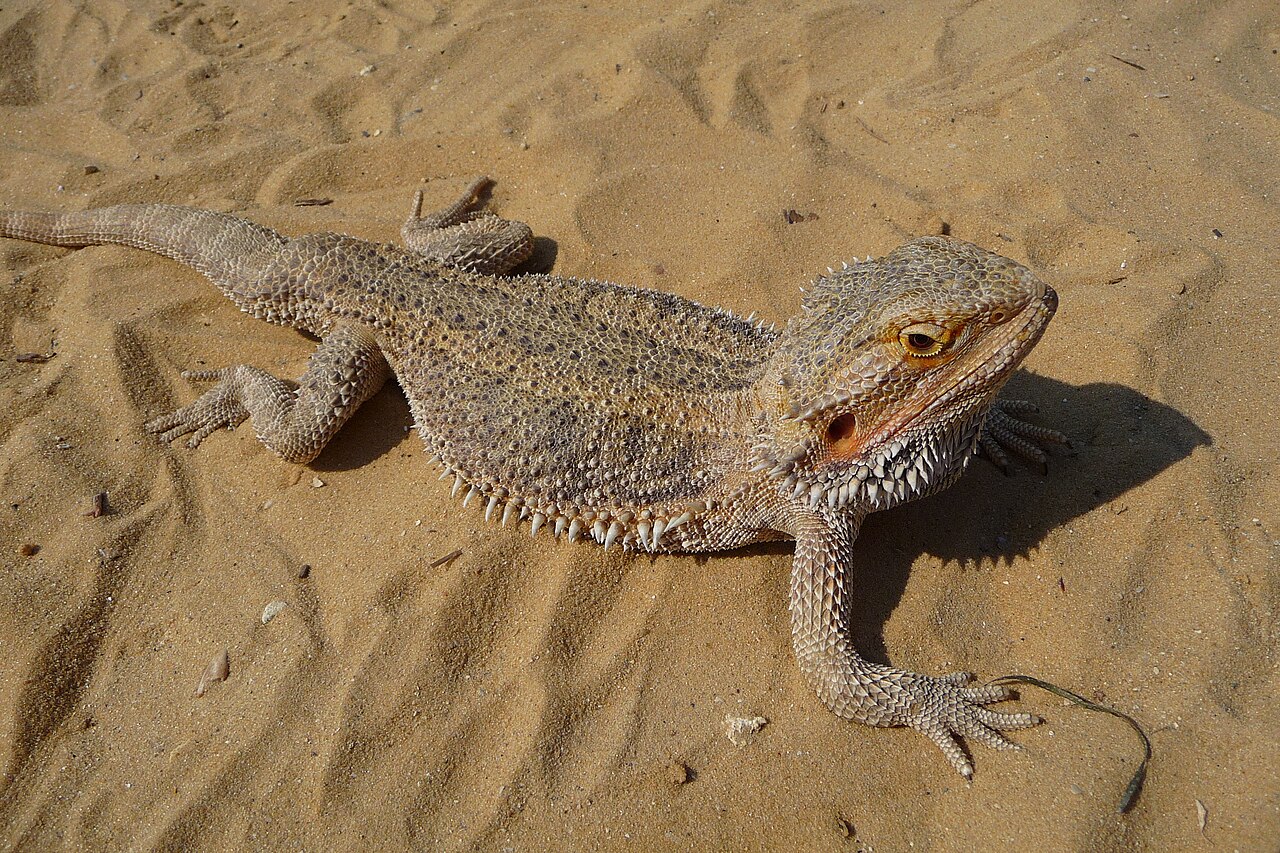
If you keep bearded dragons, you have almost certainly seen it: your dragon lifts one front leg, slowly rotates it in a wide circle, and holds it there for a second or two. This gesture is called bearded dragon arm waving, and it is one of the most distinctive and misunderstood behaviors in reptile keeping. New owners often panic, assuming the dragon is in pain, having a seizure, or suffering from a neurological problem. In reality, arm waving is a normal, deeply rooted social signal that bearded dragons use to communicate with each other — and sometimes with you. Understanding what it means, when it happens, and how it differs from genuine medical problems will make you a far more confident keeper.
What Bearded Dragon Arm Waving Actually Looks Like
The classic wave is a slow, deliberate, circular motion of one front leg. The dragon raises the limb, sweeps it outward and around, then lowers it. It often looks almost like the dragon is slowly paddling the air or drawing a circle. Some dragons wave just once; others repeat the motion several times in a row. Either the left or right leg may be used, and some dragons appear to favor one side.
It is important to distinguish this from other leg movements. A dragon that is climbing, digging, or trying to right itself after being flipped over will move its legs quickly and with obvious mechanical purpose. A waving dragon moves slowly and smoothly, often while holding its head high or slightly tilted, and usually stops as soon as the trigger passes. The motion is also distinct from the trembling or twitching that can accompany metabolic bone disease, which tends to be rapid, involuntary, and accompanied by other symptoms such as soft jaws or difficulty walking.
How It Differs From a Head Bob
Arm waving is often paired with head bobbing, but the two signals mean nearly opposite things. A slow, deep head bob is a display of confidence and dominance — the dragon is essentially saying "this territory is mine." A rapid, shallow head bob or a series of small, jerky bobs is more often a submissive or nervous signal. Arm waving, by contrast, is almost always a sign of appeasement or uncertainty. When a dragon waves, it is not trying to intimidate anyone.
Why Do Bearded Dragons Wave Their Arms? The Core Reasons
Herpetologists and experienced keepers generally agree that arm waving serves as a submissive or appeasement signal. In the wild, bearded dragons are territorial. Males defend home ranges, and encounters between unfamiliar dragons can escalate into biting, wrestling, and serious injury. A gesture that clearly communicates "I am not a threat" benefits both animals, because it lets them avoid a fight that could cost either one an eye, a limb, or their life.
The wave is thought to have evolved as a ritualized version of a defensive or retreating posture. By lifting and rotating a limb while keeping the body low, a subordinate dragon signals that it is backing down. Because the signal is unambiguous, it usually defuses tension before a physical confrontation begins.
Subadults and Juveniles Wave Most Often
Young bearded dragons wave far more frequently than adults. A juvenile that is still growing is small, vulnerable, and low in the social hierarchy, so it has the most to gain from signaling submission. Many keepers notice a spike in waving between roughly three and twelve months of age, then a gradual decline as the dragon matures and gains confidence. That pattern is completely normal and is one of the strongest pieces of evidence that waving is a social, not a medical, behavior.
Females Wave More Than Males
In general, female bearded dragons wave more often than males, and males bob more often than they wave. This fits the species' social structure: males compete for territory and breeding access, so they rely on assertive displays, while females and subordinates rely on appeasement. That said, the pattern is not absolute. Plenty of adult males wave, especially when they are introduced to a larger or more dominant dragon, and plenty of females bob when they are defending a basking spot or a clutch of eggs.
Common Triggers for Bearded Dragon Arm Waving
Understanding the trigger is often more useful than understanding the motion itself. If you can identify what set off the wave, you can decide whether any action is needed. In most cases, no action is needed at all.
- Seeing another bearded dragon. This is the single most common trigger. Even a dragon glimpsed through glass, across a room, or in a reflection can provoke a wave.
- Seeing its own reflection. Glass terrarium walls, shiny decor, and water bowls can all act as mirrors. A dragon that waves at its reflection is responding to what it perceives as a rival.
- Being approached by a larger or unfamiliar animal. This includes you. A dragon that is new to your home may wave when you reach into the enclosure.
- Being handled by an unfamiliar person. A change in scent, size, or handling style can read as a threat.
- Relocation or a new environment. Moving to a new tank, a new room, or a new home often triggers a burst of waving that fades within days or weeks.
- Competition over resources. A basking spot, a favorite hide, or the best feeding area can all become contested, prompting the less dominant dragon to wave.
- Breeding season. Hormonal changes can increase both bobbing and waving, particularly in groups where males and females are housed near each other.
Waving at Reflections and Glass
Reflection-triggered waving is extremely common and often goes unnoticed by owners. A dragon housed alone may still wave regularly because it can see itself in the glass. Covering one or two sides of the enclosure with paper or a background film can reduce this if the behavior seems constant and stressful. Some dragons seem mildly bothered by their "rival" but otherwise live perfectly normal lives; others become visibly agitated, glass-surfing and refusing food. Watch your individual animal rather than assuming all reflection responses are harmless.
Waving During Handling
Many keepers report that their dragon waves the moment they pick it up, especially in the first few weeks after purchase. This is a textbook appeasement response: the dragon is small, it has been lifted off the ground, and it is signaling that it means no harm. With calm, consistent, gentle handling, most dragons stop waving during handling within a few weeks. If your dragon waves and then settles onto your hand and relaxes, the behavior is working exactly as intended.
Is Arm Waving Ever a Sign of a Health Problem?
In the vast majority of cases, no. Arm waving is a normal behavior and is not, by itself, a symptom of illness. However, there are a few situations where unusual leg movements can indicate a genuine problem, and it is worth knowing the difference.
Metabolic bone disease (MBD) is the most common serious concern. It results from a lack of calcium, inadequate UVB lighting, or both, and it can cause tremors, twitching, and a inability to support the body properly. A dragon with MBD may have a soft or rubbery jaw, bent limbs, difficulty walking, or a reluctance to move. Its leg movements tend to be shaky and involuntary rather than smooth and deliberate.
Neurological issues, severe dehydration, and certain infections can also produce abnormal limb movements. The key distinctions are timing, control, and accompanying symptoms. A healthy wave is a single, controlled, slow motion that the dragon can start and stop. A tremor is rapid, repetitive, and often happens alongside other signs of illness.
When to See a Reptile Veterinarian
Contact an experienced reptile vet if you notice any of the following alongside leg movements:
- Soft, pliable, or visibly deformed jaws or limbs
- Twitching or trembling that continues even when the dragon is resting
- Loss of appetite, weight loss, or lethargy lasting more than a few days
- Difficulty walking, dragging limbs, or an inability to lift the body off the ground
- Sunken eyes, wrinkled skin, or other signs of dehydration
- Any sudden change in behavior that persists for more than a week
If your dragon waves normally, eats well, basks, poops regularly, and moves around its enclosure with confidence, there is almost certainly nothing wrong. A single wave after a stressful event is not a reason for a vet visit.
How to Respond When Your Bearded Dragon Waves
The best response depends on the trigger. If the wave is aimed at another dragon, the answer is usually separation or at least a visual barrier. Bearded dragons are solitary in the wild for most of the year, and cohabitation is a common cause of chronic stress, injuries, and even death. Two dragons that appear to "get along" may still be communicating constant tension through bobbing and waving.
If the wave is aimed at you, slow down. Move deliberately, approach from the side rather than from above, support the body properly, and keep handling sessions short at first. Most dragons learn quickly that their keeper is not a threat.
If the wave is aimed at a reflection, consider covering the reflective surfaces. This is a simple, low-cost fix that often reduces repetitive waving within days.
Signs Your Dragon Is Stressed Rather Than Just Communicating
Occasional waving is not a welfare problem. Chronic stress is. Watch for these signs:
- Constant glass surfing or pacing along the enclosure walls
- A persistently dark beard or a blackened tail base
- Refusing food or losing weight
- Hiding for most of the day, even during basking hours
- Stress marks — dark, jagged lines on the belly — that never fade
If several of these appear together with frequent waving, the waving is probably a symptom of an environment that needs adjusting rather than a problem in itself.
Setting Up an Environment That Reduces Unnecessary Waving
A well-designed enclosure does a great deal to reduce stress-driven behavior. Bearded dragons need a temperature gradient, strong UVB, and enough space to establish a territory without constant conflict.
Adult bearded dragons typically reach 16 to 24 inches (40 to 60 cm) in total length, and a single adult should have an enclosure at least 4 feet by 2 feet by 2 feet (120 by 60 by 60 cm). The basking zone should sit around 100 to 110°F (38 to 43°C), with a cooler side in the low 80s°F (around 27 to 29°C). A linear T5 or T8 UVB bulb rated for desert species, replaced every 6 to 12 months depending on the model, is essential for calcium metabolism.
Provide at least one basking platform, one or two hides, and visual barriers such as cork bark or artificial plants. These let a dragon move out of sight of anything it perceives as a rival. If you keep multiple dragons, house them separately. Cohabitation is the single biggest cause of chronic arm waving, and separating animals usually resolves the behavior within a week or two.
Diet, Lifespan, and General Care
Bearded dragons are omnivores. Juveniles need a diet that is roughly 70 to 80 percent insects — crickets, dubia roaches, black soldier fly larvae — and 20 to 30 percent plant matter. Adults flip that ratio, with about 70 to 80 percent leafy greens and vegetables such as collard greens, mustard greens, squash, and bell pepper. Insects should be dusted with calcium powder several times a week for growing dragons and once or twice a week for adults, depending on the UVB setup and the advice of your vet.
With good care, bearded dragons commonly live 8 to 12 years, and some well-cared-for animals reach 14 or more. They reach sexual maturity between 8 and 18 months of age, which is roughly when the juvenile waving phase begins to taper off. A healthy adult is alert, basks regularly, has clear eyes, a firm jaw, and a steady appetite.
Frequently Asked Questions About Bearded Dragon Arm Waving
Does arm waving mean my dragon is happy?
Not exactly. Arm waving is best understood as a signal of submission or uncertainty rather than an expression of joy. A relaxed, confident dragon that feels completely safe in its territory is more likely to bask, explore, and eat than to wave. That said, waving is not a sign of misery either. It is simply communication.
Can both legs wave at once?
It is uncommon but not unheard of. A dragon may wave one leg, then the other, in quick succession. Simultaneous waving of both front legs is rare and usually happens during a period of high arousal, such as right after a stressful event or a close encounter with another dragon.
Do wild bearded dragons wave?
Yes. Wild bearded dragons in Australia — where the species is native — use arm waving as part of their normal social repertoire. It has been observed in juveniles, females, and subordinate males, and it serves the same function it does in captivity: avoiding conflict.
Will my dragon grow out of it?
Most dragons wave less as they mature, but many adults still wave occasionally, especially around unfamiliar animals or during breeding season. It is not something that needs to be "fixed."
The Bottom Line on Bearded Dragon Arm Waving
Bearded dragon arm waving is a normal, healthy social signal — a slow, deliberate circular motion of one front leg that communicates submission and helps the animal avoid conflict. It is most common in juveniles, females, and subordinate dragons, and it is usually triggered by the sight of another dragon, a reflection, an unfamiliar person, or a new environment. In the overwhelming majority of cases, it is nothing to worry about and requires no treatment.
What matters is the context. A dragon that waves occasionally while otherwise eating, basking, and behaving normally is simply doing what bearded dragons do. A dragon that waves constantly while glass-surfing, hiding, losing weight, or showing tremors may be stressed or unwell, and that is worth investigating. By providing a spacious enclosure, correct temperatures, proper UVB, a balanced diet, and — most importantly — housing dragons separately, you remove most of the triggers that cause chronic waving. Do that, and the occasional slow circle of the front leg becomes exactly what it should be: a fascinating glimpse into how these animals talk to one another.
❓ Frequently Asked Questions
💬 What does it mean when a bearded dragon waves its arm?
Arm waving is a submissive gesture, essentially a bearded dragon's way of saying 'I'm not a threat.' It's most common when a dragon feels intimidated by a larger or more dominant dragon, or sometimes by its owner.
💬 Do male and female bearded dragons both wave their arms?
Yes, both sexes wave, but the reasons can differ. Females often wave to signal submission to a dominant male or to reject unwanted mating advances, while males typically wave when submitting to a larger, more dominant male.
💬 Is arm waving ever a sign of illness or a health problem?
Arm waving itself is a normal social behavior, not a health issue. However, if your bearded dragon waves constantly, seems lethargic, or shows other symptoms like loss of appetite, it's worth checking for stress, improper lighting, or a veterinary problem.
💬 How can I tell arm waving apart from a beardie trying to climb or reach something?
True arm waving is a slow, circular, deliberate motion where one front leg is lifted and rotated, often repeated. If your dragon is just stretching, climbing, or reaching for food or a surface, the movement will look more like a grab or push rather than a slow, semaphore-like wave.