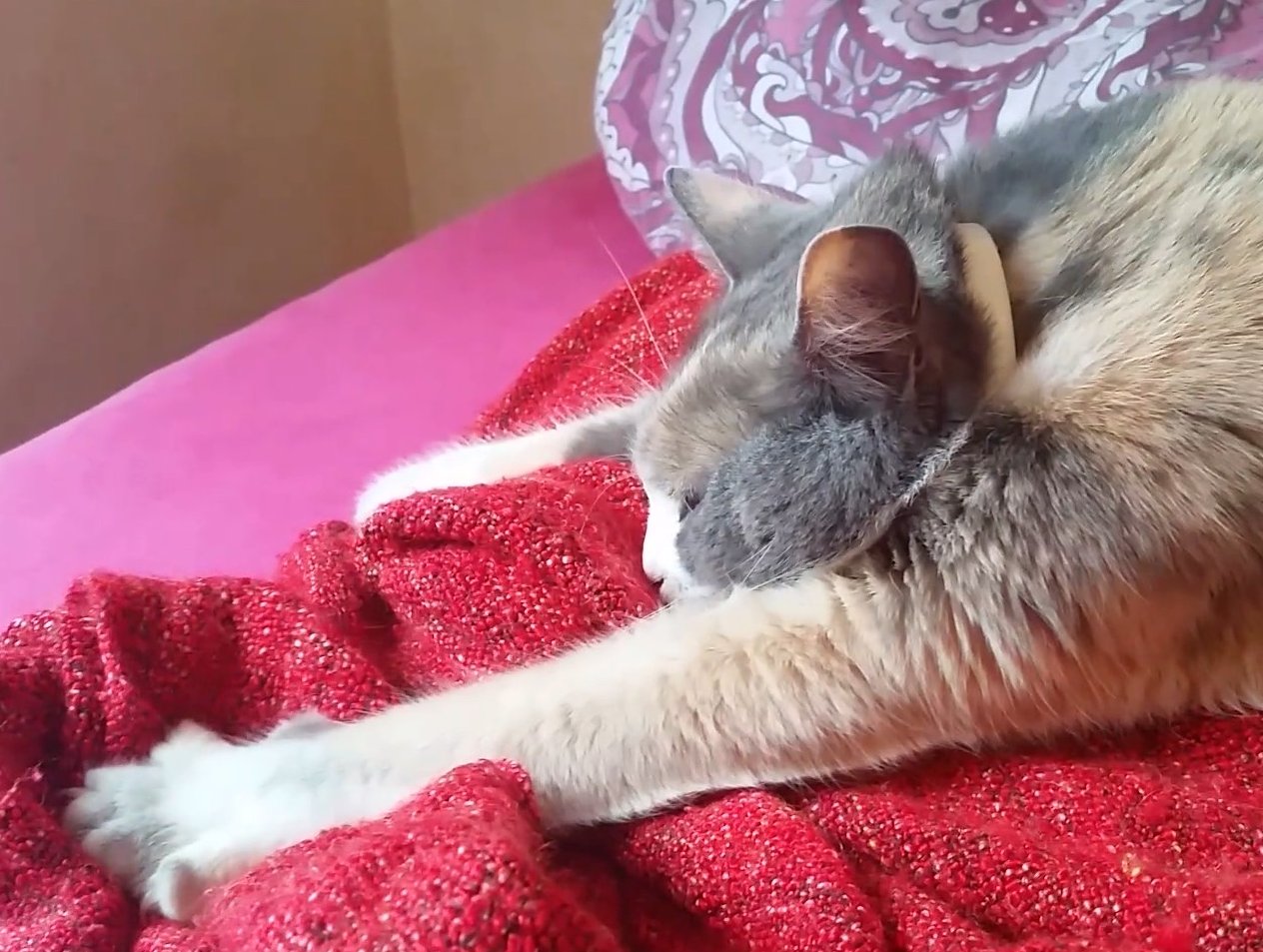
- Why Do Cats Knead? The Kittenhood Connection
- Why Adult Cats Keep the Habit
- The Science Behind Kneading: Scent, Comfort, and Communication
- What the Paw Pads Are Really Doing
- Why Do Cats Knead Their Owners? Trust, Affection, and a Little Pain
- Why Cats Knead Blankets and Soft Things
- The Many Meanings of Kneading: A Behavior Checklist
- Kneading Across the Cat Family: From Housecats to Big Cats
- Do Big Cats Make Biscuits Too?
- Should You Stop Your Cat From Kneading? Practical Advice
- Fun Facts About Cat Paws and Kneading
- The Bottom Line on Biscuit Making
- ❓ Frequently Asked Questions
If you have ever watched a cat press its paws rhythmically into a soft blanket, a cushion, or your lap, you have probably wondered why do cats knead — and whether there is any real purpose behind what looks like pure, blissful instinct. The behavior is so common that most cat owners simply call it "making biscuits," a charming nickname for the dough-like motion of alternating paws. But beneath that cozy exterior lies one of the most fascinating behaviors in feline biology, rooted in kittenhood, shaped by evolution, and loaded with meaning about comfort, communication, and trust.
Why Do Cats Knead? The Kittenhood Connection
To understand adult kneading, you have to start at the very beginning. Kittens are born blind, deaf, and entirely dependent on their mother. Within hours of birth, they begin pushing their front paws against the queen's belly in a steady, alternating rhythm. This motion stimulates milk flow from the mammary glands, making nursing more efficient. A kitten that kneads well eats well, and a well-fed kitten grows fast — domestic kittens typically triple their birth weight in the first three weeks of life.
The behavior is so tightly linked to survival that it appears almost automatically. Kittens knead while nursing, while falling asleep against their littermates, and even while purring contentedly. Over time, the brain associates the physical sensation of kneading with warmth, food, safety, and the presence of the mother. That association does not disappear when the kitten grows up. It becomes a kind of emotional shortcut: kneading feels good because it once meant survival and love.
Why Adult Cats Keep the Habit
Most cats retain kneading for life, and many animal behaviorists consider it a form of neoteny — the retention of juvenile traits into adulthood. Humans selectively bred cats for tameness and sociability over thousands of years, and kneading is one of the behaviors that stuck. In a sense, your adult cat kneading your lap is treating you a little like a mother figure, which is a remarkable compliment coming from a species that is famously independent.
Interestingly, not all cats knead equally. Some knead daily, some only when particularly relaxed, and a small minority barely knead at all. There is no health concern either way; it is simply individual variation, much like thumb-sucking or hair-twirling in humans.
The Science Behind Kneading: Scent, Comfort, and Communication
Kneading is not just a leftover baby habit. Cats have scent glands in the soft pads of their paws, between the toes and on the underside of the paw. When a cat kneads a surface, it leaves behind a faint personal scent signature — invisible and undetectable to us, but rich in information to other cats. This is one reason cats knead their owners' laps, beds, and favorite blankets: they are literally marking the things they love as "mine" and "safe."
There is also a strong comfort component. The rhythmic, repetitive motion of kneading appears to release tension and may trigger the same calm, trance-like state that cats enter when they purr. Many cats purr while kneading, and the combination of purring and kneading is one of the clearest signs of feline contentment. Researchers who study cat purring have found that purrs occur at frequencies between roughly 25 and 150 hertz, and some studies suggest these low-frequency vibrations may have a soothing or even mildly healing effect on the cat's own body.
What the Paw Pads Are Really Doing
Each front paw contains five toes and several soft, elastic pads. The large central pad, called the metacarpal pad, is packed with nerve endings and scent glands. When a cat presses down, it compresses these glands, releasing pheromones onto the surface. This is why a cat often kneads the same spot on the same sofa over and over — the scent is already there, and the cat is refreshing its claim. It is a small act of territorial ownership that feels, to the cat, like coming home.
Why Do Cats Knead Their Owners? Trust, Affection, and a Little Pain
When a cat kneads your lap, your chest, or your stomach, it is doing something quite intimate. You are being treated as a safe, familiar, mother-like surface. Cats generally do not knead people they do not trust. If your cat climbs onto you and starts making biscuits, it is a strong sign of affection and security — even if the claws involved make you wince.
The pain is real, though. A cat's claws are curved and sharp, and a determined kneader can leave small red marks through a thin shirt. This is not aggression; it is simply that the cat is using its natural motion on a surface that is not as forgiving as a mother's fur. Many owners learn to keep a folded blanket on their lap as a buffer, which the cat usually accepts happily.
Why Cats Knead Blankets and Soft Things
Blankets, fleece throws, fluffy pillows, and even laundry are classic kneading targets. The texture mimics the soft, warm belly of a mother cat, which is why so many cats knead while purring and drooling with their eyes half-closed. Some cats become so relaxed during kneading that they drool or suckle on the fabric — a behavior called wool sucking, which is more common in Siamese and Burmese breeds and is generally harmless if the cat is not swallowing the material.
If your cat kneads a specific blanket every night before sleep, it has essentially built a bedtime ritual. Cats are creatures of routine, and the sequence of knead, purr, curl, and sleep is a comforting loop that signals safety.
The Many Meanings of Kneading: A Behavior Checklist
Kneading can mean different things depending on context. Here is a quick guide to what your cat may be communicating:
- Contentment and relaxation: Slow, rhythmic kneading with purring and half-closed eyes is the classic happy-biscuit signal.
- Scent marking: Kneading a new blanket or a visitor's lap can be a way of claiming territory and mixing scents.
- Nesting: Pregnant cats and cats preparing to give birth often knead bedding to flatten it and create a safe den. This behavior is especially common in the days before labor.
- Self-soothing: Cats that knead during stressful moments — after a move, a vet visit, or a loud noise — are using the motion to calm themselves, much like a child hugging a stuffed animal.
- Attention-seeking: Some cats knead their owners to prompt petting or to request food, especially if kneading has historically been rewarded with attention.
Most kneading falls into the first two categories, but context matters. A cat that kneads frantically while pacing and vocalizing may be anxious, while a cat that kneads slowly and purrs is almost certainly happy.
Kneading Across the Cat Family: From Housecats to Big Cats
Kneading is not exclusive to domestic cats. Wild felids show similar paw-pressing behaviors, especially when settling into a resting spot or interacting with familiar group members. Lions and cheetahs have been observed pressing their paws into the ground or into each other while resting, and domestic cats' closest wild relatives, the African wildcat, display comparable nursing-related paw movements as kittens.
The domestic cat itself, Felis catus, is a remarkable animal: it typically weighs between 3.5 and 5 kilograms (about 8 to 11 pounds), stands roughly 23 to 25 centimeters at the shoulder, and has a lifespan of 12 to 18 years indoors, with some cats reaching their early twenties. It is an obligate carnivore, meaning it must eat meat to survive, and its natural diet in the wild consists of rodents, birds, insects, and small reptiles. Domestic cats are crepuscular, most active at dawn and dusk, and they can sleep 12 to 16 hours a day — which explains why so much kneading happens on a cozy lap right before a long nap.
Do Big Cats Make Biscuits Too?
While big cats are not known for kneading blankets the way housecats do, the underlying paw-pressing instinct is shared across the felid family. What changed in domestic cats is the frequency and social context: thousands of years of living alongside humans selected for cats that express affiliative behaviors — kneading, purring, slow blinking — more readily. In other words, your cat's biscuit-making is partly a product of evolution designed to make it a better companion.
Should You Stop Your Cat From Kneading? Practical Advice
Kneading is normal, healthy, and generally should not be discouraged. It is a sign of trust and comfort, and punishing a cat for it can damage the bond between you. That said, there are practical ways to manage the claws and the mess.
- Use a buffer: Keep a soft blanket or towel on your lap during kneading sessions. Most cats accept the substitution without complaint.
- Trim claws regularly: A monthly trim of the front claws reduces the sting of kneading without removing the behavior. Never declaw — the procedure is painful, removes part of the toe, and is banned in many countries.
- Provide a designated kneading spot: A fleece bed or a specific blanket can become your cat's "biscuit station," protecting furniture and clothing.
- Redirect gently: If a cat kneads an area you want to protect, gently move it to a preferred surface rather than scolding.
- Watch for stress: If kneading suddenly becomes frantic or is accompanied by excessive grooming or hiding, consult a veterinarian to rule out pain or anxiety.
One caution: some cats knead and suckle fabric intensely, and a few will chew and swallow wool or string. If your cat ingests non-food items, this is called pica and warrants a vet visit, since swallowed fabric can cause dangerous intestinal blockages.
Fun Facts About Cat Paws and Kneading
Cats have five toes on each front paw and four on each hind paw, for a total of 18 toes in most cats. Polydactyl cats, famously common in Key West, Florida, can have extra toes — sometimes six or seven per front paw — and their extra-wide paws make for especially impressive kneading. The paw pads themselves are shock absorbers, traction aids, and heat sensors all in one, and they are one of the few hairless parts of a cat's body.
Kneading also tends to increase with age in some cats. Senior cats often knead more as their joints stiffen and they seek the comfort of soft, warm surfaces. If an older cat suddenly begins kneading a specific area of its body or kneading while crying, it is worth a checkup, as changes in behavior can signal discomfort.
The Bottom Line on Biscuit Making
So why do cats knead? The answer is layered: it begins as a survival instinct in nursing kittens, becomes associated with warmth and safety, and persists into adulthood as a way of expressing contentment, marking territory with scent, and self-soothing. When your cat kneads you, it is offering a small, ancient gesture of trust — a behavior that once meant "I am fed and safe" and now means "I am happy and you are mine." The next time those paws start pressing into your lap, you can appreciate the biscuit-making for what it truly is: one of the oldest and most affectionate languages a cat knows.
❓ Frequently Asked Questions
💬 Why do cats knead with their paws?
Kneading is an instinct that starts in kittenhood, when kittens push against their mother to stimulate milk flow. Adult cats keep doing it because it feels comforting and is often linked to feeling safe and content. It's sometimes called 'making biscuits' because of the dough-like motion.
💬 Why does my cat knead me and drool?
Kneading on you is a sign of trust and affection, since your cat is treating you like a safe, comforting presence. Drooling during kneading is common because the behavior echoes kittenhood nursing, which can trigger happy, relaxed saliva production. It usually means your cat is deeply content.
💬 Do male cats knead, or only females?
Both male and female cats knead, including cats that have been neutered or spayed. Kneading isn't tied to sex or pregnancy—it's a comfort behavior rooted in kittenhood that most cats retain for life.
💬 Why does my cat knead blankets or soft things before lying down?
Cats often knead soft surfaces to make a comfortable, cozy spot, a habit inherited from wild ancestors that flattened grass or leaves to create a bed. Combined with the nursing instinct, it helps your cat relax before settling down to rest.