- The Genetic Blueprint Behind Dachshund Long Backs
- A Closer Look at the Dachshund Spine
- The Hunting Origins: Why Form Followed Function for Dachshund Long Backs
- The Two Size Varieties and Their Purposes
- The Structural Mechanics: How the Long Back Works
- Muscle Support: The Unsung Hero
- The Health Reality: The Vulnerability of the Long Spine
- Preventative Care for the Long Back
- Behavioral Traits Tied to Their Unique Build
- Living with a Long Back: Real-World Examples and Lifespan
- Conclusion: Appreciating the Masterpiece of the Long Back
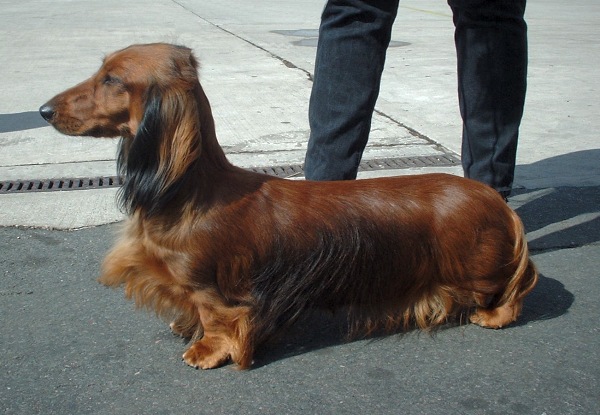
The dachshund’s long back is arguably the most iconic silhouette in the dog world, but the truth behind dachshund long backs is far more fascinating than a simple aesthetic quirk—it’s a story of purpose-driven evolution, genetic mutation, and a delicate balance between form and function that every owner should understand.
The Genetic Blueprint Behind Dachshund Long Backs
To understand why dachshunds look the way they do, you have to look at a single, powerful gene mutation that occurred centuries ago. Unlike many breeds shaped by gradual selection over thousands of years, the dachshund’s distinctive body type is largely the result of a specific genetic condition known as chondrodysplasia—a form of disproportionate dwarfism. This isn’t a flaw; it’s a deliberate, carefully bred trait that affects the development of cartilage and bone in the limbs while leaving the spine and skull relatively normal.
In practical terms, chondrodysplasia causes the long bones of the legs (the femur, tibia, and humerus) to stop growing earlier than they should, while the rest of the body continues to develop at a normal rate. The result? A dog with a full-length spine and torso supported by remarkably short, sturdy legs. This genetic blueprint is so reliable that it is now a defining characteristic of the breed standard set by kennel clubs worldwide, including the American Kennel Club, which specifies that the dachshund’s “length of body should be approximately twice the height at the withers.”
Interestingly, this same genetic pathway is responsible for the short legs seen in other beloved breeds like the Basset Hound, the Pembroke Welsh Corgi, and the Skye Terrier. However, the dachshund’s unique combination of an exceptionally long ribcage and a flexible, muscular loin sets it apart, creating a body built for a very specific job.
A Closer Look at the Dachshund Spine
While all dogs have seven cervical (neck) vertebrae and thirteen thoracic (chest) vertebrae, the dachshund’s thoracic vertebrae are elongated and its ribcage extends further back toward the pelvis than in most other breeds. This extended ribcage protects vital organs like the heart and lungs, which are proportionally large for a dog of this size. The lumbar vertebrae—the bones of the lower back—are also longer and more flexible, allowing for an incredible range of motion. A standard dachshund typically measures between 12 and 16 inches at the shoulder, but its body length from chest to rump can easily reach 20 to 24 inches, creating that unmistakable “hot dog” profile.
The Hunting Origins: Why Form Followed Function for Dachshund Long Backs
You cannot discuss dachshund long backs without paying homage to their ancestral profession. The breed originated in Germany during the 15th century, where they were known as Dackel or Teckel. Their primary quarry was the badger—a fierce, powerful animal that fights back with sharp claws and powerful jaws. The name “dachshund” literally translates to “badger dog,” and every inch of their anatomy was engineered for this subterranean combat.
The badger’s underground burrow is a tight, twisting tunnel system that can extend for 30 to 50 feet. A dog needed to be small enough to enter the tunnel, but powerful and long enough to navigate its bends and corners. The dachshund’s long back provided the perfect solution. Here’s how:
- Reach and Maneuverability: A long, flexible spine allows the dachshund to bend sharply around corners inside the burrow, effectively “snaking” its way through the narrow passages without getting stuck.
- Digging Power: The long, muscular back provides significant leverage for the powerful front legs, which are large, paddle-shaped, and slightly turned outward. This allows the dog to dig with tremendous force and speed when pursuing prey underground.
- Body Contact: The elongated body gives the dog a larger surface area to use as a physical wedge, helping it push loose dirt aside and create space in a collapsing tunnel.
- Low Center of Gravity: Combined with their short legs, the long body brings the dachshund’s center of gravity very close to the ground. This makes them incredibly stable and nearly impossible for a badger to knock over in a confined space.
Beyond badgers, dachshunds were also used to hunt rabbits, foxes, and even wild boar in packs. Their long bodies allowed them to enter dens and flush out game, while their loud, deep bark (surprisingly large for their size) helped hunters track their location from above ground. This working heritage explains why dachshunds are famously fearless, tenacious, and independent—traits that were essential for a dog sent underground to face a cornered predator.
The Two Size Varieties and Their Purposes
The breed was developed in two main sizes to tackle different quarry. The standard dachshund, weighing between 16 and 32 pounds, was used for badgers and wild boar. The miniature dachshund, weighing under 11 pounds, was bred later to hunt rabbits and ferret out smaller game from their shallow burrows. Both varieties share the same long-back anatomy, but the miniature’s smaller frame allows it to enter tunnels that would be inaccessible to its larger cousin. A third size, the rabbit dachshund, is recognized in Europe and is even smaller than the miniature, though it is not a separate classification in the United States.
The Structural Mechanics: How the Long Back Works
Understanding the mechanics of the dachshund’s body helps explain why they are so athletic and agile, despite their unusual proportions. The spine is not a rigid rod; it is a series of individual vertebrae connected by flexible intervertebral discs, which act as shock absorbers. In a dachshund, these discs are more numerous in the thoracic and lumbar regions compared to other breeds, giving the spine a remarkable degree of lateral flexibility.
This flexibility is a double-edged sword. It allows the dachshund to contort its body with incredible grace—watch one navigate a tight turn in a hallway or burrow under a blanket, and you’ll see a master of spatial adaptation. The long ribcage also provides a large attachment surface for powerful back and abdominal muscles, which explains the breed’s surprising strength and endurance. A healthy dachshund can run at surprising speeds, dig for hours, and leap onto furniture with ease, all thanks to the unique mechanical leverage their long backs provide.
Muscle Support: The Unsung Hero
The long back is only as strong as the muscles that support it. Dachshunds have a well-developed musculature along their spine and a notably strong core. These muscles work in concert to stabilize the vertebral column during movement. This is why exercise and weight management are absolutely critical for the breed. A dachshund with strong back and abdominal muscles is significantly less likely to suffer from spinal problems than one that is overweight or under-exercised. The muscle acts as a natural corset, protecting the vulnerable intervertebral discs.
The Health Reality: The Vulnerability of the Long Spine
While the long back was a brilliant evolutionary solution for hunting, it comes with a well-documented anatomical vulnerability. This is the most crucial truth every prospective and current dachshund owner must understand. The condition, known as Intervertebral Disc Disease (IVDD), is a serious risk for the breed. Because the discs between the vertebrae are under constant pressure from the elongated spine, they are prone to degeneration and rupture. When a disc ruptures, it can press on the spinal cord, causing pain, paralysis, and in severe cases, loss of bladder and bowel control.
Statistics suggest that between 19% and 24% of all dachshunds will experience some form of IVDD in their lifetime, making it the most significant health concern for the breed. The problem is not the length of the back itself, but the type of disc degeneration. Dachshunds are predisposed to a condition called chondrodystrophoid degeneration, where the discs harden and calcify prematurely, often before the dog is two years old. This makes them less flexible and more prone to rupturing with sudden movement or trauma.
Preventative Care for the Long Back
Knowledge is the best defense against spinal injury. Responsible ownership means adapting your lifestyle to protect your dachshund’s precious spine. Here are key preventative strategies:
- Weight Control: This is non-negotiable. Excess weight places enormous strain on the back. A dachshund should have a visible waistline and you should be able to easily feel its ribs.
- No Jumping: Teach your dachshund to use ramps for furniture and vehicles. Jumping off a bed or sofa is a leading cause of disc rupture.
- Proper Lifting: Always support the chest and hindquarters simultaneously, keeping the back straight and level. Never lift a dachshund by its front legs or chest alone.
- Core Strengthening: Regular, gentle exercise like walking and swimming builds the muscle mass needed to support the spine.
- No Stair Climbing: For young puppies and older dogs, carrying them up and down stairs is far safer than letting them navigate steps, which puts repetitive stress on the back.
Behavioral Traits Tied to Their Unique Build
The dachshund’s long back isn’t just a physical trait; it has profoundly shaped its personality and behavior. Their history as independent hunters means they are intelligent, stubborn, and incredibly determined. This determination can manifest in amusing ways—like a dachshund obsessively digging at a blanket to create a burrow-like nest, a direct behavioral echo of their ancestors digging for badgers. Their low-slung bodies make them excellent trackers, with their noses rarely far from the ground, and they have a strong prey drive that can lead them to chase small animals.
Furthermore, their physical bravery, a necessity for facing a badger, translates into a bold, sometimes overly confident demeanor. A dachshund will not hesitate to challenge a much larger dog. This combination of bravery and independence requires consistent, patient training. They are often described as having a “big dog” personality in a small package, and their long backs are a constant reminder of the formidable working dog they once were. Despite their stubborn streak, they are also incredibly loyal, affectionate, and playful companions, forming deep bonds with their families.
Living with a Long Back: Real-World Examples and Lifespan
To truly appreciate the dachshund, it helps to look at real-world examples of how they live. Consider a standard dachshund named Max, who weighs 25 pounds and lives in an apartment. His owner has installed ramps next to the couch and bed, and they take two 30-minute walks daily. Max’s long back allows him to walk for miles without tiring, his short legs pumping efficiently beneath him. At home, he loves to burrow under a pile of cushions, his flexible spine allowing him to twist into a perfect circle, a behavior known as “the dachshund curl.”
In contrast, a miniature dachshund named Daisy, weighing just 9 pounds, is an accomplished earthdog trial competitor. In these events, Daisy is released into an artificial underground tunnel and must navigate a series of turns to reach a caged rat (which is safe and protected). Her long back and short legs are perfect for this sport, allowing her to reverse direction in a narrow tunnel and turn around with astonishing agility. These examples highlight that the long back is not a disability; it’s a specialized tool that, when properly cared for, allows the dachshund to excel at activities that other dogs simply cannot do.
With proper care, a healthy dachshund has a remarkably long lifespan for a dog of its size, typically ranging from 12 to 16 years, with many living to 18 or even 20 years old. Their diet should be high-quality, portion-controlled dog food, ideally split into two meals a day to prevent obesity. Their habitat, whether an apartment or a house with a yard, needs to be “dachshund-proofed” with ramps and secure fencing, as their digging instinct can lead them to escape under fences.
Conclusion: Appreciating the Masterpiece of the Long Back
The truth about dachshund long backs is that they are a masterpiece of canine engineering—a perfect adaptation for a perilous profession. This elongated form, born from a specific genetic mutation and refined by centuries of selective breeding, gave the world a fearless badger hunter with a personality as big as its body is long. The dachshund’s silhouette is not a caricature; it is a testament to the incredible diversity of the dog species and the lengths humans will go to create a perfect working partner. While this unique anatomy carries an inherent risk of spinal injury, it is a risk that can be managed with education, responsible care, and a deep understanding of the dog’s physical needs. To live with a dachshund is to appreciate that their long back is not a flaw, but the very essence of what makes them one of the most beloved, distinctive, and remarkable breeds in the world.