- The Basics: What Kneading Actually Looks Like
- Why Do Cats Knead? The Kittenhood Origin Story
- Milk Let-Down and the Nursing Reflex
- Why Some Cats Knead More Than Others
- Why Do Cats Knead? Comfort, Scent, and Social Bonding
- The Self-Soothing Hypothesis
- Scent Glands and Territorial Marking
- Social Bonding and Affiliative Behavior
- Kneading and Purring: The Oxytocin Connection
- Common Myths About Kneading — Debunked
- Myth 1: Kneading Means the Cat Was Weaned Too Early
- Myth 2: Kneading Is Always a Sign of Happiness
- Myth 3: You Should Stop a Cat From Kneading
- Myth 4: Only Happy, Well-Adjusted Cats Knead
- When Kneading Becomes a Problem — and What to Do
- Kneading Across the Cat Family
- What Your Cat Is Really Saying When It Kneads
- Final Thoughts: The Surprising Truth About Kneading
- ❓ Frequently Asked Questions
If you have ever shared a sofa with a cat, you have probably felt it: those rhythmic, alternating paws pressing into your lap, a blanket, or your favorite sweater, often accompanied by a deep rumbling purr and a faraway look. It is one of the most endearing behaviors in the animal kingdom, and it is also one of the most misunderstood. People often ask why do cats knead, assuming it is simply a quirky leftover from kittenhood or a sign that a cat is preparing to nap. The truth is far richer. Kneading — sometimes called "making biscuits," "milk treading," or "happy paws" — is a complex behavior rooted in kitten survival, shaped by scent communication, and maintained into adulthood because it serves real emotional and social functions. In this article, we will unpack the science, the history, and the practical side of kneading, including what to do when those little claws start working your thighs like dough.
The Basics: What Kneading Actually Looks Like
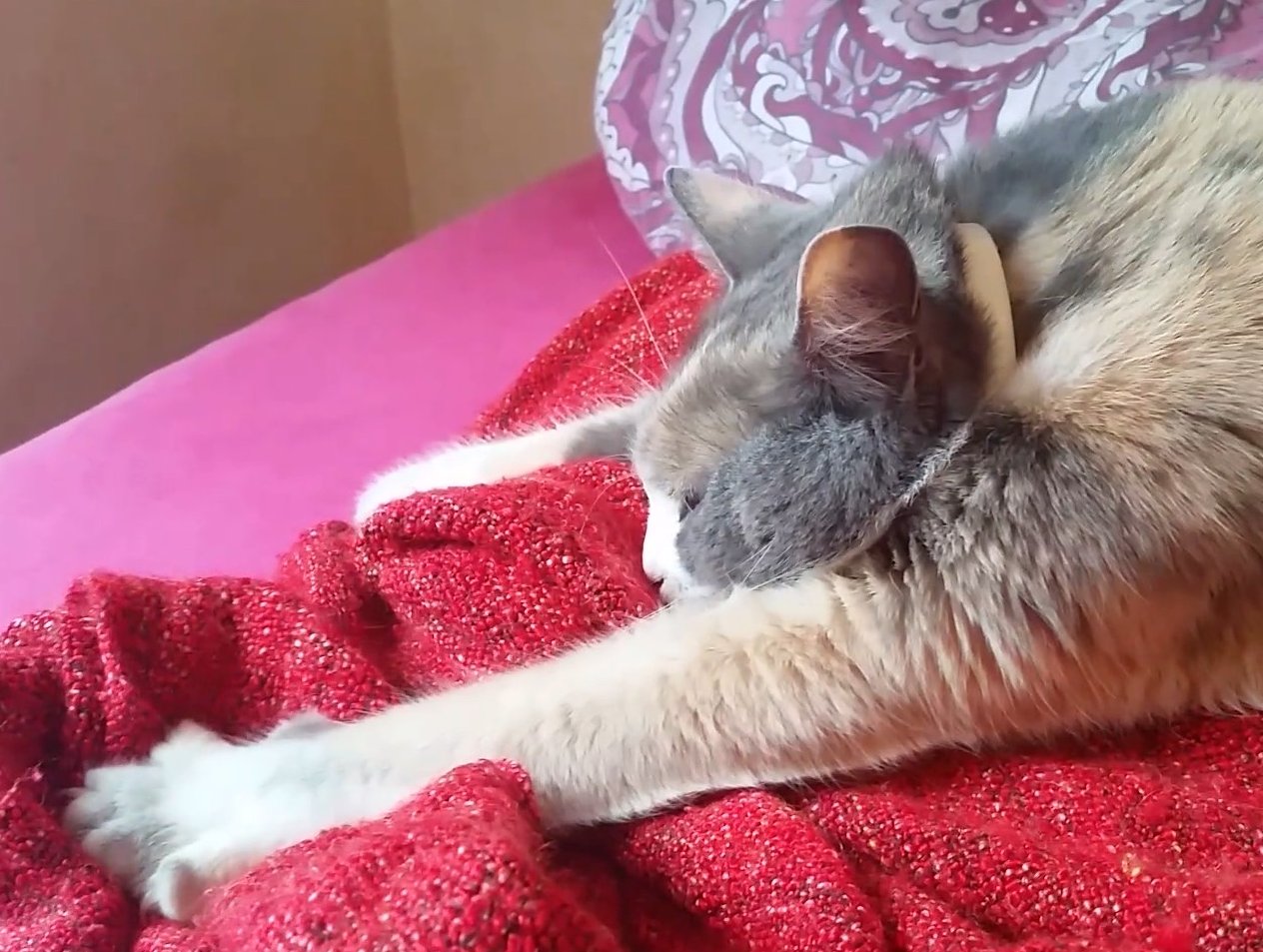
Kneading is a stereotyped motor pattern. A cat pushes its front paws down and forward in an alternating rhythm, then pulls them back, often flexing the toes so the claws extend and retract with each stroke. The motion can be slow and dreamy or fast and intense. Some cats knead with all four paws, "marching" in place; others alternate front paws only. Many extend their claws, which is why kneading on bare skin can feel like a tiny acupuncture session. Others keep their claws sheathed and simply press with soft paw pads.
The behavior usually comes with a package of other signals. Owners commonly report a loud purr, drooling, a glazed expression, half-closed eyes, and a slightly raised tail. Some cats knead and suck on fabric at the same time, a behavior sometimes called wool-sucking or fabric-sucking. In a 2021 study published in the Journal of Veterinary Behavior, researchers surveying more than 2,000 cat owners found that kneading is one of the most frequently reported "affiliative" behaviors, alongside purring and slow blinking. It is not rare or pathological — it is part of the normal feline repertoire.
Kneading is distinct from other paw behaviors. "Biscuit making" is rhythmic and relaxed. "Pawing" or "bunting" is a quick swipe used to get attention. "Scratching" is a marking behavior directed at vertical or horizontal surfaces, not at a caregiver's lap. Recognizing the difference matters, because each behavior has a different function and a different set of management strategies.
Why Do Cats Knead? The Kittenhood Origin Story
Milk Let-Down and the Nursing Reflex
The leading explanation for kneading is that it begins as a nursing reflex. Newborn kittens are born blind and deaf, with a strong sense of smell and touch. When a kitten latches onto a nipple, it presses its front paws against the mother's mammary glands in a steady rhythm. That pressure stimulates oxytocin release in the queen, which triggers milk let-down — the flow of milk from the glands. In other words, kneading is not just an emotional habit; it is a mechanical tool that helps a kitten get fed.
Kittens knead from the first day of life, and the behavior peaks during the first few weeks. Domestic cats nurse for roughly four to eight weeks, though many continue to knead long after weaning. The motor pattern is so deeply wired that it persists into adulthood even though the original function — stimulating milk flow — is gone. This is a classic example of a behavior that is "ontogenetically ritualized": it starts with a practical purpose and becomes a social signal.
Why Some Cats Knead More Than Others
Not every cat kneads with the same enthusiasm. Genetics, early experience, and individual temperament all play a role. Kittens who were separated from their mothers very young, or who were bottle-fed, sometimes knead more intensely, possibly because the behavior became associated with comfort and feeding. Others barely knead at all. Breed differences are not well documented, but Siamese, Burmese, and other Oriental breeds are often described by owners as particularly "pawy." There is no evidence that kneading frequency correlates with intelligence or affection in any simple way.
Why Do Cats Knead? Comfort, Scent, and Social Bonding
The Self-Soothing Hypothesis
Adults knead most often when they are relaxed, drowsy, or seeking comfort. Think of a cat settling onto a soft blanket, a warm lap, or a pile of laundry. The rhythmic pressure and the sensation of claws flexing appear to lower arousal. Veterinary behaviorists often compare it to a child sucking a thumb or stroking a security blanket. In a 2019 study in Applied Animal Behaviour Science, cats exposed to a novel environment showed more self-directed behaviors, including kneading, when a familiar person was present, suggesting that kneading can function as a coping mechanism.
This is why cats often knead right before sleep. The behavior helps them transition from alert to relaxed. It is also why kneading frequently intensifies during periods of change — a move, a new baby, a returned vacation — when a cat needs extra reassurance.
Scent Glands and Territorial Marking
Cats have scent glands between their paw pads. When a cat kneads, it deposits a unique chemical signature onto the surface. This is not aggressive marking like urine spraying; it is a gentle, familiar form of "this is mine, and it smells like safety." The same glands are involved when cats scratch, but kneading is a softer, more intimate version.
This scent-marking function helps explain why cats knead on their owners' clothing, beds, and laps. They are mixing their scent with yours, creating a communal odor profile that signals membership in the same social group. In multi-cat households, cats often knead the same blankets, building a shared scent map. It is a quiet form of communication that humans rarely notice but cats read constantly.
Social Bonding and Affiliative Behavior
Kneading is also an affiliative behavior — a way of maintaining social bonds. In feral cat colonies, cats that are related or familiar often rest together and groom one another. Kneading on a trusted companion, human or feline, is an extension of that physical intimacy. It says, in effect, "I am comfortable with you, and I trust you near my body."
Many owners notice that their cat kneads only on certain people. This is not random. Cats choose kneading targets based on relationship history, scent familiarity, and past reinforcement. A cat that kneads on one family member but not another is making a social distinction, not playing favorites for no reason.
Kneading and Purring: The Oxytocin Connection
Kneading and purring often occur together, and there is a physiological reason. Purring is produced by rapid contractions of the laryngeal muscles, and it occurs at frequencies between roughly 25 and 150 Hertz. These low-frequency vibrations have been shown in studies to promote bone density and tissue healing. Kneading, meanwhile, is associated with the release of oxytocin — the same "bonding hormone" involved in maternal care, nursing, and social trust.
When a cat kneads and purrs on your lap, both cat and human may experience a drop in cortisol and a rise in oxytocin. This is one reason cat ownership is associated with reduced stress and lower blood pressure in some studies. The behavior is not one-way affection; it is a shared physiological event. Some researchers describe it as a "social glue" that reinforces the human-cat relationship over time.
It is worth noting that purring is not always a sign of contentment. Cats also purr when injured, ill, or anxious, possibly as a self-soothing mechanism. Kneading, by contrast, is more consistently associated with relaxed or affiliative states, though it can appear during mild stress as a displacement behavior.
Common Myths About Kneading — Debunked
Myth 1: Kneading Means the Cat Was Weaned Too Early
This is one of the most persistent myths. While early separation can influence the intensity of kneading, it is not the primary cause. Kittens who are weaned at a perfectly normal age still knead as adults. The behavior is normal across the species, not a sign of trauma or poor rearing.
Myth 2: Kneading Is Always a Sign of Happiness
Kneading usually indicates comfort, but context matters. A cat that kneads while pacing, vocalizing, or avoiding eye contact may be anxious or overstimulated. Sudden, intense kneading in a cat that normally does not knead can sometimes signal pain or discomfort, especially if accompanied by changes in appetite, litter box habits, or activity level. When in doubt, consult a veterinarian.
Myth 3: You Should Stop a Cat From Kneading
Kneading is a natural, healthy behavior. Punishing or startling a cat for kneading can damage trust and increase anxiety. The better approach is management: provide a soft blanket, trim claws regularly, or redirect the cat to a designated kneading surface. Never scruff or yell at a cat for kneading — it is not misbehavior.
Myth 4: Only Happy, Well-Adjusted Cats Knead
Many confident, well-adjusted cats knead, but so do shy cats, anxious cats, and cats in new environments. Kneading is a flexible behavior with multiple functions. Its presence or absence alone tells you very little about a cat's overall welfare.
When Kneading Becomes a Problem — and What to Do
For most owners, kneading is charming. For some, it is painful. A cat with sharp claws kneading a bare leg can leave scratches, and a cat that kneads and sucks on wool can damage clothing or swallow fibers. Here are practical, humane strategies.
- Trim the claws. Regular nail trims every two to three weeks blunt the tips and reduce scratch damage. Ask your veterinarian or a groomer to demonstrate the technique if you are unsure.
- Use a barrier. Place a thick blanket, towel, or dedicated "kneading pad" between the cat and your skin. Many cats happily transfer their attention to a fleece throw.
- Redirect gently. If the cat kneads on a delicate sweater, calmly move it to a nearby blanket. Reward the cat with praise or a treat when it uses the alternative surface.
- Provide soft bedding. Cats often knead before sleep. A plush cat bed near your chair can satisfy the urge without involving your lap.
- Address wool-sucking. If your cat sucks and ingests fabric, consult your veterinarian. Ingested fibers can cause intestinal blockage. Provide safe alternatives like food puzzles or chew toys, and remove access to the target fabrics.
- Watch for pain. If kneading is suddenly accompanied by limping, crying, or reluctance to be touched, seek veterinary care. Paw or joint pain can change paw behavior.
It also helps to understand your cat's individual pattern. Some cats knead only at night, some only on one specific blanket, and some only when a particular person is home. Tracking these patterns can reveal what the behavior means for your cat specifically.
Kneading Across the Cat Family
Kneading is not unique to domestic cats. Related behaviors have been observed in other felids. Cheetahs, for example, are known to knead and purr, and they have a similar social structure in which females raise cubs alone and males form coalitions. Domestic cats are unusual among felids in that they retain juvenile behaviors like kneading and purring into adulthood and direct them at humans. This is likely a result of domestication: over roughly 10,000 years, humans selected for cats that were tolerant, social, and responsive to caregiving. Kneading may have been favored because it strengthened the human-cat bond and made cats more appealing companions.
In wild or feral settings, adult cats knead less frequently than house cats, but the behavior still appears during nursing and in relaxed social contexts. This supports the idea that kneading is a conserved mammalian behavior — a piece of ancient wiring that domestication repurposed for a new relationship.
What Your Cat Is Really Saying When It Kneads
When your cat kneads you, it is doing several things at once. It is recalling the safety of kittenhood. It is marking you with its scent, claiming you as part of its social group. It is soothing itself and possibly soothing you. And it is communicating trust — the kind of trust that allows a small predator to close its eyes and relax in your presence.
Kneading is not a sign that your cat thinks you are its mother, exactly. It is more accurate to say that your cat has transferred a deeply ingrained comfort behavior onto a new attachment figure. That is a remarkable thing. It reflects the flexibility of feline behavior and the depth of the human-cat bond.
So the next time those paws start working, take a moment to notice the whole picture: the rhythm, the purr, the half-closed eyes, the slight drool. You are not just being used as a cushion. You are being included in a behavior that began with survival and became a language of affection.
Final Thoughts: The Surprising Truth About Kneading
The surprising truth about why do cats knead is that it is not one thing but many. It is a nursing reflex that outlived its original purpose. It is a scent-marking ritual. It is a self-soothing mechanism. It is a social bond in physical form. And it is a behavior that has been shaped by thousands of years of living alongside humans. Understanding kneading helps you respond with patience rather than frustration, and it deepens your appreciation for the small, ancient gestures that make cats such extraordinary companions. Whether your cat is making biscuits on a fleece blanket or gently pressing its paws into your arm, it is offering you a piece of its history — and a quiet declaration of trust.
❓ Frequently Asked Questions
💬 Why do cats knead with their paws?
Kneading is an instinct that starts in kittenhood, when nursing kittens press their paws against their mother to stimulate milk flow. Adult cats often keep the behavior because it's tied to feelings of comfort, safety, and contentment, much like the relaxed state they felt as kittens.
💬 Why does my cat knead me and drool?
Kneading and drooling together usually signal deep relaxation and affection, echoing the happy nursing state of kittenhood. Some cats simply produce more saliva when content, though if drooling is new, excessive, or paired with other symptoms, it's worth checking with a vet.
💬 Do cats knead when they are in pain or stressed?
Kneading is most often a sign of comfort, but some cats knead to self-soothe when anxious or stressed. If kneading comes with hiding, pacing, appetite changes, or other odd behavior, have your cat examined to rule out pain or illness.
💬 Why do cats knead blankets before lying down?
This behavior likely comes from an ancient instinct to trample grass or bedding into a soft, safe resting spot, and it may also spread the cat's scent to mark the area as theirs. Combined with the comforting kittenhood nursing reflex, it helps your cat settle in and relax.