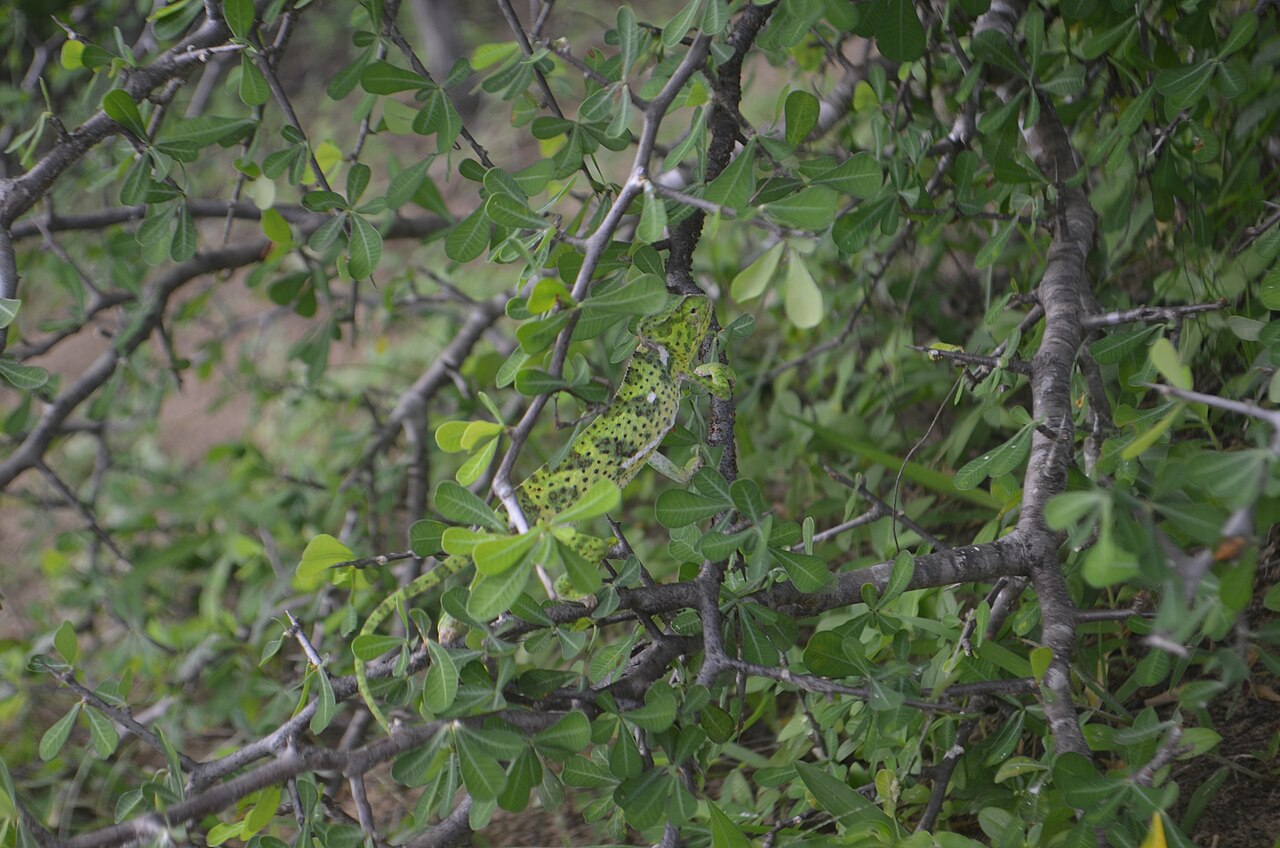
- The Myth of Camouflage: Why Chameleons Change Color for Reasons Other Than Hiding
- Where the camouflage idea comes from
- The Science Behind How Chameleons Change Color
- Pigments versus photonic crystals
- The role of the nervous system
- Communication: The Social Language of Color
- Stress, mood, and the "mood ring" effect
- Temperature Regulation: Color as a Solar Panel
- Why basking color matters for survival
- Real-World Examples: Species and Their Spectacular Displays
- A day in the life
- What Color Change Cannot Do — and What It Costs
- Conclusion: The Surprising Truth About Chameleon Color
- ❓ Frequently Asked Questions
Few animals capture the human imagination like the chameleon, and much of that fascination comes down to a single question: why do chameleons change color? The short answer is that they don't change color to blend into their surroundings — the popular myth of the chameleon as a master of camouflage is only partly true, and the real reasons are far more interesting. Chameleons change color primarily to communicate with one another and to regulate their body temperature, using a remarkable layer of specialized skin cells controlled by the nervous system. In this article, we'll dig into the science behind this ability, explore the species that use it most dramatically, and separate the facts from the folklore.
The Myth of Camouflage: Why Chameleons Change Color for Reasons Other Than Hiding
The idea that chameleons change color to match whatever they're sitting on is one of the most persistent myths in the animal kingdom. It's easy to see where it came from: many chameleons are naturally green or brown, and their resting colors do help them disappear into foliage. But when a chameleon shifts from green to bright yellow, red, or even black, it is almost never trying to imitate its background.
In fact, a chameleon that turns vivid, high-contrast colors is often doing the opposite of hiding — it is making itself as visible as possible. Bright displays signal to rivals and potential mates. A stressed or angry chameleon may darken dramatically, and a sick one often turns pale or dull. Researchers who study chameleon behavior note that the animal's color at any given moment is usually a reflection of its internal state — mood, temperature, health, and social context — rather than a snapshot of the leaf it's perched on.
Where the camouflage idea comes from
Some camouflage is real, just not the way most people imagine it. Species such as the common chameleon (Chamaeleo chamaeleon) and the veiled chameleon (Chamaeleo calyptratus) do have baseline colors that blend with their habitat, and they can shift between shades of green, brown, and grey that help them go unnoticed by birds and snakes. But this is a slow, subtle adjustment — nothing like the instant, dramatic color changes seen in viral videos. True background-matching is a minor part of the chameleon's repertoire, not its headline act.
The Science Behind How Chameleons Change Color
For decades, scientists believed chameleon color change was driven mainly by pigments moving within cells. That picture changed dramatically in 2015, when a team of researchers led by Michel Milinkovitch at the University of Geneva published a landmark study in Nature Communications. Using the panther chameleon (Furcifer pardalis) as their subject, they discovered that the most striking color shifts are produced not by pigments but by structural coloration — light interacting with microscopic crystals in the skin.
Pigments versus photonic crystals
Chameleon skin contains several layers of specialized cells called chromatophores. The deepest layer, the melanophores, contains dark pigment and helps control overall brightness. Above them sit cells containing yellow and red pigments, which set the animal's warm tones. But the star of the show is a layer of cells called iridophores, packed with tiny guanine crystals arranged in a regular lattice.
When light hits this lattice, it reflects specific wavelengths — a phenomenon called structural coloration, the same physics that gives peacock feathers and morpho butterfly wings their iridescence. By actively changing the spacing between the crystals — essentially stretching or compressing the lattice — a chameleon can tune which wavelengths bounce back. Widely spaced crystals reflect longer wavelengths like red and orange; tightly packed crystals reflect shorter wavelengths like blue and green.
The role of the nervous system
What makes this mechanism so fast is that the crystal lattice is controlled by the nervous system. When a chameleon becomes excited, aggressive, or ready to mate, nerve signals cause the iridophore crystals to shift position within seconds. This is why a calm, resting chameleon can transform into a blazing display of color almost instantly — far faster than any pigment-based system could manage. The 2015 study also found a second, deeper layer of iridophores that reflect mostly infrared light, which may help with heat management.
Communication: The Social Language of Color
If you want to understand why chameleons change color in the wild, watch two males meet. The encounter is often spectacular. Rival males of many species — panther chameleons, veiled chameleons, and Jackson's chameleons among them — inflate their bodies, gape their mouths, and shift into intense, high-contrast color patterns. The message is unmistakable: back off. Often the display alone settles the dispute, with one male retreating without a fight.
Color also plays a central role in courtship. A receptive female may adopt relatively muted, calm tones, while a female that has already mated and is carrying eggs often turns dark, sometimes almost black, with bright warning markings — a clear signal that she is not interested and may become aggressive if approached. Males, meanwhile, put on their most vivid colors when courting, and in some species the intensity and pattern of a male's display appear to influence a female's choice.
Stress, mood, and the "mood ring" effect
Because chameleon color is under nervous control, it functions almost like a visible mood indicator. A chameleon that is relaxed and basking tends to show its calmest, most uniform colors. One that is startled, handled roughly, or confronted by a predator may darken sharply or show mottled patterns. Keepers of pet chameleons quickly learn to read these signals: persistent dark coloration, especially combined with lethargy, can indicate stress or illness and is a cue to check temperature, humidity, and husbandry.
Temperature Regulation: Color as a Solar Panel
Chameleons are ectotherms — "cold-blooded" animals that rely on external heat sources to warm their bodies. Basking in the sun is a daily necessity, and color plays a direct role in how efficiently they absorb heat. A chameleon that needs to warm up often shifts to darker shades, because darker surfaces absorb more solar radiation. Once it has reached its preferred body temperature, it may lighten again to reflect sunlight and avoid overheating.
This thermoregulatory use of color is especially important for species living in cooler or high-altitude habitats. The montane species of East Africa, for example, experience chilly nights and must warm up quickly each morning to become active hunters. By darkening their skin while basking, they can raise their body temperature efficiently — a trick that matters a great deal for an animal that depends on warmth to fuel its lightning-fast tongue strike.
Why basking color matters for survival
Chameleons live on a metabolic knife-edge. They cannot generate their own body heat, and their hunting strategy — a ballistic tongue that can extend up to twice the length of the body in some species — requires precise muscle coordination that works best when warm. Managing color to manage temperature is therefore not a cosmetic trick but a core survival skill.
Real-World Examples: Species and Their Spectacular Displays
Chameleons are a large family: roughly 200 species are recognized, and the vast majority live in Madagascar and mainland Africa, with a few species in southern Europe and Asia. Their color abilities vary enormously.
- Panther chameleon (Furcifer pardalis): Native to Madagascar, this species is famous for its vivid blues, reds, and greens. Adult males reach about 40–50 cm (16–20 inches) in total length, with females smaller and less colorful. Males erupt into intense displays during territorial disputes.
- Veiled chameleon (Chamaeleo calyptratus): From the Arabian Peninsula, recognizable by its tall casque (head crest). Adult males can reach around 60 cm (24 inches). They show strong banding and bright yellow-green patterns, and are especially prone to dark stress coloration.
- Jackson's chameleon (Trioceros jacksonii): A smaller East African species (males about 25–30 cm) with three horns. Males use color and horn displays together in territorial contests.
- Common chameleon (Chamaeleo chamaeleon): Found around the Mediterranean, this species relies more heavily on subtle camouflage tones of green, brown, and grey.
A day in the life
Consider a wild male panther chameleon in a Madagascar rainforest. He wakes cool and dark, basking on a sunlit branch to warm up. By mid-morning he is active, hunting insects — crickets, grasshoppers, and other arthropods make up most of the diet. If another male enters his territory, his colors flare into a brilliant, high-contrast pattern within seconds, and the intruder usually backs down. A female passing nearby may trigger a different, courtship-oriented display. By evening, as temperatures drop, his colors settle back to calmer, darker tones. In the wild, chameleons typically live a few years; in captivity, well-cared-for panther chameleons can reach five to seven years, though females, which produce eggs even without mating, usually have shorter lifespans.
What Color Change Cannot Do — and What It Costs
Impressive as it is, chameleon color change has limits. It cannot make a chameleon invisible, and it cannot instantly match an arbitrary background. The animal's palette is constrained by its species, sex, and age — a panther chameleon will never turn pure white, and a female cannot produce the full range of a male's display colors. Color change is also energetically and physiologically demanding, and in a sick or malnourished chameleon, the ability to produce vivid colors deteriorates.
There's also a conservation angle worth noting. Many chameleon species are threatened by habitat loss, particularly in Madagascar, where deforestation and agricultural expansion squeeze endemic species into shrinking fragments of forest. The pet trade, legal and illegal, adds pressure on some populations. Understanding why chameleons change color — and how central that ability is to their social lives and thermoregulation — underscores how vulnerable these animals are when their environment is disrupted. A chameleon that cannot find the right temperature gradient or a quiet territory to display in is a chameleon in trouble.
Conclusion: The Surprising Truth About Chameleon Color
So why do chameleons change color? Not, as legend would have it, to vanish into the wallpaper. The surprising truth is that chameleons change color to talk to each other, to warm up and cool down, and to broadcast their mood, health, and intentions — using a tunable lattice of microscopic crystals that shifts in response to nerve signals. Camouflage plays a supporting role, but communication and temperature control are the lead actors. The next time you see a chameleon flash from green to blazing orange, remember: it isn't hiding. It's speaking a language written in light, and it's one of the most sophisticated color systems in the animal kingdom.
❓ Frequently Asked Questions
💬 Do chameleons change color to camouflage with their surroundings?
Not primarily. Chameleons change color mainly to communicate and regulate temperature, not to blend in, though their resting colors can help them avoid detection. The old camouflage myth oversimplifies what's really a social and physiological signal.
💬 What do chameleons' color changes actually mean?
Color shifts often signal mood, social status, or breeding readiness, such as bright colors to attract mates or dark colors to show aggression. They also help with thermoregulation, since darker skin warms up faster in the sun.
💬 How do chameleons change color physically?
Special skin cells called chromatophores contain pigments and reflective crystals that expand or contract to alter how light is reflected. By rearranging these structures, chameleons can shift hue and brightness within seconds.
💬 Can chameleons change to any color they want?
No. Each species has a limited palette set by its skin structure, so a chameleon can only shift within its natural range of colors. They cannot match arbitrary backgrounds like a printed pattern or a red shirt.