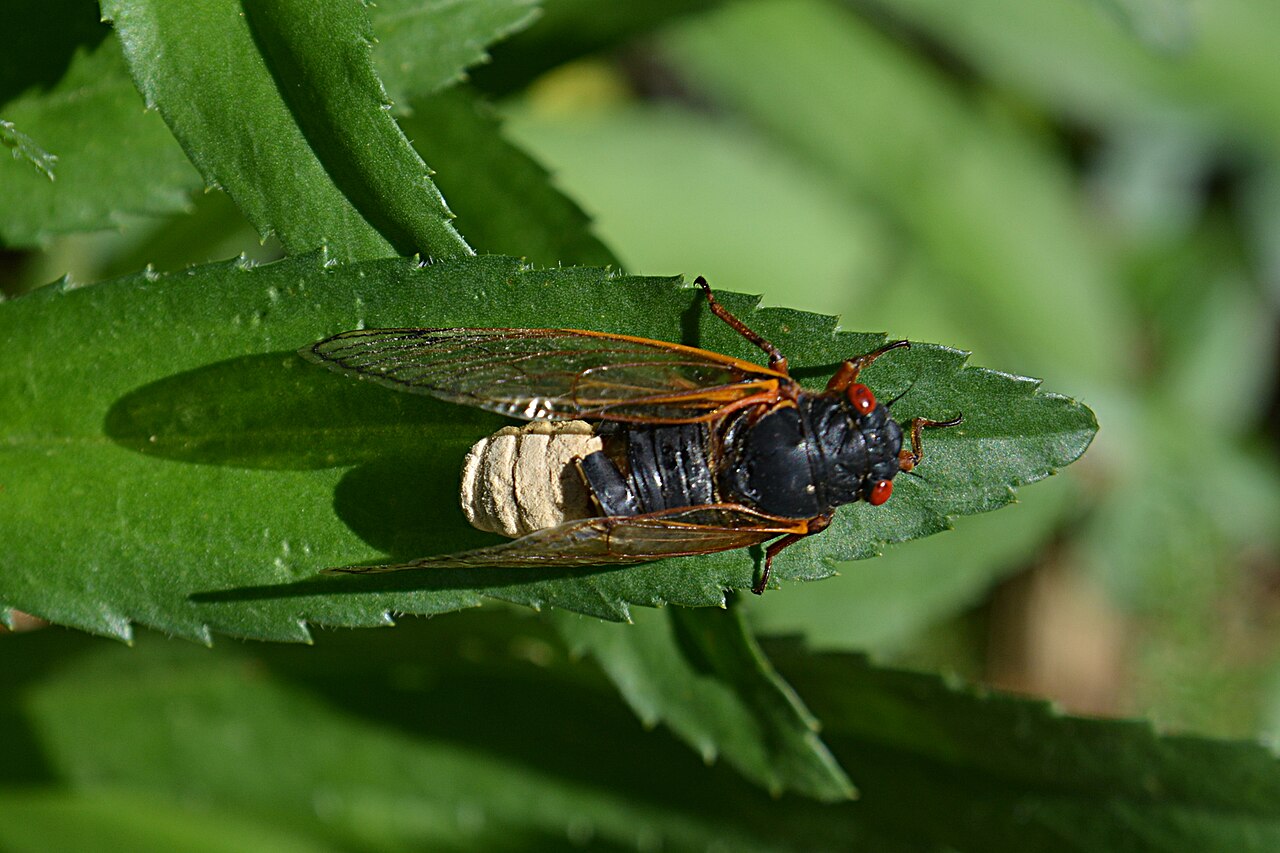
- The Basics of Periodical Cicadas: A Life Unlike Any Other
- Broods and the Geography of Emergence
- Why Periodical Cicadas Stay Underground So Long: The Leading Theories
- 1. Predator Satiation: Safety in Unimaginable Numbers
- 2. The Prime Number Advantage
- 3. Avoiding Specialized Enemies
- 4. Climate and Glacial History
- What Do Cicada Nymphs Do Underground for 17 Years?
- Diet and Feeding
- Movement and Habitat
- How Do They Count the Years?
- The Emergence: A Synchronized Spectacle
- Are Periodical Cicadas Harmful? Risks and Misconceptions
- Why the Long Wait Matters
- ❓ Frequently Asked Questions
Every 17 years, in a phenomenon that feels almost like a natural magic trick, billions of periodical cicadas claw their way out of the soil across the eastern United States, filling the air with an overwhelming chorus of buzzing and clicking. These insects spend the vast majority of their astonishingly long lives—17 years for some species, 13 for others—hidden underground as nymphs, only to emerge en masse for a few frantic weeks of adulthood. It is one of the longest life cycles of any insect on Earth, and it raises an obvious question: why on earth would an animal stay buried for nearly two decades? The answer involves a remarkable mix of evolutionary strategy, predator avoidance, climate history, and biological timing that scientists are still working to fully understand.
The Basics of Periodical Cicadas: A Life Unlike Any Other
Periodical cicadas belong to the genus Magicicada, and they are found only in eastern North America—nowhere else on the planet. There are seven recognized species: four with 17-year cycles and three with 13-year cycles. They are distinct from the "annual" or "dog-day" cicadas, which are larger, green-and-black insects that appear every summer in smaller numbers and have much shorter life cycles of just two to five years underground.
The life of a periodical cicada begins when a female uses a saw-like organ called an ovipositor to slice into small tree branches and lay hundreds of eggs. After about six to ten weeks, the eggs hatch into tiny nymphs that drop to the ground and burrow into the soil. There they will remain for 13 or 17 years, feeding on fluids from plant roots, molting through five developmental stages, and growing from a speck smaller than a grain of rice into a stout, brownish insect roughly 2.5 to 3 centimeters (about 1 to 1.2 inches) long.
When the time finally comes, the nymphs emerge by the billions, climb up tree trunks and vegetation, and shed their final exoskeleton to become winged adults. The adults live only four to six weeks. During that brief window, they sing, mate, lay eggs, and die—completing a cycle that will not repeat until well over a decade later.
Broods and the Geography of Emergence
Periodical cicadas emerge in synchronized groups called broods, each with its own geographic range and emergence year. Brood X, perhaps the most famous, emerged in 2021 across parts of Pennsylvania, Virginia, Maryland, Indiana, and other states. Brood XIII, a 17-year brood concentrated in the Midwest, emerged in 2024—the same year as Brood XIX, a 13-year brood, creating a rare dual emergence that had not happened since 1803. Scientists track these broods carefully, and citizen-science projects allow anyone to report sightings.
Why Periodical Cicadas Stay Underground So Long: The Leading Theories
No single explanation fully accounts for the 13- and 17-year cycles, but several hypotheses work together to explain why such extreme patience pays off.
1. Predator Satiation: Safety in Unimaginable Numbers
The most widely accepted explanation is predator satiation. By emerging all at once in enormous numbers—sometimes more than a million insects per acre—periodical cicadas overwhelm the appetites of predators. Birds, squirrels, raccoons, turtles, and even pets will eat cicadas, but no population of predators can consume billions of insects in a few weeks. Any individual cicada has a decent chance of surviving long enough to reproduce simply because there are so many others around. The strategy only works if the emergence is both massive and synchronized, which is precisely what the long underground wait makes possible.
The timing of the emergence also helps. Cicadas typically emerge in late spring, often in the evening, when many predators are already satiated or inactive. The sheer volume of food effectively "switches off" predator pressure for the duration of the event.
2. The Prime Number Advantage
Both 13 and 17 are prime numbers—divisible only by one and themselves. Evolutionary biologists have long theorized that this is no coincidence. A cicada with a prime-numbered life cycle is less likely to synchronize its emergence with the population cycles of predators or parasites that have shorter, more regular life spans. For example, a predator or parasitoid with a two-, three-, or four-year cycle would rarely line up with a 13- or 17-year emergence. A 12-year or 16-year cycle, by contrast, would share common factors with many shorter cycles and could allow specialized enemies to "catch" the cicadas more often. The prime-number hypothesis remains debated, but it is one of the most elegant ideas in evolutionary ecology.
3. Avoiding Specialized Enemies
Because periodical cicadas are absent from the landscape for so long, few predators or parasites can specialize in eating them. A bird that depended on cicadas would starve during the 16 years between emergences. The long dormancy essentially prevents the evolution of cicada-specialist enemies, leaving generalist predators to deal with the overwhelming glut when it arrives.
4. Climate and Glacial History
Some researchers link the origin of long life cycles to ancient climate shifts, particularly the Pleistocene ice ages. As glaciers advanced and retreated, suitable habitat for cicadas shifted and fragmented. Long, synchronized life cycles may have helped populations survive periods when breeding conditions were poor, and may have kept broods geographically separated so they could diverge into distinct species. The 13-year cicadas are generally found farther south and the 17-year cicadas farther north, a pattern consistent with life-cycle length being shaped by climate and growing-season length.
What Do Cicada Nymphs Do Underground for 17 Years?
Life underground is not a passive sleep. Nymphs are active feeders and diggers throughout their long development.
Diet and Feeding
Cicada nymphs feed on xylem fluid—the watery sap that plants use to transport water and minerals from roots to leaves. They use needle-like mouthparts to tap into the roots of grasses, shrubs, and trees, including oaks, maples, and many other species. Xylem fluid is nutrient-poor, which helps explain the slow growth rate: it takes years of steady feeding to accumulate enough energy to become an adult.
Movement and Habitat
Nymphs live in the soil, typically within the top 20 to 30 centimeters (8 to 12 inches), though some descend deeper, especially during dry periods or cold winters. They dig small tunnels and chambers, molting periodically and leaving behind tiny casts. Healthy, undisturbed soil with plenty of roots is ideal habitat—which is why cicadas are most abundant in established forests, older neighborhoods, and parks rather than heavily tilled farmland.
How Do They Count the Years?
One of the most fascinating questions is how nymphs know when 13 or 17 years have passed. Research suggests they track seasonal changes in the sap they drink—particularly the flush of nutrients that occurs each spring when trees leaf out. In effect, the nymphs may be counting the number of seasonal cycles rather than literally counting days. Experiments that warmed trees in greenhouses have shown cicadas can be tricked into emerging early, supporting the idea that plant signals drive the timing.
The Emergence: A Synchronized Spectacle
In the final spring of their lives, mature nymphs dig upward and wait just below the surface until soil temperatures reach roughly 18°C (about 64°F). Then, usually after sunset, they emerge together in staggering numbers. Each nymph climbs a vertical surface—a tree trunk, a fence post, a garden stake—and anchors itself while its back splits open. The adult cicada pulls free, pumps fluid into its wings to expand them, and hardens over several hours.
The males begin singing within days, using tymbals—ribbed membranes on the abdomen—to produce a loud, buzzing call that can exceed 90 decibels in a chorus. Each species has its own song, and females respond by clicking their wings. Mating follows quickly, and females lay eggs in pencil-thin branches, a process that can cause minor "flagging" damage to young trees. Within about six weeks, the adults are gone, the eggs are hatching, and the next generation disappears underground.
Are Periodical Cicadas Harmful? Risks and Misconceptions
Despite their overwhelming numbers, periodical cicadas are not dangerous. They do not bite or sting, they are not toxic, and they do not carry diseases to humans. They can be a nuisance—the noise is loud, the carcasses pile up, and egg-laying can damage small ornamental trees—but the ecological impact is generally positive. Their emergence aerates soil, their bodies return nutrients to the ecosystem, and they provide a brief, enormous food subsidy for wildlife.
One real concern is that habitat loss and land development can threaten broods. Because cicadas depend on long-established root systems and undisturbed soil, paving and clearing can wipe out local populations that took nearly two decades to develop. Conservationists monitor brood health partly through citizen reports.
Why the Long Wait Matters
The 17-year underground life of periodical cicadas is not wasted time—it is a finely tuned survival strategy. By staying hidden, feeding slowly on root sap, and emerging in synchronized, overwhelming numbers, these insects turn patience into protection. The prime-numbered cycles, the mass emergences, and the brief, explosive adult lives all fit together into one of nature's most extraordinary life histories. When the chorus finally rises after nearly two decades of silence, it is a reminder that sometimes the longest waits produce the most spectacular results.
❓ Frequently Asked Questions
💬 Why do periodical cicadas stay underground for 17 years?
Scientists believe the long, synchronized cycle helps them overwhelm predators—when billions emerge at once, predators can't eat them all, so many survive to mate. The odd, prime-numbered timing may also make it hard for predators with shorter cycles to sync up with them.
💬 What do cicadas do underground for 17 years?
They spend almost all that time as nymphs feeding on fluids from plant roots, slowly growing and molting through several stages. In their final year they dig upward and wait near the surface before emerging together.
💬 How do cicadas know when 17 years have passed?
They don't count years; instead they track seasonal cycles in the trees they feed on, likely sensing changes in the sap as roots and leaves shift with the seasons. This lets the whole brood emerge at nearly the same time.
💬 Are 17-year cicadas harmful or dangerous?
No—periodical cicadas don't bite or sting and are harmless to humans and pets, though they can be noisy and messy. They can damage young trees when females lay eggs in small branches, so gardeners sometimes cover saplings during an emergence.