- The Anatomy of Perfect Sound: How Lyrebird Mimicry Works
- A Dual-Voice Box
- Exceptional Hearing and Memory
- Evolutionary Drivers: Why Lyrebird Mimicry Evolved
- The Courtship Display
- Territorial Defense
- The Repertoire: What Do Lyrebirds Mimic?
- Natural Sounds
- Human-Made Sounds
- Habitat and Lifestyle: The Foundation of Mimicry
- Dense Forest Dwellers
- Diet and Foraging
- Lifespan and Learning
- Famous Examples of Lyrebird Mimicry in Action
- The Chainsaw Lyrebird
- The Camera Shutter Bird
- The "Baby Cry" Lyrebird
- Conservation and the Future of Lyrebird Mimicry
- Habitat Loss
- Climate Change
- The Shifting Soundscape
- Conclusion: The Perfection of Practice
- ❓ Frequently Asked Questions
When you hear a chain saw buzzing in an Australian forest, a car alarm blaring, or even the shutter click of a camera, you might be forgiven for thinking you are near a human settlement. But more often than not, the source of these uncanny sounds is a single bird: the superb lyrebird. The phenomenon of lyrebird mimicry is one of the most astonishing examples of vocal learning in the animal kingdom, raising the question: why do lyrebirds mimic sounds so perfectly? The answer lies in a blend of evolutionary necessity, anatomical genius, and an almost obsessive dedication to practice.
The Anatomy of Perfect Sound: How Lyrebird Mimicry Works
To understand why lyrebird mimicry is so flawless, we must first examine the bird’s unique vocal apparatus. Unlike humans, who use a larynx, birds produce sound using a syrinx—a complex, two-part organ located where the trachea splits into the bronchi. The superb lyrebird (Menura novaehollandiae) possesses one of the most sophisticated syrinxes of any passerine bird, allowing it to produce two independent sounds simultaneously.
A Dual-Voice Box
The syrinx of a lyrebird is controlled by a set of highly developed muscles, giving it exceptional control over pitch, volume, and timbre. This dual-source capability means a lyrebird can mimic a kookaburra’s call with one side while replicating a camera shutter with the other, creating a layered, realistic soundscape. This anatomical structure is the foundation of its perfect mimicry, enabling it to reproduce not just simple notes but complex, multi-frequency sounds like human speech or machinery.
Exceptional Hearing and Memory
Perfect mimicry requires perfect listening. Lyrebirds have acute hearing that allows them to parse environmental sounds with extraordinary precision. Their auditory cortex is highly specialized for retaining and recalling sounds they may hear only once. Studies have shown that a lyrebird can remember and accurately reproduce a specific sound—such as a crying human baby or a particular bird alarm call—for years after first hearing it. This combination of a flexible syrinx and an exceptional auditory memory makes the complexity of lyrebird mimicry possible.
Evolutionary Drivers: Why Lyrebird Mimicry Evolved
The primary evolutionary driver behind the perfection of lyrebird mimicry is not deception, but sexual selection. The male superb lyrebird is one of nature’s most dedicated performers, and his vocal repertoire is his primary tool for winning a mate.
The Courtship Display
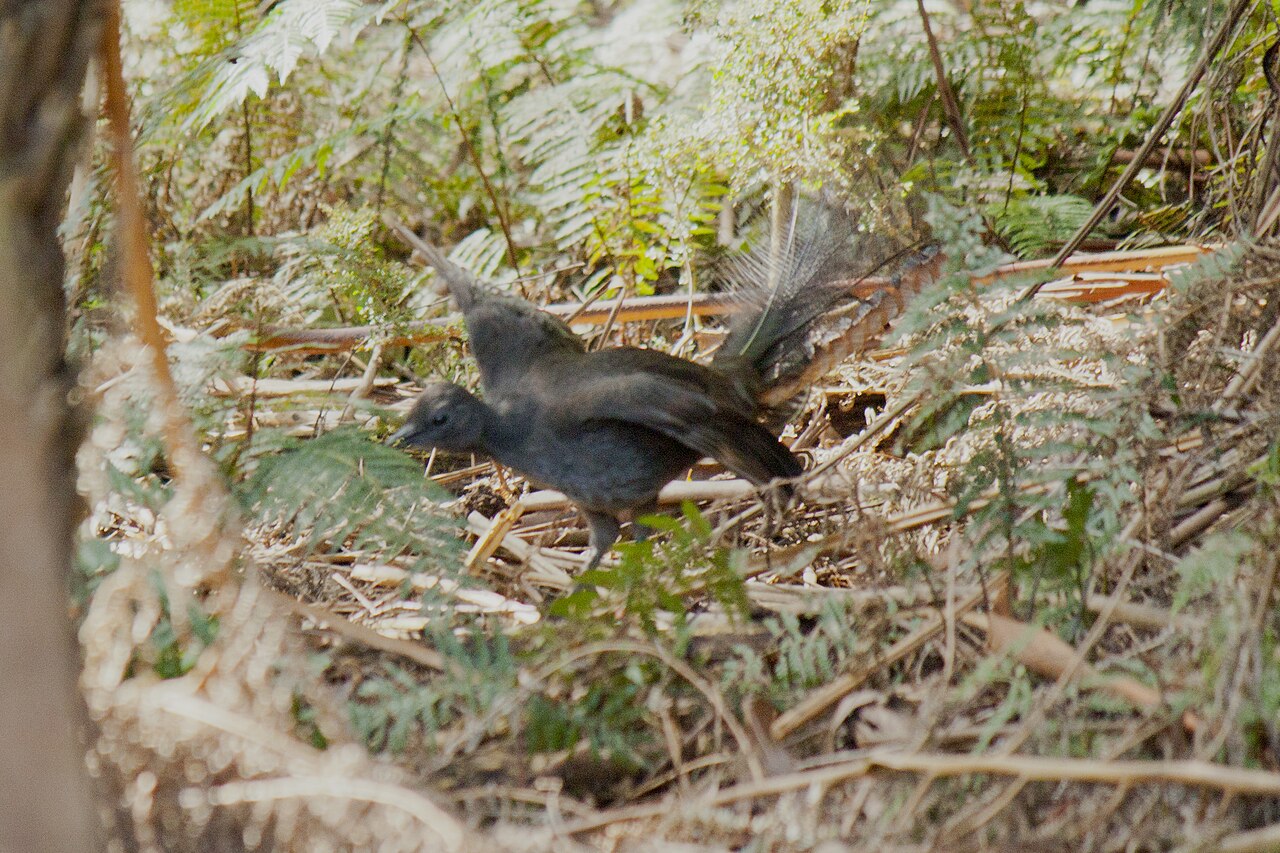
During the breeding season (May to August), male lyrebirds clear a stage-like mound on the forest floor. Here, they perform an elaborate dance, fanning their spectacular tail feathers into a shimmering silver arc that resembles a lyre. But the visual display is only half the show. The male then launches into a medley of mimicked sounds, seamlessly blending the songs of other birds (like the satin bowerbird and grey shrike-thrush) with mechanical noises (like chainsaws, axes, and dog barks).
The accuracy of these sounds is crucial. Female lyrebirds visit multiple males’ display mounds and choose a mate based on the complexity and perfection of his performance. A male who can mimic a perfectly rhythmic kookaburra laugh and then flawlessly replicate the sound of a falling tree is demonstrating superior neural and physical health. This is a classic example of an honest signal: only a male with a strong, healthy brain and body can memorize and reproduce such a vast, accurate repertoire.
Territorial Defense
While courtship is the main driver, lyrebird mimicry also serves a functional purpose in territorial defense. Male lyrebirds are highly territorial, and their mimicry can be used to create an illusion of a larger, more diverse animal presence. By imitating the mobbing calls of multiple birds (such as the alarm calls of wattlebirds or magpies), a lyrebird can scare away potential intruders, including other male lyrebirds. In some cases, they mimic the calls of predators like foxes or dingoes to create a sense of danger, effectively clearing their territory without physical confrontation.
The Repertoire: What Do Lyrebirds Mimic?
The scope of lyrebird mimicry is staggering. While they are most famous for mimicking other bird species, their repertoire extends far beyond the avian world. A single male superb lyrebird may have a repertoire of over 200 different sounds, and some individuals have been recorded mimicking up to 20 different bird species in a single performance.
Natural Sounds
- Bird Calls: The core of their repertoire. They mimic the calls of kookaburras, golden whistlers, grey shrike-thrushes, satin bowerbirds, currawongs, and many more. They often copy the exact rhythm and pitch of a specific bird’s song.
- Animal Sounds: They can replicate the growls of dingoes, the barks of dogs, the meows of cats, and even the screams of koalas during the mating season.
- Environmental Sounds: The sound of rain hitting leaves, the rustling of a snake through undergrowth, and the flap of a bird's wings are all fair game.
Human-Made Sounds
Lyrebirds are particularly famous for their ability to mimic human-made noises, which they often pick up from living near towns, logging camps, or tourist areas. Documented examples include:
- Machinery: The sound of a chainsaw starting, a car engine revving, a camera shutter clicking, and even the beep of a reversing truck.
- Tools: The ring of an axe hitting wood, the sound of a hammer, or the whir of a lawnmower.
- Sounds of Technology: A mobile phone ringtone, a video game noise, or the beep of a smoke detector.
- Human Voices: Some lyrebirds have been recorded mimicking human speech, including phrases like "Hello" or the sound of a baby crying, though this is less common than mimicking other birds.
Habitat and Lifestyle: The Foundation of Mimicry
Lyrebird mimicry is not just a party trick; it is deeply integrated into their ecology. Understanding their habitat and lifestyle helps explain why this ability is so refined.
Dense Forest Dwellers
Superb lyrebirds are endemic to the temperate rainforests and wet eucalypt forests of southeastern Australia, from southern Victoria to the rainforests of New South Wales. They are ground-dwelling birds, spending most of their time scratching through the leaf litter of the forest floor in search of food. Their habitat is incredibly noisy—filled with the calls of dozens of bird species, the rustle of wind, and the distant sounds of human activity. To stand out in this acoustic chaos, a male lyrebird must be exceptionally loud and precise. His mimicry must cut through the forest’s ambient noise to reach a female’s ears from hundreds of meters away.
Diet and Foraging
Their diet consists mainly of invertebrates found in the soil and leaf litter: earthworms, beetles, spiders, centipedes, and larvae. A lyrebird’s powerful legs and feet are used to vigorously scratch the forest floor, turning over large amounts of debris. This constant, rhythmic scratching is a sound they themselves mimic in their courtship displays, often interspersing a scratching sound between mimicked bird calls. The act of foraging also keeps them in close contact with the sounds of their environment, providing a constant stream of new material to learn and practice.
Lifespan and Learning
Lyrebirds are long-lived for songbirds, with a lifespan of 10 to 15 years in the wild, and up to 30 years in captivity. This long lifespan is crucial for their mimicry. It takes a young male years to build his full repertoire. Juvenile lyrebirds are not born with a complete song; they learn by listening to their father and other males in the area. They spend their first few years as "apprentices," practicing quietly in the undergrowth before they are ready to perform on a display mound. This extended learning period, combined with a long life, allows them to continuously refine and expand their mimicry, leading to the perfection seen in older, dominant males.
Famous Examples of Lyrebird Mimicry in Action
Several well-documented cases highlight the astonishing accuracy of lyrebird mimicry and have cemented their reputation as nature's greatest impersonators.
The Chainsaw Lyrebird
Perhaps the most famous example comes from the 1960s in the forests of Tasmania and New South Wales. Loggers working in the area reported hearing the unmistakable sound of chainsaws, but when they stopped their machines, the sound continued. It was a lyrebird that had learned to perfectly mimic the two-stroke engine of a chainsaw, including the distinctive starting sequence and the revving sound. This bird had not only copied the sound but had integrated it into its courtship display, and the mimicry was so accurate that it confused human loggers.
The Camera Shutter Bird
In the 1990s, a male lyrebird living near a wildlife sanctuary in Victoria became famous for mimicking the sound of a camera shutter. This bird had likely heard tourists taking photos of his display. He incorporated the "click-whirr" of an automatic zoom lens into his song, and the mimicry was so precise that it fooled professional photographers who were trying to take his picture—they would look down, thinking their camera had already fired.
The "Baby Cry" Lyrebird
In 2023, a lyrebird at the Taronga Zoo in Sydney gained international attention for mimicking the sound of a crying human baby. Zookeepers reported that the bird had perfectly copied the sound of a human infant from a nearby exhibit, and the mimicry was so realistic that it caused visitors to look around for a distressed child. This case demonstrates the lyrebird’s ability to copy not just simple sounds but complex, emotionally charged vocalizations.
Conservation and the Future of Lyrebird Mimicry
The perfection of lyrebird mimicry is a fragile phenomenon, dependent on the health of their habitat. As human activity encroaches on their rainforest homes, the sounds they mimic are changing.
Habitat Loss
The greatest threat to lyrebirds is habitat destruction from logging, land clearing for agriculture, and urban development. Without large, undisturbed tracts of rainforest, lyrebird populations become fragmented, reducing their ability to learn from other males and limiting their access to suitable display mounds. The loss of rainforest also means the loss of the diverse bird songs that form the core of their repertoire.
Climate Change
Climate change poses a more insidious threat. Rising temperatures and changing rainfall patterns are altering the composition of Australian forests. This can lead to a decline in the insect populations that lyrebirds feed on, potentially impacting their health and ability to perform energetically costly displays. It may also change the timing of breeding seasons and the availability of the specific bird calls they need to learn.
The Shifting Soundscape
Interestingly, as natural sounds decline, lyrebirds are increasingly incorporating human-made sounds into their repertoire. While this makes for fascinating recordings, it may also indicate a loss of the natural acoustic environment they evolved to mimic. Conservation efforts must focus on preserving not just the lyrebird population, but the entire soundscape of the Australian rainforest—the rich tapestry of bird calls, animal sounds, and natural noises that have shaped the evolution of this remarkable bird’s mimicry for millennia.
Conclusion: The Perfection of Practice
So, why do lyrebirds mimic sounds so perfectly? The answer is a beautiful convergence of biology and evolution. It begins with a specialized syrinx and a powerful auditory memory, allowing them to learn and reproduce almost any sound they hear. But the true driver is the relentless pressure of sexual selection: only the most accurate and inventive mimics earn the right to mate, passing on their genes for vocal brilliance. This has shaped a bird that is not merely a copycat, but a living, breathing archive of its environment—a feathered soundscape that captures the wild beauty and the encroaching noise of the world around it. The perfection of lyrebird mimicry is a testament to the power of nature’s most demanding audience: a female looking for a mate who can sing a perfect song, even if that song includes the roar of a chainsaw or the click of a camera. Their ability is a constant reminder that in the animal kingdom, the line between nature and culture is often a beautiful, blurry one.
❓ Frequently Asked Questions
💬 How do lyrebirds mimic sounds so perfectly?
Lyrebirds have a highly specialized syrinx (vocal organ) with complex muscles that allow them to produce an extraordinary range of sounds with precise control, enabling them to replicate natural and man-made noises with stunning accuracy.
💬 What sounds do lyrebirds typically mimic?
Lyrebirds mimic a wide variety of sounds from their environment, including other bird calls, animal noises like koala grunts, and human-made sounds such as chainsaws, car alarms, camera shutters, and even flute music.
💬 Why do lyrebirds mimic sounds in the first place?
Male lyrebirds use mimicry primarily during courtship displays to attract females by demonstrating their vocal prowess and fitness, as well as to defend their territory and establish dominance over rivals.
💬 Can lyrebirds mimic human speech?
While lyrebirds are capable of mimicking human speech, they rarely do so in the wild; they more commonly replicate mechanical sounds like chainsaws or camera shutters, which they learn from their surroundings.