- The Basics: What Exactly Is a Clownfish?
- The Real Reason Clownfish Change Sex
- Why "Born Male" Changes Everything
- How Clownfish Change Sex: A Step-by-Step Process
- Step 1: The Dominant Female Dies
- Step 2: The Breeding Male Becomes Female
- Step 3: The Largest Subordinate Becomes Male
- Step 4: The Queue Resets
- Size Matters: The Strict Clownfish Hierarchy
- A Real-World Example
- Why This Strategy Makes Evolutionary Sense
- Anemones Are Rare and Valuable
- Bigger Females Produce More Eggs
- One-Way Change Is Enough
- Clownfish and Their Anemone: A Partnership That Shapes Everything
- Habitat and Range
- Common Myths and Misconceptions
- Myth: All Clownfish Are Born Female
- Myth: A Clownfish Can Switch Back and Forth
- Myth: Any Clownfish Can Become Female at Any Time
- Myth: Clownfish Are All the Same Species
- What Happens in Captivity and in a Changing Ocean?
- Conservation Snapshot
- Frequently Asked Questions About Clownfish Change Sex
- How long does it take for a clownfish to change sex?
- Can a clownfish change sex more than once?
- What triggers the change?
- Do all clownfish in a group change sex?
- Is sex change in clownfish rare in the animal kingdom?
- Conclusion: A Small Fish With a Big Lesson
- ❓ Frequently Asked Questions
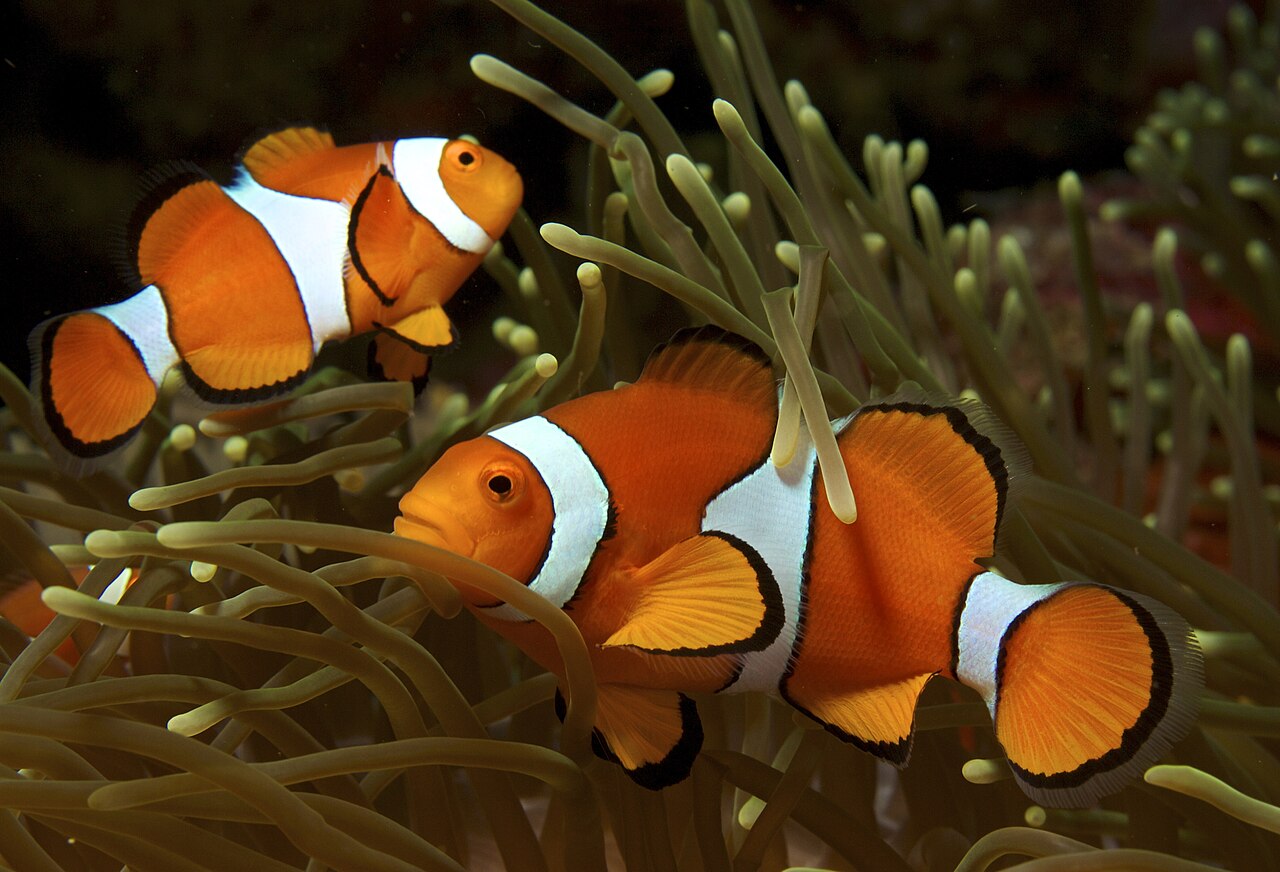
Few creatures on a coral reef are as instantly recognizable as the clownfish, the orange-and-white striped little fish that became a global celebrity thanks to a certain animated movie. But behind that friendly face lies one of the strangest family arrangements in the animal kingdom: clownfish change sex, and they do it in a way that is remarkably orderly, predictable, and essential to their survival. Understanding why requires a trip into the bizarre social world of anemonefish, where the biggest fish in the group is always a female, the second biggest is always a male, and everyone else is simply waiting their turn.
The Basics: What Exactly Is a Clownfish?
Clownfish, also called anemonefish, are small marine fish belonging to the subfamily Amphiprioninae. There are roughly 30 recognized species, including the familiar Amphiprion ocellaris (the species most people picture) and the slightly larger Amphiprion percula. Most species grow to just 2 to 4 inches (5 to 11 centimeters) in length, though a few reach about 7 inches (18 centimeters).
They are native to the warm, shallow waters of the Indo-Pacific, the Red Sea, and parts of the Great Barrier Reef, where they live among coral reefs at depths typically ranging from 1 to 15 meters. In the wild, a clownfish can live 6 to 10 years, and some individuals in protected aquarium settings have been documented living well past 20 years.
Their diet is omnivorous and fairly opportunistic. Clownfish eat zooplankton, small crustaceans, algae, and the leftovers of meals dropped by their host anemone. This varied diet helps them grow quickly, which matters enormously in a society where size determines sex.
The Real Reason Clownfish Change Sex
The short answer is: clownfish change sex because of a strict size-based hierarchy combined with a dangerous neighborhood. On a coral reef, a clownfish that leaves the protective tentacles of its host anemone is likely to be eaten within minutes. That simple fact shapes everything about their social structure.
Because leaving home is so risky, young clownfish rarely disperse far. Instead, they settle into a single anemone and stay there, sometimes for life. But an anemone can only support a limited number of fish, and only one pair can breed. So the group needs a system that guarantees a breeding pair always exists, without anyone having to strike out on their own to find a mate.
That system is sequential hermaphroditism — specifically, protandry, meaning an animal starts life as one sex and can later become the other. In clownfish, every individual is born male. If the dominant female dies, her male partner transforms into a female, and the largest non-breeding fish in the group matures into a functional male to replace him. The breeding pair is restored almost instantly, and no one has to risk the open ocean.
Why "Born Male" Changes Everything
This is the key twist that surprises most people. Clownfish are not born female and turned male, as is common in some wrasses and other reef fish. They are born male and can become female. In other words, females are the "upgraded" sex in clownfish society, and the transformation only goes one direction: male to female, never female back to male.
That one-way street is why the death of a female is such a pivotal event in the group. She cannot be replaced by a reversal of her own change; she can only be replaced by a male growing into her role.
How Clownfish Change Sex: A Step-by-Step Process
The transformation is not instant. It typically takes weeks to months, and it involves dramatic physical and behavioral changes.
Step 1: The Dominant Female Dies
Females in clownfish groups are the largest, most aggressive fish. When she disappears — eaten by a predator, lost to disease, or simply reaching the end of her life — the hierarchy collapses and the remaining fish must reorganize.
Step 2: The Breeding Male Becomes Female
The male partner, who is the second-largest fish in the group, begins changing. His gonads, which were producing sperm, reorganize into ovarian tissue. His body grows larger. His behavior shifts from submissive to dominant, and he takes over the female's role of patrolling the anemone and suppressing the growth of subordinates.
Step 3: The Largest Subordinate Becomes Male
Meanwhile, the biggest of the smaller, non-breeding fish begins maturing sexually. Its reproductive system develops functional testes, and it takes the place of the former male as the new breeding partner. The remaining smaller fish stay male and non-reproductive, biding their time.
- Timeline: Full sex change usually takes several weeks to a few months.
- Direction: Always male to female. Clownfish never change back.
- Trigger: The loss or removal of the dominant female.
- Result: A new breeding pair forms within the same anemone.
Step 4: The Queue Resets
Every fish in the group moves up one rung on the ladder. The smallest fish, often juveniles, simply wait. If they grow too large or become too assertive, the dominant female will chase, nip, and harass them, keeping their growth and development in check.
Size Matters: The Strict Clownfish Hierarchy
Clownfish societies are among the most rigidly structured in the fish world. Within a single anemone, you typically find a group of two to six fish arranged in a strict size order.
At the top is the female, usually the largest fish by a clear margin. Below her is the breeding male. Beneath him is a queue of smaller, non-breeding males, each slightly smaller than the one above. This ladder is maintained through constant, low-level aggression — mostly chasing and displays rather than serious injury.
Researchers have found that this suppression is not just behavioral. The dominant pair's presence actively inhibits the sexual maturation of the subordinates, likely through a combination of aggression, visual cues, and chemical signals in the water. Remove the female, and the whole chain reacts like a set of dominoes.
A Real-World Example
In a well-documented study of Amphiprion percula on the reefs of Papua New Guinea, researchers monitored groups over months and confirmed that when the female was removed experimentally, the male began changing sex within days and completed the transition over the following weeks. The largest subordinate simultaneously began developing testes. The group's breeding output resumed with minimal interruption — a remarkable feat of biological insurance.
Why This Strategy Makes Evolutionary Sense
At first glance, changing sex might seem needlessly complicated. Why not just have males and females born in equal numbers and let them find each other? The answer lies in the economics of reef life.
Anemones Are Rare and Valuable
A suitable host anemone is a scarce, long-lived resource. It provides protection from predators, a steady supply of food scraps, and a safe place to lay eggs. Clownfish that wander in search of a mate risk death. By staying put and adjusting their sex to fit the group, they avoid that risk entirely.
Bigger Females Produce More Eggs
In most fish, reproductive output is closely tied to body size — larger females produce far more eggs. Because the female is the largest fish in the group, the colony maximizes its reproductive potential. And because a male can always be replaced by a growing subordinate, the system never runs out of breeding partners.
One-Way Change Is Enough
Since the female is always the largest and most dominant, and since subordinates are always smaller, there is no scenario in which a female would need to become male. She is already at the top. The one-way male-to-female path perfectly matches the one-way size hierarchy.
Clownfish and Their Anemone: A Partnership That Shapes Everything
No discussion of clownfish sex change makes sense without the anemone. These fish live in a mutualistic relationship with sea anemones, whose stinging tentacles would kill most other fish.
Clownfish are protected by a layer of mucus that disguises them from the anemone's nematocysts (stinging cells). In return, the fish chase away butterflyfish and other predators that would nibble the anemone, drop food scraps that the anemone can absorb, and improve water circulation around its tentacles with their constant movement.
This partnership is what makes the clownfish's sedentary, stay-at-home lifestyle possible. Without a safe host, the entire sex-changing strategy would fall apart, because fish would have to disperse and the stable social group would never form.
Habitat and Range
- Range: Indo-Pacific, Red Sea, Great Barrier Reef, and parts of the western Pacific.
- Depth: Usually 1–15 meters in warm, clear reef waters.
- Temperature: Roughly 24–28°C (75–82°F).
- Hosts: Species such as Heteractis magnifica, Stichodactyla species, and Entacmaea quadricolor.
Common Myths and Misconceptions
Because clownfish are so popular, plenty of misinformation circulates about them. Here are the most common misunderstandings, corrected.
Myth: All Clownfish Are Born Female
False. Clownfish begin life as males. Some people confuse them with certain wrasses and groupers, which are often born female and change into males. Clownfish do the opposite.
Myth: A Clownfish Can Switch Back and Forth
False. The change is strictly one-way. Once a clownfish becomes female, it cannot revert to being male. This is why a group that loses its female must rely on a male transforming, not on a female reversing.
Myth: Any Clownfish Can Become Female at Any Time
Not quite. Only the dominant, second-largest fish in a group typically changes sex when the female dies. Smaller subordinates are suppressed and generally do not mature until their turn arrives.
Myth: Clownfish Are All the Same Species
False. There are around 30 species of anemonefish, varying in color, size, and host preference. The orange-and-white "Nemo" look is just one of many patterns.
What Happens in Captivity and in a Changing Ocean?
In home aquariums, clownfish often live alone or in pairs, which means the natural hierarchy is disrupted. A single clownfish usually remains male indefinitely, because there is no female death to trigger a change — or, if kept with a larger female, it stays male. Hobbyists sometimes report a "pair" turning into two females, which leads to aggression, because two dominant females cannot coexist in a small tank.
In the wild, the bigger concern is environmental change. Coral bleaching, ocean warming, and ocean acidification threaten both anemones and clownfish. Research has shown that acidified water can impair a clownfish's ability to smell its host anemone, making it harder for juveniles to find a safe home. If anemones disappear, the stable social groups that make sex change so effective disappear with them.
Conservation Snapshot
- Most clownfish species are currently listed as Least Concern by the IUCN.
- Habitat loss from coral bleaching is the primary long-term threat.
- The aquarium trade removes millions of clownfish annually, though captive breeding now supplies most of the market.
- Protected reef areas help preserve both anemones and the fish that depend on them.
Frequently Asked Questions About Clownfish Change Sex
How long does it take for a clownfish to change sex?
Typically several weeks to a few months, depending on species, size, and environmental conditions.
Can a clownfish change sex more than once?
No. The change is one-directional, from male to female. A clownfish that has become female stays female for life.
What triggers the change?
The disappearance or death of the dominant female in the group. Her absence releases the male from suppression, and he begins transforming.
Do all clownfish in a group change sex?
No. Only the breeding male changes into a female, and only the largest subordinate matures into the new breeding male. The rest remain non-breeding males.
Is sex change in clownfish rare in the animal kingdom?
Sex change itself occurs in many fish, but the specific male-to-female pattern combined with a strict size hierarchy is a distinctive clownfish specialty.
Conclusion: A Small Fish With a Big Lesson
Clownfish change sex not out of confusion or accident, but as an elegant solution to a brutal problem: how to keep a breeding pair alive on a dangerous reef where leaving home means almost certain death. By starting life as males, forming strict size-based queues, and allowing the dominant male to become female when needed, these tiny fish guarantee that their anemone always has a reproductive pair — no matter what happens to the previous one.
It is a system built on patience, hierarchy, and one-way transformation, and it has worked for millions of years. The next time you see a clownfish peeking out from its anemone, remember: you are looking at a society where the biggest fish is always the female, everyone else is waiting in line, and the whole arrangement depends on a quiet biological superpower that most people never suspect.
❓ Frequently Asked Questions
💬 Do all clownfish change sex?
Yes, all clownfish are born male and have the ability to become female. They are sequential hermaphrodites, meaning they start life as males and can later transition to females if the need arises.
💬 Why do clownfish change from male to female?
Clownfish change sex to maintain their social hierarchy and breeding pair. When the dominant female dies, the largest male in the group becomes female, ensuring the group always has a reproductive female.
💬 Can a clownfish change back to male after becoming female?
No, the change is irreversible. Once a clownfish becomes female, it cannot change back into a male, so the transition only goes one way.
💬 How long does it take for a clownfish to change sex?
The process typically takes several weeks to a few months, depending on the individual and environmental conditions. During this time, the clownfish's gonads transform and its behavior shifts to that of a female.