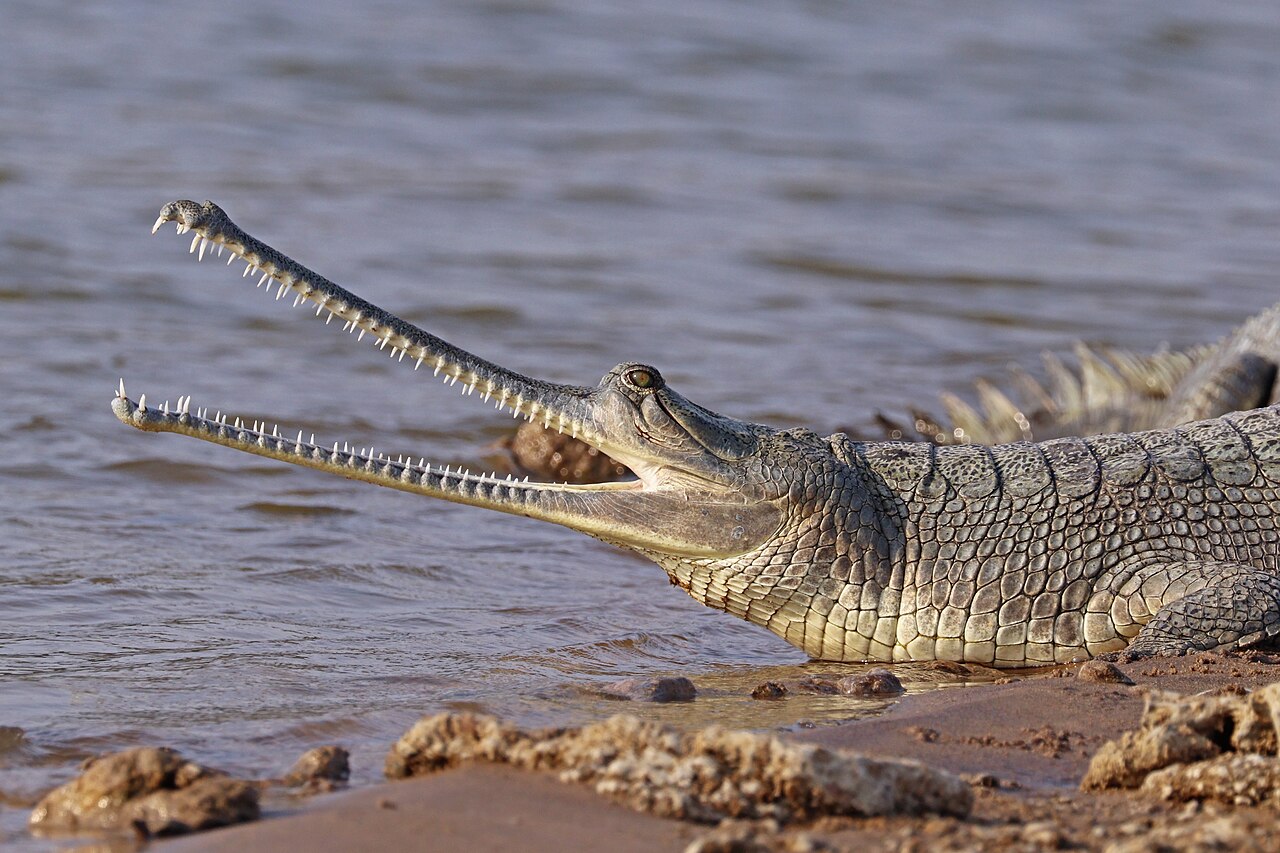
- Where the Idea of Crocodile Tears Comes From
- Do Crocodiles Really Cry? The Honest Answer
- The Anatomy Behind Crocodile Tears
- How a Crocodile Swallows Without Chewing
- Why Pressure Builds Up in the Sinuses
- The Role of the Third Eyelid and Eye Protection
- What Crocodiles Actually Eat and How They Hunt
- Real Examples and Observations of Crocodile Tears
- Why the Myth Survived So Long
- Frequently Asked Questions About Crocodile Tears
- Do all crocodiles cry while eating?
- Are crocodile tears a sign of emotion?
- Is the phrase "crocodile tears" scientifically accurate?
- How long do crocodiles live, and does age affect this behavior?
- What is the largest crocodile species?
- The Real Truth Behind the Tears
- ❓ Frequently Asked Questions
The phrase crocodile tears has been part of the English language for centuries, used to describe someone who sheds fake tears while doing something harmful or insincere. But behind this popular idiom lies a genuinely strange biological question: do crocodiles actually weep while they eat? The answer is more fascinating than the myth, and it takes us into the anatomy of a reptile's head, the physics of how it swallows, and the surprising story of how one ancient writer's observation became a permanent fixture of human speech.
Where the Idea of Crocodile Tears Comes From
The notion that crocodiles cry while devouring their prey is ancient, and it did not start with a scientist. It started with storytellers. The earliest known reference appears in The Voyage and Travel of Sir John Mandeville, a fourteenth-century travelogue that mixed real geography with wild legend. Mandeville claimed that crocodiles were serpents that killed men and then wept over them as they ate. The image stuck because it was so perfectly contradictory: a predator that mourns its own meal.
Earlier still, ancient Greek and Roman writers described crocodiles along the Nile as shedding tears to lure in unwary victims. The idea was that the tears were bait, a display of false sorrow that made the animal seem harmless. Plutarch, writing in the first century, mentioned the crocodile's habit of weeping after it had swallowed a man. Whether these writers ever watched a crocodile closely is doubtful, but their stories traveled well, and by the time the phrase entered common English, the crocodile had become the world's most famous insincere mourner.
The idiom now applies to politicians, athletes, and anyone caught performing grief they clearly do not feel. But the animal itself never asked to be a symbol of hypocrisy, and modern research suggests the real explanation has nothing to do with emotion at all.
Do Crocodiles Really Cry? The Honest Answer
Yes, crocodiles produce tears, and yes, they sometimes do it while feeding. This has been observed and documented, not just repeated from old books. In 2007, zoologist Kent Vliet of the University of Florida watched four captive caimans and three American alligators during feeding at a Florida wildlife park. He recorded whether the animals teared up while eating, and he found that five of the seven did produce noticeable moisture or bubbling around the eyes during their meals. The behavior was real, but the interpretation was not.
What Vliet and other researchers emphasize is that the tears had nothing to do with sadness, guilt, or deception. The animals were not mourning anything. They were simply experiencing a physical response in their heads while performing the strenuous act of eating. The tears were a byproduct, not a message.
It is also worth noting that crocodilians do have tear glands and a system for draining fluid from the eye, just as mammals do. Their eyes need lubrication and cleaning like any vertebrate eye. So the machinery for tears exists. The question is why eating would trigger it so visibly.
The Anatomy Behind Crocodile Tears
How a Crocodile Swallows Without Chewing
To understand the tears, you first have to understand how a crocodile eats. Crocodilians cannot chew. Their teeth are built for gripping and tearing, not grinding, and their jaws are designed to clamp down with enormous force rather than move side to side. A large saltwater crocodile can bite with a force measured in thousands of pounds, among the strongest bites of any living animal, but it cannot break a tough meal into small pieces inside its mouth.
Instead, a crocodile tears off chunks of prey and swallows them whole or in oversized pieces. To get that food down, it uses a technique sometimes called the "head lift" or "jerk swallow." The animal raises its head above the water or above the ground, opens its jaws, and uses gravity and a series of sharp backward jerks to slide the food toward its throat. It may also use its tongue and throat muscles to push the meal along. This is hard, forceful, physical work, and it involves a lot of pressure changes inside the skull.
Why Pressure Builds Up in the Sinuses
Here is where the tears come in. Crocodilians have extensive air spaces in their skulls, including sinuses connected to the nasal passages and the throat. When a crocodile swallows a large piece of food, it can create pressure in these cavities. That pressure can push fluid out of the tear glands and into the eye area, especially when the animal's head is tilted upward. At the same time, the forceful gulping and jaw movements can squeeze the tissues around the eyes, and the tears have nowhere to go but out.
In other words, the tears are mechanical, not emotional. They are closer to the way your eyes water when you yawn hard or when you get something stuck in your throat than to the way you cry when you are sad. The crocodile is not moved by its meal. Its sinuses are simply being squeezed.
The Role of the Third Eyelid and Eye Protection
Crocodilians also have a nictitating membrane, often called a third eyelid, a translucent covering that sweeps across the eye to protect it underwater. When a crocodile feeds, especially in water, it may close or partially close this membrane to shield the eye from debris, splashing, and struggling prey. The movement of that membrane and the associated glands can produce extra moisture that appears as tears. Combined with the pressure effects of swallowing, this gives the impression of a weeping predator.
What Crocodiles Actually Eat and How They Hunt
Crocodiles are opportunistic carnivores, and their diet depends heavily on their size, species, and habitat. Young crocodiles eat insects, small fish, frogs, and crustaceans. As they grow, their prey grows with them. A medium-sized Nile crocodile might take fish, turtles, birds, and small mammals. A large adult can bring down antelope, wildebeest, zebra, and even young hippos or buffalo. Saltwater crocodiles in Australia and Southeast Asia have been recorded taking sharks, wild boar, and livestock, and they are known to attack humans.
Crocodilians are ambush predators. They wait near the water's edge, often almost completely submerged with only their eyes and nostrils above the surface, and then explode upward or sideways with a sudden burst of speed. Their bite is a clamp, and once they have a grip, they often roll or thrash to drag prey into the water. This is the famous "death roll," a spinning maneuver that disorients and drowns prey and helps tear off manageable pieces.
Because they cannot chew, crocodiles often stash food. They may wedge a carcass under a submerged log or rock to let it soften, or they may return to it over several days. Some species, including Nile crocodiles, have been observed caching prey and coming back to feed repeatedly. All of this feeding behavior involves the same forceful swallowing mechanics, which means the same potential for tear production.
Real Examples and Observations of Crocodile Tears
The most cited modern example comes from Vliet's 2007 observations at a Florida facility, where American alligators and caimans were filmed during feeding. Five of the seven animals showed tearing or bubbling around the eyes. The behavior was most visible when the animals were eating large, dry pieces of food on land, with their heads raised. When they ate smaller items or fed underwater, the tears were less obvious.
Keepers at zoos and crocodile farms around the world have reported similar sightings. In Australia, staff at crocodile parks have described saltwater crocodiles producing moisture around the eyes during feeding demonstrations. In Africa, guides along the Nile and in the Okavango Delta have told visitors about crocodiles that appear to weep over a kill. These are anecdotal, but they line up with the mechanical explanation.
It is important to be careful about what these observations mean. A crocodile that tears up while eating is not expressing regret. It is not signaling to a mate or warning a rival. There is no evidence that crocodilians use tears as communication at all. The tears are a side effect of anatomy and physics, and the animal may not even notice them.
Why the Myth Survived So Long
The myth survived because it is a great story, and because it flatters human vanity. It turns a cold-blooded predator into a hypocrite, which makes us feel morally superior. It also fits a pattern in how people have always talked about animals: we project our own emotions onto them, especially the ones we find frightening. A crocodile that cries while eating is easier to mock than a crocodile that simply has a blocked sinus.
There is also a practical reason the myth lasted. For most of history, people did not watch crocodiles feed up close. They saw them from a distance, or they heard about them from travelers. The animal's real behavior, its stillness, its patience, its explosive strike, was hard to study. A dramatic story filled the gap. By the time scientists could observe crocodilians properly, the phrase had already escaped into language, and language is much harder to correct than a textbook.
Today, the idiom is used so often that most people never stop to ask whether it is true. It is a small reminder that a phrase can be memorable, widespread, and completely wrong about the animal it describes.
Frequently Asked Questions About Crocodile Tears
Do all crocodiles cry while eating?
No. Tearing during feeding has been observed in some individuals and some species, but it is not universal. It appears more often when the animal is eating large or dry food on land with its head raised. Many crocodiles eat without any visible tears at all.
Are crocodile tears a sign of emotion?
There is no scientific evidence that crocodilians experience grief, guilt, or remorse in the way humans do. Their brains are structured differently, and their behavior is driven by survival needs such as feeding, thermoregulation, and reproduction. The tears are a physical response, not an emotional one.
Is the phrase "crocodile tears" scientifically accurate?
Only in the narrow sense that crocodilians can produce tears while feeding. The phrase as commonly used, meaning fake or insincere sorrow, is a human invention. The animal is not being insincere. It is simply swallowing.
How long do crocodiles live, and does age affect this behavior?
Crocodilians are long-lived. Many species live 50 to 70 years in the wild, and some individuals in captivity have exceeded 100 years. Age does not appear to change the basic mechanics of swallowing, so older animals can show the same tearing behavior as younger ones. What changes with age is diet and prey size, which can make the tears more or less noticeable.
What is the largest crocodile species?
The saltwater crocodile is the largest living reptile. Adult males commonly reach 4 to 5 meters (13 to 16 feet) and can weigh over 1,000 kilograms (2,200 pounds). The largest reliably measured individuals have approached 6 meters (about 20 feet). Nile crocodiles are the second largest, with males typically reaching 3.5 to 5 meters.
The Real Truth Behind the Tears
Crocodiles do sometimes appear to cry while eating, and the reason is not sorrow, guilt, or deception. It is anatomy. A crocodile cannot chew, so it swallows large pieces of food using forceful head movements and pressure changes inside its skull. Those pressure changes, along with the movement of the third eyelid and the squeezing of tissues around the eyes, can push fluid out and create the appearance of tears. The animal is not mourning its meal. It is managing a difficult swallow.
The phrase crocodile tears will probably never disappear from the language, and that is fine. Idioms do not have to be biologically accurate. But the next time you hear someone accused of crying crocodile tears, you can smile at the irony. The real crocodile is not faking anything. It is simply built in a way that makes a hard meal look like a sad one, and that accidental resemblance has been fooling humans for more than two thousand years.
❓ Frequently Asked Questions
💬 Do crocodiles really cry when they eat?
Yes, but not from emotion. As a crocodile eats, its jaw muscles can press on the tear glands and squeeze out fluid, and it may also produce tears to lubricate its eyes or clear debris. So the 'tears' are a physical reflex, not sadness or remorse.
💬 Where does the phrase 'crocodile tears' come from?
The expression dates back centuries and was popularized in English by writers like Shakespeare, based on the old belief that crocodiles weep while devouring their prey to lure or mourn it. It became a metaphor for showing fake or insincere sorrow.
💬 Are crocodile tears the same as human crying?
No. Human emotional crying is linked to feelings and brain processes, while a crocodile's tears are involuntary and serve physical functions like lubrication and pressure release. The similarity is only in appearance, not meaning.
💬 Do other animals shed tears while eating too?
Some do, and many animals produce tears mainly to keep their eyes moist and clean rather than from emotion. Even in humans, tears flow for non-emotional reasons such as irritation, yawning, or eye strain.