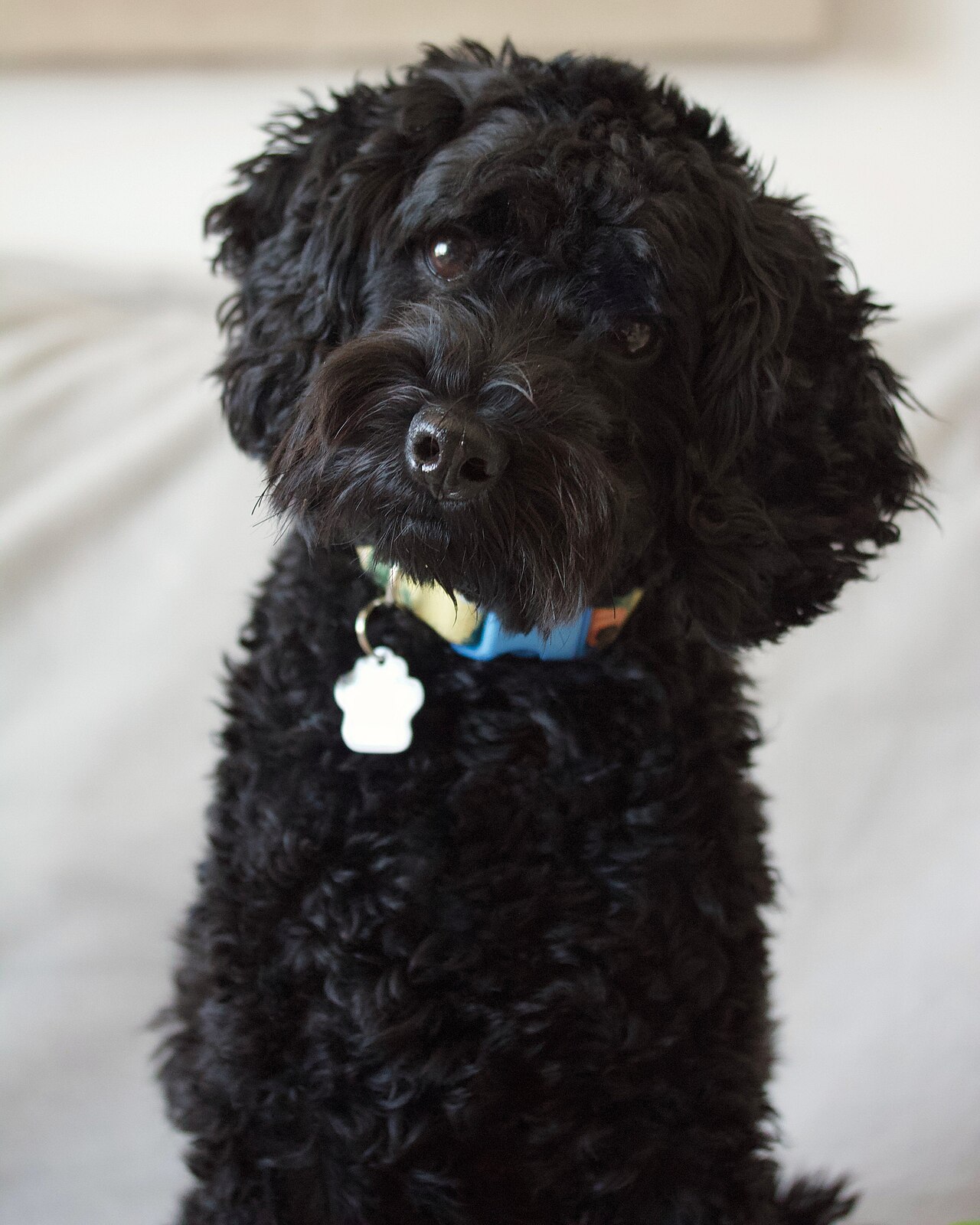
- The Sensory Science Behind Why Dogs Tilt Heads
- How Sound Localization Works in Dogs
- Why Dogs Tilt Heads: Emotional and Cognitive Insights
- The “Empathy Tilt” and Bonding
- Breed Differences: Why Some Dogs Tilt More Than Others
- When Head Tilting Becomes a Health Concern
- How to Encourage (or Discourage) Head Tilting
- Training Tips for a Healthy Tilt
- The Evolutionary Purpose of the Head Tilt
- Practical Takeaways for Dog Owners
- Conclusion: The Beautiful Truth Behind the Tilt
- ❓ Frequently Asked Questions
If you’ve ever wondered why dogs tilt heads when you speak to them, you’re not alone—this endearing behavior has puzzled scientists and dog lovers for decades. While it looks irresistibly cute, the head tilt is actually a complex combination of sensory processing, emotional intelligence, and physical anatomy. In this in-depth guide, we’ll explore the science behind the tilt, what your dog might be trying to tell you, and when a tilted head could signal a health problem.
The Sensory Science Behind Why Dogs Tilt Heads
When you talk to your dog, you’re not just producing sound—you’re emitting a rich tapestry of visual cues, vocal pitch, and facial expressions. Dogs have evolved to read these signals with remarkable precision, and the head tilt is one of their most effective tools for doing so. But the primary reason may be simpler than you think: dogs tilt their heads to see your face better.
Here’s the anatomical truth: a dog’s muzzle can block their view of your mouth and eyes. This is especially true for breeds with long snouts like Collies, Greyhounds, or German Shepherds. When you speak, your lips move, your eyes crinkle, and your eyebrows rise—all crucial emotional cues. By tilting their head, dogs shift their muzzle out of their direct line of sight, allowing them to see your entire face clearly. A 2021 study published in Animal Cognition found that dogs with longer muzzles tilted their heads more frequently and for longer durations than flat-faced breeds like Pugs or Bulldogs, supporting this “visual field” hypothesis.
But vision isn’t the only sense at play. Dogs also have highly mobile outer ears (pinnae) that can rotate independently to locate sound sources. When a dog tilts its head, it changes the angle of its ear canals, helping the brain triangulate the exact direction and distance of a sound. This is particularly useful when you’re speaking in a higher-pitched “dog-directed” voice, which many owners instinctively use. The tilt helps your dog pinpoint whether your voice is coming from your mouth, a toy, or a treat hidden in your pocket.
How Sound Localization Works in Dogs
Dogs can hear frequencies up to 65,000 Hz, compared to a human’s maximum of 20,000 Hz. However, their ability to pinpoint the location of a sound is slightly less accurate than ours because their ears are set wider apart. Tilting the head compensates for this by creating a microsecond time difference between when sound reaches the left and right ear. This tiny delay—called the interaural time difference—allows the dog’s brain to compute the sound’s origin with far greater precision. So when you ask, “Want to go for a walk?” and your dog tilts its head, it’s not being cute—it’s using physics to decode your words.
Why Dogs Tilt Heads: Emotional and Cognitive Insights
Beyond raw sensory mechanics, why dogs tilt heads also relates to their remarkable ability to process human emotions. Dogs are the only non-primate species that can read human facial expressions, and they do this by matching visual cues to emotional states. When you speak, your dog isn’t just hearing words—they’re analyzing your tone, your posture, and your eye contact. A head tilt may indicate that your dog is actively trying to understand you, not just react to you.
Research from the University of Sussex in 2018 demonstrated that dogs process emotional sounds (like crying or laughing) in a specialized brain region, similar to humans. The head tilt may be a physical manifestation of this deep cognitive processing. Think of it as your dog’s version of leaning in to listen better during a serious conversation. Some behaviorists even suggest that dogs tilt their heads as a learned social gesture—they do it because it earns them positive reinforcement, like praise, treats, or a scratch behind the ears. Over time, the behavior becomes a deliberate communication tool.
The “Empathy Tilt” and Bonding
Dogs are also masters of emotional contagion—they “catch” your feelings. If you speak in a sad, low tone, your dog may tilt its head and look at you with wide eyes, a behavior that mirrors human empathy. This is not anthropomorphism; it’s rooted in their domestication history. Over roughly 15,000 years, dogs have been selectively bred to cooperate with humans, and their brains have developed specialized neural pathways for understanding human gestures. A head tilt during emotional conversation is a sign that your dog is fully engaged in your emotional state, not just waiting for a treat.
Breed Differences: Why Some Dogs Tilt More Than Others
Not all dogs tilt their heads equally, and the differences are fascinating. As mentioned earlier, brachycephalic (flat-faced) breeds like Boxers, French Bulldogs, and Shih Tzus have a wider field of view because their muzzles don’t obstruct their vision. Consequently, they tilt less frequently because they can already see your face clearly. In contrast, dolichocephalic (long-nosed) breeds like Borzois, Dachshunds, and Whippets tilt much more often to compensate for their visual obstruction.
However, ear shape also plays a role. Dogs with floppy ears, such as Basset Hounds and Cocker Spaniels, may tilt more to lift their ear flaps and improve sound reception. Dogs with erect ears, like German Shepherds and Siberian Huskies, have natural sound-collecting advantages but may still tilt to enhance visual clarity. Interestingly, small breeds like Chihuahuas and Pomeranians often tilt in an exaggerated, theatrical way—possibly because they have to look up at humans from a low vantage point, and tilting helps them align their gaze with your face.
Here’s a quick breakdown of tilt tendencies by breed group:
- Long-nosed breeds (Collies, Greyhounds): High tilt frequency, primarily for visual clearance.
- Flat-faced breeds (Pugs, Bulldogs): Lower tilt frequency, but may tilt for auditory cues.
- Floppy-eared breeds (Beagles, Labradors): Moderate tilt frequency, often to reposition ear flaps.
- Erect-eared breeds (Malamutes, Akitas): Moderate tilt frequency, usually for visual confirmation.
- Toy breeds (Maltese, Yorkies): High tilt frequency, often exaggerated for attention.
When Head Tilting Becomes a Health Concern
While head tilting is typically adorable and harmless, it’s crucial to recognize when it’s not normal. A persistent or involuntary head tilt—especially when your dog is not interacting with you—can be a sign of a medical issue. Unlike the voluntary tilt during conversation, a pathological tilt is often constant and accompanied by other symptoms.
Common medical causes of abnormal head tilts include:
- Ear infections: The most frequent culprit. Bacterial or yeast infections in the middle or inner ear cause inflammation, pain, and balance issues. Your dog may tilt its head to relieve pressure or because they feel dizzy.
- Vestibular disease: This condition affects the vestibular system (the inner ear and brainstem), causing a sudden, severe head tilt, loss of balance, rapid eye movements (nystagmus), and nausea. It’s more common in senior dogs but can occur at any age.
- Neurological disorders: Brain tumors, strokes, or inflammatory brain diseases can disrupt the dog’s sense of equilibrium, leading to a fixed head tilt.
- Trauma: A blow to the head or a foreign object lodged in the ear canal can cause a temporary or permanent tilt.
If your dog’s head tilt is accompanied by scratching at the ears, head shaking, discharge, redness, foul odor, or difficulty walking, you should see a veterinarian immediately. A simple ear infection can escalate to a ruptured eardrum if left untreated. In contrast, a voluntary head tilt during conversation should stop as soon as you stop talking or when your dog loses interest. If the tilt persists for hours or days, treat it as a medical emergency.
How to Encourage (or Discourage) Head Tilting
If you love the head tilt, you’re in luck—it’s easy to reinforce. Dogs tilt their heads because they’ve learned it gets a positive response. To encourage the behavior, use a high-pitched, enthusiastic voice when speaking to your dog. Say a keyword like “treat” or “walk” in an excited tone, and the moment your dog tilts its head, offer a reward. Over time, your dog will associate the tilt with positive outcomes and perform it more frequently.
However, excessive head tilting can become a compulsive behavior if over-reinforced. If your dog tilts its head so frequently that it interferes with normal activities like eating or walking, it’s best to stop rewarding the behavior and instead reward calm, neutral posture. Also, be mindful that some dogs tilt their heads as a sign of confusion or stress. If your dog tilts its head while also yawning, licking its lips, or avoiding eye contact, they may be anxious rather than curious. In that case, reduce the intensity of your voice and give them space.
Training Tips for a Healthy Tilt
Here are three evidence-based tips to manage head tilting:
- Use variable rewards: Don’t reward every tilt. Instead, reward only when your dog tilts in response to a specific cue, like “what’s this?” This keeps the behavior intentional.
- Monitor duration: A healthy tilt lasts 1-3 seconds. If your dog holds a tilt for more than 5 seconds, stop the interaction and check for signs of dizziness.
- Pair with commands: You can train your dog to tilt on command by saying “tilt” just before they do it naturally, then rewarding. This turns an instinctive behavior into a fun trick.
The Evolutionary Purpose of the Head Tilt
To fully understand why dogs tilt heads, we must look at their evolutionary journey from wolves to household companions. Wolves rarely tilt their heads at each other—they communicate primarily through body posture, scent, and vocalizations. But when wolves were domesticated, they entered a world where humans relied heavily on facial expressions and verbal language. Dogs that were better at reading human faces—perhaps through adaptive behaviors like head tilting—had a survival advantage. They received more food, shelter, and care, and thus passed on their genes.
This is a classic example of co-evolution. Humans selected dogs that were attentive and responsive, while dogs developed behaviors that exploited human social cues. The head tilt is likely one such adaptation, a visual signal that says, “I’m listening to you, and I want to understand you.” It’s no coincidence that puppies start tilting their heads at around 7-8 weeks of age, which is exactly when they begin to form strong social bonds with their human caregivers.
Interestingly, a 2022 study in Scientific Reports found that dogs tilt their heads more when they hear a familiar person’s voice versus a stranger’s voice. This suggests that the tilt is not just a mechanical response but a socially selective behavior. Your dog is more likely to tilt when you speak because they have a deeper emotional investment in your words. So the next time your dog tilts its head at you, remember—it’s a sign of a 15,000-year-old partnership built on mutual understanding.
Practical Takeaways for Dog Owners
Now that you understand the mechanics and meaning behind the head tilt, here’s how to apply this knowledge in everyday life:
- Improve communication: When giving commands, kneel down to your dog’s eye level. This reduces the need for them to tilt excessively and helps them see your face clearly.
- Watch for asymmetry: If your dog only tilts its head to one side consistently, it might favor that ear. Have your vet check for hearing loss or ear disease.
- Use it as a mood gauge: A relaxed, gentle tilt during conversation indicates engagement. A stiff, rapid tilt with a tense body may indicate fear or confusion.
- Capture the moment: The head tilt is a beautiful bonding opportunity. Take a photo, but also take a second to just enjoy the connection—your dog is trying hard to understand you.
Conclusion: The Beautiful Truth Behind the Tilt
So, why dogs tilt heads is not a single answer but a symphony of sensory, cognitive, and evolutionary factors. Your dog tilts to see you better, to hear you more clearly, to empathize with your emotions, and to strengthen your bond. It’s a behavior born from thousands of years of co-evolution, refined by positive reinforcement, and expressed with pure, unfiltered charm. While a persistent tilt can indicate health issues, the occasional tilt during your conversations is a wonderful sign that your dog is fully present, curious, and deeply connected to you.
Next time your dog cocks their head at your voice, remember that you’re witnessing a remarkable biological and emotional event. It’s not just a cute trick—it’s your dog saying, “I see you, I hear you, and I’m trying my best to understand you.” And that, perhaps, is the most beautiful truth of all.
❓ Frequently Asked Questions
💬 Why do dogs tilt their heads when you talk?
Dogs tilt their heads to better hear and see you, adjusting their outer ears to pinpoint sounds and moving their muzzle out of the way so they can read your facial expressions and body language more clearly.
💬 Do all dogs tilt their heads, or only certain breeds?
Not all dogs tilt their heads equally; breeds with longer muzzles, like Greyhounds or Collies, tilt more often because their snouts block more of their vision, while flat-faced breeds like Pugs see clearly without needing to tilt as much.
💬 Is head tilting a sign that my dog understands what I'm saying?
Yes, head tilting often indicates active listening and engagement—dogs tilt when they hear a familiar word or an interesting tone, showing they are trying to process the sound and connect it to a meaning, like a command or their name.
💬 Should I be worried if my dog stops tilting their head?
Usually not, as head tilting is a voluntary behavior that can decrease with age or familiarity, but if your dog suddenly stops tilting alongside other signs like ear drooping, balance issues, or unresponsiveness, consult a vet to rule out ear infections or hearing loss.