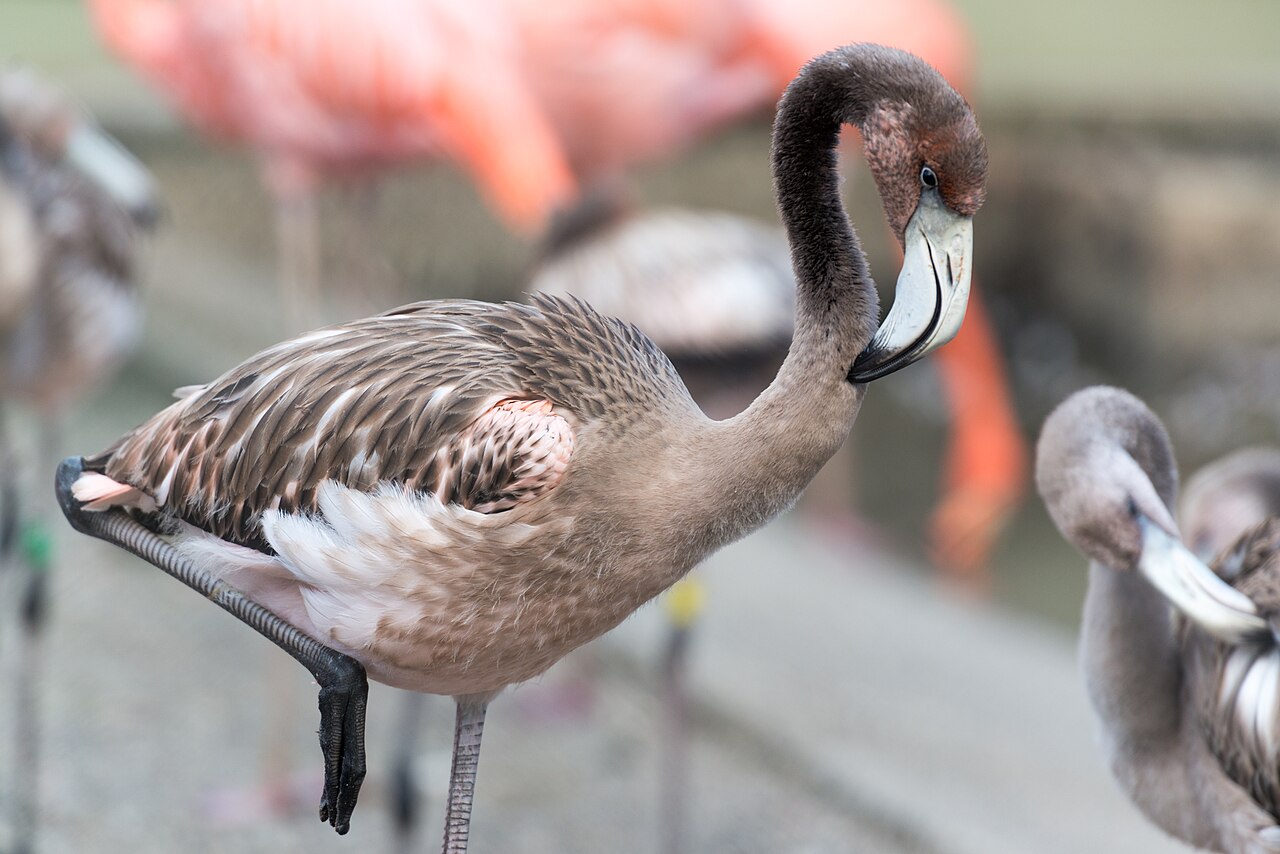
- Meet the Flamingo: The Bird Behind the Pose
- Why Do Flamingos Stand on One Leg? The Leading Theories
- The heat-conservation hypothesis
- The energy-saving and "passive balance" discovery
- The muscle-rest and fatigue hypothesis
- The "it's simply comfortable" explanation
- Why Do Flamingos Stand on One Leg in Water? Cold Feet, Warm Bellies
- Do Flamingos Stand on One Leg to Regulate Body Temperature? The Evidence
- Why Do Flamingos Stand on One Leg? Balance, Brains and Body Mechanics
- The mechanics of a stable stance
- Brain lateralisation and "half-asleep" resting
- Do chicks do it too?
- More Than a Pose: Flamingo Behaviour and Survival
- Feeding
- Breeding and colonies
- Predators and threats
- The Balancing Truth: What We Now Know
- ❓ Frequently Asked Questions
Few sights in the natural world are as instantly recognisable as a flock of pink birds balancing on spindly legs — and few animal behaviours have sparked as much genuine scientific curiosity as the question of why flamingos stand on one leg. It looks precarious, even comical, yet it is one of the most stable and energy-efficient postures in the bird world. Over the past two decades, researchers have tested heat conservation, muscle fatigue, balance mechanics and even brain lateralisation as possible explanations. The answers are surprising, and some of them overturn assumptions that stood for decades. This article unpacks the real science behind the pose, along with the biology, habitat and behaviour of the birds that made it famous.
Meet the Flamingo: The Bird Behind the Pose
Before explaining the stance, it helps to know the animal. Flamingos are wading birds in the family Phoenicopteridae, and although they are found on five continents, the family is small: six recognised species in total. The greater flamingo (Phoenicopterus roseus) is the largest, standing up to about 1.5 metres (5 feet) tall and weighing up to 4 kilograms. The lesser flamingo is the smallest, at roughly 80 to 90 centimetres and around 1.5 to 2 kilograms. In the Americas, the American (Caribbean) flamingo is the most familiar, while the Andean, Chilean and James's flamingos occupy high-altitude salt lakes in South America.
Their trademark colour is not inherited. Chicks hatch grey or white, and the pink, orange and coral tones develop over two to three years as the birds eat carotenoid-rich foods — mainly algae and small crustaceans such as brine shrimp and Artemia. In captivity, flamingos on a poor diet fade to a pale, washed-out colour. Their diet is also the reason for their famously unusual beak, which is bent sharply downward and filters food from water like a whale's baleen, pumping with a tongue lined with hair-like structures.
Flamingos are long-lived for birds of their size. In the wild, lifespans of 20 to 30 years are typical, and captive individuals have been recorded living past 40 and even into their 50s. They are highly social, gathering in colonies that can number in the tens of thousands — sometimes hundreds of thousands at prime sites such as Lake Natron in Tanzania or the Ría Lagartos reserve in Mexico.
Why Do Flamingos Stand on One Leg? The Leading Theories
The one-legged stance is not a quirk of a few individuals: it is near-universal across all six species, seen in wild birds, zoo birds and chicks within days of hatching. So why do it? Scientists have proposed several explanations, and the evidence now points to a combination of factors rather than a single cause.
The heat-conservation hypothesis
The most widely cited explanation is thermoregulation. Flamingos often feed and rest in shallow water, and water conducts heat away from the body far faster than air does. Their legs and feet are bare and unfeathered, with a dense network of blood vessels that can act as a heat exchanger. By tucking one leg up into the warm feathers of the belly, a bird roughly halves the surface area exposed to cold water or cold air, reducing heat loss. Studies of captive flamingos in colder climates have found that birds stand on one leg more often when temperatures drop and when they are standing in water rather than on land — strong support for the idea.
The energy-saving and "passive balance" discovery
For a long time, researchers assumed the pose must require constant muscular effort, and therefore that it must be worth the cost. Then a 2017 study by two young scientists, Paul-Camilo Zalamea and Juan M. Rodríguez, produced a striking result: a dead flamingo, with no muscle activity at all, could still be balanced on one leg. Their conclusion was that the posture is largely passive. Because the centre of gravity sits almost directly above the supporting leg, the bird can lock into a stable position with minimal muscular work. Rather than costing energy, standing on one leg may actually save it — the opposite of what most people assume.
The muscle-rest and fatigue hypothesis
Even if the pose is mechanically cheap, alternating legs still makes sense. By switching which leg bears weight, a flamingo gives each limb a rest from the small stabilising corrections needed to stay upright, and reduces cumulative strain on joints and muscles over long periods of standing. Flamingos may spend many hours a day motionless in shallow water, so spreading that load matters.
The "it's simply comfortable" explanation
Some biologists argue the behaviour needs no elaborate adaptive story at all. The one-legged stance may be the most relaxed, low-effort way for a large bird with long legs to rest — a default posture rather than a specialised survival trick. The fact that chicks do it within days of hatching, before any obvious thermal need, lends some weight to this view.
Why Do Flamingos Stand on One Leg in Water? Cold Feet, Warm Bellies
The habitat context is key to understanding the behaviour. Flamingos are specialised for shallow, often alkaline or hypersaline lakes, lagoons and mudflats. These environments are rich in the algae and invertebrates they eat, but they are frequently cold, especially at dawn, at night, and at high altitude — Andean flamingos live at elevations above 3,500 metres, where nights can drop below freezing.
Standing in water accelerates heat loss dramatically compared with standing on dry ground. The thermoregulation theory predicts that flamingos should favour the one-legged stance most strongly when standing in water in cool conditions, and that is broadly what observations show. The tucked leg is warmed against the body's core, and the exposed leg's specialised circulation limits heat drain. It is a neat, low-cost solution to a real physiological problem.
Do Flamingos Stand on One Leg to Regulate Body Temperature? The Evidence
The temperature story is supported by several lines of evidence:
- Seasonal patterns: Captive flocks in temperate zoos show more one-legged resting in winter than in summer.
- Substrate effects: Birds standing in water use the pose more than birds on dry land at the same air temperature.
- Leg anatomy: Flamingo legs have counter-current blood vessel arrangements that help conserve heat, and the unfeathered lower leg is where heat loss is concentrated.
- Head-tucking: Flamingos often rest with the head tucked into the back feathers while standing on one leg, another heat-saving behaviour that frequently accompanies the stance.
That said, temperature alone does not explain everything. Flamingos stand on one leg in warm weather too, and even in the tropics. This is why most researchers now favour a combined explanation: the pose is mechanically stable and cheap, it rests one limb at a time, and in cold or wet conditions it delivers a useful thermoregulatory bonus.
Why Do Flamingos Stand on One Leg? Balance, Brains and Body Mechanics
Beyond heat and energy, the pose raises fascinating questions about how a bird with such long, thin legs stays upright at all — and whether the brain plays a role.
The mechanics of a stable stance
Flamingo legs are long but not fragile. The visible "knee" that bends backwards is actually the ankle joint; the true knee is hidden in the feathers close to the body. The leg bones are strong relative to the bird's weight, and the foot has a wide, webbed base that spreads load on soft mud. Combined with a centre of gravity positioned close to the supporting foot, the bird achieves a remarkably stable column. Studies using force plates have shown that a one-legged flamingo sways very little — sometimes less than a two-legged one.
Brain lateralisation and "half-asleep" resting
One intriguing line of research concerns brain lateralisation — the idea that the two halves of the brain handle different tasks. Some studies have suggested that when flamingos rest on one leg, they tend to orient themselves and monitor their surroundings in ways linked to which leg is raised, and that the posture may be associated with a kind of unihemispheric rest, similar to the "half-brain sleep" seen in some birds and marine mammals. The evidence is not yet conclusive, but it hints that the stance may be tied to how flamingos rest while remaining alert to predators.
Do chicks do it too?
Yes — and this is one of the strongest clues. Flamingo chicks begin standing on one leg within a few days of hatching, long before they could have learned it and at a stage when heat loss is less of an issue than in adults. This early appearance supports the view that the behaviour is largely innate and mechanically natural, rather than a learned response to cold.
More Than a Pose: Flamingo Behaviour and Survival
The one-legged stance is just one part of a rich behavioural repertoire. Understanding the rest of flamingo life helps explain why such an odd posture evolved in the first place.
Feeding
Flamingos feed with their heads upside down, sweeping their bills through shallow water and pumping water through comb-like lamellae to strain out food. A greater flamingo eats mainly small invertebrates, while lesser and Andean flamingos specialise in microscopic algae and diatoms. They may feed for many hours a day, often at night or at dawn, and they frequently stand on one leg between feeding bouts.
Breeding and colonies
Flamingos nest in dense colonies, building cone-shaped mud mounds on which a single chalky white egg is laid. Both parents incubate for about 27 to 31 days. Chicks hatch with straight bills that gradually curve, and they are fed a nutrient-rich "crop milk" produced by both parents. Colonies can be enormous — the lesser flamingo colony at Lake Natron has at times numbered over a million birds, one of the largest gatherings of any bird species on Earth.
Predators and threats
Adults have few natural predators, but eggs and chicks are vulnerable to foxes, jackals, gulls and other opportunistic animals. Habitat loss, water extraction, pollution and disturbance of breeding lakes are the main long-term threats, and several species are of conservation concern. The one-legged stance, by letting birds rest efficiently while staying alert, fits neatly into a life spent in open, exposed wetlands.
The Balancing Truth: What We Now Know
So what is the real answer to why flamingos stand on one leg? The balancing truth is that there is no single, simple explanation — and that the most popular one, that the pose is tiring and must be worth the effort, is probably backwards. The evidence suggests the stance is mechanically stable and low-cost, resting one limb at a time while the bird conserves energy. In cold or wet conditions, tucking a leg into the warm belly feathers provides a genuine thermoregulatory advantage, which is why the behaviour is more common then. The early appearance of the pose in chicks, and the fact that a dead flamingo can balance on one leg, both point to passive mechanics rather than constant muscular effort.
What remains uncertain is the role of the brain. Research into lateralisation and resting states is ongoing, and it may yet reveal that the pose is tied to how flamingos rest while staying vigilant. What is clear is that a behaviour once dismissed as a curiosity is a finely tuned adaptation — one that lets these remarkable birds thrive in some of the harshest wetlands on the planet. The next time you see a flamingo balanced on a single leg, you are not watching a bird struggle to stay upright. You are watching a masterclass in efficiency, evolved over millions of years.
❓ Frequently Asked Questions
💬 Why do flamingos stand on one leg?
The leading explanation is thermoregulation: tucking one leg against the warm body reduces heat loss through the long, featherless limb, which matters in cool water and air. It may also simply be an energy-saving, comfortable resting posture, since flamingos can stand this way for long periods with little muscle effort.
💬 Do flamingos sleep standing on one leg?
Yes, flamingos often sleep and rest while balanced on one leg, sometimes with the head tucked into their feathers. Their leg anatomy includes a locking mechanism that lets them stay stable with minimal muscle work.
💬 Is it true that flamingos stand on one leg to keep warm?
That's the most widely supported explanation. By holding one leg up against their body, flamingos cut heat loss from a long limb exposed to cold water or air, and studies show they do it more often in cooler conditions.
💬 Can flamingos stand on both legs?
Yes, flamingos walk, run, and stand on two legs normally, and they often use both legs when active or wading. The one-legged stance is mainly a resting behavior, not a necessity.