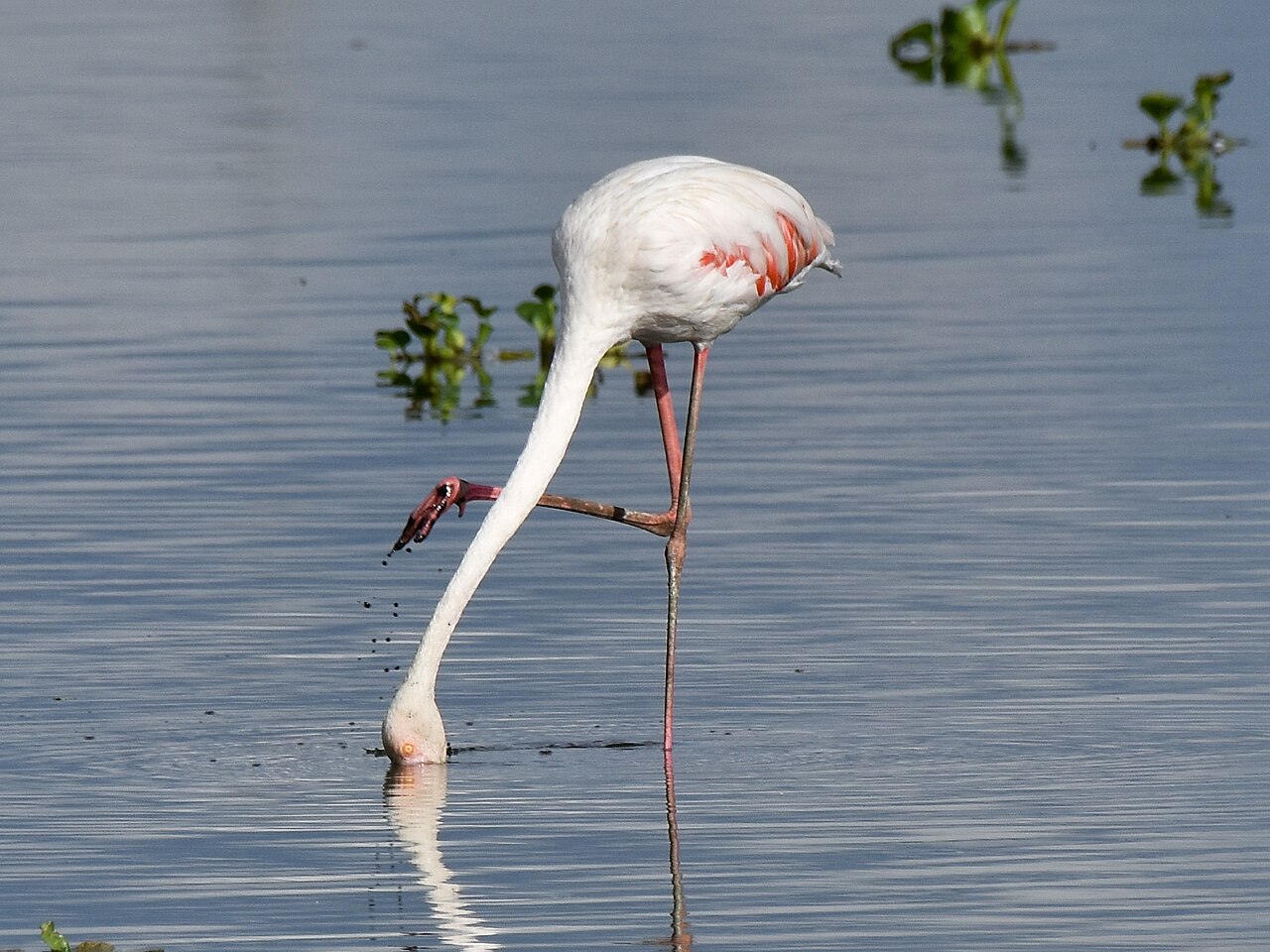
- The Basics: What Flamingos Are and Where They Live
- Diet and Feeding Behavior
- Lifespan and Social Structure
- Why Do Flamingos One Leg Stance So Often?
- The Energy-Saving Hypothesis
- Thermoregulation: Keeping Warm in Cold Water
- Why Not Always One Leg?
- Common Myths About Flamingos One Leg Behavior
- Myth 1: Flamingos Stand on One Leg to Balance
- Myth 2: It's Always About Warmth
- Myth 3: Only Sick or Injured Birds Do It
- The Anatomy That Makes It Possible
- Do Flamingos Sleep on One Leg?
- What the Research Actually Shows
- What About Other Birds?
- Why This Behavior Matters for Conservation
- Fun Facts About Flamingos
- Conclusion: The Real Truth About Flamingos One Leg
- ❓ Frequently Asked Questions
Few sights in nature are as iconic—or as puzzling—as a flock of flamingos standing on one leg. The behavior is so distinctive that "flamingos one leg" has become a shorthand for one of biology's most enduring mysteries. For centuries, naturalists assumed the birds were simply resting, conserving warmth, or balancing awkwardly. But modern research has revealed something far more interesting: the one-legged stance is not a quirk of anatomy or a lazy habit. It is an energy-saving adaptation, a thermoregulatory strategy, and possibly even a sign of good health. In this article, we'll unpack what science actually knows about why flamingos stand on one leg, separating genuine findings from popular myths.
The Basics: What Flamingos Are and Where They Live
Before diving into the leg question, it helps to understand the bird itself. Flamingos are wading birds in the family Phoenicopteridae, and there are six recognized species, including the greater flamingo (Phoenicopterus roseus), the American flamingo (Phoenicopterus ruber), and the lesser flamingo (Phoeniconaias minor). They are found across the Americas, Africa, southern Europe, and parts of Asia, typically in shallow saline lakes, lagoons, mudflats, and estuaries.
Greater flamingos are the largest species, standing roughly 110 to 150 centimeters (about 3.6 to 5 feet) tall and weighing between 2 and 4 kilograms (4.4 to 8.8 pounds). Lesser flamingos are considerably smaller, around 80 to 90 centimeters tall. Their famous pink coloration is not innate—it comes from carotenoid pigments in the algae and crustaceans they eat. A flamingo that doesn't get enough of these pigments in its diet will gradually fade to white or pale gray.
Diet and Feeding Behavior
Flamingos are filter feeders with a highly specialized downward-bent bill. They typically feed with their heads upside down in the water, pumping water through comb-like structures called lamellae that trap tiny food particles. Their diet includes brine shrimp, small mollusks, insect larvae, algae, and diatoms. This specialized feeding style is one reason they spend so much time in shallow, often caustic water—environments that few other large animals can exploit.
Lifespan and Social Structure
In the wild, flamingos can live 20 to 30 years, and in captivity some individuals have reached 40 years or more. They are highly social birds, gathering in colonies that can number in the thousands—sometimes over a million in the case of lesser flamingos at East African soda lakes like Lake Natron in Tanzania. These dense colonies provide safety in numbers and help coordinate breeding, which is often triggered by specific environmental cues such as rainfall or water levels.
Why Do Flamingos One Leg Stance So Often?
If you watch a flamingo for any length of time, you'll notice that the one-legged posture isn't occasional—it's the default. Birds frequently alternate legs, but at any given moment, a large portion of a flock may be standing on a single limb. Researchers studying captive and wild flamingos have documented that the behavior occurs in many contexts: while resting, sleeping, preening, and even during mild social activity. It is not tied to a single situation, which is precisely why scientists took so long to explain it.
The Energy-Saving Hypothesis
The leading explanation today is that standing on one leg reduces the muscular effort required to keep the body upright. In a study published in 2017 in the journal Biology Letters, researchers used force plates to measure how much muscle activity flamingos generated in different stances. They found that a one-legged flamingo used significantly less muscular energy than a two-legged one. The reason is mechanical: when a flamingo lifts one leg, its center of mass shifts directly over the supporting leg, and the leg's joints lock into a stable, near-vertical position. The bird essentially becomes a passive structure, relying on gravity and joint geometry rather than active muscle contraction.
This is not unlike a person standing with locked knees—once the skeleton is aligned, the muscles can relax. For a bird that may spend hours at a time motionless, saving even a small amount of energy adds up over days and weeks. This matters because flamingos often live in environments where food is scarce or patchy, and conserving calories can mean the difference between breeding successfully and not breeding at all.
Thermoregulation: Keeping Warm in Cold Water
A second major factor is heat loss. Flamingos frequently wade in water that is cooler than their core body temperature, and their long, thin legs have a large surface area relative to their volume. That makes them efficient radiators—great for shedding heat in a hot climate, but costly in cold water. By tucking one leg up against the body, a flamingo cuts its exposed surface area roughly in half, reducing heat loss through the limbs.
Supporting this idea, studies have found that flamingos stand on one leg more often in colder water and less often in warmer conditions. In one analysis, the behavior increased noticeably when water temperatures dropped. The tucked leg is often held close to the abdomen, where body heat can help warm it. This is a common strategy among birds: ducks, geese, and gulls also stand on one leg in cold weather for the same reason.
Why Not Always One Leg?
If one leg is more efficient, why do flamingos ever stand on two? The answer likely involves trade-offs. A two-legged stance provides greater stability when the bird needs to move quickly, respond to a threat, or engage in active social displays. It also allows the bird to shift weight and rest different muscle groups. Flamingos appear to switch legs periodically to avoid fatigue and to maintain balance on uneven or muddy ground. So the one-legged stance is the default for rest, but two legs remain useful for action.
Common Myths About Flamingos One Leg Behavior
Because the behavior is so conspicuous, a number of myths have grown up around it. Let's address the most persistent ones.
Myth 1: Flamingos Stand on One Leg to Balance
This is one of the most common misconceptions. Standing on one leg is actually more stable for a flamingo than standing on two, not less. The bird's center of mass sits directly above the supporting foot, and the leg's anatomy—including a specialized joint structure—allows it to lock in place without muscular effort. If balance were the goal, two legs would be the obvious choice. The one-legged stance is about efficiency, not equilibrium.
Myth 2: It's Always About Warmth
Thermoregulation is a real factor, but it isn't the whole story. Flamingos stand on one leg in warm climates too, including in the Caribbean and parts of Africa where water temperatures are comfortably high. The energy-saving explanation covers those cases better. In reality, the behavior likely serves multiple functions, and the relative importance of each depends on the environment.
Myth 3: Only Sick or Injured Birds Do It
Some people assume a flamingo standing on one leg must be injured. In fact, the opposite is closer to the truth. Healthy flamingos stand on one leg routinely, and the behavior is so normal that researchers use it as a baseline for observing captive birds. An injured flamingo may limp, hold a leg at an odd angle, or avoid putting weight on it—but a clean, upright one-legged stance is usually a sign of a relaxed, comfortable bird.
The Anatomy That Makes It Possible
Flamingos can pull off this feat because of some remarkable anatomical features. Their legs are long and slender, with the tibiotarsus and tarsometatarsus forming the visible upper and lower segments. The joint that appears to be a knee is actually the ankle; the true knee is hidden within the feathers close to the body.
Critically, the flamingo's leg joints can lock into position. When the bird lifts one leg, the supporting leg's joints align so that the body's weight passes almost directly down through the bone. This creates a stable column that requires very little muscle activity to maintain. Researchers have described the mechanism as a "passive stay apparatus," similar to the locking mechanism found in horses. The result is that a flamingo can sleep, rest, or stand for long periods without tiring.
Do Flamingos Sleep on One Leg?
Yes. Flamingos frequently sleep while standing on one leg, often with their head tucked into their back feathers. The locked-joint mechanism allows them to remain upright even while unconscious, which is a significant advantage in predator-rich environments where lying down could be risky. The one-legged sleep posture is so stable that birds can remain in it for extended periods without waking to adjust.
What the Research Actually Shows
Scientific interest in this behavior has grown considerably in the past two decades. The 2017 Biology Letters study by Young-Hui Chang and Lena Ting was a landmark: it used force plates and video analysis to demonstrate that flamingos expend less energy on one leg than on two. The researchers also noted that the behavior is more common in captive birds than in some wild populations, possibly because captive birds have less need to move and more opportunities to rest.
Other studies have examined the role of water temperature. A 2009 paper in the journal Waterbirds found that flamingos at a zoo stood on one leg more often when standing in water than when on land, and more often in cooler water. This supports the thermoregulation hypothesis. Together, the evidence points to a behavior that is both energy-saving and heat-conserving, with the balance shifting depending on conditions.
What About Other Birds?
Flamingos are not unique in standing on one leg. Herons, egrets, ducks, geese, and even some songbirds do it. What makes flamingos special is how consistently and conspicuously they do it—and how long they can maintain the posture. The behavior is widespread among birds because it offers the same basic benefits: reduced heat loss and lower energy expenditure. Flamingos simply take it to an extreme.
Why This Behavior Matters for Conservation
Understanding why flamingos stand on one leg isn't just a curiosity. It has practical implications for conservation and captive management. Zookeepers and wildlife veterinarians can use the posture as an indicator of health and comfort. A flamingo that suddenly stops standing on one leg, or that shifts constantly, may be stressed, injured, or ill.
In the wild, the behavior is tied to the birds' ability to thrive in harsh environments. Flamingos often live in alkaline or hypersaline lakes where food is limited and water conditions are extreme. The ability to conserve energy and heat helps them survive in these marginal habitats. Protecting those habitats—from Lake Natron to the Andean salt flats—is essential for the species' long-term survival. Several flamingo species are currently listed as near threatened or vulnerable by conservation organizations, largely due to habitat loss, water diversion, and disturbance of breeding colonies.
Fun Facts About Flamingos
- Flamingos can drink water that is nearly boiling and highly alkaline, thanks to specialized glands and a tough mouth lining.
- Their pink color deepens with age and diet; chicks are born gray or white.
- Flamingo milk is a real thing—both parents produce a nutrient-rich secretion from their crop to feed chicks.
- A flock of flamingos is sometimes called a "flamboyance."
- Flamingos can fly, and they do so with their necks and legs fully extended, reaching speeds of up to 60 kilometers per hour (about 37 mph).
Conclusion: The Real Truth About Flamingos One Leg
The real truth about why flamingos stand on one leg is that there is no single, simple answer. The behavior is a remarkable convergence of biomechanics, energy conservation, and thermoregulation. Flamingos stand on one leg because it is more efficient than standing on two, because it helps them stay warm in cool water, and because their anatomy allows them to lock the supporting leg into a stable, low-effort position. It is not a sign of injury, not a balancing act, and not merely a resting habit.
What makes the behavior so fascinating is how it reflects the broader story of flamingo survival. These birds live in some of the most challenging environments on Earth, and every adaptation—from their filter-feeding bills to their pigment-based color to their one-legged stance—helps them make the most of limited resources. Next time you see a flamingo balanced on a single leg, you'll know you're watching millions of years of evolution at work: a bird that has turned stillness into a survival strategy.
❓ Frequently Asked Questions
💬 Why do flamingos stand on one leg?
The leading explanation is thermoregulation: tucking one leg into their body feathers reduces heat loss, since flamingos spend hours wading in cold water. It may also simply be an energy-saving resting posture that requires almost no muscle effort.
💬 Do flamingos ever stand on two legs?
Yes. Flamingos stand on both legs while walking, running, mating, and often while feeding or when they feel threatened. The one-legged stance is mainly used when resting or sleeping.
💬 Do flamingos sleep standing on one leg?
Yes, flamingos commonly sleep and rest on one leg, sometimes with their head tucked into their back feathers. Their locking leg anatomy lets them stay balanced without actively balancing.
💬 Can flamingos stand on one leg for hours without falling?
Yes. Their leg joints can lock into place so the stance is nearly passive, and they can hold it for long periods, even in wind or while asleep, without tipping over.