- Why Do Frogs Croak? The Core Reasons Behind the Noise
- 1. Attracting a Mate
- 2. Defending Territory
- 3. Warning Predators and Other Frogs
- 4. Maintaining Contact
- Why Do Frogs Croak at Night? The Advantages of Darkness
- Lower Predation Risk
- Cooler Temperatures and Better Moisture
- Acoustic Advantages
- Timing With Breeding Activity
- Why Do Frogs Croak? A Look Inside the Frog's Vocal Machinery
- The Vocal Sac as an Amplifier
- Call Types and Complexity
- Meet the Nighttime Chorus: Real Frogs and Their Calls
- Spring Peeper (Pseudacris crucifer)
- American Bullfrog (Lithobates catesbeianus)
- Green Treefrog (Hyla cinerea)
- Túngara Frog (Engystomops pustulosus)
- Poison Dart Frogs
- What Makes a Frog Chorus? Synchrony, Competition, and Timing
- The Competition to Be Heard
- Satellite Males and Sneaky Strategies
- Environmental Cues
- How Frogs Make Sound Without Damaging Themselves
- Frogs, Ecosystems, and the Sound of a Healthy Wetland
- Why Some Frogs Are Going Quiet
- Frequently Asked Questions About Frog Croaking
- Do female frogs croak?
- Why do frogs stop croaking when I approach?
- Do frogs croak in the rain?
- Can frogs croak underwater?
- The Noisy Truth: Croaking Is Communication, Survival, and Romance
- ❓ Frequently Asked Questions
If you live near a pond, marsh, or even a drainage ditch, you already know the soundtrack of summer: a chorus of croaks, peeps, and trills that starts at dusk and sometimes rattles on until dawn. So why do frogs croak at night? The short answer is that croaking is how frogs talk to each other, and night is simply the safest, most efficient time to do it. But the full story is richer than you might expect. Behind that noise lies a sophisticated communication system built on species recognition, courtship, territory defense, and survival. This article unpacks the science of frog calls, explains why darkness is prime time for the amphibian choir, and reveals a few surprising facts about the voices behind the racket.
Why Do Frogs Croak? The Core Reasons Behind the Noise
Croaking is not random noise. It is a deliberate, energy-expensive behavior that serves several distinct biological purposes. When a frog croaks, it is usually trying to accomplish one of a few key goals.
1. Attracting a Mate
The most common reason for nighttime croaking is reproduction. In most frog species, males do the calling, and their calls function as advertisements to females. Each species has its own distinct call signature, which helps females find males of the right species and avoid wasted reproductive effort. Some males even produce different call types depending on the situation, switching between an "advertisement call" to attract females and a "courtship call" once a female is close.
Females are choosy listeners. Research on túngara frogs and gray treefrogs has shown that females prefer males with lower-pitched calls, faster call rates, or longer calls, all of which can signal a larger body, better health, or more energy. In other words, the loudest, most persistent croaker in the pond may genuinely be the most attractive one.
2. Defending Territory
Many frog species are territorial, especially during breeding season. A male that has claimed a prime calling spot near the water's edge will croak to advertise ownership. When another male approaches, the resident may switch to a sharper, more aggressive call. If vocal warnings fail, the encounter can escalate to physical wrestling or grappling. For species like the green frog, whose call sounds like a plucked banjo string, these territorial exchanges are a nightly drama played out in the shallows.
3. Warning Predators and Other Frogs
Frogs also produce a "release call" when grabbed or handled, and some species emit distress calls when attacked. These calls can startle a predator or signal to other frogs that danger is nearby. Some frogs even have alarm calls that send nearby individuals diving for cover.
4. Maintaining Contact
In dense breeding aggregations, frogs may croak to stay in touch with neighbors or to coordinate group activity. The result is the famous "chorus" effect, where many males call together and individuals adjust their timing based on what they hear around them.
Why Do Frogs Croak at Night? The Advantages of Darkness
Frogs are certainly capable of calling during the day, and some species do. But nighttime offers several powerful advantages that explain why the loudest choruses happen after sunset.
Lower Predation Risk
Croaking is risky. A loud, stationary frog is easy to locate, and many predators, from raccoons and herons to snakes and bats, would happily eat a calling frog. Calling at night helps frogs avoid birds of prey and other visual hunters that are active during the day. Nighttime is not risk-free, of course, but the predator lineup shifts, and darkness offers some cover.
Cooler Temperatures and Better Moisture
Frogs have highly permeable skin and lose water quickly in hot, dry air. Calling is physically demanding and can dehydrate a frog. Nighttime temperatures are cooler and humidity is usually higher, which reduces water loss and makes extended calling sessions feasible. Many species simply cannot sustain long calls in the heat of midday.
Acoustic Advantages
There is some evidence that sound travels differently at night. Cooler, denser air near the ground can help low-frequency calls carry farther, and the relative quiet of the night means a frog's call is less likely to be masked by daytime noise from wind, insects, and other animals. For a frog trying to reach females hundreds of meters away, those conditions matter.
Timing With Breeding Activity
Many frog species breed at night, when females move toward the water to lay eggs. Males call when females are most likely to be listening. The nightly chorus is essentially a synchronized mating market, and darkness is when the customers are shopping.
Why Do Frogs Croak? A Look Inside the Frog's Vocal Machinery
The mechanics of croaking are surprisingly elegant. A frog does not use vocal cords the way a mammal does. Instead, it pushes air from its lungs across the larynx, where vocal folds vibrate to produce sound. That sound is then amplified by the vocal sac, a balloon-like pouch of skin under the chin or on the sides of the throat.
The Vocal Sac as an Amplifier
When a male frog calls, the vocal sac inflates like a bubble, sometimes ballooning to a remarkable size relative to the body. The sac acts as a resonating chamber, boosting volume and shaping the call's frequency. Some species, like the spring peeper, a tiny frog just 2 to 3 centimeters long, produce calls that can be heard from more than a kilometer away. That is an impressive feat of acoustic engineering for an animal smaller than a thumb.
Call Types and Complexity
Frogs are not limited to a single sound. Depending on the species and situation, they may produce:
- Advertisement calls — the standard mating call, often repeated hundreds or thousands of times per night.
- Territorial calls — sharper, more aggressive sounds directed at rival males.
- Release calls — a short, buzzy sound made when a frog is grabbed, signaling "let go."
- Distress calls — loud screams produced when a frog is under attack.
- Rain calls — some species call in response to falling rain or changing weather.
Each call type is produced in a specific context, and the combination gives frogs a surprisingly rich vocabulary.
Meet the Nighttime Chorus: Real Frogs and Their Calls
If you have ever wondered which frog is making that particular sound, you are not alone. Frog calls are so distinctive that scientists and amateur naturalists use them to identify species without ever seeing the animal. Here are some well-known examples from around the world.
Spring Peeper (Pseudacris crucifer)
This tiny frog, common across eastern North America, produces a high, piercing peep repeated in quick succession. A full chorus of spring peepers can sound like jingling bells or sleigh bells and can be deafening near a wetland. Adults measure just 2 to 3 centimeters, yet their calls carry extraordinary distances.
American Bullfrog (Lithobates catesbeianus)
North America's largest frog, the bullfrog can reach 15 to 20 centimeters in body length and weigh over half a kilogram. Its deep, resonant "jug-o-rum" call is one of the most recognizable sounds of summer. Bullfrogs are territorial and voracious, eating insects, fish, smaller frogs, snakes, and even small birds. They can live 7 to 10 years in the wild.
Green Treefrog (Hyla cinerea)
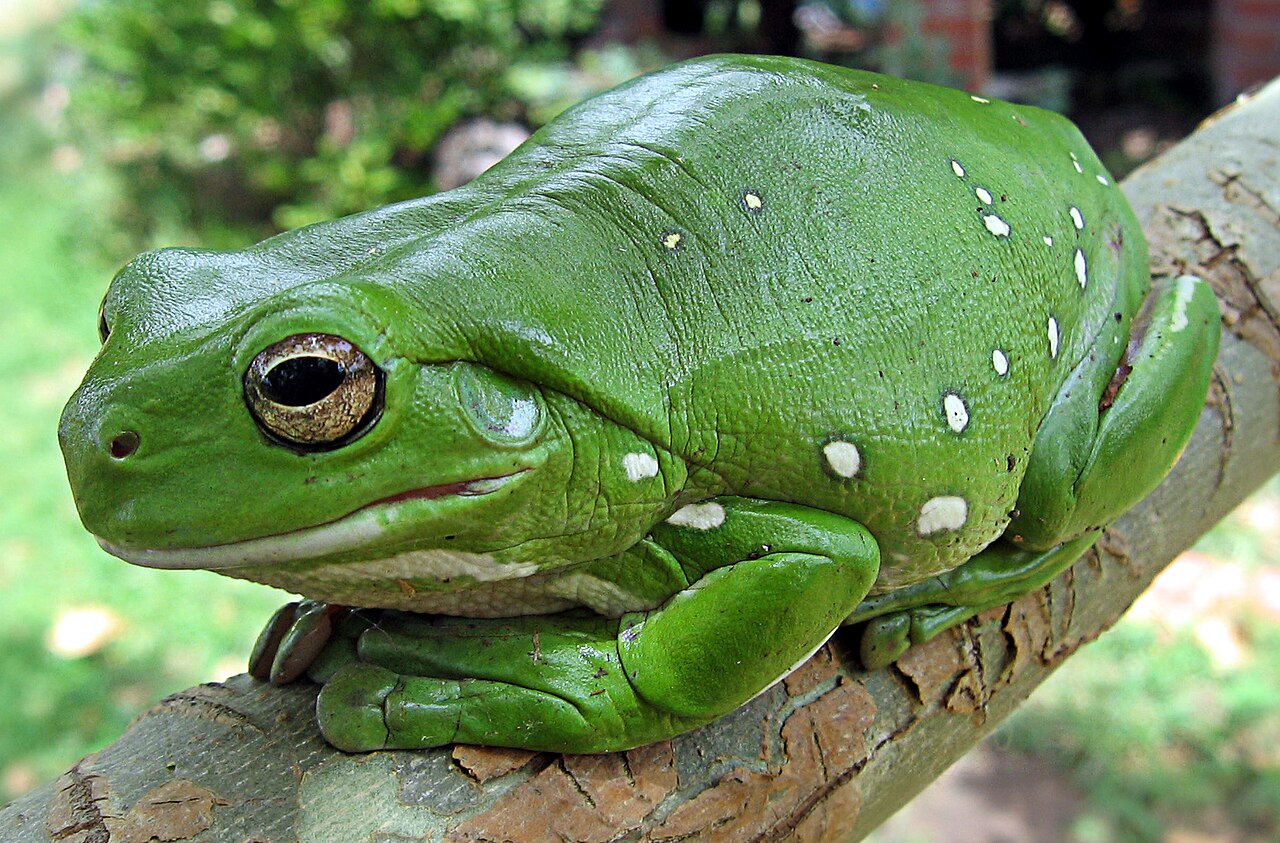
Found in the southeastern United States, this bright green frog produces a repeated, nasal "queenk-queenk" call. It is often heard from vegetation near water and is a frequent visitor to porch lights, where it hunts insects attracted to the glow.
Túngara Frog (Engystomops pustulosus)
This Central and South American species is a favorite of researchers because males add a "chuck" to their call, and females strongly prefer males that chuck. Studies have shown that the chuck exploits a pre-existing sensory bias in the female's auditory system, a classic example of how sexual selection shapes animal communication.
Poison Dart Frogs
Many poison dart frogs of Central and South America are diurnal, meaning they are active during the day, and their calls are often heard in daylight. This is a useful reminder that not all frogs are nocturnal callers. Species in cool, moist forests may call whenever conditions are right.
What Makes a Frog Chorus? Synchrony, Competition, and Timing
A frog chorus is not just a bunch of frogs croaking independently. It is a dynamic social system with rules, competition, and even acoustic cooperation.
The Competition to Be Heard
When many males call at once, the noise can be overwhelming. Males compete for acoustic space, and some species adjust their call timing to avoid overlapping with neighbors. In some cases, males will actively try to "jam" a rival's call by calling at the same moment, reducing the rival's chances of attracting a female. Other species alternate calls in a loose rhythm, creating the pulsing chorus sound that many people find soothing.
Satellite Males and Sneaky Strategies
Not every male croaks. In some species, smaller or younger males adopt a "satellite" strategy, positioning themselves near a calling male and attempting to intercept females attracted to the caller. These sneaky males save energy and avoid the risks of calling, but they also risk being attacked by the resident male. The existence of satellite males is one reason why not every frog in a pond is making noise.
Environmental Cues
Frogs respond to temperature, humidity, rainfall, and even moonlight. Many species call more intensely after rain, when breeding pools are full and conditions are favorable. Some frogs reduce calling on bright, moonlit nights, possibly because the risk of predation is higher. Others seem to call regardless, driven by the urgency of a short breeding season.
How Frogs Make Sound Without Damaging Themselves
Calling is hard work. A male frog may call thousands of times in a single night, and the energy cost is substantial. Some species lose a significant percentage of their body weight during a long breeding season. To cope, frogs have evolved strategies such as calling in bursts, resting between calls, and timing their activity to the coolest, most humid parts of the night.
The vocal sac also plays a protective role. By inflating and deflating, it helps regulate airflow and reduces strain on the vocal folds. Some frogs can even call while floating in water, using the water surface to reflect sound and improve projection.
Frogs, Ecosystems, and the Sound of a Healthy Wetland
A loud frog chorus is more than background noise. It is a sign of a functioning ecosystem. Frogs are sensitive to pollution, habitat loss, and disease, and their populations can decline quickly when conditions deteriorate. Because frogs are both predators and prey, they play important roles in food webs, eating enormous numbers of insects and serving as food for birds, snakes, and mammals.
Scientists increasingly use acoustic monitoring to study frog populations. By recording choruses and analyzing the calls, researchers can identify which species are present, estimate breeding activity, and track changes over time. In this sense, the nighttime croaking is not just noise; it is data.
Why Some Frogs Are Going Quiet
Sadly, many frog populations are in decline. The amphibian chytrid fungus, habitat destruction, pesticides, and climate change have all taken a toll. When a wetland falls silent, it can be an early warning sign of environmental trouble. Protecting ponds, marshes, and the surrounding uplands is essential for keeping the chorus alive.
Frequently Asked Questions About Frog Croaking
Do female frogs croak?
Females of most species do not produce the loud advertisement calls that males do. However, females of some species can vocalize, especially in response to being grabbed or handled, and a few species have more complex vocal behavior. In general, if you hear a loud, repetitive chorus at night, you are almost certainly hearing males.
Why do frogs stop croaking when I approach?
Frogs are alert to vibrations and sudden sounds. When you approach a pond, your footsteps and movement can trigger a "silence response," where frogs pause their calls to assess the threat. Wait quietly for a minute or two, and the chorus usually resumes.
Do frogs croak in the rain?
Many frogs call more actively during and after rain, when breeding conditions improve. Some species have specific "rain calls" that are triggered by falling rain or changes in atmospheric pressure. A warm summer shower can set off a chorus within minutes.
Can frogs croak underwater?
Most calls are produced in air, but some frogs can call while partially submerged, and a few species produce underwater sounds. The physics of underwater sound transmission are different, and these calls tend to be quieter and less complex than airborne calls.
The Noisy Truth: Croaking Is Communication, Survival, and Romance
So why do frogs croak at night? Because the night is when the stakes are highest and the conditions are best. Croaking is how frogs find mates, defend territory, warn rivals, and stay connected in a crowded, dangerous world. The nighttime chorus is a convergence of biology, physics, and behavior: vocal sacs acting as amplifiers, cool humid air carrying sound farther, and males competing for the attention of choosy females.
The next time you hear a pond erupt in sound after dark, listen a little closer. You are hearing individual frogs making individual choices, each call a small gamble in the game of survival and reproduction. The noise is not random. It is one of the oldest and most remarkable conversations in nature, and it is happening right outside your window.
❓ Frequently Asked Questions
💬 Why do frogs croak mostly at night?
Most frogs are nocturnal and croak at night because the air is cooler and more humid, which helps their calls travel farther and keeps them from drying out. Nighttime also offers some protection from predators while they advertise for mates.
💬 What are frogs actually trying to say when they croak?
Croaking is mainly a mating call: males call to attract females and to warn rival males away from their territory. Frogs also make shorter distress or alarm calls when threatened or grabbed.
💬 Why do frogs stop croaking when I walk closer?
Frogs are sensitive to vibrations and sudden movement, so approaching footsteps or a flashlight can trigger them to go silent as a predator-avoidance response. They usually resume calling once they sense the disturbance has passed.
💬 Do female frogs croak too?
In most species only males croak loudly to attract mates, but females of some species do produce quieter calls or release calls, especially when avoiding unwanted males. So a croaking frog is usually, but not always, male.