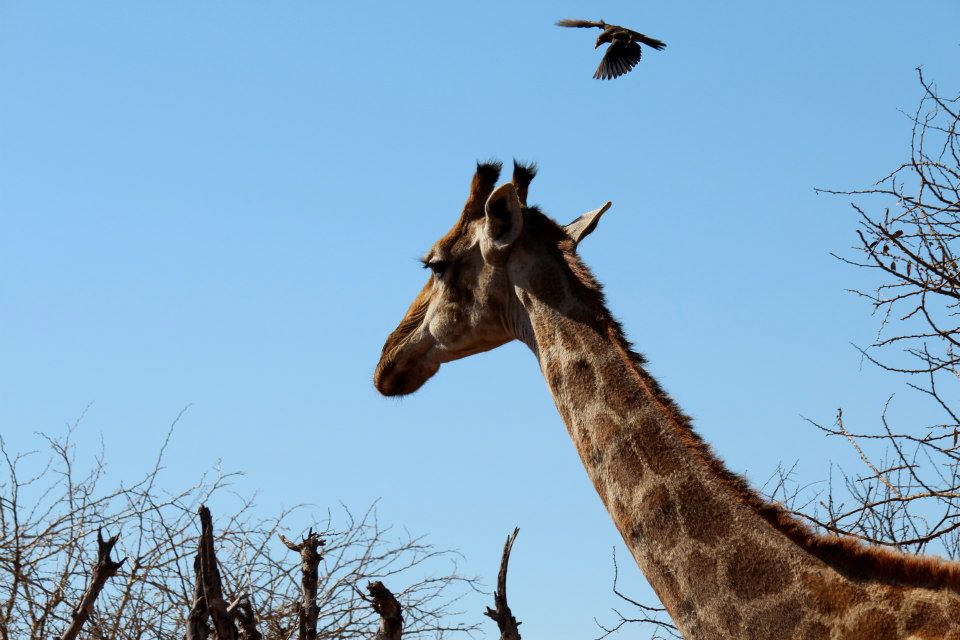
- The Classic Hypothesis: The Giraffe Long Neck and the Treetop Buffet
- The Fringe Benefit of a Longer Reach
- The Necking Combat: The Sexual Selection Theory for the Giraffe Long Neck
- Fossil Evidence: The Missing Link That Changes Everything
- The Hidden Costs: How the Giraffe Long Neck Defies Physiology
- The Breathing and Vocalization Puzzle
- Feeding Ecology: The Real Diet of a Giraffe
- Habitat and Geographic Range
- Lifespan and Behavior: Living With a Giant Neck
- The Future of the Giraffe Long Neck in a Changing World
- Conclusion: The Real Truth About the Giraffe Long Neck
- ❓ Frequently Asked Questions
The giraffe long neck is one of the most iconic and puzzling features in the entire animal kingdom, yet the real truth behind its evolution is far more complex and fascinating than the simple "reaching for leaves" story you learned in grade school. For centuries, naturalists, geneticists, and ecologists have debated whether this extraordinary adaptation was driven by food competition, sexual selection, or a combination of both, and recent scientific discoveries have completely reshaped our understanding of how the giraffe got its stretch. In this deep dive, we will separate fact from myth, explore the surprising fossil record, and reveal the hidden costs and incredible biomechanics that make the giraffe one of the most extraordinary mammals on Earth.
The Classic Hypothesis: The Giraffe Long Neck and the Treetop Buffet
The most widely taught explanation for the giraffe long neck is rooted in the idea of competitive advantage at the treetops. The theory, popularized by Charles Darwin and later expanded by other biologists, suggests that ancestral giraffes with slightly longer necks could reach foliage that shorter herbivores could not, giving them a survival edge during periods of drought or food scarcity. Over millions of years, natural selection favored those with the longest necks, eventually producing the modern giraffe (Giraffa camelopardalis) with a neck that can measure up to 2.4 meters (about 8 feet) long and weigh over 250 kilograms (550 pounds).
However, this simple narrative has significant flaws. For one, modern giraffes actually spend a large portion of their feeding time with their necks bent horizontally or at ground level, grazing on low shrubs and herbs. In fact, studies of giraffe feeding behavior in the wild have shown that they often prefer to feed at chest height or even lower when food is abundant, which suggests that the treetop advantage may not have been the sole selective pressure. Additionally, the fossil record shows that early giraffids, like the short-necked Okapi's ancestors, coexisted with taller browsers, meaning the competition for high foliage was not always as intense as once believed.
Another problem with the classic hypothesis is that it fails to explain why only giraffes among all browsing mammals developed such an extreme neck. Other large herbivores, like elephants and rhinos, also compete for similar resources, yet they evolved trunks and low-grazing strategies instead of elongated necks. This has led many scientists to search for alternative explanations that go beyond simple foraging efficiency.
The Fringe Benefit of a Longer Reach
While the treetop feeding theory may not be the whole story, it certainly plays a supporting role. The giraffe long neck does provide a unique ecological niche, allowing giraffes to access acacia leaves that are physically out of reach for most other savanna dwellers. Acacia trees have long thorns, and giraffes use their prehensile tongues—which can be up to 45 centimeters (18 inches) long—to carefully strip leaves from between the spines. This specialized diet gives giraffes a reliable food source during dry seasons when grasses and low-lying plants wither, effectively reducing competition for calories in a harsh environment.
Moreover, the height advantage offers a secondary benefit: an elevated vantage point. Standing at an average height of 4.5 to 5.5 meters (15 to 18 feet), giraffes can spot predators like lions from a great distance, giving them more time to escape. This "watchtower" effect may have amplified the evolutionary benefits of a longer neck, even if it wasn't the primary driver. But as we will see, the most compelling evidence for the giraffe long neck points to a very different part of giraffe life: mating.
The Necking Combat: The Sexual Selection Theory for the Giraffe Long Neck
If you have ever watched male giraffes interact, you have likely witnessed the bizarre and violent behavior known as "necking." This is not a gentle nuzzle; it is a brutal, swinging combat where males use their heavy heads and ossified skull bones as clubs, striking each other's bodies and necks with tremendous force. The giraffe long neck, according to the sexual selection hypothesis, is essentially a weapon and a display of dominance, not a feeding tool. Males with longer, thicker necks win more fights, secure more mating opportunities, and pass their genes to the next generation.
This theory is supported by strong anatomical evidence. Male giraffes have significantly thicker and heavier necks than females, a trait known as sexual dimorphism. While both sexes have long necks, adult males can weigh up to 1,200 kilograms (2,600 pounds) compared to females at 830 kilograms (1,800 pounds), with the extra mass concentrated in the neck and skull. The skulls of male giraffes are also more heavily ossified, with additional bone deposits that act like a helmet, protecting the brain during high-speed collisions. If the neck were only for feeding, there would be no reason for males to develop such exaggerated features beyond what females possess.
Behavioral observations reinforce this idea. Male giraffes engage in necking bouts that can last for minutes, swinging their heads in arcs that reach speeds of up to 60 kilometers per hour (37 mph). The force of these blows is powerful enough to knock an opponent off balance or even break bones, yet the giraffe's anatomy is uniquely adapted to absorb this punishment. The cervical vertebrae, which number just seven (the same as a human!), are elongated but have specialized ball-and-socket joints that allow for incredible flexibility while providing structural support. This combination of weaponry and armor points directly to sexual selection as a major evolutionary driver.
Fossil Evidence: The Missing Link That Changes Everything
In recent years, paleontologists have unearthed fossils that challenge the traditional narrative of gradual neck elongation. The most famous of these is Samotherium, an ancient giraffid that lived about 7 million years ago. Unlike modern giraffes, Samotherium had a neck of intermediate length, but critically, its cervical vertebrae showed a mosaic of features that suggest the elongation process was not a slow, uniform stretch. Instead, the front part of the neck elongated first, followed by the back, in a pattern that aligns more closely with sexual selection pressures than with simple feeding needs.
Even more striking is the discovery of Discokeryx, a bizarre giraffid that lived around 17 million years ago. This animal had a short, thick neck but possessed an enormous, dome-shaped skull with a dense bony helmet, clearly adapted for head-butting combat. The existence of such heavily armored, short-necked ancestors suggests that the earliest stages of giraffe evolution were driven by male-male competition at ground level, not by reaching for leaves. Over time, as fighting styles shifted from head-butting to neck-swinging, the neck elongated to deliver more powerful blows from a greater distance. This fossil evidence provides a compelling narrative: the giraffe long neck began as a combat adaptation and only later became useful for feeding.
The Hidden Costs: How the Giraffe Long Neck Defies Physiology
Having a neck that is six feet long is not without serious physiological challenges, and understanding these costs makes the giraffe's existence even more remarkable. The most obvious problem is blood pressure. To pump blood up to the brain, which sits about two meters above the heart, a giraffe's heart must generate a blood pressure of roughly 280/180 mmHg—about double that of a typical mammal. This massive pressure would normally cause fluid to leak from the capillaries into the brain, leading to fatal edema, but giraffes possess a specialized network of blood vessels called the rete mirabile (wonderful net) that regulates pressure and prevents fluid accumulation.
Another challenge is the "fainting" problem. When a giraffe lowers its head to drink water, gravity would cause a massive rush of blood to the brain, potentially causing a stroke. To counteract this, giraffes have evolved a series of one-way valves in the jugular veins that prevent backflow, along with a highly elastic wall in the carotid arteries that absorbs the pressure changes. When they lift their heads again, another set of valves prevents blood from draining away too quickly, avoiding sudden dizziness. These intricate adaptations are so specific that they could not have evolved purely as a side effect of feeding behavior; they are the result of millions of years of fine-tuning to support the giraffe long neck.
The Breathing and Vocalization Puzzle
The giraffe long neck also creates a significant "dead space" problem for respiration. The trachea is about 1.5 meters (5 feet) long, meaning that each breath must fill a large tube before reaching the lungs. This dead space reduces respiratory efficiency, forcing giraffes to have a larger tidal volume (the amount of air inhaled per breath) and a slower breathing rate of about 10 breaths per minute, compared to 15-20 for humans. Remarkably, the giraffe's lungs are not proportionally larger than those of other mammals; instead, they compensate by having a smaller total lung capacity relative to body size, which paradoxically increases oxygen extraction efficiency.
Vocalization is another mystery. For a long time, scientists believed giraffes were mute, but research in zoos has revealed they produce low-frequency humming sounds, especially at night, that are too low for human ears to easily detect. The long neck makes producing high-frequency calls difficult, so giraffes likely rely on infrasound (below 20 Hz) to communicate over long distances, similar to elephants. This adaptation shows that the giraffe long neck has shaped not just its physique but its entire sensory and communication system.
Feeding Ecology: The Real Diet of a Giraffe
To truly understand the giraffe long neck, we must examine what giraffes actually eat in the wild. Giraffes are browsers, meaning they feed on woody plants rather than grass. Their preferred food is the leaves of acacia trees, especially Acacia tortilis and Acacia nilotica, which are rich in protein and calcium. However, these leaves are heavily defended with thorns and tannins, so giraffes have evolved a tough, leathery mouth and a thick, sticky saliva that neutralizes the toxic compounds. They also have a remarkable ability to select the most nutritious leaves, stripping them with their prehensile tongues in a way that minimizes thorn damage.
Despite their height, giraffes are not exclusively treetop feeders. Studies from the Serengeti and Kruger National Park show that giraffes spend about 50% of their feeding time at shoulder height or below, especially during the wet season when low vegetation is lush. They also feed on herbs, vines, and even fruit when available. In fact, during severe droughts, giraffes have been observed eating bones and carcasses to obtain calcium and phosphorus—a behavior that would be impossible without their strong, multi-chambered stomachs. The giraffe long neck is thus a versatile tool, but it is not the sole determinant of their feeding strategy.
Habitat and Geographic Range
Giraffes are native to the savannas, grasslands, and open woodlands of sub-Saharan Africa, with populations scattered from Niger in the west to Kenya and South Africa in the east and south. They are highly adaptable and can survive in arid regions with sparse rainfall, as long as there are enough trees and shrubs to browse. The giraffe long neck allows them to exploit a vertical feeding niche that is largely unavailable to other large herbivores, which may explain why they can coexist with wildebeest, zebras, and elephants without direct competition. Their home ranges can be as large as 1,000 square kilometers (386 square miles), and they are nomadic, following seasonal food availability rather than staying in a fixed territory.
There are currently four recognized species of giraffe, not just one as previously thought: the Northern giraffe, Southern giraffe, Masai giraffe, and Reticulated giraffe. Each species has distinct coat patterns—from the large, irregular patches of the Masai to the clean, white lines of the Reticulated—but all share the same elongated neck structure, confirming that the giraffe long neck is a universal feature of the genus. However, recent genetic studies have revealed that the neck length varies subtly between populations, with those in more forested regions having slightly shorter necks than those on open plains, further supporting the idea that feeding ecology modulates but does not drive the trait.
Lifespan and Behavior: Living With a Giant Neck
Giraffes live for an average of 20 to 25 years in the wild, with some reaching 30 years in captivity. They are social animals that form loose, fission-fusion groups, meaning the composition changes frequently. Females typically stay in their natal herds, while males leave at around 3-4 years old to lead a more solitary or bachelor life. The giraffe long neck plays a crucial role in social interactions beyond just fighting. When two males meet, they engage in a "necking" ritual that can range from gentle rubbing to violent combat, and the outcome determines dominance and access to females. The length and thickness of the neck are also visual signals of health and genetic quality, making it a honest indicator of fitness.
Giraffes are also known for their unique locomotive pattern, called "pacing," where both legs on one side move together, creating a swaying motion. This gait is efficient for their long limbs but makes them vulnerable to predators when running at full speed. Despite this, a giraffe can reach speeds of up to 60 kilometers per hour (37 mph) and deliver a powerful kick with its front legs that can kill a lion. Their size and strength, combined with their height, make adult giraffes nearly invulnerable to predation, with calves being the most at risk. This defensive advantage further reinforces the idea that the giraffe long neck is not just about feeding but about survival in a dangerous landscape.
The Future of the Giraffe Long Neck in a Changing World
Today, giraffes face a conservation crisis that threatens the very existence of this evolutionary marvel. Over the past 30 years, giraffe populations have declined by nearly 40%, dropping from an estimated 155,000 individuals in the 1980s to around 117,000 today, according to the Giraffe Conservation Foundation. The primary threats are habitat loss due to agriculture and infrastructure development, illegal poaching for bushmeat and trophies, and civil unrest in several African nations. The giraffe long neck, which once provided a survival advantage, now makes them more visible to poachers and more vulnerable to habitat fragmentation, as they require large home ranges to meet their dietary needs.
However, there is hope. Conservation efforts, including community-based wildlife management and anti-poaching patrols, have stabilized and even increased populations in countries like Namibia and South Africa. Translocations have been used to reintroduce giraffes to areas where they were locally extinct, and genetic monitoring is helping to preserve the distinct species. The giraffe long neck remains a symbol of evolutionary ingenuity, but its future depends on human action. By protecting their habitats and addressing the root causes of decline, we can ensure that future generations will continue to marvel at these gentle giants.
Conclusion: The Real Truth About the Giraffe Long Neck
The real truth behind the giraffe long neck is that it is not the product of a single cause but a masterpiece of multifactorial evolution. While the treetop feeding hypothesis provides a logical starting point, the overwhelming evidence from anatomy, behavior, and the fossil record points to sexual selection as the primary engine that drove the neck to its extraordinary length. The giraffe long neck evolved as a weapon in the brutal contests between males, a signal of genetic superiority, and only secondarily became a useful feeding tool. The physiological adaptations that allow a giraffe to survive with such a neck—from its high-pressure heart to its anti-fainting valves—are testaments to the power of natural selection to solve even the most daunting challenges. As we continue to study these magnificent animals, we are reminded that evolution rarely takes a straight path, and the most extraordinary traits often arise from a complex interplay of survival, competition, and love.
❓ Frequently Asked Questions
💬 Why do giraffes have such long necks?
The leading scientific explanation is the 'competing browsers theory'—long necks let giraffes reach leaves high in acacia trees that other herbivores can't access, giving them a unique food source. However, some researchers argue neck length evolved primarily for sexual selection, as males use their necks and heads to swing and fight for dominance, with longer necks winning more mating opportunities.
💬 How long is a giraffe's neck, and how many bones does it have?
A giraffe's neck can be up to 6 feet (1.8 meters) long, yet it contains only seven vertebrae—the same number as in a human neck. Each vertebra is greatly elongated, up to 10 inches long, and they are connected by ball-and-socket joints for flexibility.
💬 How does a giraffe's long neck pump blood to its brain without fainting?
Giraffes have a powerful heart that generates high blood pressure, about twice that of humans, to push blood up to the brain. They also have specialized valves in their neck veins and a network of tiny blood vessels (the rete mirabile) that regulate blood flow and prevent sudden pressure changes when they lower or raise their heads.
💬 Do giraffes have long necks to reach food or for fighting?
Both factors likely played a role, but modern research suggests sexual selection—males fighting with their necks ('necking')—may have been the primary driver. Longer necks provide a clear advantage in these battles, and even male giraffes have thicker, heavier skulls for head-butting, while females still have long necks but less extreme length, hinting that competition among males shaped the trait.