- What Exactly Are Glass Frogs? Defining the Translucent Skin Phenomenon
- The Science of Transparency: How Does the Glass Frog's Skin Turn See-Through?
- Lack of Pigment Cells in Key Areas
- The Arrangement of Muscle and Bone
- Blood Shunting and the "White Out" Phenomenon
- Evolutionary Advantages: Why Camouflage Demands Translucent Skin
- Internal Anatomy: A Living Window into Amphibian Biology
- Behavior and Diet: Life in the Canopy
- The Habitat of Transparency: Why These Frogs Need Pristine Streams
- Placing the Glass Frog in the Broader Tree of Life
- How Scientists Study These See-Through Wonders
- Conclusion: The See-Through Frog That Is a Biological Marvel
- ❓ Frequently Asked Questions
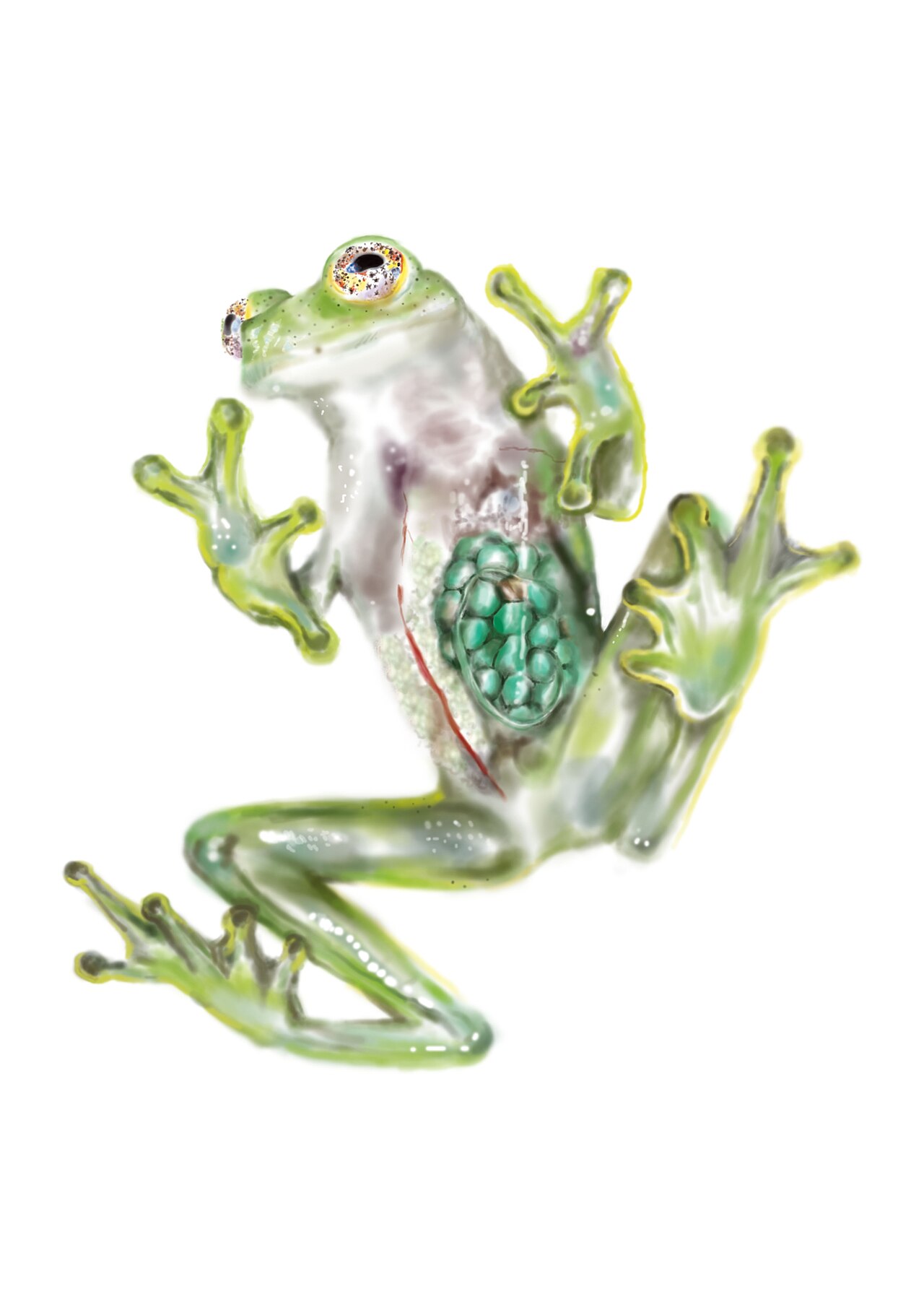
The secret behind a glass frog’s legendary see-through body isn’t a single trick, but a symphony of biological adaptations—and the reason for this astonishing glass frogs translucent skin is rooted in one of nature’s most elegant survival strategies. For decades, these tiny, jewel-like amphibians of the Neotropical rainforest have baffled scientists and delighted nature enthusiasts. Unlike albino animals or deep-sea creatures, glass frogs are not entirely transparent; they possess a unique form of camouflage where their dorsal skin is typically a vivid, leaf-green, while the skin on their ventral side (the belly and chest) is completely translucent. Through this clear patch, you can observe a beating heart, pulsing arteries, a working digestive tract, and even the eggs inside a female. This remarkable feature is not merely a biological curiosity—it is a masterclass in evolutionary engineering, a sophisticated optical illusion, and a survival mechanism honed over millions of years.
What Exactly Are Glass Frogs? Defining the Translucent Skin Phenomenon
To understand the phenomenon of glass frogs translucent skin, we must first appreciate the animal itself. Glass frogs belong to the amphibian family Centrolenidae, a group that contains over 160 recognized species. They are diminutive creatures; most species measure only between 2 and 3 centimeters (about 0.8 to 1.2 inches) in length, with some of the smallest, like Centrolene pipilatum, barely reaching the size of a thumbnail. Their natural range stretches from southern Mexico through Central America and deep into the Amazon Basin of South America, including countries like Costa Rica, Panama, Colombia, Ecuador, and Peru.
While all Centrolenid frogs are considered glass frogs, the degree of translucency varies wildly among species. Some, like the iconic Reticulated Glass Frog (Hyalinobatrachium valerioi), feature such clear abdominal skin that their internal organs are visible in stunning detail. Others, such as the Fleischmann's Glass Frog (Hyalinobatrachium fleischmanni), only have a semi-opaque area covering the digestive cavity. The most common denominator among them is the presence of transparent skin extending across the chest and abdomen. In many species, the pericardium (the sac around the heart) is exceptionally clear, making the ruby-red heart one of the most visually striking elements of this amphibian’s anatomy. The skin itself is thin, often lacking the thick layer of chromatophores (pigment-containing cells) found in other frogs, which allows light to pass through the tissue rather than reflecting off it.
The Science of Transparency: How Does the Glass Frog's Skin Turn See-Through?
When we look at a normal frog, we see a solid creature because light bounces off the dense tissue, muscle, and blood vessels beneath the skin. The glass frog overturns this physical rule. The mechanism of transparency is a complex biological process that involves several layers of specific adaptations.
Lack of Pigment Cells in Key Areas
In most frogs, the skin contains three types of pigment cells: melanophores (which contain dark melanin), xanthophores (which contain yellow and red pigments), and iridophores (which reflect light). In the ventral skin of a glass frog, these cells are almost entirely absent. This absence is specific to the belly region, whereas the back retains dense green pigmentation to blend with leaves. This targeted loss of pigment is known as "regional transparency."
The Arrangement of Muscle and Bone
Transparency isn't just about skin; it’s about what lies beneath. Even if the skin is clear, you wouldn't see through the frog if it had thick, opaque muscles. Glass frogs have evolved very thin, smooth abdominal muscles. More importantly, their internal organs are not where you might expect them to be. In a normal frog, the heart sits ventrally (toward the front), but in glass frogs, the heart is shifted slightly, and the liver is often located in the posterior region of the body cavity. This arrangement creates a "window" in the anterior body where light can pass through with minimal obstruction.
Blood Shunting and the "White Out" Phenomenon
Perhaps the most astonishing biological discovery about glass frog transparency came from a 2022 study published in Science. Researchers found that when glass frogs sleep, they hide roughly 89% of their red blood cells! The frogs enter a state of controlled "blood shunting," where the red blood cells are packed tightly into the liver, which is covered in reflective guanine crystals. This packing removes the densely colored red blood cells from the bloodstream at the surface, effectively transforming the frog from semi-transparent to nearly 60% more transparent. This is not a frozen state; it is a dynamic process that allows the frog to "turn off" the red color of its blood while sleeping so it doesn't give away its silhouette to predators. When the frog wakes up, the red blood cells are released back into circulation to provide oxygen.
Evolutionary Advantages: Why Camouflage Demands Translucent Skin
Evolution is a merciless editor; it rarely retains a trait that doesn't provide a survival benefit. The primary driver behind glass frogs translucent skin is predation pressure. In the rainforest canopy, these frogs are surrounded by a litany of predators: birds, snakes, spiders, and even predatory insects. They are small, defenseless, and have no chemical toxins to deter attackers. Their only defense is to disappear.
During the day, glass frogs rest on the undersides of large, broad leaves, typically hanging over streams or rivers. Their dorsal green surface matches the leaf perfectly, creating a solid color block. However, when viewed from below—by a snake slithering up a branch or a bird flying beneath the canopy—a normal frog would appear as a dark, opaque silhouette against the bright sky. The glass frog’s translucent belly disrupts this silhouette. The clear skin allows ambient light to scatter through the frog’s body, effectively eliminating the shadow or dark spot that would normally signal "prey" to a predator. The frog becomes visually fused with the light environment, a phenomenon scientists call "edge diffusion."
The placement of the internal organs also enhances this illusion. By packing the red blood cells into the liver (as mentioned earlier) and keeping the major organs packed tightly together, the frogs reduce internal reflection. Additionally, some species have a whitish or silvery coating over the intestines, which acts like a mirror, reflecting light back out through the skin and further reducing the visible body form. This is not just passive disguise; it is an active optical illusion that matches the luminance of the background.
Internal Anatomy: A Living Window into Amphibian Biology
Because their skin is transparent, glass frogs offer a rare opportunity for researchers to study visceral anatomy and physiology without invasive surgery. Observing a glass frog is like looking at a living anatomical diagram.
- The Heart: The most prominent feature is the heart. You can watch the blood flow in and out of the atria and ventricle. Scientists are studying glass frogs to understand cardiac arrhythmias and blood flow dynamics in vertebrates, as the heart is visibly beating under the skin.
- The Digestive System: You can clearly see the stomach and intestines. In a recently fed glass frog, you can even see the shape of the insects it has consumed. The digestive tract is often coiled tightly.
- The Liver: The liver is unique in that it is typically covered with a reflective, white pigmentation called guanine. This coating is what helps to mask the liver and makes it appear like a white mass rather than a dark red organ.
- Skeletal Structure: In some the species, the bones are green (due to biliverdin, a bile pigment), but in others, the ribs and spine are visible through the skin, creating a ghostly, luminescent appearance under flashlight.
This visible anatomy has led to a strange quirk: the visibility of eggs. In females, you can often see the green eggs developing inside the translucent ovaries. For researchers, this allows non-invasive monitoring of reproductive cycles, which is a boon for conservation efforts.
Behavior and Diet: Life in the Canopy
The lifestyle of the glass frog is intrinsically tied to its transparent body. They are strictly nocturnal. As the sun sets, they awaken from their motionless daytime slumber to begin their hunt. Their diet is primarily insectivorous, though they are opportunistic feeders. They consume a variety of small invertebrates, including ants, small beetles, flies, crickets, and spiders. They use a quick, ballistic tongue projection—a common frog trait—to capture prey. Because they are so small, they themselves are a food source for a wide range of predators, so they rarely venture far from their sleeping leaves.
Glass frogs live surprisingly long lives for such tiny amphibians. In the wild, they are known to live up to 5 to 6 years, with some species reaching 10 years in controlled environments. Their breeding behavior is fascinating. Males establish territories along streams and call to females with high-pitched whistles. After mating, females lay a clutch of eggs—often numbering between 20 and 30—on the underside of a leaf hanging over the water. The male's parental care is notable; he remains with the eggs to protect them from predators and desiccation. He will often sit on the eggs or urinate on them to keep them moist. When the eggs hatch, the tadpoles drop into the swift-flowing water below, where they burrow into leaf litter and silt to avoid being swept away.
The Habitat of Transparency: Why These Frogs Need Pristine Streams
The see-through nature of the glass frog is a blessing and a curse. Their skin is highly permeable—far more so than a mammal's—which means they are vulnerable to environmental changes. They are bioindicators, meaning their presence (or absence) tells us a great deal about the health of an ecosystem. They require high humidity, dense canopy cover, and, most critically, clean, fast-flowing streams for their tadpoles to develop. The tadpoles are adapted to live in oxygen-rich, cool water. Sedimentation, pollution from agricultural runoff (like pesticides), and climate change-induced droughts are devastating to glass frog populations.
Because their entire body is visible under the skin, any internal parasites or infections are often physically observable, which indicates high stress levels. Furthermore, the frog's reliance on specific leaves for sleeping and ovipositioning means that deforestation and habitat fragmentation directly impact their survival. Croaking from the canopy, a glass frog in a fragmented forest is like a spotlight in a dark room—unable to hide due to reduced forest cover. Their specialized skin, so adept at hiding them from predators, cannot protect them from humans. Conservation efforts are focusing on preserving riparian buffer zones (the vegetation along riverbanks) to ensure these frogs have the specific microhabitats they need to rest and breed.
Placing the Glass Frog in the Broader Tree of Life
The glass frog’s translucent skin is a convergent trait, meaning it has evolved independently in other species. However, the glass frog is the only known terrestrial vertebrate that achieves such a high degree of transparency in its ventral surface.
To be specific:
- Vs. Squid and Octopus: The glass squid uses transparency to hide in open water, but these creatures don't need to worry about thermoregulation or oxygen to the same extent as a frog.
- Vs. Icefish: The Antarctic icefish has translucent blood, but this is due to a lack of hemoglobin, not a dynamic shuttling mechanism like the glass frog.
- Vs. Frogs and Toads: Some tree frogs have translucent skin on their legs, but it is usually thin, allowing for background color matching, not for viewing internal organs. The glass frog is unique in its encapsulation and relocation of blood cells for camouflage.
This unique evolutionary path makes the glass frog a crucial species for biological research, particularly in the fields of hematology, pigmentation, and optical physics. Understanding how these frogs manage to keep their blood cells "frozen" in the liver without causing clotting or oxygen deprivation could one day inspire new treatments for human cardiovascular diseases.
How Scientists Study These See-Through Wonders
Studying glass frog transparency is an ongoing field of scientific inquiry. Because they are so small and often live high in the canopy, researchers use a combination of field observation and advanced technology. Field biologists use headlamps and red lights at night to spot the frogs’ glowing "eye shine" (the tapetum lucidum in their eyes reflects light back). Once captured, they use advanced imaging techniques such as Optical Coherence Tomography (OCT) to measure the thickness and density of the skin layers without damaging the frog.
Recently, researchers photographed sleeping frogs under white light and then used sophisticated image processing software to quantify exactly how much light passes through the body. This is how they discovered the blood-packing phenomenon. In the lab, they use high-speed video cameras to record the movement of red blood cells within the veins, tracking how the cells migrate to the liver. These studies are painstaking, as the frogs are delicate, but every finding reshapes our understanding of vertebrate physiology.
Conclusion: The See-Through Frog That Is a Biological Marvel
In the vast tapestry of the natural world, the glass frog is proof that reality can be stranger and more sophisticated than fiction. The evolution of glass frogs translucent skin is a remarkable story of adaptation, showcasing nature's ability to manipulate physics and biology for survival. It is not just about being invisible; it is about managing the very blood in our veins, rearranging internal organs, and creating an optical body so pure that it lets the light shine through. For those who are lucky enough to see one clinging to a leaf in the misty rainforest, the sight of a tiny, beating heart against a backdrop of green is a profound reminder of the hidden wonders of biodiversity—and a compelling reason to protect the fragile ecosystems they call home.
❓ Frequently Asked Questions
💬 Why do glass frogs have see-through skin?
Glass frogs have translucent skin primarily as a form of camouflage. Their transparent bellies and parts of their limbs help break up their body outline, making them blend seamlessly with the leaves they rest on and harder for predators to spot.
💬 Are glass frogs completely transparent?
No, glass frogs are not completely transparent. Their skin on the back is usually green, while the skin on the belly and underside is translucent, allowing you to see their internal organs, including the heart, liver, and digestive tract.
💬 How does being see-through help glass frogs survive?
See-through skin helps glass frogs evade predators by reducing their contrast against the background. Because their translucent undersides make them appear less solid, predators like birds and snakes have a harder time detecting them when they sit on green leaves.
💬 Do all glass frogs have see-through skin?
All glass frogs are classified in the family Centrolenidae and share the trait of translucent abdominal skin, but the degree of transparency varies among species. In some, the internal organs are clearly visible, while in others the skin is only slightly transparent.