- What Makes Glass Frog Transparent Skin So Unusual?
- Not Every Part Is See-Through
- Why Do Glass Frogs Have Transparent Skin? The Camouflage Advantage
- Transparency and the "Silhouette Problem"
- How Does Glass Frog Transparent Skin Actually Work?
- Thin Skin and Reduced Pigmentation
- The Role of the Body Wall and Organs
- Light Scattering and Tissue Optics
- Where Do Glass Frogs Live and What Do They Eat?
- Breeding and Life Cycle
- Lifespan and Size
- Are Glass Frogs Really as Fragile as They Look?
- Predators and Defenses
- What Glass Frog Transparent Skin Teaches Us
- Conclusion: The See-Through Truth
- ❓ Frequently Asked Questions
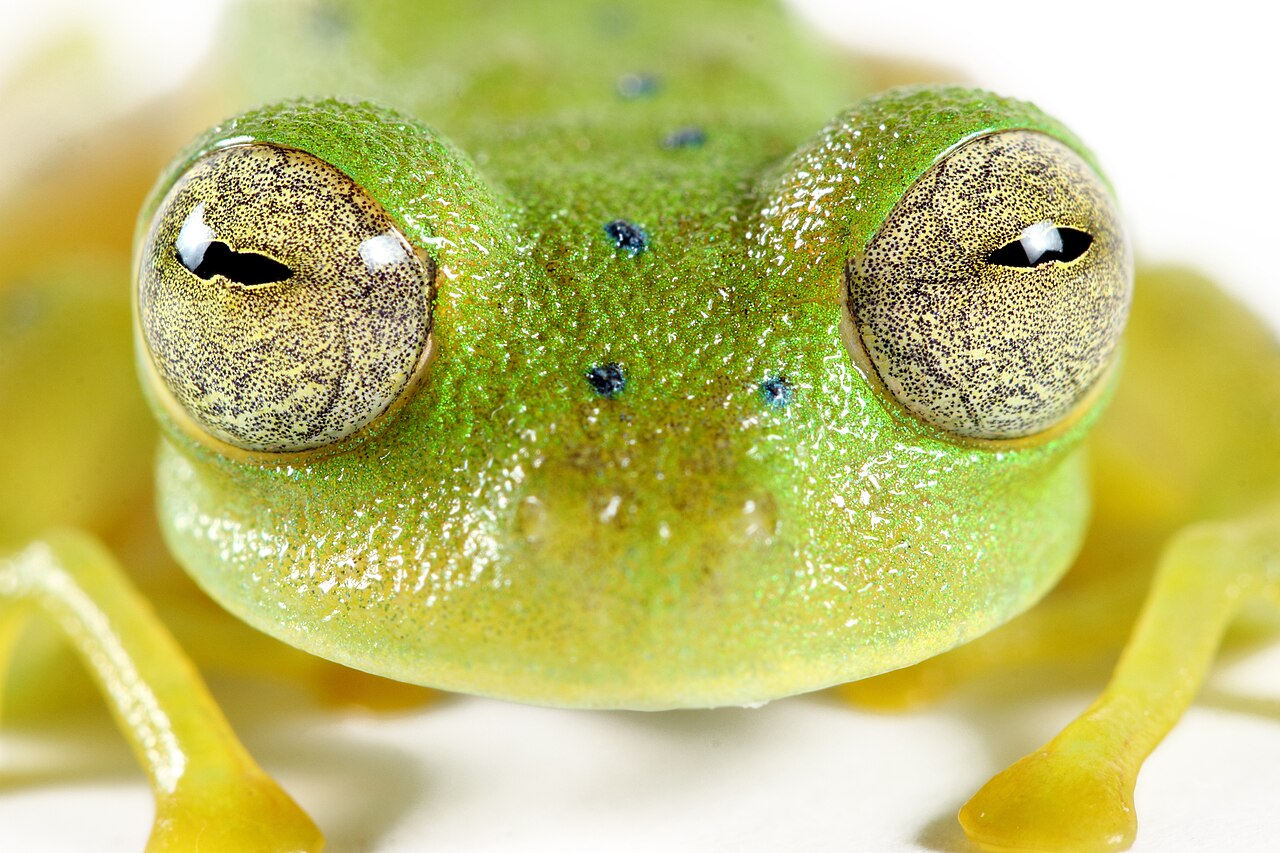
The glass frog transparent skin is one of the most striking adaptations in the animal kingdom: a living, breathing amphibian whose belly, legs, and even internal organs can be glimpsed through its skin. Found in the humid forests of Central and South America, these small tree frogs have evolved a suite of translucent tissues that make them look like delicate glass figurines perched on leaves. But transparency is not simply a curiosity of nature — it is a survival strategy, a physiological balancing act, and a puzzle that continues to fascinate scientists. In this article, we explore why glass frogs are see-through, how their skin works, what they eat, where they live, and what their transparency can teach us about camouflage, anatomy, and conservation.
What Makes Glass Frog Transparent Skin So Unusual?
Most frogs are opaque. Their skin contains layers of pigment cells — melanophores, iridophores, and xanthophores — that produce greens, browns, reds, and yellows, helping them blend into their surroundings. Glass frogs are different. In many species, the skin on the belly and the underside of the legs lacks significant pigmentation, and the tissues themselves are thin enough to let light pass through. The result is a window into the frog's body: you can often see the beating heart, the coiled digestive tract, and, in some species, the liver and other organs.
The most famous example is the aptly named glass frog of the family Centrolenidae, which includes more than 150 described species. Among them, the flea frog (Hyalinobatrachium fleischmanni) and the granular glass frog (Cochranella granulosa) are well known for their translucent undersides. Some species are so transparent that researchers can observe internal organs without dissection, making them valuable subjects for studies of anatomy and physiology.
Not Every Part Is See-Through
It is important to note that glass frogs are not uniformly transparent. Their backs are typically a vivid lime green, which provides camouflage against foliage. The transparency is concentrated on the ventral side — the belly, throat, and the undersides of the limbs. This two-toned arrangement is no accident: the green back hides the frog from predators above, while the translucent belly reduces the frog's visible silhouette when viewed from below against a bright sky or a sunlit leaf.
Why Do Glass Frogs Have Transparent Skin? The Camouflage Advantage
The leading explanation for glass frog transparent skin is camouflage. Glass frogs are small — most species measure between 2 and 7.5 centimeters (about 0.8 to 3 inches) in body length, with many around 3 to 5 centimeters. They are arboreal, living on leaves and branches in humid forests, and they are most active at night. During the day, they rest on the undersides of leaves, where their green backs blend with the vegetation.
But camouflage is not only about color. Predators such as birds, snakes, and large insects view the world from many angles. When a glass frog sits on a leaf, its body casts a shadow and presents a solid outline. A translucent body reduces that outline, especially when light passes through the frog from above. In effect, the frog becomes less of a dark blob and more of a faint, diffuse shape — a phenomenon sometimes called translucency-based camouflage or edge diffusion. The see-through belly and legs blur the boundary between the animal and its background, making it harder for a predator to detect.
Transparency and the "Silhouette Problem"
Researchers have studied how transparency affects visibility in aquatic and terrestrial animals. In water, transparent animals such as jellyfish and larval fish reduce their silhouette against a bright background. On land, the principle is similar but complicated by the fact that air and leaf surfaces have different reflective properties. Glass frogs appear to exploit the diffuse light of their forest habitat: by letting light pass through their bodies, they soften the contrast between themselves and the leaves beneath them. This is particularly effective when the frog is viewed from below against a bright canopy.
How Does Glass Frog Transparent Skin Actually Work?
Transparency in biological tissues is not simply a matter of being thin. It requires that light pass through without being scattered or absorbed. Most animal tissues scatter light because they contain structures — cells, fibers, and organelles — of different refractive indices. Glass frogs achieve transparency through a combination of thin tissue layers, reduced pigmentation, and specialized skin structure.
Thin Skin and Reduced Pigmentation
The skin of a glass frog's belly is extremely thin, often just a few cell layers thick. It contains far fewer pigment cells than the skin on the frog's back. In some species, the skin over the belly is so thin that the underlying musculature and organs are visible. The green color of the back comes from a combination of pigment cells and structural coloration, while the belly lacks these light-blocking elements.
The Role of the Body Wall and Organs
Transparency also depends on what lies beneath the skin. Glass frogs have relatively small, compact organs, and their body cavity is not packed with fat or dense tissue that would block light. The digestive tract, heart, and liver are visible through the skin, but they are arranged in a way that leaves much of the belly clear. In some species, the heart is positioned near the surface, and its beating can be seen through the skin — a detail that has made glass frogs popular subjects for educational videos and scientific observation.
Light Scattering and Tissue Optics
Scientists have investigated the optical properties of glass frog skin and found that it scatters relatively little light compared with the skin of opaque frogs. The arrangement of collagen fibers and the low density of cells in the transparent regions allow light to pass through with minimal distortion. This is similar, in principle, to the transparency of certain fish and insects, though the mechanisms differ. In glass frogs, the combination of thinness and low pigmentation appears to be the key.
Where Do Glass Frogs Live and What Do They Eat?
Glass frogs are native to the Neotropics, ranging from southern Mexico through Central America and into northern South America, including Colombia, Ecuador, Peru, Bolivia, and Brazil. They inhabit humid lowland and montane forests, often near streams and rivers. Their dependence on moisture and specific breeding habitats makes them sensitive to environmental change.
Most glass frogs are nocturnal and arboreal. During the day, they rest on the undersides of leaves, often near water. At night, they emerge to hunt small insects. Their diet consists primarily of small arthropods such as crickets, flies, moths, spiders, and other invertebrates. They are ambush predators, using their large eyes and quick reflexes to capture prey.
Breeding and Life Cycle
Glass frogs are known for their unusual reproductive behavior. Males typically call from vegetation overhanging streams, and females lay clutches of eggs on leaves or rocks near the water. In many species, males guard the eggs until they hatch. The eggs are often translucent as well, and developing embryos can be seen inside. Once the tadpoles hatch, they drop into the stream below, where they continue their development. This reproductive strategy ties glass frogs closely to clean, flowing water — a habitat that is increasingly threatened by deforestation, agriculture, and pollution.
Lifespan and Size
Glass frogs are small and delicate. Most species range from about 2 to 7.5 centimeters in length, with females generally larger than males. Their lifespan in the wild is not well documented for most species, but many small frogs live several years. In captivity, some glass frogs have lived for around five to ten years, depending on the species and care. Their small size and specific habitat requirements make them challenging to keep in captivity, and they are more commonly studied in the wild.
Are Glass Frogs Really as Fragile as They Look?
Despite their delicate appearance, glass frogs are well adapted to their environment. Their translucent skin is not a sign of weakness but a finely tuned adaptation. However, it does make them vulnerable in certain ways. Their skin is permeable, as with all amphibians, and they absorb water and oxygen through it. This means they are highly sensitive to environmental toxins, changes in humidity, and temperature fluctuations. Pollution, habitat loss, and climate change are significant threats to many glass frog species.
Some species are listed as vulnerable or endangered by conservation organizations. The combination of small geographic ranges, dependence on pristine streams, and sensitivity to environmental change makes them important indicators of ecosystem health. Protecting glass frogs means protecting the forests and waterways they depend on.
Predators and Defenses
Glass frogs face predation from birds, snakes, large insects, and small mammals. Their primary defense is camouflage, but they also rely on stillness and their green coloration. Some species may secrete mild toxins or unpalatable compounds, though glass frogs are not known to be highly toxic like poison dart frogs. Their transparency may also serve as a form of shock camouflage — a sudden movement can confuse a predator when the frog's outline is already hard to discern.
What Glass Frog Transparent Skin Teaches Us
Glass frogs are more than a biological curiosity. Their transparent skin offers insights into tissue optics, camouflage, and evolutionary adaptation. Researchers study them to understand how light interacts with living tissue and how animals balance the need for concealment with the need for functional organs. The frog's transparency is a reminder that evolution often finds elegant solutions to complex problems.
Beyond science, glass frogs have become symbols of the richness and fragility of tropical forests. Their see-through bodies capture the imagination and draw attention to the importance of conserving biodiversity. For photographers and nature enthusiasts, spotting a glass frog is a memorable experience — a glimpse of a creature that seems almost too delicate to exist.
Conclusion: The See-Through Truth
The glass frog transparent skin is a remarkable adaptation that combines thin tissues, reduced pigmentation, and optical properties to create a living window into the frog's body. This transparency serves primarily as camouflage, helping these small arboreal amphibians blend into their leafy, humid environments. Glass frogs are native to Central and South America, measure just a few centimeters, eat small insects, and depend on clean streams for breeding. Their delicate skin makes them sensitive to environmental change, and many species face threats from habitat loss and pollution. Understanding why glass frogs are see-through helps us appreciate the ingenuity of evolution and the importance of protecting the fragile ecosystems they call home. The next time you see a photograph of a glass frog with its beating heart visible through its skin, remember: that transparency is not just beautiful — it is a survival strategy honed over millions of years.
❓ Frequently Asked Questions
💬 Can you really see a glass frog's internal organs through its skin?
Yes—on many glass frogs, especially the species Hyalinobatrachium fleischmanni, the translucent belly skin reveals the beating heart, liver, and digestive tract. The skin is thinnest on the underside, so the organs are most visible from below.
💬 Why did glass frogs evolve transparent skin?
Transparency is mainly camouflage: when a glass frog rests on a green leaf, light passes through its body so its outline blends into the background, making it harder for predators to spot. Some research also suggests the translucent skin helps regulate how much light reaches the frog's tissues.
💬 Do glass frogs live up to their name, or are they only partly transparent?
They are only partly transparent—most species have translucent skin on the belly and limbs but opaque green skin on the back. A few species are remarkably clear underneath, which is why they're called glass frogs.
💬 Are glass frogs endangered or poisonous?
Glass frogs are not poisonous, and many species are threatened by habitat loss, with some listed as endangered or critically endangered. Their sensitivity to pollution and deforestation makes them important indicators of rainforest health.