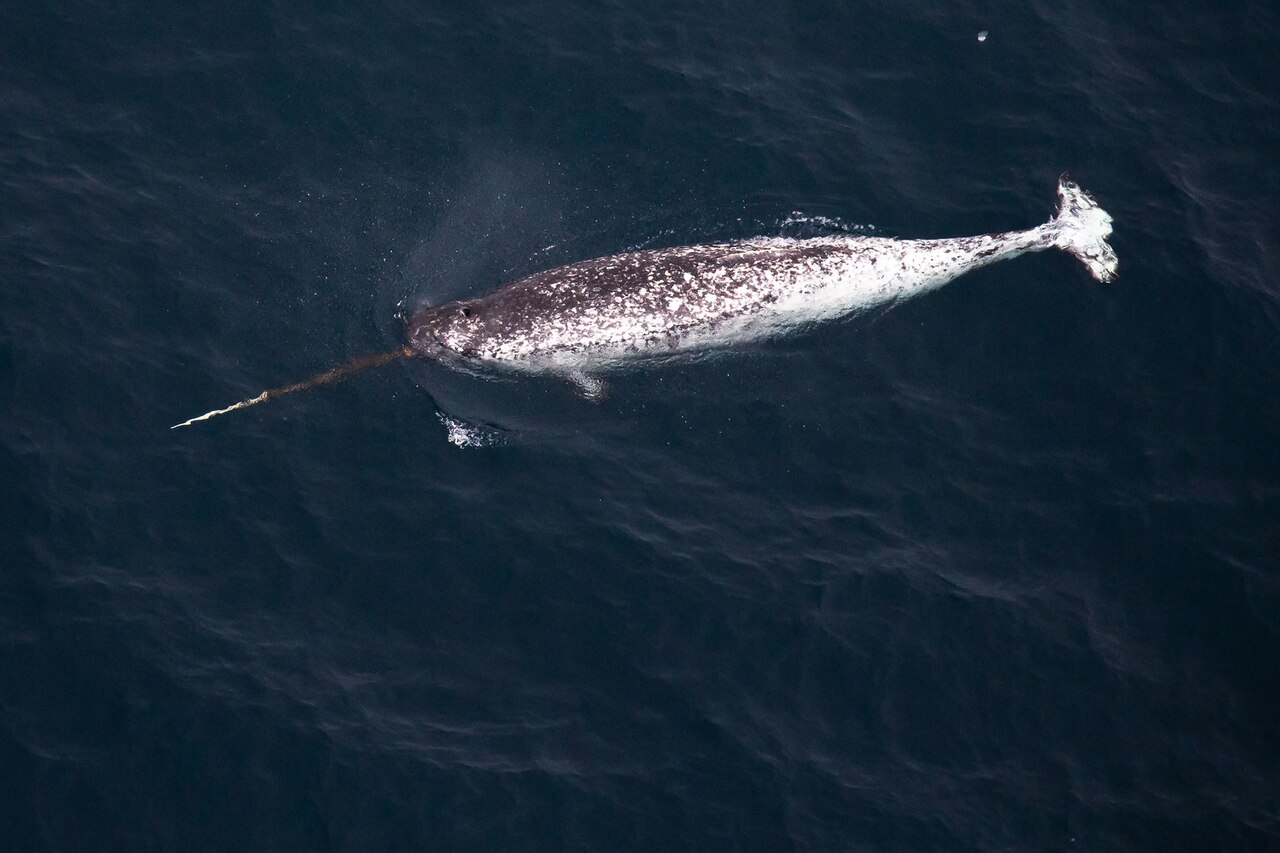
- What Exactly Are Narwhal Tusks?
- A Tooth That Never Stops Growing
- The Surprising Truth About Narwhal Tusks as Sensory Organs
- The Dentin Tubes That Change Everything
- How Do Narwhals Actually Use Their Tusks?
- The Tusk as a Status Symbol and Social Signal
- What Does a Long Tusk Say?
- The Life of the Unicorn of the Sea
- Habitat and Migration
- Diet and Feeding
- Longevity and Life Cycle
- Threats and the Future of Narwhal Tusks
- Climate Change and Sea Ice Loss
- Human Activities
- Conclusion: A Mystery Still Unfolding
- ❓ Frequently Asked Questions
Narwhal tusks are among the most extraordinary and misunderstood structures in the animal kingdom, and the surprising truth about why these whales grow them has only recently begun to emerge from a blend of Indigenous knowledge, marine biology, and cutting-edge technology. For centuries, the spiral horn of the narwhal fueled legends of unicorns and royal gifts, a single tooth that could stretch to nearly three meters in length. But the tusk is not a weapon for spearing fish, nor a tool for breaking sea ice, nor a dueling lance — at least not in the ways old folklore suggested. The real story, involving a "tooth-nose" with millions of nerve endings, a hidden social life, and a changing Arctic, is far more fascinating than the myths.
What Exactly Are Narwhal Tusks?
Despite appearances, a narwhal tusk is not a horn made of keratin like that of a rhino or a goat. It is an elongated canine tooth, one of only two teeth the narwhal possesses, and it erupts through the upper lip of males in a dramatic spiral that twists counter-clockwise. The entire structure is composed of cementum on the outside, enamel on the surface near the tip, and a dense, complex layer of dentin beneath — all surrounding a hollow, pulpy core. In very rare cases, males have two tusks, and around 15 percent of females grow a smaller, less twisted tusk, but the classic "unicorn horn" is a male feature.
- Length: the average adult male tusk grows between 1.5 and 3.0 meters (5–10 feet), with 2.5 meters being common.
- Weight: a full-grown tusk can weigh up to 10 kilograms (22 pounds).
- Flexibility: the tusk is surprisingly flexible — it can bend about 30 centimeters (1 foot) in any direction before breaking.
- Growth: the tusk grows continuously throughout life, at a rate of roughly 1 centimeter per month.
A Tooth That Never Stops Growing
Unlike the teeth of most mammals, the narwhal tusk does not have a fixed lifespan. It keeps elongating year after year, which means older males sprout longer tusks. This continuous growth is one of the strongest clues about the tusk's purpose: it acts as a living, growing record of the animal's life history. Because new layers of dentin are added each season, scientists can read growth layers like tree rings. These layers record dietary changes, stress events, and even chemical signatures from the waters the narwhal traveled — all contained inside the surprising truth of a spiraled tooth.
The Surprising Truth About Narwhal Tusks as Sensory Organs
The most game-changing discovery about narwhal tusks is that they are not primarily weapons at all — they are massive, highly sensitive sensory organs. In 2014, a team led by marine biologist Martin Nweeia published research revealing that the tusk is packed with sensory nerve endings. Scanning electron microscopy showed that the dentin tubules — microscopic channels normally found inside teeth — are connected directly to the central pulp cavity, which contains blood vessels and nerves. In a typical mammal tooth, these tubules detect pain from heat, cold, or pressure. But in the narwhal tusk, the density of these connections is staggering.
Estimates suggest the tusk's outer surface contains up to 10 million nerve endings — far more than in a human tooth. Even more astonishing, the tusk's enamel is porous, allowing seawater to access the dentin. This means a narwhal's tusk functions almost like a giant taste-antenna, continuously sampling the surrounding ocean. The tusk can detect variations in water temperature, salinity, pressure, and perhaps even chemical gradients that indicate the presence of prey or ice formations. Living in the dark, near-freezing waters of the Arctic, narwhals have turned a tooth into a highly evolved environmental sensor — a surprising truth that flips the old "poking weapon" story on its head.
The Dentin Tubes That Change Everything
Why would a whale need ten million nerves in a tooth? Consider the narwhal's habitat. Arctic waters are dark for months, clouded by ice cover, and often deep. Visual cues are limited. A sensitive tusk gives narwhals the ability to "feel" their environment at a distance. When a male narwhal moves its head side to side, the tusk slices through water of different temperatures and salinities. Each change is registered by the nerves and transmitted to the brain. In this way, the tusk effectively acts as an external probe, helping the whale navigate beneath sea ice, find breathing holes in the pack ice, and locate prey in the total darkness of winter. The old image of the tusk as a brittle lance is replaced by a picture of a delicate, living instrument — arguably one of the most extraordinary sensory adaptations in the marine world.
How Do Narwhals Actually Use Their Tusks?
If the tusk is a sensor, does it ever get used for practical tasks? Yes — and recent drone footage from 2016 finally caught narwhals doing something that biologists had debated for decades. A team from the University of Washington and the World Wildlife Fund filmed footage of narwhals in the Canadian Arctic striking fish with their tusks. But they were not spearing the fish, as old descriptions claimed. Instead, the whales delivered powerful sideways swipes, stunning Arctic cod into submission before swallowing them. This is a subtle but significant distinction: the tusk is used to stun prey, not to impale it. Impaling would risk breaking the delicate tusk on a small fish's skeleton; stunning is a low-risk, high-efficiency strategy.
The drone footage also revealed something surprising: narwhals sometimes chased fish and used their tusks to maneuver them into position. The tusk, already established as a sensory organ, turned out to be a tool when hunting required it. However, most of the time, a narwhal's feeding method is far less glamorous — they suck prey into their mouths using their tongues to create negative pressure. The tusk is a complement to feeding, not a necessity. Narwhals have survived and thrived without tusks in many individual cases, proving that the tusk is not essential for finding food. This strengthens the idea that the tusk's primary role lies elsewhere — in the sensorium and in the social world.
The Tusk as a Status Symbol and Social Signal
Size matters in the narwhal world. Because tusks grow throughout life, longer tusks generally belong to older, larger males. This makes the tusk a reliable visual indicator of maturity, health, and experience. In the twilight of the Arctic spring and summer, groups of male narwhals engage in a behavior that has fascinated scientists for years: "tusking." Two males rise vertically from the water, face each other, and cross their tusks, often rubbing them together in a slow, almost ceremonial motion. High-resolution observations from shore and helicopter have shown that tusking involves contact between the tips, and sometimes the entire length of the tusk.
There is no evidence that tusking is aggressive or violent. Instead, it resembles communication. The tusk, with its incredible nerve supply, can transmit pressure waves and vibrations upon contact. When two tusks slide against each other, both whales receive tactile information. Many biologists now believe that tusking is a way for males to assess each other — a "jousting" of information, not injury. The whales are measuring each other's strength, coordination, and perhaps even circulatory health through the subtle vibrations that travel down the tusk. The absence of fight wounds on narwhal heads supports this theory. Instead of breaking tusks or causing scars, males use their long teeth as polite but probing greeting cards.
What Does a Long Tusk Say?
- Age and dominance: a longer tusk signals age and accumulated experience.
- Mating fitness: females may prefer males with longer tusks, as they indicate strong genes and a healthy life history.
- Social ranking: tusks are used to establish hierarchy within male groups, reducing the need for violent fights.
The tusk's potential role in mate selection remains an active field of study, but the pattern is clear: females often carry tusks too, and tusks appear far more often in social displays than in feeding or defense. In a species where brains have disproportional size and social bonds are complex, a tool of communication makes sense.
The Life of the Unicorn of the Sea
To understand narwhal tusks, we must understand the narwhal itself. These whales belong to the Monodontidae family, alongside the beluga whale, with whom they share the Arctic seas. Narwhals (species name Monodon monoceros) are medium-sized toothed whales, measuring between 4 and 5.5 meters (13–18 feet) in length and weighing 800 to 1,600 kilograms (1,760–3,520 pounds). They have no dorsal fin — an adaptation for living under ice and reducing heat loss — and their mottled grey, black, and white skin provides camouflage in an environment of shifting shadows.
Habitat and Migration
Narwhals are truly Arctic specialists. Around 90 percent of the world's population spends the summer in the fjords and bays of Baffin Bay, stretching between northern Canada and Greenland. Smaller populations live around Svalbard (Norway), East Greenland, and the Russian Arctic. In winter, they are among the few whales that remain in the high Arctic rather than fleeing south. They migrate annually, traveling hundreds of kilometers along ice corridors, using cracks and leads in the sea ice to breathe.
Diet and Feeding
Narwhals are bottom and mid-water feeders with a surprisingly narrow diet for such a large animal. Their menu consists mainly of:
- Arctic cod (Boreogadus saida) — their primary prey.
- Greenland halibut (Reinhardtius hippoglossoides) — a deep-water flatfish.
- Shrimp and other crustaceans.
- Squid, in smaller quantities.
To find Greenland halibut, narwhals perform some of the deepest dives ever recorded for a toothed whale — reaching depths of 1,500 meters (4,900 feet) and staying submerged for up to 25 minutes. At those depths, the pressure is crushing and the darkness absolute, making the tusk's sensory role even more critical. How do they navigate in the black abyss? Together with echolocation clicks and whistles, the tusk likely contributes data about water pressure and temperature gradients.
Longevity and Life Cycle
Narwhals are long-lived animals, with an estimated lifespan of up to 50 years, and some scientists believe that figure could be closer to 60 years. Females give birth to a single calf after a gestation of roughly 14 months, and calves nurse for over a year, developing a thick layer of blubber to survive winter seas. The long juvenile period means that social learning, including the subtle art of using tusks in communication, is passed down over generations. Matriarchal groups are common, with older females leading family clusters and guiding younger animals to safe breathing holes.
Threats and the Future of Narwhal Tusks
Despite their remoteness, narwhals face an increasingly uncertain future. The narwhal tusk — a body part that evolved to help narwhals thrive in the Arctic — is now entangled in a web of environmental change.
Climate Change and Sea Ice Loss
Narwhals are deeply tied to sea ice. They use it to hide from predators like killer whales (orcas), to access their preferred prey, and to navigate. As Arctic sea ice retreats and becomes thinner, narwhal habitat is shrinking. Warmer waters attract new predators and competitors, from orcas to Pacific species moving through the Northwest Passage. Meanwhile, summer ice loss forces narwhals to travel farther for food, increasing energy expenditure. In some regions, "trapped" events occur when sudden ice shifts close their breathing holes, causing mass strandings and death.
Human Activities
Melting ice also opens the Arctic to human activity. Shipping traffic, large-scale fishing, oil and gas exploration, and seismic surveys bring noise pollution that disrupts narwhal echolocation and communication. Narwhals were recorded to have some of the strongest reactions to ship noise of any whale species — they stop feeding, dive deeper, and sometimes flee for hours. Fatal entanglements in fishing nets, particularly gillnets set for Greenland halibut, kill dozens of narwhals each year. There is also a steady legal subsistence hunt by Inuit communities in Canada and Greenland, where the tusk has cultural and economic importance, and the skin (muktuk) is a vital source of nutrients. While this hunt is not currently the primary threat to the species, unregulated trade in tusks on international markets remains a concern for conservationists.
Current estimates place the global narwhal population at around 170,000 individuals, and the species is classified as Least Concern on the IUCN Red List. But "least concern" masks a worrying detail: narwhals are among the most specialized marine mammals, with low genetic diversity and a narrow ecological niche. A species so tightly adapted to a stable, icy world may be especially vulnerable to rapid, sweeping changes.
Conclusion: A Mystery Still Unfolding
For centuries, humans looked at narwhal tusks and imagined unicorns, sea serpents, or dueling knights of the deep. The surprising truth is that the tusk is entirely unique in nature — a hollow, spiral tooth packed with ten million nerves, serving simultaneously as a sensory radar, a social token, and an occasional hunting tool. It is by turns a survival instrument, an ornament of status, and a clue to the hidden life of a mysterious whale that few people have ever seen alive. As technology advances, from drones to genetic analysis, scientists continue to uncover new meanings for this ancient paradox — reminding us that in the Arctic, even a tooth can be a world of wonder.
❓ Frequently Asked Questions
💬 Is a narwhal tusk actually a tooth?
Yes, the tusk is an elongated canine tooth that grows through the upper lip, spiraling counterclockwise. It is one of only two teeth narwhals have.
💬 Do female narwhals have tusks?
About 15% of females grow a small tusk, but most tusks belong to males. Some females may grow one, and occasionally a narwhal has two tusks.
💬 What do narwhals use their tusks for?
The tusk is highly sensitive, with millions of nerve endings, and may help detect changes in water, temperature, and salinity. It is also used in mating displays and competition between males.
💬 Do narwhals use their tusks to break sea ice?
Not typically—ice-breaking would risk damaging the tusk, which is flexible but not that strong. Narwhals usually create breathing holes using their heads or rely on existing cracks in the ice.