- The Myth of Hippo Sweat Blood: What People Actually See
- What Is the Red Secretion? Meet Hipposudoric Acid
- The Chemistry Behind the Color
- Not Sweat, Not Blood — A Third Thing
- Why Do Hippos Produce This Red Fluid? The Real Functions
- Sun Protection: Nature's Sunscreen
- Antimicrobial Defense: Fighting Infection
- Thermoregulation: A Helping Hand, Not the Whole Story
- Wound Healing and Skin Condition
- Hippo Sweat Blood: How the Myth Spread and Why It Persists
- Hippo Basics: Size, Diet, Habitat, and Lifespan
- Physical Statistics
- Diet and Feeding Behavior
- Habitat and Social Life
- Lifespan and Reproduction
- Other Common Hippo Myths and Misconceptions
- "Hippos are slow and lazy."
- "Hippos are related to pigs."
- "Hippos only eat plants, so they are harmless."
- What Scientists Still Do Not Know
- The Bottom Line: A Red Herring Worth Celebrating
- ❓ Frequently Asked Questions
Few animals inspire as much myth and misunderstanding as the common hippopotamus, and few myths are as persistent as the claim that hippo sweat blood. Search the internet, visit a zoo, or listen to a safari guide, and you will eventually hear the story: hippos supposedly ooze blood from their skin, a gruesome adaptation that keeps them cool, wards off infection, or signals danger to rivals. The truth, as is so often the case in nature, is stranger and more fascinating than the legend. Hippos do not sweat blood — but they do produce a remarkable red-orange secretion that has puzzled scientists for centuries and still is not fully understood today.
The Myth of Hippo Sweat Blood: What People Actually See
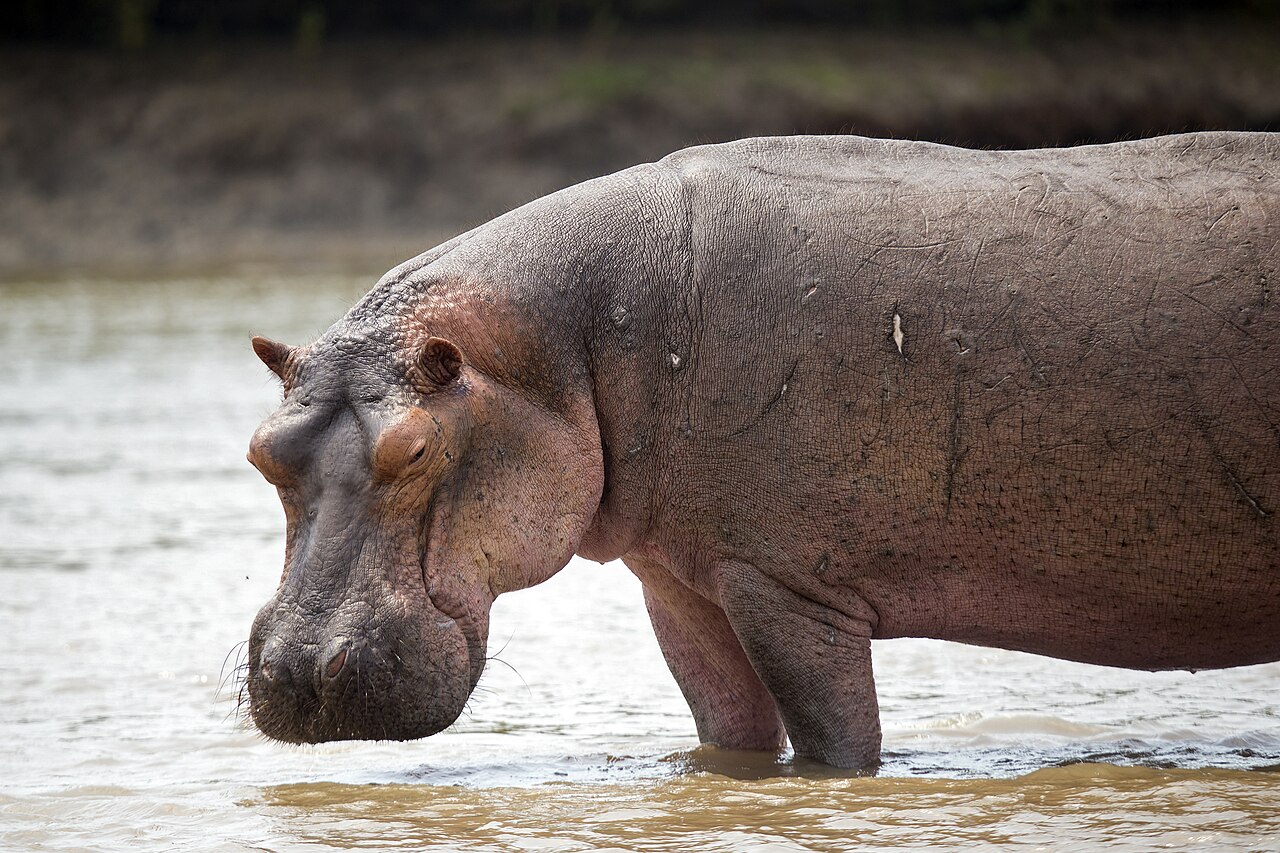
Imagine watching a hippo haul itself out of a river at dusk. Its massive body glistens, and along its back, face, and flanks you notice a slick, reddish coating that looks uncannily like blood seeping through the skin. Tourists have reported it for generations, and early European explorers in Africa wrote breathless accounts of hippos that "sweat blood" under the hot sun. The image stuck, and it is easy to see why. The secretion is vivid, it appears suddenly, and it seems to emerge from nowhere — there are no visible wounds, no bites, no cuts.
Yet the substance is not blood. It contains no red blood cells and no hemoglobin, the iron-rich protein that gives blood its color and carries oxygen. If you wiped the coating off a hippo and analyzed it in a laboratory, you would find a complex cocktail of pigments and proteins produced by specialized glands in the animal's skin. The confusion arises purely from appearance: the secretion starts out nearly colorless, then gradually darkens to pink, then red, then finally a deep brownish hue as its pigments oxidize on exposure to air — exactly the way a sliced apple browns.
This color shift is one reason the myth has proven so durable. A hippo that has just emerged from the water may show only a faint sheen. Minutes later, the same animal can look as though it has been in a fight. Observers who see only the final stage understandably jump to the blood conclusion.
What Is the Red Secretion? Meet Hipposudoric Acid
The red-orange substance has two main pigment components, both named after the animal itself. The first, hipposudoric acid, is the red-orange pigment responsible for the dramatic coloration. The second, norhipposudoric acid, is an orange pigment that appears alongside it. Together they form what researchers sometimes call "hippo sweat," though the term is technically misleading, since the fluid is not produced by sweat glands in the way human perspiration is.
The Chemistry Behind the Color
These pigments belong to a family of compounds related to phenols and quinones, molecules that are common in plants and microorganisms but rare in mammals. In their reduced, freshly secreted form, the pigments are relatively pale. When they meet oxygen in the air, they oxidize and polymerize — linking into larger molecules — and the color intensifies dramatically. This is why the coating appears to "develop" over time, darkening from a watery pink to a rust-red and eventually to brown.
Hippos are not unique in producing colored skin secretions, but they are unusual in the intensity and chemical complexity of theirs. Some other mammals, including certain bats and rodents, produce reddish or yellowish glandular fluids, but few match the hippo's output in volume or visual drama. A large adult hippo can coat much of its body in this substance within a short period, especially when stressed or exposed to strong sun.
Not Sweat, Not Blood — A Third Thing
It is worth being precise here, because the popular phrase "hippo sweat blood" bundles two errors into one. First, the fluid is not blood. Second, it is not true sweat either. Human sweat is a watery solution of salts produced by eccrine glands to cool the body through evaporation. The hippo's secretion is a thicker, oilier, pigment-rich fluid produced by subcutaneous glands that open onto the skin surface. It may assist with cooling indirectly, but its primary jobs appear to be protection and defense, not thermoregulation in the classic sense.
Why Do Hippos Produce This Red Fluid? The Real Functions
If the secretion is not blood and not sweat, what is it for? Scientists have proposed several overlapping functions, and the evidence suggests the answer is "all of the above" — a multipurpose biological shield.
Sun Protection: Nature's Sunscreen
Hippos spend their days in water and their nights grazing on land, but they are hardly nocturnal in the strict sense. They frequently bask on sandbanks and mudflats, and their hairless skin offers little natural cover. The red secretion absorbs ultraviolet light, acting as a built-in sunscreen. Laboratory studies have shown that the pigments absorb strongly in the UV range, which would help prevent the kind of DNA damage that leads to sunburn and skin cancer.
This matters enormously for an animal that can weigh up to 1,500 kilograms (3,300 pounds) for males, with some exceptional individuals reaching 2,000 kilograms or more. A hippo's skin surface area is large, its epidermis is relatively thin for its size, and it cannot retreat into shade whenever it likes, because it must regulate its body temperature by staying near or in water. A chemical sunscreen it can manufacture on demand is an elegant solution.
Antimicrobial Defense: Fighting Infection
Hippos live in and around water that is often teeming with bacteria, fungi, and parasites. They also fight — frequently and violently — and their skin is regularly punctured by tusks, teeth, and the rough edges of their environment. The red secretion contains compounds with demonstrated antibacterial and antifungal properties. In laboratory tests, both hipposudoric acid and norhipposudoric acid inhibited the growth of several disease-causing microorganisms, including strains of Pseudomonas and Staphylococcus.
This antimicrobial action may explain why hippos heal from serious wounds with surprising speed and why infections, though they occur, are not as rampant as one might expect in animals that spend their lives in muddy, microbe-rich water. The secretion essentially gives a hippo a self-applied antiseptic layer.
Thermoregulation: A Helping Hand, Not the Whole Story
Cooling is often cited as the main purpose of the secretion, and it likely plays a supporting role. The fluid is mostly water, and as it evaporates it carries heat away from the skin. However, hippos rely far more on behavioral cooling — submerging in rivers and lakes for hours, sometimes up to 16 hours a day — than on evaporative cooling. Their skin also lacks the dense network of sweat glands that would make sweating an efficient cooling strategy. So think of the red secretion as a minor assist in temperature control rather than the primary mechanism.
Wound Healing and Skin Condition
Some researchers have suggested that the pigments help maintain skin condition by forming a protective film that limits water loss and shields against irritants. Given that hippos alternate between wet and dry environments daily, a flexible, semi-permeable coating that slows dehydration when they are on land would be valuable. Observations of hippos with damaged skin suggest the secretion is produced more abundantly around injuries, though this has not been conclusively proven in controlled studies.
Hippo Sweat Blood: How the Myth Spread and Why It Persists
The myth has deep roots. Ancient and medieval writers described the hippo — an animal they often knew only from secondhand accounts — as a beast that perspired blood, sometimes linking it to biblical passages and moral allegories. Nineteenth-century European hunters and naturalists repeated the claim in travel journals, and the image entered popular culture through books, films, and eventually the internet, where dramatic photographs of red-slicked hippos circulate endlessly without context.
Several factors keep the myth alive:
- Visual similarity: The oxidized secretion genuinely resembles dried or fresh blood, especially in photographs where color balance is imperfect.
- Lack of close observation: Most people never see a hippo in person, let alone inspect its skin chemistry.
- Good storytelling: "Hippos sweat blood" is a memorable, slightly sinister factoid that spreads faster than a nuanced explanation about phenolic pigments.
- Real-world confusion: Hippos do sometimes appear bloodied — after territorial fights, when males clash with their enormous canine tusks, or when a female defends a calf. Seeing a genuinely wounded hippo can reinforce the false belief that the everyday red sheen is blood too.
Zookeepers and field biologists regularly field questions about it. The honest answer is that the animal is not bleeding; it is secreting a protective chemical brew that happens to be red.
Hippo Basics: Size, Diet, Habitat, and Lifespan
Understanding the secretion makes more sense when you understand the animal. The common hippopotamus (Hippopotamus amphibius) is native to sub-Saharan Africa, where it inhabits rivers, lakes, and mangrove swamps. Despite its reputation as a water creature, it cannot breathe underwater and must surface every few minutes to inhale; when sleeping or resting, it can stay submerged for around five minutes and can even close its ears and nostrils to keep water out.
Physical Statistics
- Weight: Adult males typically 1,500–1,800 kg (3,300–4,000 lb); females 1,300–1,500 kg (2,900–3,300 lb).
- Length: 3.3–5.2 meters (11–17 feet) from snout to tail.
- Height: About 1.5 meters (5 feet) at the shoulder.
- Speed: Can run 30 km/h (19 mph) on land for short bursts — faster than most humans.
- Bite force: Among the strongest of any land mammal, with canines growing up to 50 cm (20 inches).
Diet and Feeding Behavior
Hippos are herbivores and primarily grazers. At night they leave the water and walk — sometimes several kilometers — to feed on short grasses. An adult can consume roughly 35–40 kilograms (80–90 pounds) of grass per night. They do not eat aquatic plants to any significant degree, despite spending their days in water. Their stomachs are unusual: they have a four-chambered structure somewhat like a ruminant's, but they do not chew cud, and their digestion is comparatively inefficient, which is one reason they need to eat so much.
Habitat and Social Life
Hippos live in groups called herds, pods, or bloats, typically numbering 10–30 animals, though larger aggregations form when water levels drop and suitable pools shrink. A dominant male controls a stretch of river or a pool, and territorial disputes are frequent and occasionally lethal. Females form the stable core of the group, and calves stay close to their mothers for protection.
Lifespan and Reproduction
In the wild, hippos live about 40–50 years, with some individuals reaching their mid-50s. In captivity, where predators and droughts are not a threat, they can live into their 50s or even 60s. Females reach sexual maturity around 5–6 years of age, males somewhat later. After a gestation of roughly eight months, a single calf is born — underwater, typically — weighing around 25–50 kilograms (55–110 pounds). The mother nurses the calf for up to a year, and calves can suckle underwater by closing their ears and nostrils and surfacing to breathe.
Other Common Hippo Myths and Misconceptions
The blood-sweat legend is not the only falsehood attached to these animals. Correcting a few others helps paint a fuller picture.
"Hippos are slow and lazy."
Hippos rest a great deal during the day, but they are capable of explosive speed. On land they can outrun a person, and in water they move with surprising agility, walking or bounding along the bottom and launching themselves to the surface. A hippo defending its calf or territory is one of the most dangerous animals in Africa.
"Hippos are related to pigs."
This is a longstanding error. Molecular evidence places hippos in the order Artiodactyla (even-toed ungulates), and their closest living relatives are cetaceans — whales and dolphins. Hippos and whales share a common ancestor that lived roughly 55 million years ago. Pigs are far more distant relatives.
"Hippos only eat plants, so they are harmless."
Herbivorous does not mean harmless. Hippos kill an estimated 500 people per year in Africa, more than lions, elephants, or crocodiles. Most incidents occur when people unknowingly come between a hippo and deep water, or when a boat passes too close to a pod with calves.
What Scientists Still Do Not Know
Despite decades of study, the hippo's red secretion retains mysteries. Researchers are still working out the full chemical structure of the pigments, the precise pathways by which they are synthesized, and how their production varies with age, sex, health, and environment. It is not fully clear whether the secretion is produced continuously or triggered by stress, heat, or social conflict. Nor is it known exactly how much protection it provides in the wild compared with the controlled conditions of a laboratory.
There is also conservation urgency behind the research. The common hippopotamus is classified as Vulnerable on the IUCN Red List, with populations declining due to habitat loss, drought, and poaching for meat and ivory-like teeth. Understanding the animal's biology — including its extraordinary skin chemistry — supports better captive care and wild management. Compounds derived from hippo pigments have even attracted interest for potential pharmaceutical and materials applications, though such work remains exploratory.
The Bottom Line: A Red Herring Worth Celebrating
So the next time someone tells you that hippos sweat blood, you can gently correct them — and then tell them something better. Hippos produce a chemically sophisticated, red-orange secretion containing hipposudoric acid and norhipposudoric acid, pigments that act as sunscreen, antimicrobial armor, and a partial cooling aid. It is not blood, it is not sweat, and it is one of the most unusual adaptations in the mammalian world. The myth of hippo sweat blood endures because the truth looks so much like the legend. But nature rarely needs embellishment. A two-ton animal that manufactures its own sunscreen, antiseptic, and protective film while spending half its life submerged in African rivers is already remarkable enough — no blood required.
❓ Frequently Asked Questions
💬 Do hippos actually sweat blood?
No, hippos don't sweat blood. The red, oily substance on their skin is a natural secretion often called 'blood sweat,' but it contains no blood at all.
💬 What is the red stuff that hippos secrete?
It's a mix of pigments, including red and orange compounds, produced by special glands in the hippo's skin. This secretion acts as a natural sunscreen, moisturizer, and antibiotic.
💬 Why do hippos need a red sweat-like secretion?
Hippos spend long hours in the sun and water, so the secretion protects their sensitive skin from UV rays, keeps it from drying out, and helps prevent infections.
💬 Is hippo sweat dangerous to humans?
No, the secretion itself isn't dangerous to humans. However, hippos are highly aggressive and can be very dangerous if approached, so you should always keep a safe distance.