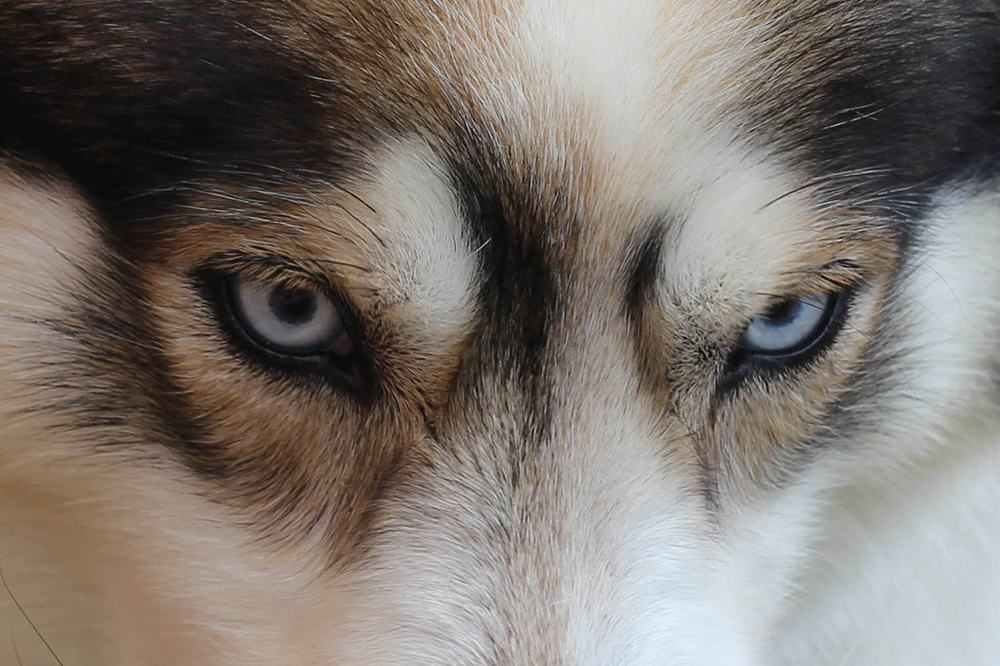
- The Genetic Mystery of Husky Blue Eyes: It’s Not What You Think
- The “Piebald” Connection and the ALX4 Duplication
- Husky Blue Eyes vs. Other Breeds: A Different Genetic Path
- Why Not All Huskies Have Blue Eyes
- The Evolutionary History of the Siberian Husky: Built for the Arctic
- Physical Traits of the Siberian Husky
- Behavior and Temperament: More Than Just a Pretty Face
- The High-Energy Reality of the Breed
- Common Health Issues Linked to Eye Color
- The Psychology of the Blue-Eyed Gaze
- The Grooming Reality of a Double-Coated Breed
- The Surprising Truth About Heterochromia and Parti-Colored Eyes
- Conclusion: The Icy Gaze Is a Genetic Marvel
- ❓ Frequently Asked Questions
The husky blue eyes that stare out from countless photographs and videos are arguably the breed's most iconic feature, but the genetic story behind that icy gaze is far more complex and surprising than a simple color palette. While many assume all Siberian Huskies have blue eyes, or that the trait is exclusive to them, the truth involves a specific genetic mutation, a fascinating quirk of canine DNA, and even a link to a breed standard that predates modern genetics. This article will unravel the science, history, and myths surrounding the husky blue eyes phenomenon, revealing why this striking trait is not just beautiful, but biologically remarkable.
The Genetic Mystery of Husky Blue Eyes: It’s Not What You Think
For years, scientists believed that blue eyes in dogs were caused by the same genetic mechanism that produces blue eyes in humans—a variation near a gene called OCA2, which influences melanin production. However, a landmark 2018 study published in the journal PLOS Genetics turned that assumption on its head. Researchers at Embark Veterinary, working with Cornell University, sequenced the genomes of over 2,000 dogs and discovered that blue eyes in Siberian Huskies are linked to a completely different region of the genome.
The culprit is a duplication on canine chromosome 18, in a region that contains a gene called ALX4. This gene plays a critical role in eye development. The duplication, which is not a mutation in the traditional sense but rather an extra copy of a DNA segment, appears to disrupt the normal expression of ALX4 during embryonic development. This disruption interferes with the migration of melanocytes—the cells that produce pigment—into the iris. Without melanin, the iris scatters light in a way that makes it appear blue, much like the sky.
The “Piebald” Connection and the ALX4 Duplication
Interestingly, the ALX4 duplication is also associated with piebaldism—a condition that produces white patches on the coat. In Huskies, this is most visibly expressed as white markings on the face, particularly around the eyes and muzzle. The study found a strong statistical correlation between the presence of the ALX4 duplication and dogs with white faces, which is why you’ll rarely see a solid black or solid red Husky with blue eyes. The gene doesn't just affect the eye; it affects the entire pigmentation pathway during early development.
This discovery was a breakthrough because it showed that the husky blue eyes trait is dominant but not simple. A dog only needs one copy of the duplication to express blue eyes, yet not all dogs with the duplication will have blue eyes. This is called incomplete penetrance. Some Huskies carry the duplication but have brown eyes, while others may have one blue and one brown eye (heterochromia), or even “parti-colored” eyes where one iris is half blue and half brown. The genetic dice are loaded, but the final roll depends on other, as-yet-unidentified modifiers.
Husky Blue Eyes vs. Other Breeds: A Different Genetic Path
It’s crucial to understand that the ALX4 duplication is specific to certain breeds. While a Husky’s blue eyes come from this chromosome 18 duplication, other blue-eyed dogs—like the Australian Shepherd, Border Collie, or Corgi—often get their blue eyes from the merle gene (M-locus). Merle is a dilution pattern that causes patches of reduced pigment, and when it affects the eye, it can produce blue or partially blue irises. This is a completely different genetic pathway.
Furthermore, the piebald gene (S-locus) in breeds like the Dalmatian or English Setter can also produce blue eyes, but again, this is a separate mechanism from the ALX4 duplication found in Huskies. The husky blue eyes trait is so distinct that genetic testing companies like Embark now offer a specific marker for the ALX4 duplication to help owners understand their dog's eye color probability. This precision is a testament to how unique the Siberian Husky's genetic architecture truly is.
Why Not All Huskies Have Blue Eyes
Despite the strong association, the American Kennel Club (AKC) breed standard for Siberian Huskies explicitly states that eye color may be brown, blue, black, or any combination thereof. There is no preferred color. In fact, a 2016 study by the University of California, Davis, estimated that approximately 40% of Siberian Huskies have blue eyes, 40% have brown eyes, and the remaining 20% have heterochromia or parti-colored eyes. This diversity is a direct result of the incomplete penetrance mentioned earlier. The ALX4 duplication is common, but its expression is highly variable.
Environmental and developmental factors also play a role. Puppies are often born with blue eyes that later change to brown as melanin production ramps up in the first few weeks of life. This happens because the melanocytes are still migrating and activating during the neonatal period. If the ALX4 duplication has severely suppressed melanocyte function, the eyes will stay blue. If suppression is partial, a Husky might end up with amber or light brown eyes instead of the deep chocolate brown seen in other breeds.
The Evolutionary History of the Siberian Husky: Built for the Arctic
To understand why this genetic quirk persisted, we must look at the Husky’s origins. The Siberian Husky was developed by the Chukchi people of northeastern Siberia over 3,000 years ago. These dogs were not bred for appearance; they were bred for survival and endurance as sled dogs. The Chukchi valued traits like speed, stamina, and the ability to work in extreme cold, often at temperatures reaching -60°F (-51°C).
Here’s where the husky blue eyes story gets a fascinating twist. There is no direct evidence that blue eyes provide any visual advantage in snowy conditions. In fact, some researchers hypothesize that blue eyes might reduce glare, similar to how mountaineers wear sunglasses. However, this theory remains unproven. The more likely explanation for the trait's persistence is genetic drift and founder effect. Because the Chukchi population was relatively isolated and small, a random genetic duplication could easily become fixed in the gene pool if it didn't confer a survival disadvantage.
The Chukchi people themselves held a different belief. Historical accounts describe them as valuing dogs with blue eyes for spiritual reasons, considering them to have a special connection to the spirit world. This cultural preference may have inadvertently increased the frequency of the ALX4 duplication, as blue-eyed dogs were more likely to be kept for breeding. This is a classic example of how human cultural selection can shape animal genetics, even in a working breed.
Physical Traits of the Siberian Husky
Beyond their eyes, Huskies are a medium-sized breed with remarkable physical adaptations. Males stand 21 to 23.5 inches (53-60 cm) at the shoulder and weigh between 45 and 60 pounds (20-27 kg). Females are slightly smaller, at 20 to 22 inches (51-56 cm) and 35 to 50 pounds (16-23 kg). Their double coat—a soft, dense undercoat and a longer, straight topcoat—provides exceptional insulation. They also have a unique metabolic adaptation that allows them to regulate their body temperature efficiently during strenuous exercise, which is why they can run for hours without overheating.
Their lifespan is typically 12 to 14 years, which is relatively long for a breed of their size. This longevity is partly due to their hardy genetic background and the fact that they have fewer inherited diseases compared to many purebred dogs, although they are prone to hip dysplasia, eye disorders like cataracts and progressive retinal atrophy, and hypothyroidism.
Behavior and Temperament: More Than Just a Pretty Face
While the husky blue eyes may captivate you, the breed’s personality is equally distinctive. Siberian Huskies are known for their friendly, outgoing, and mischievous nature. They are not guard dogs; they are notorious for being equally welcoming to strangers as they are to family. This trait stems from their history as pack animals that lived closely with humans and other dogs, where aggression was actively bred out.
Their intelligence is high, but it is often described as “independent” or even “stubborn.” A Husky will readily learn a command if there is a reward, but they will also openly ignore it if they decide something else is more interesting. This is a classic trait of sled dogs, who were bred to make split-second decisions on the trail without waiting for human input. This independence means they are not the easiest breed for a first-time dog owner.
One of the most critical behavioral traits to understand is their prey drive. Huskies have a strong instinct to chase small animals, which is a survival remnant from their Arctic heritage where they had to hunt for food. This means they absolutely cannot be trusted off-leash in an unsecured area. They are also prolific escape artists, capable of digging under fences, jumping over six-foot barriers, or even opening latches. A bored Husky is a destructive Husky, known for chewing furniture and howling—not barking—in a mournful, wolf-like chorus.
The High-Energy Reality of the Breed
Owning a Husky requires a serious commitment to exercise. They were bred to pull sleds for hundreds of miles, and that stamina doesn’t disappear in a suburban backyard. A Husky needs at least 1 to 2 hours of vigorous exercise daily. This isn't just a leisurely walk; it involves running, hiking, or participating in dog sports like canicross (running with a dog attached to a harness) or bikejoring. Without adequate exercise, they will channel their energy into unwanted behaviors.
Their diet must match their energy levels. A working Husky on a sled team may require up to 10,000 calories per day, but a companion Husky needs significantly less. Typically, an average adult Husky needs about 1,200 to 1,500 calories per day, depending on activity level, split into two meals. A high-quality protein-rich diet is essential to maintain their lean muscle mass. They are also known for having a unique ability to regulate their food intake; they will often eat only when hungry, rather than gorging themselves, which is unusual for most dog breeds.
Common Health Issues Linked to Eye Color
There is a widespread misconception that husky blue eyes are linked to deafness or blindness. This is true for some breeds with extreme white pigmentation, like the Dalmatian or Australian Shepherd, where the genes responsible for coat color can also affect the inner ear and eye development. However, the ALX4 duplication in Huskies is not associated with these issues. A blue-eyed Husky is no more likely to be deaf or blind than a brown-eyed Husky.
That said, all Huskies are prone to certain eye conditions, regardless of color. The most common is cataracts, which can cause a progressive clouding of the lens and can lead to blindness if untreated. Juvenile cataracts can appear in Huskies as young as 6 months old. Another concern is corneal dystrophy, which affects the cornea's clarity, and progressive retinal atrophy (PRA), a degenerative disease that eventually causes blindness. Responsible breeders perform eye exams through the Canine Eye Registration Foundation (CERF) to screen for these hereditary issues.
Interestingly, the structure of a Husky's eye is different from many breeds. They have a higher incidence of persistent pupillary membranes (PPM), which are strands of tissue in the eye that should disappear after birth but sometimes remain. These are usually harmless but can occasionally affect vision. The key takeaway is that while the husky blue eyes are genetically unique, they are not a health red flag. The health concerns are breed-wide, not color-specific.
The Psychology of the Blue-Eyed Gaze
Why are we so captivated by husky blue eyes? The answer lies in human psychology and our evolutionary history. Studies have shown that humans are drawn to eyes with a visible contrast between the iris and the pupil. Blue eyes have a distinct, sharp limbal ring (the dark border around the iris), which increases their perceived attractiveness. In dogs, this contrast is particularly striking against a dark coat or white face.
Moreover, dogs have evolved to use their eyes to communicate with humans. A study by the University of Portsmouth found that dogs developed a specific muscle around their eyes that allows them to produce the “puppy dog eyes” expression—raising their inner eyebrows to make their eyes appear larger. This muscle is absent in wolves. When a Husky with blue eyes looks at you, the combination of the pale iris and the expressive eyebrow movement triggers a powerful nurturing response in humans. We perceive them as more infant-like, more vulnerable, and more trustworthy.
This psychological effect has real-world consequences. A 2019 study in the journal Animals found that dogs with blue eyes are more likely to be adopted from shelters than their brown-eyed counterparts. They are also more likely to be featured in advertising and social media, which perpetuates the cycle of demand. However, this popularity has a downside. Many people acquire Huskies based on their looks without researching the breed's high energy and grooming needs, leading to a high rate of abandonment in Husky-specific rescues.
The Grooming Reality of a Double-Coated Breed
If you're considering a Husky, be prepared for a significant grooming commitment. Their double coat is not just for cold weather; it also helps insulate them from heat. However, it sheds profusely. Huskies “blow” their undercoat twice a year, typically in spring and fall. During these periods, they will shed massive clumps of fur for two to three weeks. Outside of these heavy shedding periods, they still shed moderately year-round.
Regular brushing is essential—at least 2 to 3 times a week, and daily during shedding season. A slicker brush and an undercoat rake are the best tools to remove loose fur. Contrary to popular belief, you should not shave a Husky in the summer. The undercoat acts as insulation against heat, and shaving can damage the coat permanently and expose the dog's skin to sunburn.
Bathing should be infrequent—only every 2 to 3 months—as over-bathing strips the natural oils from their skin. Their nails need regular trimming, and dental hygiene is crucial. Huskies are generally clean dogs with little to no odor, a trait they inherited from their Arctic ancestors who had to stay scent-free to approach prey.
The Surprising Truth About Heterochromia and Parti-Colored Eyes
One of the most beautiful expressions of the husky blue eyes gene is heterochromia—having two different colored eyes. In Huskies, this is often one blue eye and one brown eye, but it can also be a blue eye and an amber eye. This condition is not a defect; it is simply the result of the ALX4 duplication affecting one side of the face more than the other. The melanocytes may successfully migrate to one eye but fail to do so in the other.
Even more remarkable is the phenomenon of partial heterochromia, or “parti-colored” eyes. In this case, a single iris contains segments of different colors—for example, half blue and half brown. This occurs when melanocyte migration is patchy within a single eye. This is visually stunning and is often the most sought-after trait by Husky enthusiasts. The rarest combination is a dog with one blue eye and one eye that is split half blue, half brown.
The genetic lottery for these patterns is random. There is no way to breed specifically for a certain eye color combination because of the incomplete penetrance and the influence of unknown modifier genes. A litter of six puppies can have a blue-eyed dog, a brown-eyed dog, a dog with heterochromia, and a dog with parti-colored eyes, all from the same parents. This unpredictability is part of what makes each Husky so unique.
Conclusion: The Icy Gaze Is a Genetic Marvel
The husky blue eyes that have made this breed an internet sensation are not just a random cosmetic quirk. They are the result of a specific, rare genetic duplication on chromosome 18—a mutation that is unique to a handful of Arctic breeds and completely separate from the genes that cause blue eyes in other dogs or in humans. This trait is a fascinating window into the breed's isolated history with the Chukchi people, a testament to the power of genetic drift and cultural selection. The ALX4 duplication is a dominant gene, yet its expression is beautifully unpredictable, creating a rainbow of brown, blue, amber, and mixed eyes within a single breed. While the blue eye itself carries no health risks, it serves as a powerful reminder that this is a working breed with ancient roots, requiring a dedicated owner who understands their high energy, independent spirit, and profound need for activity. The next time you lock eyes with a blue-eyed Husky, remember you are looking at a living genetic marvel—a trait that took thousands of years and a unique partnership between humans and dogs to create.
❓ Frequently Asked Questions
💬 Are all Huskies born with blue eyes?
No, not all Huskies are born with blue eyes, though many are. Puppies are often born with blue eyes that may change to brown, green, or amber by 6-8 weeks of age as their melanin production kicks in, so the final color isn't guaranteed until they're older.
💬 Why do Huskies have blue eyes when most dogs have brown?
Huskies have blue eyes due to a genetic mutation near the ALX4 gene that affects melanin production in the iris, causing less pigment and light scattering in a way that appears blue. This mutation is unique to the breed and is not linked to deafness or vision problems, unlike in some other dog breeds.
💬 Can a Husky have one blue eye and one brown eye?
Yes, this condition is called heterochromia and is common in Huskies. It happens when each eye inherits different levels of pigment, so one eye is blue while the other is brown, green, or amber, and it's completely harmless.
💬 Do blue-eyed Huskies have more health problems than brown-eyed Huskies?
No, blue-eyed Huskies do not have more health problems. Their blue eyes are purely a cosmetic trait from a genetic quirk, and they have the same vision and overall health as brown-eyed Huskies, provided they don't carry other unrelated genetic conditions.