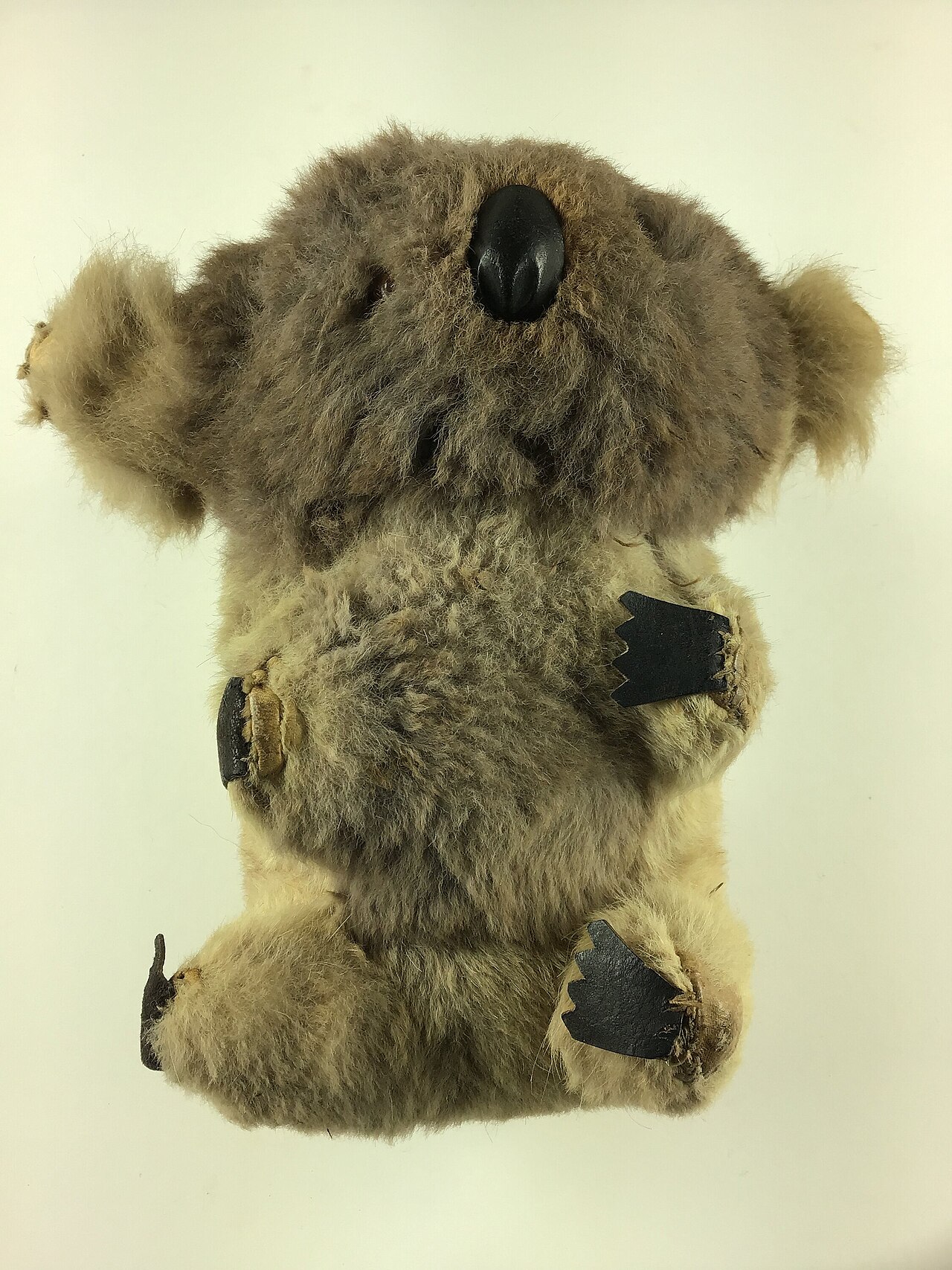
- The Remarkable Story of Koala Fingerprints
- A Forensic Mix-Up in the Making
- The Conundrum of Koala Fingerprints vs. Primate Prints
- Convergent Evolution: Form Following Function
- The Purpose and Anatomy of the Clinging Grip
- Microscopic Similarities in the Ridges
- A Genetic Mystery: The Recipe for Ridges
- How the "Human-Like" Illusion Is Maintained
- Beyond Fingerprints: The Koala's Clever Claws
- Behavioral Affinities with Humans
- The Primate Connection: What Human Hands and Koala Paws Share
- Koala Fingerprints in Forensics and Popular Science
- A Unique Case in Animal Identification
- The Distant Cousins: Looking at the Thylacine and Wombat
- Frequently Asked Questions About Koala Prints and Paws
- Koala Conservation: Protecting the Animal Behind the Prints
- Conclusion: A Masterful Design in the Animal Kingdom
- ❓ Frequently Asked Questions
When you picture the animal kingdom's most unique adaptations, koala fingerprints are likely not the first thing that comes to mind, yet these marsupials possess ridged patterns on their paws that are so uncannily similar to our own that they have fooled forensic experts on more than one occasion. These intricate swirls and loops, borne by a creature that spends its life munching eucalyptus leaves in Australian treetops, represent one of evolution's most striking examples of convergent adaptation. While the anatomy of a koala seems radically different from a human primate, a closer look at the pads of their hands reveals a biological blueprint nearly identical to our own, raising profound questions about function, genetics, and chance.
The Remarkable Story of Koala Fingerprints
Koalas (Phascolarctos cinereus) are arboreal herbivores native to Australia, instantly recognizable by their large, round ears, prominent black noses, and seemingly perpetual state of drowsiness. However, a closer inspection of their forepaws reveals one of zoology's most fascinating secrets: they have individual, ridged fingerprints that are practically indistinguishable from human dermatoglyphics. This discovery is not a modern revelation; scientists have known about the similarity for decades, but the public became widely aware of the phenomenon in 1996 when a British forensic scientist, Maciej Henneberg, published a paper noting the uncanny resemblance. He pointed out that a koala print could easily be mistaken for a human print during a crime scene investigation, a claim that has since been validated by subsequent studies and anecdotal forensic cases.
A Forensic Mix-Up in the Making
One of the most cited anecdotal cases involves a police investigation in Australia where detectives were baffled by fingerprints found at a crime scene that did not match any human on record. A quick, tense investigation revealed the prints belonged to a koala that had wandered into the location. While the exact details of this urban legend are often debated, the underlying scientific truth remains: the structure of a koala's fingerprint is so similar to a human's that even sophisticated scanning software can have difficulty distinguishing them. The primary difference isn't the pattern or the friction ridges themselves, but the scale—koala prints are generally smaller and more rounded, yet the observable features (loops, whorls, and arches) fall within the same classifications used by human forensic analysts.
The Conundrum of Koala Fingerprints vs. Primate Prints
To understand why this similarity is so shocking, one must look at the evolutionary tree. Humans are primates, a group that has long been known for possessing fingerprints. Our closest relatives—chimpanzees, gorillas, and orangutans—all have them, and they are also present in many other Old World and New World monkeys. On the other hand, koalas are marsupials, a lineage of mammals that diverged from placental mammals (like primates) roughly 125 million years ago. Marsupials are characterized by giving birth to relatively undeveloped young that complete their development in a pouch. The koala’s closest relatives, such as wombats and kangaroos, do not possess patterned fingerprints with the same level of complexity; they tend to have smooth pads or simple, linear ridges.
The existence of such intricate prints in a marsupial challenges the assumption that this trait is exclusive to the primate lineage. It forces biologists to ask whether this is a relic of a common ancestor (which is highly unlikely given the evolutionary distance) or, more plausibly, an independent evolutionary solution to similar environmental pressures—a phenomenon known as convergent evolution. The koala’s paws are remarkably similar to primate hands in general. They have five digits, including an opposable-like thumb and two opposable toes on the hind feet, which allow them to grip branches with a "hands and feet" approach, much like a human climbing a rock wall.
Convergent Evolution: Form Following Function
Convergent evolution occurs when unrelated species develop similar traits because they occupy similar ecological niches. Flying squirrels and sugar gliders both developed gliding membranes, and dolphins and sharks both developed streamlined bodies, despite their vastly different ancestries. The case of the koala suggests that the specific need to grasp cylindrical objects (tree trunks and branches) while moving in a three-dimensional environment strongly selects for the development of friction ridges. However, if this were the sole reason, we would expect to see the same complex patterns on the paws of all arboreal mammals, from squirrels to raccoons. We do not, which is precisely why koala fingerprints are such a unique scientific anomaly. They are an overdeveloped example of convergence that seems to have gone one step further than necessary, matching primate prints in microscopic detail rather than just general grip-enhancing structure.
The Purpose and Anatomy of the Clinging Grip
The primary function of fingerprints in any species is mechanical: they increase friction between the skin and the surface being grasped. Tiny ridges create channels that allow moisture to be channeled away, allowing the skin to make a more durable and consistent contact with a smooth surface. In addition to mechanical friction, they may also increase the sensitivity of touch through the stimulation of nerve endings in the dermal papillae beneath the ridges. For koalas, this is essential for survival. They live in a vertical environment, often dozing for up to 20 hours a day. Falling from a branch during a deep sleep would be fatal, and their grip must be maintained without conscious effort and without damaging the bark of the trees they depend on.
An average adult koala weighs between 9 and 14 kilograms (20 to 31 pounds) and can be over 60 centimeters long. They scramble to the tops of trees in search of leaves, and their hands are built to act as secured clamps. The anatomy of the hand includes a shallow "crack" between the two largest digits, allowing them to hold cylindrical branch ends firmly. The friction created by their fingerprints means they don't have to exert nearly as much muscular force to maintain their hold, which conserves energy for the long hours of digestion required to process their toxic diet.
Microscopic Similarities in the Ridges
The sophistication of koala fingerprints is revealed at the microscopic level. Friction ridges in primates are defined by the presence of "minutiae"—specific points where ridges end, bifurcate, or split. These minutiae are the foundation of human fingerprint identification. Koalas possess these same minutiae, including the forks and dot patterns. The dermatoglyphic formula (the quantitative pattern of ridge flow) is shared. In fact, a study conducted by researchers in 2021 comparing koala and human scans found that the ridge density and shape parameters were statistically indistinguishable in several areas. This level of detail suggests the fingers pad deals with the same mechanical stresses in the exact same way a human thumb or index finger does. The pattern types found on koalas are also diverse; some koalas have a high frequency of whorls, while others favor loops, mirroring the distribution of patterns found in the human population.
A Genetic Mystery: The Recipe for Ridges
If the fossil record tells us these species have been apart for over 100 million years, the shared trait of fingerprints suggests that the genetic pathway for making them is either extremely stable (ancient) or was re-evolved with the same molecular "ingredients" by chance. The genetic basis of fingerprint formation is a complex process driven by the EDAR, EDA, and WNT genes during embryonic development. These genes are involved in the development of hair follicles, teeth, and limbs. In humans, the patterns emerge in the womb at around week 10, when the skin on the pads grows faster than the underlying tissue, causing buckling.
In koala embryos, the same processes occur in the development of the paw. The question is whether they are using the same gene regulatory network as primates. Researchers believe they are, but they have been "switched on" independently. The koala genome was fully sequenced in 2018, and it revealed that the marsupial has a functioning copy of the teeth and hair pathways that are crucial in humans. This implies the genetic toolkit for building these ridges is ancient, predating the split between marsupials and placentals. However, the *expression* of these genes in the exact pattern of a fingerprint is highly specific. The patterning is influenced by the orientation of the skin and the forces applied by the developing fetus in the pouch—a phenomenon known as "Volar Pad Theory," which suggests the size and shape of the pad determine the type of pattern.
How the "Human-Like" Illusion Is Maintained
Even the size is not a major deterrent for comparison. While an adult human hand often measures 18-20 cm from wrist to tip, a koala's hand is roughly 4-5 cm. However, the ridges themselves are not scaled down proportionally. Koala ridge widths are often larger than human ridge widths when measured absolutely. When you scale a koala print up to the size of a human print, the proportion falls perfectly into the statistical range of human fingerprints. This is why a forensic examiner has to look for the "lyrate pattern" (the arrangement of ridges at the tip of the thumb) to tell them apart. Without a scale reference or a known koala sample in the database, the automated fingerprint identification systems (AFIS) will often return a "possible match" for a koala print. This proves that the *koala fingerprints* are not merely analogous in function but homologous in appearance.
Beyond Fingerprints: The Koala's Clever Claws
The fingerprints do not act alone. Koalas possess sharp, curved claws on their digits that play a crucial role in their climbing strategy. While the fingers and toes grip, the claws dig into the bark, providing additional anchorage. The opposable thumbs on the front paws and the syndactylous (fused) second and third toes on the back feet create a pincer mechanism. This combination of bone-structure, claws, and friction ridges allows them to navigate trees that are often smooth and slippery after rain.
Koalas are highly specialized eaters, consuming up to 500 grams of eucalyptus leaves per day. They choose specific species of eucalyptus, often those with higher protein and lower toxin content. This diet is fibrous and difficult to digest, requiring a long hindgut and a specialized cecum (a pouch connected to the junction of the small and large intestines) that contains bacteria capable of breaking down the tough plant cell walls and detoxifying the phenols and terpenes. The hand strength to grab these specific leaves is therefore paramount. Without the grip provided by their unique dermatoglyphics, they would not be able to manipulate the leaves to their mouths with the dexterity they exhibit.
Behavioral Affinities with Humans
Observing a koala eating reveals a remarkably human-like behavior—they use their front paws to grasp a branch, pull it toward their mouth, and then use their fingers to individually pluck leaves off the stem, guiding them to their lips with precise movements. This manipulation of individual food items requires a high level of motor control and tactile sensitivity. It is widely accepted in zoology that the existence of sensory feedback from the fingerprints enhances this "prehensile" feeding behavior. They can distinguish the age and toxin content of a leaf by touch alone. They rarely, if ever, drop their food, a testament to the dry, frictional contact offered by their prints.
The Primate Connection: What Human Hands and Koala Paws Share
Comparative anatomy between koala paws and primate hands shows a list of shared adaptations that go far beyond fingerprints. Primates, particularly arboreal ones, have nails instead of claws, which aid in gripping. Koalas also have flattened nails on their digits (except for the first digit of the hind foot). They have a reduced number of digits for weight-bearing, and their feet are plantigrade (placing the whole sole on the surface) when on the ground, though they are digitigrade when climbing. The structure of the "hypothenar" pad (the pad on the outside of the palm) is notably similar in size and position between humans and koalas.
But why did these changes occur specifically in koalas and not in other marsupials? The answer lies in the "Arboreal Hypothesis." Primates evolved for tree life, and koalas have undergone a similar evolutionary bottleneck toward extreme arboreality. The opossum, another marsupial, also has semi-opposable thumbs, but it lacks the complicated ridge flow of a koala. The koala’s niche is more restrictive: they never descend to the ground to forage; they spend 99% of their lives in the canopy. This extreme lifestyle placed a higher selective premium on touch and grip, leading to the development of the finest fingerprints in the non-primate world.
Koala Fingerprints in Forensics and Popular Science
Because of their specific structure, koala fingerprints have provided a unique challenge and a fascinating case study in forensic science. A paper written by Maciej Henneberg in the mid-1990s stressed that koala fingerprints are so similar to human prints that they could be used to "train" forensic students on the importance of looking for the specific shape of the print—not just the ridge pattern. In a 2023 review of "non-human fingerprints," researchers reiterated that the koala is the only non-primate mammal known to possess both the full ridge structure and the presence of sweat glands on the ridge crests, just like humans. This is known as "friction skin."
A Unique Case in Animal Identification
This unique feature is also being used for conservation. Wildlife researchers are beginning to use "koala fingerprinting" to identify individual animals in the wild. Because each koala possesses unique patterns, researchers photographing handprints on trees can use identification software to track individual koalas without needing to capture them physically. This non-invasive technique allows for monitoring of population sizes, movement patterns, and health. The same biometric technology designed to catch criminals is now being used to save an endangered species, representing a perfect circular use of an odd evolutionary quirk. Since the Australian bushfires of 2019-2020, koalas have been under severe stress, and the ability to cheaply and non-invasively census their populations via this method is proving to be an indispensable conservation tool.
The Distant Cousins: Looking at the Thylacine and Wombat
To contextualize the koala's adaptation, it helps to compare them with their closest relatives. Wombats, for instance, are terrestrial burrowers. They have thick, strong claws and a heavy build, but their hands have a simpler ridge pattern that is not considered comparable to primate prints. Their lifestyle does not demand the precision grip of a tree-dweller. The extinct Tasmanian tiger (thylacine) had a different paw structure entirely, more akin to a dog's, showing that the marsupial order, while sharing a general body plan, had massive variability in hand function.
The unique position of the koala suggests that if the thylacine or wombat had been driven into a similar "extreme arboreal" niche, they too might have evolved fingerprints. The fact that the koala is the only species to do so highlights the potent combination of their specific morphology and the selective pressures of eucalyptus forests. This example is often used by evolutionary biologists to teach students about "parallel evolution," where similar morphologies arise in related lineages under similar pressures, though in this case, the relatedness is so deep that it borders on full convergence with primates.
Frequently Asked Questions About Koala Prints and Paws
Many people ask if koala fingerprints implant on surfaces like human prints do. Yes, they do. Koalas have eccrine sweat glands on their paw pads. When they touch smooth surfaces, such as glass or metal—or in some rare cases, cars parked in their habitat—they leave a visible, oily fingerprint residue that is developed by traditional fingerprint powder. Because they are arboreal, they are frequently touching eucalyptus leaves, but they also traverse smooth bark, leaving latent prints that can be lifted by zoologists.
Another common question is whether the pattern changes over a koala’s lifetime, and the answer is no. Like human fingerprints, the ridge patterns are formed in the pouch and remain unchanged throughout the koala's life, though they do grow in size as the animal grows. A koala's lifespan in the wild is about 10 to 12 years, though some can live up to 18 years in captivity with adequate veterinary care. Over these years, the prints may accumulate scars from climbing, but the fundamental pattern remains.
Koala Conservation: Protecting the Animal Behind the Prints
Understanding the uniqueness of koala hands also serves a conservation purpose. The koala is currently listed as endangered in various parts of Australia, with populations declining due to habitat loss, chlamydia outbreaks, and devastating wildfires. Their specialized grip means they are specifically adapted to old-growth forests with sturdy horizontal branches and tree trunks of a certain diameter. If forests are cleared or fragmented, the koalas are forced to travel across the ground, where their impressive fingerprints cannot protect them from cars and predators (dingoes and domestic dogs).
Preserving mature eucalyptus forests is paramount. The size of the trees directly impacts the ability of these animals to grip safely. If a tree is too thin, the koala cannot wrap its front paws around it effectively to secure its grip. The fingerprints work best on trunks that naturally fit the span of their paws. Conservation efforts now involve mapping forest canopies to ensure that corridors of large trees remain connected, allowing the koalas to move safely and use their adapted appendages to their full advantage. Their unique hands are a physical testament to how deeply connected a species is to its habitat; if you change the habitat, you render millions of years of precision adaptation useless.
Conclusion: A Masterful Design in the Animal Kingdom
The evolutionary mystery of why koalas have human-like fingerprints is a wonderful reminder of how life solves problems in duplicative ways. Unlike our primate ancestors, who evolved fingerprints for complex manipulation of tools and food, the koala evolved the exact same biological structure to cling to eucalyptus branches with a vice-like grip during long bouts of sleep. The result is a natural wonder that blurs the line between species, creates literal headaches for crime lab technicians, and offers a powerful blueprint for robotic gripping technologies. The fingerprints of the koala are not a coincidence or a cosmic joke, but rather a masterpiece of engineering that ensures this iconic Australian marsupial continues to remain safe, secure, and unmistakably unique in the treetops it calls home.
❓ Frequently Asked Questions
💬 Do koalas have fingerprints?
Yes, koalas have fingerprints on their fingers and toes, and they are remarkably similar to human fingerprints. They even have ridges, whorls, and loops that can be difficult to distinguish from our own under a microscope.
💬 Why do koalas have fingerprints like humans?
Koala fingerprints are a result of convergent evolution, meaning they developed independently from humans for a similar purpose: improving grip. The fine ridges help koalas securely hold onto smooth tree branches and eucalyptus leaves as they climb and feed.
💬 Are koala fingerprints identical to human fingerprints?
No, koala fingerprints are not identical in structure or pattern, but they are strikingly similar. Under a microscope, the fine ridge details are very hard to tell apart, though koala prints have unique arrangements and are generally smaller.
💬 Can koalas leave fingerprints that could be mistaken for a human's?
Yes, koala fingerprints are so similar that they can confuse forensic experts. There have been documented cases where koala prints were found at crime scenes and initially mistaken for human fingerprints, though a careful analysis can tell them apart.