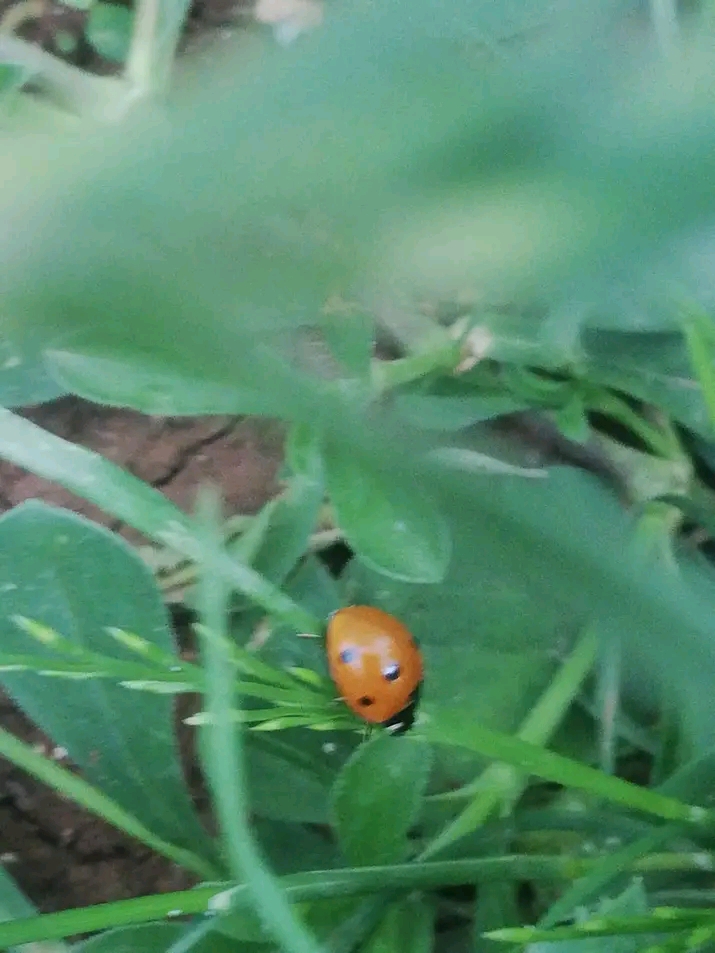
- The First Truth About Ladybug Spots: A Warning in Plain Sight
- Why Red and Black Work So Well
- How Many Ladybug Spots? It Depends on the Species
- Ladybug Spots as Species ID and Mate Signals
- Melanism and the Black Forms
- Do Ladybug Spots Help With Temperature and Camouflage?
- The Life Behind the Spots: From Larva to Winged Warning
- Eggs and Larvae
- Pupation and Emergence
- Adult Lifespan and Diet
- Why Ladybug Spots Matter to Growers and Gardeners
- Common Myths About Ladybug Spots
- Myth: The Number of Spots Tells You the Ladybug's Age
- Myth: All Ladybugs Are Red With Black Spots
- Myth: The Spots Are Just Decoration
- Myth: Ladybugs Are Always Harmless to Touch
- What the Spots Really Tell Us
- ❓ Frequently Asked Questions
Those bright red wing cases dotted with black are one of the most recognizable patterns in nature, and most of us learn to identify a ladybug before we can even read. But ladybug spots are far more than decoration. They are part of an ancient survival system—a set of signals, warnings, and disguises that have helped these beetles thrive for tens of millions of years. The truth is that a ladybug's spots do several jobs at once: they warn predators that the insect tastes terrible, they help species recognize one another, they may help regulate body temperature, and in some species they even shift with the seasons. This article unpacks what those spots really mean, why the number of spots matters, and why the familiar seven-spotted ladybug is only one small part of a much stranger story.
The First Truth About Ladybug Spots: A Warning in Plain Sight
In the natural world, bright colors are rarely accidental. Biologists call the phenomenon aposematism: a conspicuous visual signal that tells predators "do not eat me." A ladybug's red or orange wing cases, broken up by bold spots, are a textbook example. The pattern is designed to be seen, remembered, and avoided.
The warning is not a bluff. When threatened, many ladybugs engage in a behavior called reflex bleeding. They squeeze fluid from the joints of their legs, releasing a yellowish, foul-smelling liquid containing alkaloids and other defensive chemicals. The substance is bitter, can stain skin or fabric, and is genuinely unpleasant to taste. Birds, lizards, and even some insects that sample a ladybug once tend to leave the next one alone. The spots advertise that chemical defense before a predator wastes the effort of a taste test.
Why Red and Black Work So Well
Red against black is one of the highest-contrast combinations available to a small animal. Research on warning coloration suggests that predators learn such patterns quickly and retain the memory, which is exactly what a slow-moving, defenseless beetle needs. A ladybug cannot outrun a bird, so it relies on being instantly recognizable. The spot pattern amplifies that recognition: even a partially seen ladybug, glimpsed through grass or foliage, still reads as "ladybug."
Not every ladybug follows the red-and-black template. Some species are orange, yellow, or even black with red spots. The common thread is contrast and consistency within a species, so that predators learn one clear lesson rather than many confusing ones.
How Many Ladybug Spots? It Depends on the Species
People often assume all ladybugs have seven spots, because the seven-spotted ladybug (Coccinella septempunctata) is the classic European and North American species. In reality, spot counts vary enormously across the roughly 5,000 known species in the family Coccinellidae.
- Two-spotted ladybug (Adalia bipunctata): one spot per wing case, though some individuals are mostly black with red spots.
- Seven-spotted ladybug: three spots on each wing case plus one shared spot across the middle seam.
- Fourteen-spotted ladybug (Propylea quatuordecimpunctata): a checkerboard-like pattern that can look more like a mosaic than distinct dots.
- Twenty-two-spotted ladybug (Psyllobora vigintiduopunctata): a small yellow species with numerous fine spots.
- Asian lady beetle (Harmonia axyridis): extremely variable, ranging from zero spots to more than twenty, in colors from pale yellow to deep red to black.
The Asian lady beetle is a useful reminder that spot number is not a reliable field mark on its own. Within a single species, individuals can vary widely, and some are almost entirely spotless. Identification usually requires looking at body shape, the pattern on the pronotum (the shield behind the head), and the markings on the head itself.
Ladybug Spots as Species ID and Mate Signals
Beyond warning predators, the pattern helps ladybugs tell friend from stranger. In regions where several species overlap, subtle differences in spot arrangement, color, and the shape of the pronotum markings let individuals avoid wasting time courting the wrong species.
There is also evidence that pattern quality influences mate choice. In some species, males prefer females with well-defined, symmetrical markings, which may serve as an indicator of health or developmental stability. The logic is similar to other animals' ornaments: a clean, crisp pattern is hard to produce perfectly, so it may signal a robust individual.
Melanism and the Black Forms
Some ladybug populations include melanic individuals that are mostly black with red spots. In the two-spotted ladybug, the frequency of these dark forms varies with climate and has been studied for decades as an example of how environment shapes inherited variation. Darker beetles warm up faster in cool conditions, which can be an advantage in northern latitudes. The spots still function as part of the overall pattern, but the balance of color has shifted.
Do Ladybug Spots Help With Temperature and Camouflage?
The warning function is the best-supported explanation for ladybug coloration, but researchers have proposed additional roles. One idea is thermal regulation: because dark pigment absorbs more solar radiation, the proportion of black on a ladybug's body may affect how quickly it reaches the body temperature needed for flight and activity. A ladybug typically needs to warm to roughly 24–27°C before it can take off efficiently, which is why they bask on sunlit surfaces in spring.
A second idea concerns disruptive coloration. Up close, the spots break up the beetle's outline against a background of leaves, stems, and dappled light. A ladybug is still conspicuous, but the pattern may make its exact shape slightly harder to lock onto at a distance. These hypotheses are not mutually exclusive; a single pattern can serve warning, thermoregulation, and camouflage simultaneously.
What the spots are not is a reliable age indicator. A ladybug does not add a spot each year the way a tree adds a ring. The pattern is fixed once the adult beetle emerges from its pupa and hardens, and it stays essentially the same for the insect's adult life.
The Life Behind the Spots: From Larva to Winged Warning
The adult ladybug with its spotted shell is only the final stage of a remarkable transformation. Understanding the life cycle helps explain why the warning pattern matters so much: the adult stage is short, mobile, and exposed.
Eggs and Larvae
A female may lay several hundred eggs in clusters, typically near aphid colonies. The eggs hatch in about three to ten days depending on temperature. The larvae look nothing like their parents—they are elongated, spiny, often black with orange markings, and resemble tiny alligators. They are voracious predators, and a single larva can consume hundreds of aphids during its development.
Pupation and Emergence
After passing through four larval stages over roughly two to four weeks, the larva pupates on a leaf or stem. When the adult emerges, its wing cases are soft and pale; the familiar colors and spots darken over the next several hours as the cuticle hardens. This is the moment the warning pattern is finalized.
Adult Lifespan and Diet
Adult ladybugs typically live for several months, and some species overwinter as adults and can survive close to a year. Their diet is dominated by soft-bodied insects—aphids above all, but also scale insects, mealybugs, and mites. A single seven-spotted ladybug may eat dozens of aphids a day, which is why they are valued as natural pest control in gardens and agriculture. The herbivorous species are the exception: the twenty-two-spotted ladybug feeds on mildew rather than insects.
Why Ladybug Spots Matter to Growers and Gardeners
The warning pattern has practical consequences. Because ladybugs are chemically defended, they have relatively few natural predators, and their populations can build quickly where aphids are abundant. This makes them important allies in integrated pest management.
- Biological control: Ladybugs and their larvae are released or encouraged in greenhouses and fields to suppress aphid outbreaks.
- Overwintering behavior: Many species gather in large clusters in sheltered spots—under bark, in wall cavities, and sometimes indoors—to survive cold months.
- The Asian lady beetle question: This species is an effective aphid predator but also a nuisance when it invades homes in autumn, and it can outcompete native species in some regions.
For gardeners, the takeaway is simple: a spotted beetle on a rose bush is usually good news. The spots are a signal, but to a gardener they signal a working predator rather than a warning to stay away.
Common Myths About Ladybug Spots
A few persistent beliefs are worth correcting, because they shape how people interpret what they see.
Myth: The Number of Spots Tells You the Ladybug's Age
This is false. Spot number is determined by genetics and species, not by how long the beetle has lived. A seven-spotted ladybug is seven-spotted from the day its shell hardens.
Myth: All Ladybugs Are Red With Black Spots
False. Ladybugs range from pale yellow to deep orange to black, and some have red spots on a dark background. The Asian lady beetle alone can appear in dozens of color-and-spot combinations.
Myth: The Spots Are Just Decoration
False, as the evidence above shows. The pattern is a functional signal, refined by millions of years of selection pressure from predators that learn to avoid bitter, chemically defended prey.
Myth: Ladybugs Are Always Harmless to Touch
Mostly true, but reflex bleeding can leave a yellow stain and a lingering odor on skin. It is not dangerous, but it is a reminder that the beetle is defending itself.
What the Spots Really Tell Us
The hidden warning truth behind ladybug spots is that they are a message written in pigment: a chemical defense announced in advance, a species label, and possibly a thermal tool, all packed into an insect less than a centimeter long. The next time a spotted beetle lands on your sleeve, you are not just seeing a pretty pattern—you are seeing the outcome of an evolutionary negotiation between a slow, soft-bodied insect and the predators that would otherwise eat it. The spots are the terms of that deal, and they have held for a very long time.
❓ Frequently Asked Questions
💬 Do a ladybug's spots tell you how old it is?
No, spot number and size are fixed by species and set at adulthood, not by age. A ladybug doesn't gain or lose spots as it gets older, so you can't use them to tell how old it is.
💬 Are spotted ladybugs poisonous to humans or pets?
Ladybugs aren't dangerous to touch, but when threatened they release a yellow, smelly fluid (reflex bleeding) that can stain skin and fabric and tastes bitter. If a pet eats many, it may drool or vomit, so keep heavy infestations away from curious mouths.
💬 Why do some ladybugs have no spots or different patterns?
Spot patterns vary by species and even within one species, so spotless or striped forms are normal. The classic seven-spot ladybug is just one of thousands of species, and melanic (darker) variants can also hide or merge spots.
💬 What do a ladybug's bright spots and colors warn predators about?
The red or orange shell with contrasting spots is aposematic coloration—a warning signal that the beetle is unpalatable. Birds and other predators learn to associate the pattern with the bitter-tasting defensive chemicals, so they tend to leave spotted ladybugs alone.