- The Anatomy of Manta Ray Wings: Fins That Became Wings
- Why Manta Ray Wings Are Built for Gliding, Not Flapping
- The Role of the Wing's Flexibility
- The Ecological Truth: Wings as a Plankton-Collection Tool
- Size Matters: How Wing Size Relates to Food Availability
- Comparing Manta Ray Wings to Other Marine Life
- Behavioral Secrets: How Manta Rays Use Their Wings for Communication
- Breaching: The Ultimate Wing Display
- The Threats to Manta Ray Wings: Conservation and the Fishing Industry
- The Future of the Ocean's Glider: Why We Must Protect the Wings
- Conclusion: The Airborne Soul of the Sea
- ❓ Frequently Asked Questions
When you first see a manta ray gliding through the blue, it is impossible not to stare at the spectacular, triangular shapes that propel it—these are the manta ray wings, and they are not just a beautiful adaptation but a masterclass in evolutionary engineering. These "wings" are actually highly modified pectoral fins, and they represent one of the most efficient locomotion systems in the entire animal kingdom. Unlike the undulating, wave-like motion of many other rays, manta rays flap these giant appendages like birds, allowing them to fly through the water with a grace that seems to defy physics. But why did these creatures evolve such enormous, wing-like structures, and what do they reveal about the ocean's deepest truths? The answer lies in a combination of anatomy, ecology, and the relentless pressure of survival in the open sea.
The Anatomy of Manta Ray Wings: Fins That Became Wings
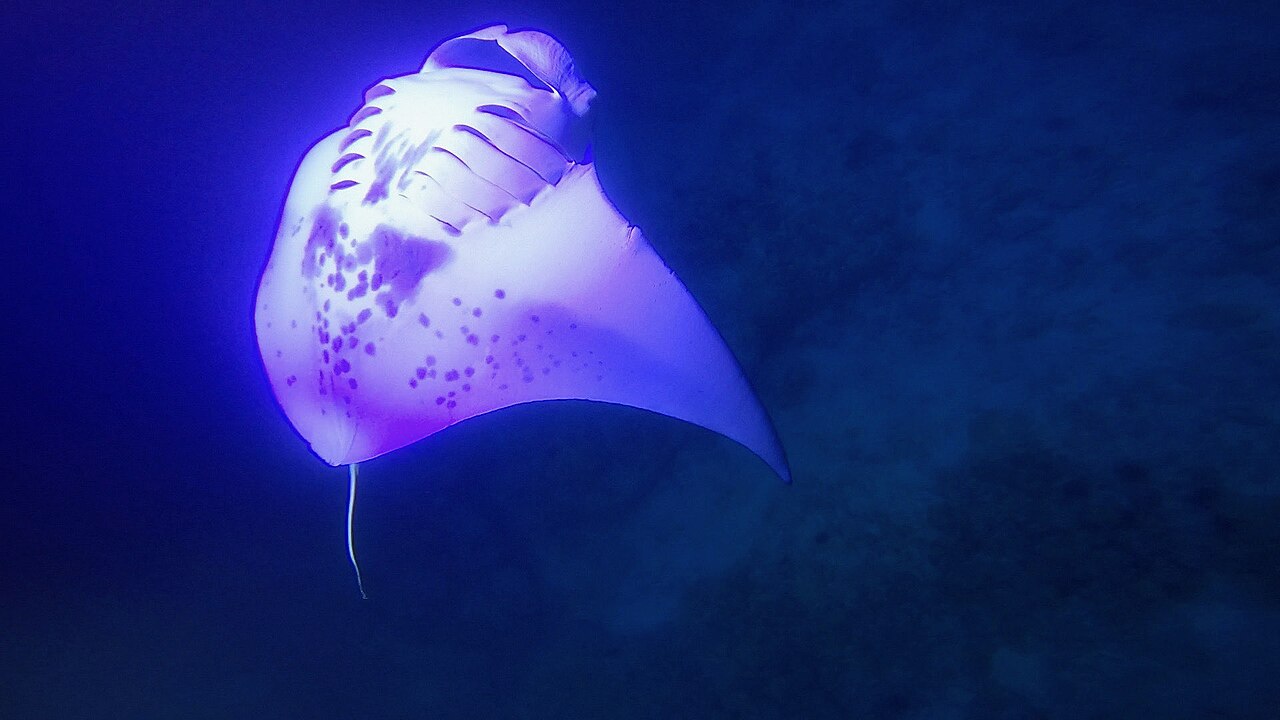
To understand the "why," we must first understand the "what." The manta ray wings are not a separate set of appendages; they are a radical extension of the pectoral fins that all fish possess. In most fish, these fins are used for fine-tuned steering and braking. In manta rays, however, the pectoral fins have elongated dramatically, stretching from the head all the way to the base of the tail. The result is a diamond or triangular shape that can span over 20 feet in the giant oceanic manta ray (Mobula birostris), making it one of the largest fish in the ocean.
Internally, these wings are supported by a cartilaginous skeleton, similar to the structure of a shark. The "joints" are not rigid like a bird's shoulder; instead, they are flexible rods of cartilage that allow for a fluid, sweeping motion. The cephalic fins, which look like two horns on the head, are actually the front-most portion of these pectoral fins. They have evolved to be separate, curled structures that funnel water and plankton into the mouth, but they are fundamentally part of the same wing structure. This anatomical distinction is crucial: the manta ray did not grow a new pair of limbs; it modified an existing pair to an extreme degree, prioritizing lift and thrust over maneuverability.
The sheer muscle mass within the wings is substantial. The primary flight muscles are located near the base, providing the powerful downstroke that generates lift. Because water is nearly 800 times denser than air, the manta ray doesn't need a large, airfoil-shaped wing to generate lift; it needs a large surface area to push against the water. The long, flexible tips of the wings act like the wingtips of an albatross, reducing drag and allowing for efficient gliding over long distances.
Why Manta Ray Wings Are Built for Gliding, Not Flapping
One of the most common misconceptions is that manta rays flap their wings rapidly to swim. In reality, they are masters of slow, deliberate movement. They primarily use a technique called "flapping" that is more akin to a slow, powerful bird like a heron than a hummingbird. The downstroke is powerful, pushing water downward and backward, while the upstroke is more passive and controlled. This generates lift, pushing the ray upward, and thrust, pushing it forward.
This design is a direct response to their habitat. Unlike bottom-dwelling stingrays that use their fins to stir up sand, manta rays are pelagic, meaning they live in the open ocean water column. They have no need to hide in the substrate. Instead, they spend their lives migrating across vast stretches of ocean, often traveling hundreds of miles. The broad, stiff structure of the manta ray wings allows them to cover these distances with minimal energy expenditure. They can glide for long periods between flaps, using the ocean's currents to their advantage. This is a critical energy-saving strategy, as they must constantly move to force water over their gills for oxygen, a process known as ram ventilation.
The Role of the Wing's Flexibility
While the overall shape is rigid, the tips of the wings are incredibly flexible. This is not a design flaw; it is a hydrodynamic necessity. During a downstroke, the wing tips bend upward, creating a dynamic shape that reduces drag and prevents vortices from forming at the tips. This allows the manta ray to maintain lift at slow speeds, which is essential for feeding on dense patches of plankton. If the wings were completely stiff, the ray would sink or require excessive energy to stay afloat.
The Ecological Truth: Wings as a Plankton-Collection Tool
The primary reason for these giant wings is not speed, but rather the ability to hover and maneuver with precision. Manta rays are filter feeders, consuming massive quantities of zooplankton, krill, and small fish. To do this, they must swim through clouds of plankton with their mouths open. The manta ray wings allow them to perform "barrel rolls"—somersaulting loops that keep them in a plankton-rich patch for longer. This behavior, known as "cyclone feeding," relies on the ability to turn tightly and hover, which is only possible with the high lift-to-drag ratio provided by their enormous fins.
When feeding, they often gather in groups, and the synchronized flapping of their wings creates a vortex that can concentrate the plankton. By flapping their wings in a coordinated manner, they create a "wall" of water pressure that herds the tiny organisms into a dense ball. This is a sophisticated hunting technique that would be impossible without the precise control offered by their wing-like fins. The wings act as both a propulsion system and a herding tool, making them a multi-functional organ that is vital for survival.
Size Matters: How Wing Size Relates to Food Availability
The giant oceanic manta ray has a larger wingspan than the reef manta ray (Mobula alfredi) primarily because it travels further and dives deeper to find food. The larger wings provide more lift, enabling the oceanic manta to support its larger body mass and to glide efficiently during long vertical migrations to depths of over 1,000 meters. In the cold, deep water, the water is denser, which actually provides more lift, but the journey up and down requires immense energy. The oversized wings are a biological battery, storing kinetic energy that allows for efficient gliding during these deep dives.
Comparing Manta Ray Wings to Other Marine Life
To fully appreciate the manta ray wings, it helps to compare them to other animals that have evolved similar structures. Penguins, for example, also "fly" through the water using stiff, flipper-like wings. However, penguin wings are short and powerful, designed for acceleration and agility in pursuit of fish. Manta rays, in contrast, have long, high-aspect-ratio wings (long and narrow) that are optimized for endurance and slow-speed maneuverability, not bursts of speed.
Similarly, sea turtles use their front flippers for propulsion, but their movement is more of a rowing motion. Manta rays are unique in that their wing motion is a true flapping motion, biomechanically closer to a bird in flight than any other marine vertebrate. This convergent evolution—where unrelated species develop similar traits—highlights that the open ocean environment favors a specific design: large, wing-like surfaces for efficient travel. The manta ray has perfected this design to an extreme, exceeding the wingspan of any other fish.
- Manta Ray: Long, narrow wings for endurance and hovering.
- Penguin: Short, stiff wings for acceleration and turning.
- Sea Turtle: Oar-like flippers for rowing, less efficient for gliding.
- Stingray: Round, undulating fins for bottom-dwelling and camouflage.
This comparison shows that the manta ray wing is not just for movement; it is a specialized tool for a specific ecological niche—the constant pursuit of drifting plankton in the open ocean.
Behavioral Secrets: How Manta Rays Use Their Wings for Communication
Beyond locomotion and feeding, manta ray wings serve a crucial social function. They are used for communication and courtship. During mating rituals, males will chase females at high speed, using their wings to perform acrobatic leaps and somersaults. The sight of a manta ray breaching the water and flying through the air is a spectacular display of power, and it is believed that this behavior is used to show fitness to potential mates.
In cleaning stations, where smaller fish remove parasites from the manta's skin, the rays will often hover almost vertically, using their wings to maintain a stable position in the water column. This "standing" posture requires immense control and precision. They also use their wings to signal to other rays. A rapid flick of a wing tip can indicate agitation, while a slow, sweeping motion can signal a relaxed state. While they are mostly solitary, they do aggregate in large numbers, and the ability to read these subtle wing movements is essential for maintaining social harmony without physical contact.
Breaching: The Ultimate Wing Display
The phenomenon of breaching—jumping completely out of the water—is one of the most mysterious behaviors associated with manta ray wings. While the exact reason is debated, theories suggest it could be to remove parasites, to communicate with other rays from a distance, or simply to play. When they breach, they twist their bodies and spread their wings to their full extent, maximizing air resistance to slow their descent back into the water. This is a high-risk, high-energy behavior that demonstrates the sheer strength and structural integrity of the wing design.
The Threats to Manta Ray Wings: Conservation and the Fishing Industry
The very feature that makes manta rays so majestic is also their greatest vulnerability. The manta ray wings are the primary target of targeted fisheries, particularly in Indonesia and other parts of Southeast Asia. The gill plates, located on the underside of the head, are used to filter plankton from the water. These gill rakers are dried and sold in Asian markets as a "detoxifying" agent in traditional medicine, despite having no proven medicinal value. To extract these gill plates, fishermen catch the rays and remove the gills, discarding the body and the massive wings.
The slow reproductive rate of manta rays exacerbates this threat. They have a long lifespan of up to 40 years and do not reach sexual maturity until they are 8-10 years old. Females typically give birth to a single pup every 2-3 years. This means that the removal of even a small number of adults from a population can have a devastating impact. The loss of a single mature female is a loss that takes decades to replace. The manta ray wings, which take years to grow to full size, are effectively a resource that cannot be sustainably harvested at current rates.
Additionally, bycatch in fishing nets is a major killer. Manta rays cannot swim backward, and their large wings make it difficult for them to escape from nets. Once entangled, they suffocate quickly because they need to keep moving to breathe. The sheer size of the wings makes them prone to entanglement, and even if the ray manages to break free, the injuries to the wing membrane are often fatal.
The Future of the Ocean's Glider: Why We Must Protect the Wings
Understanding why manta rays have giant wings is not just a biological curiosity; it is a conservation imperative. The wings are the engine of the manta ray's life. They are the tools that allow them to feed, migrate, mate, and survive. If we lose the manta ray, we lose a vital component of the ocean's plankton cycle. Manta rays consume vast quantities of plankton, and their waste products recycle nutrients back into the water column, fertilizing the surface waters where phytoplankton grow. This makes them a keystone species in marine ecosystems.
International efforts, such as the listing of both manta ray species under the Convention on International Trade in Endangered Species (CITES) in 2013, have helped to regulate international trade. However, domestic fishing laws in many countries remain weak, and enforcement is often lacking. The creation of marine protected areas (MPAs) that encompass critical feeding and cleaning sites is vital. These MPAs give the rays safe havens where they can flap their giant wings without the threat of nets or harpoons.
Ecotourism has emerged as a powerful economic argument for conservation. In places like Yap, Hawaii, and Bali, divers pay significant sums of money to swim with these gentle giants. A single manta ray can generate hundreds of thousands of dollars in tourism revenue over its lifetime, far exceeding the one-time value of its gill plates. By showing that live manta rays are worth more than dead ones, these tourism initiatives provide local communities with a direct economic incentive to protect the very wings that make these animals so special.
Conclusion: The Airborne Soul of the Sea
The manta ray wings are a testament to the power of natural selection. They are not simply fins; they are a sophisticated flight apparatus that allows a 2-ton animal to move with the grace of a bird. From the mechanics of the cartilaginous skeleton to the behavioral complexity of barrel-rolling and breaching, every aspect of their biology is tied to the function of these incredible structures. The truth of the ocean is that these wings are not just for swimming—they are for living a life of constant migration, precision feeding, and aerial acrobatics. As we continue to learn more about these gentle giants, we must also recognize our responsibility to protect them. The sight of a manta ray soaring through the blue is one of the most profound experiences the ocean offers, and it is a sight that we must work to preserve for generations to come. The future of the manta ray is, quite literally, in our hands.
❓ Frequently Asked Questions
💬 Are manta ray wings actually wings?
No, they are highly modified pectoral fins, not true wings. These fins are enlarged and flexible, allowing manta rays to flap them like wings to swim gracefully through the water.
💬 Why are manta ray wings so large compared to their body?
The large wing-like fins provide lift and thrust, enabling manta rays to glide efficiently through the ocean while traveling long distances to find food. Their size also helps them maneuver and perform spectacular leaps out of the water.
💬 Do manta rays use their wings to fly in the air?
No, they cannot fly. However, they sometimes leap completely out of the water and appear to 'fly' for a few seconds, using their wing-like fins to glide above the surface before splashing back down.
💬 What is the wingspan of the largest manta ray?
The giant oceanic manta ray can reach a wingspan of up to 7 meters (23 feet) across, making it one of the largest fish in the ocean. This immense wing span helps them cover vast areas while filter-feeding on plankton.