- What Exactly Is a Narwhal Tusk?
- Not a Horn, Not a Spear
- How Many Narwhals Have a Tusk—and Who Gets One?
- The Narwhal Tusk Is a Giant Sensory Organ
- What Can a Tusk Detect?
- The Tusk as a Social Antenna
- How Narwhals Use Their Tusks in Real Life
- Sexual Selection and Dominance
- Feeding and Foraging
- Ice and Navigation
- Where Narwhals Live and Why It Matters
- Diet and Diving
- Lifespan and Reproduction
- Why the Tusk Is So Valuable—and So Threatened
- Common Myths About the Narwhal Tusk
- Myth: The Tusk Is a Horn
- Myth: Narwhals Spear Fish With It
- Myth: The Tusk Is Used to Break Ice
- Myth: Only Males Have Tusks
- The Arctic Unicorn Truth
- ❓ Frequently Asked Questions
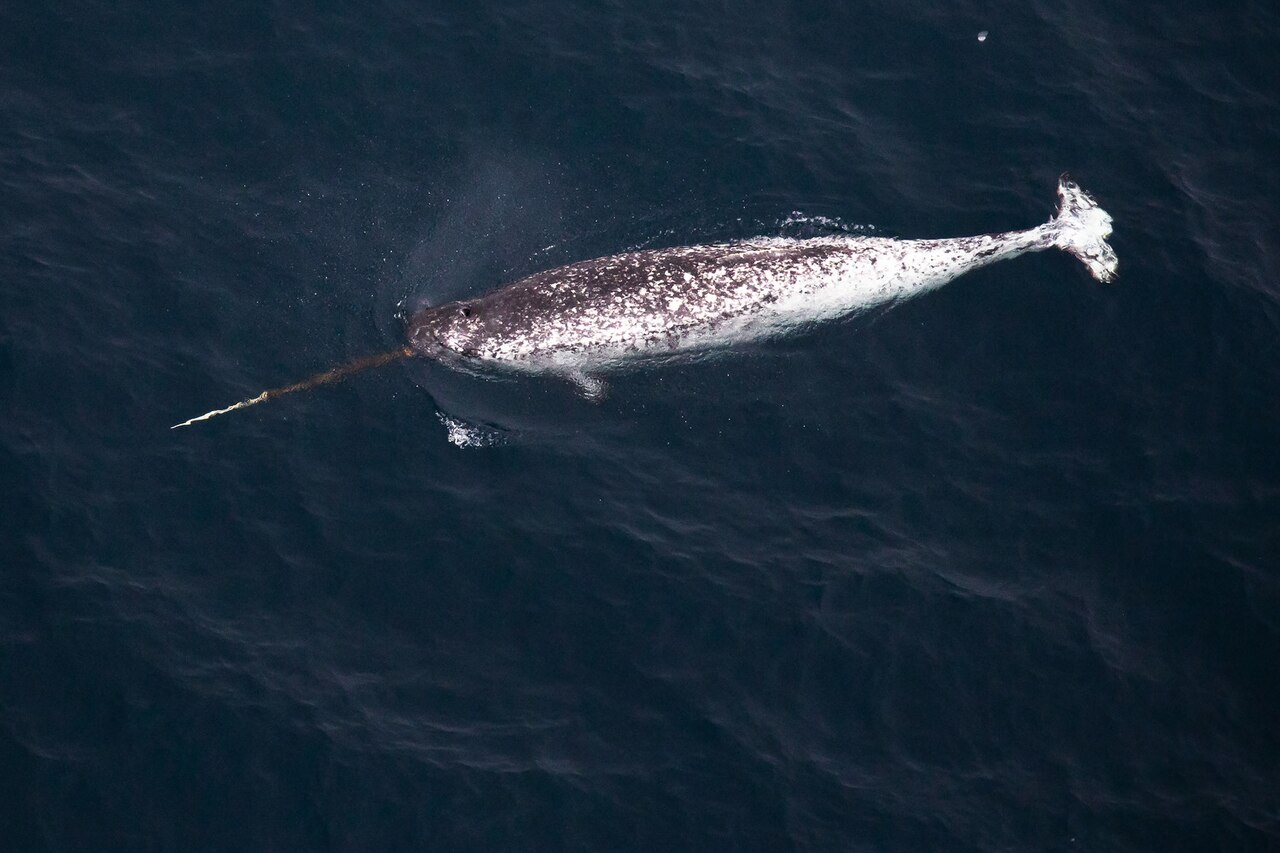
The narwhal tusk is one of the most recognizable—and most misunderstood—features in the animal kingdom. A single, spiraling spear of ivory jutting up to three meters from the head of a 1,600-kilogram whale sounds like something out of legend, and for centuries that is exactly how it was treated. Norse sailors sold narwhal tusks as unicorn horns for sums that could rival a small kingdom's treasury, and even today the animal is nicknamed the "unicorn of the sea." But the tusk is not a horn, not a weapon of war in the way most people imagine, and not a frozen accident of evolution. It is a highly specialized, densely innervated tooth—and the more scientists study it, the stranger and more impressive its story becomes.
What Exactly Is a Narwhal Tusk?
The first thing to understand is that a narwhal tusk is not a horn at all. Horns are made of keratin, the same protein as your fingernails, and they grow from the skin. A tusk is a tooth, and the narwhal's tusk is specifically an overgrown upper left canine. In the vast majority of males—and in a small percentage of females—this single tooth erupts through the upper lip and grows straight forward through the head, producing the iconic spiral. The right canine almost always stays buried in the skull and never erupts at all.
The tusk's spiraling grooves are not carved by swimming or rubbing against ice. They form as the tooth grows, because the structure of the dentine and cementum layers causes the growing tusk to twist along its axis. A fully grown tusk can reach 2.5 to 3 meters (8 to 10 feet) in length, which is remarkable when you consider that the whale's body is only about 4 to 5.5 meters long. In effect, the tusk can be more than half the length of the animal that carries it.
Not a Horn, Not a Spear
Because the tusk looks like a weapon, early observers assumed it was used for fighting, spearing fish, or breaking through ice. Each of those ideas has been tested and largely rejected. Narwhals do not spear prey with the tusk, and they do not need it to breathe through ice—they surface at open leads and breathing holes that they maintain with their heads and backs, not their tusks. The tusk is far more interesting than a simple spear.
How Many Narwhals Have a Tusk—and Who Gets One?
Sexual dimorphism in narwhals is extreme. Most males grow a tusk; most females do not. Estimates suggest that roughly 85 to 90 percent of males develop a visible tusk, while only about 15 percent of females do. When females do grow one, it tends to be shorter and thinner than a male's.
There is also a rare and spectacular exception: the two-tusked narwhal. In a very small number of individuals, the right canine also erupts, producing an animal with two parallel tusks. These double-tusked whales are uncommon but well documented, and they are prized sightings for Arctic researchers and photographers.
- Males: usually one tusk, occasionally two, typically 2 to 3 meters long.
- Females: usually none, occasionally a shorter tusk.
- Calves: born tuskless; growth begins after the first year.
- Two-tusked individuals: rare, usually male, formed when the right canine also erupts.
The Narwhal Tusk Is a Giant Sensory Organ
This is where the science gets genuinely exciting. For decades, the leading explanation for the tusk was sexual selection—a showy ornament that males use to display status and attract mates. That idea has not disappeared, but since the mid-2000s it has been joined by a far more surprising discovery: the tusk appears to be a sensory organ.
In a landmark 2014 study, researchers led by Martin Nweeia examined the surface of narwhal tusks and found millions of tiny pores connecting to nerve channels running through the dentine to the pulp cavity, which is richly supplied with nerve endings. The tusk is not a dead, inert bone. It is a living tooth with an extraordinary amount of sensory wiring.
What Can a Tusk Detect?
When the researchers exposed captured narwhals to changing water conditions, the whales' heart rates shifted in response to different levels of salinity. That strongly suggests the tusk can detect chemical and physical properties of seawater—salinity being the most likely candidate, but possibly also temperature and pressure.
Why would that matter? Narwhals live in a dynamic Arctic environment where sea ice forms and melts, freshwater from rivers and glaciers mixes with saltwater, and the boundaries between water masses shift constantly. A tusk that can sense salinity could help a whale detect where prey-rich currents are, where ice is about to form, or where freshwater inflows signal changing conditions. It is a biological instrument for reading the ocean.
The Tusk as a Social Antenna
The sensory function may also explain a behavior that has puzzled observers for years: "tusking," in which two or more narwhals raise their tusks and slowly cross or rub them together at the surface. Early accounts described this as fighting, but close observation shows it is usually gentle and deliberate—more like a handshake than a duel. If the tusk is packed with nerve endings, then tusking may be a way for whales to exchange information about the water they are in, or simply to communicate through direct contact.
How Narwhals Use Their Tusks in Real Life
Even with the sensory discovery, the tusk almost certainly serves more than one purpose. Evolution rarely produces a structure this costly for a single job. Here are the main functions supported by observation and research.
Sexual Selection and Dominance
Tusk size correlates with body size and likely signals fitness. Males with longer, thicker tusks may have an advantage in competition for mates. Some males bear scars and broken tusk tips from confrontations, which suggests that the tusk does occasionally function in combat or at least in aggressive displays. But outright jousting is rare compared with the more common, gentler tusking behavior.
Feeding and Foraging
Narwhals eat primarily Arctic cod, Greenland halibut, squid, shrimp, and other bottom-dwelling or mid-water prey. They feed mostly in deep water, often diving to 800 meters and sometimes beyond 1,500 meters, and they do not appear to use the tusk to stab or stun fish. Some researchers have suggested that males may use the tusk to disturb prey off the seafloor, but this remains speculative.
Ice and Navigation
Narwhals live in some of the most ice-choked waters on Earth, and they navigate through leads, cracks, and polynyas—areas of open water surrounded by ice. While the tusk is not a drill, it may help whales sense the water around them as they move through a changing ice landscape, which is exactly what a salinity- and temperature-sensitive organ would be useful for.
Where Narwhals Live and Why It Matters
Narwhals are Arctic specialists. They are found mainly in the waters around Greenland, Canada, and Svalbard, with the largest populations concentrated in the Canadian High Arctic and along the coasts of West and East Greenland. There are roughly 150,000 narwhals worldwide, making them numerous enough not to be considered endangered as a species, but they are highly vulnerable because they depend on a narrow set of Arctic conditions.
They spend the winter in deep, ice-covered waters, feeding intensively, then migrate in spring and summer toward coastal bays and fjords. Some populations travel more than 1,000 kilometers each year. They are social animals, often moving in groups of five to twenty, and sometimes gathering in much larger herds of hundreds or even thousands during migration.
Diet and Diving
Narwhals are deep divers. A typical foraging dive lasts 10 to 25 minutes and reaches 500 to 800 meters, though dives exceeding 1,500 meters have been recorded. They hunt by echolocation—like other toothed whales—producing clicks and listening for the returning echoes to locate prey in dark, murky water. Their diet is dominated by fish and cephalopods, and they have relatively few natural predators, though orcas and occasionally polar bears at breathing holes pose a threat.
Lifespan and Reproduction
Narwhals are long-lived. They can live 50 years or more, and some estimates suggest males may reach 60 to 70 years. Females typically give birth every two to three years to a single calf after a gestation of about 14 to 15 months. Calves are around 1.5 meters long at birth and nurse for roughly a year. Sexual maturity comes slowly—females around 5 to 7 years, males later—which makes populations slow to recover from losses.
Why the Tusk Is So Valuable—and So Threatened
Narwhal ivory has been traded for over a thousand years. Medieval Europeans carved it into chalices, scepters, and religious objects, and it was often sold as unicorn horn at extraordinary prices. That trade is now regulated, but it has not disappeared. In Greenland and Canada, limited subsistence hunting by Inuit communities is legal and culturally important, and tusks from those hunts may be sold under permit. International commercial trade is restricted by CITES.
Illegal trade and online sales remain a problem, and tusks can fetch thousands of dollars. But the bigger threat to narwhals is not hunting—it is climate change. Narwhals depend on sea ice for protection from orcas, for the structure of their feeding grounds, and for the timing of their migrations. As the Arctic warms, ice cover shrinks, orca ranges expand northward, and shipping and industrial activity increase. Narwhals are also notoriously sensitive to noise, and underwater noise from ships and seismic surveys can disrupt their behavior.
- Climate change: shrinking sea ice alters habitat and increases orca predation.
- Noise pollution: shipping and industrial activity disturb communication and foraging.
- Illegal trade: demand for narwhal ivory drives poaching and unregulated sales.
- Bycatch and entanglement: a lesser but real risk in some fishing areas.
Common Myths About the Narwhal Tusk
The narwhal has accumulated more than its share of misinformation, so it is worth clearing up a few persistent claims.
Myth: The Tusk Is a Horn
It is a tooth—specifically a modified canine. This matters because it explains why the tusk has nerves and pores, and why it can sense the environment in ways a horn cannot.
Myth: Narwhals Spear Fish With It
There is no reliable evidence that narwhals use the tusk to impale prey. They are suction and echolocation feeders, and their prey is typically swallowed whole.
Myth: The Tusk Is Used to Break Ice
Narwhals do not drill through ice with their tusks. They maintain breathing holes by pushing with their heads and backs, and they generally surface at existing leads and cracks.
Myth: Only Males Have Tusks
Most tusks belong to males, but a minority of females grow them too—roughly 15 percent. Female tusks tend to be shorter.
The Arctic Unicorn Truth
The narwhal tusk is not a mythic horn, not a spear, and not a simple ornament. It is a living, growing tooth with millions of sensory connections, capable of detecting changes in the seawater around it. It likely serves several purposes at once: signaling fitness to rivals and mates, enabling gentle social contact through tusking, and helping a deep-diving Arctic whale read an environment defined by ice, freshwater, and shifting currents. It is one of the few structures in the animal kingdom that we can describe as both a display and a sensor—a tooth that doubles as a scientific instrument.
That complexity is exactly why the narwhal remains such a compelling animal. It survives in one of the harshest habitats on the planet, dives to depths that would crush a human, and carries a three-meter spiral of ivory whose purpose scientists are still untangling. Protecting narwhals means protecting the Arctic sea ice they depend on, the quiet waters they need to communicate, and the legal frameworks that keep their ivory trade from spiraling out of control. The "unicorn of the sea" is real, and it is stranger, smarter, and more fragile than the legend ever suggested.
❓ Frequently Asked Questions
💬 Is a narwhal's tusk a tooth or a horn?
A narwhal's tusk is actually a tooth—an elongated, spiral canine that grows through the upper lip, usually on the left side. Because it pierces the skin and looks like a horn, it's often mistaken for one, but it's structurally a tooth.
💬 Do female narwhals have tusks?
Most females don't have a tusk, though a small percentage grow a shorter one. The tusk is far more common and longer in males, which is why it's thought to play a role in mating competition.
💬 What is the narwhal tusk actually used for?
Research suggests the tusk is a sensory organ packed with nerve endings that can detect water temperature and salinity, and males also use it in jousting and display to establish dominance. It's not used for spearing prey, as often shown in myths.
💬 Are narwhals endangered, and is the tusk worth a lot?
Narwhals are listed as Least Concern overall but are considered vulnerable in some regions due to climate change, shipping, and hunting. Their tusks are sold and traded in some countries, which is one reason the species faces pressure and why many nations regulate or ban the trade.