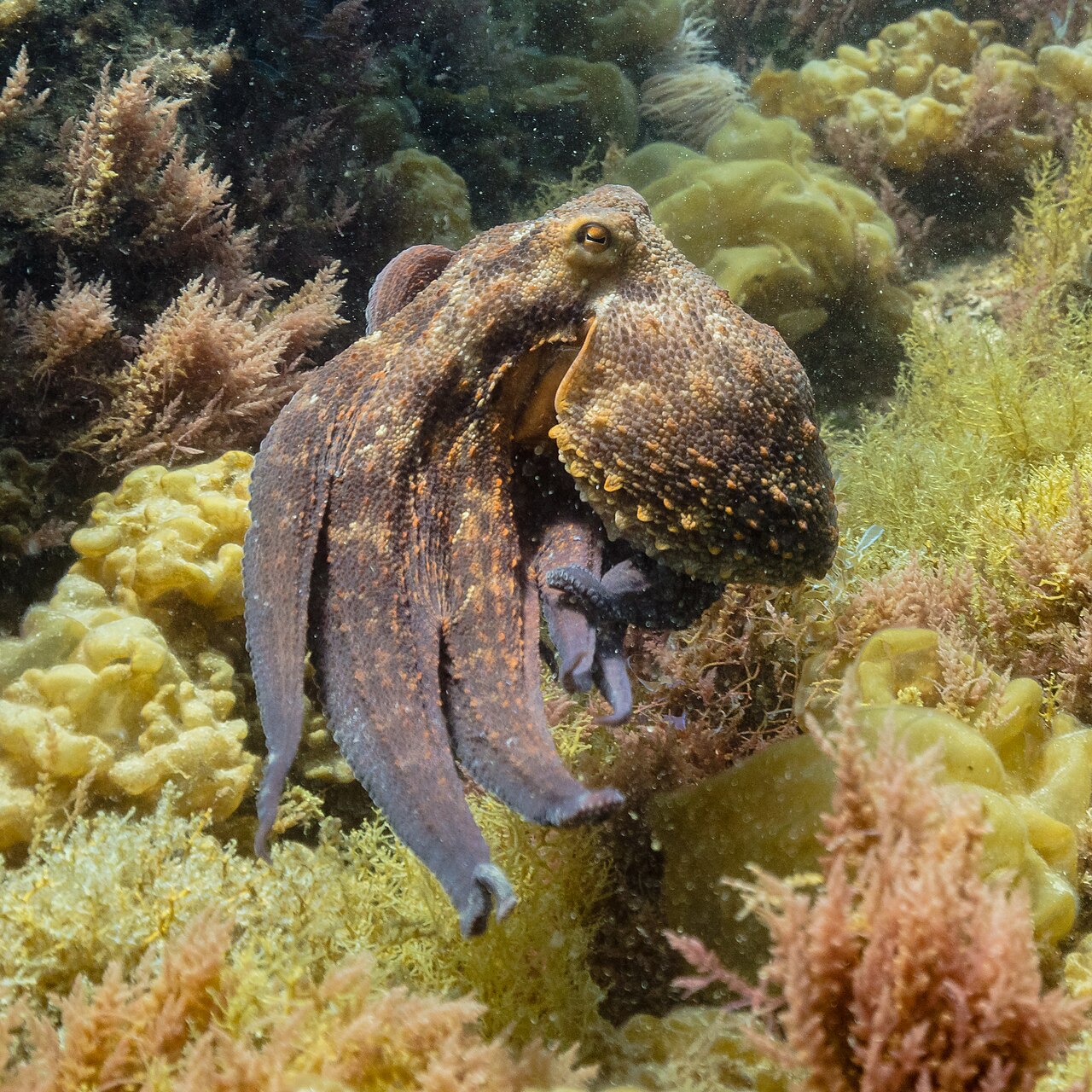
- What the Octopus Three Hearts Actually Do
- Why Not Just One Heart?
- Blue Blood: The Chemistry Behind the Octopus Three Hearts
- A System Tuned to Cold Water
- Why Do Octopuses Have Three Hearts? The Swimming Problem
- What This Means in Practice
- How the Octopus Three Hearts Fit the Rest of the Body
- A Brain That Needs Oxygen
- Diet, Habitat, and Lifespan: The Pressures on the System
- Real Examples Across Species
- Common Myths About the Octopus Three Hearts
- Why the Design Is Not "Better" — Just Different
- The Bigger Picture: Why This Matters
- Conclusion: The Amazing Truth About the Octopus Three Hearts
- ❓ Frequently Asked Questions
Few animals on Earth seem as alien as the octopus, and few facts about them surprise people more than this one: an octopus three hearts beat inside a soft, boneless body that can squeeze through a hole the size of a coin. It sounds like science fiction, yet it is simple biology shaped by millions of years of evolution in the ocean. Those three hearts are not a quirky detail — they are a clever solution to a very specific set of problems that come with being a fast, intelligent, cold-blooded hunter with blue blood and no bones. Understanding why octopuses have three hearts means understanding how their bodies work, where they live, what they eat, and what they must escape. It also reveals some surprising limits: having three hearts does not make an octopus superhuman, and in fact one of those hearts stops beating during some of the animal's most important movements.
What the Octopus Three Hearts Actually Do
The three hearts are not identical, and each has a distinct job. Two of them are called branchial hearts, and they sit near the octopus's gills. Their task is to pump deoxygenated blood from the body into the gills, where oxygen from seawater is absorbed and carbon dioxide is released. The third heart, the systemic heart, is larger and sits centrally. It receives the freshly oxygenated blood from the gills and pumps it out to the rest of the body, including the brain and the arms.
This two-stage system is a bit like a house with two pumps: one pushes water through the filter, and the other sends the clean water to every tap. In an octopus, the branchial hearts handle the low-pressure work of pushing blood through the delicate gill tissue, while the systemic heart generates the higher pressure needed to circulate oxygen-rich blood throughout the body. Working together, the three hearts keep a constant supply of oxygen moving through an animal that has a very high metabolic demand for its size.
Why Not Just One Heart?
Most fish have a single heart and a single loop of circulation. Mammals and birds have a four-chambered heart and a double loop. The octopus has evolved its own version of a double-loop system using three separate hearts. This arrangement is efficient for an animal that breathes through gills in water, where oxygen is far less concentrated than in air. Seawater contains only a small fraction of the oxygen found in the atmosphere, so an octopus must move a lot of water across its gills and a lot of blood through its body to meet its energy needs. Splitting the work between dedicated pumps helps make that possible.
Blue Blood: The Chemistry Behind the Octopus Three Hearts
The reason octopus blood looks blue rather than red is a pigment called hemocyanin, which uses copper instead of iron to bind oxygen. Hemocyanin is dissolved directly in the blood plasma rather than packaged inside red blood cells. When it picks up oxygen, it turns a deep blue color.
Hemocyanin is less efficient at carrying oxygen than the hemoglobin found in vertebrate blood, especially in warm, acidic conditions. This is one reason octopuses are restricted to relatively cool ocean waters and why their circulation system has to work hard. The three-heart design compensates for the lower oxygen-carrying capacity of hemocyanin by keeping blood moving steadily and ensuring the gills are constantly supplied. In cold water, hemocyanin performs reasonably well, and octopuses have thrived in the oceans for hundreds of millions of years with this copper-based system.
A System Tuned to Cold Water
This chemical limitation helps explain octopus distribution. They are found in every ocean, from shallow tropical reefs to the freezing depths of the Southern Ocean, but they are most abundant and diverse in temperate and polar waters. The giant Pacific octopus, for example, lives in the cold North Pacific and can reach an arm span of more than four meters and weigh over 50 kilograms. Warmer-water species tend to be smaller. The chemistry of their blood and the design of their hearts are part of the reason.
Why Do Octopuses Have Three Hearts? The Swimming Problem
Here is the twist that surprises most people: the systemic heart actually stops beating when an octopus swims using jet propulsion. To move quickly, an octopus fills its mantle cavity with water and forces it out through a siphon, shooting backward through the sea. That forceful expulsion of water also affects the heart's ability to pump. During sustained jetting, the main heart pauses, blood pressure drops, and the animal tires quickly.
This is why octopuses prefer to crawl along the seafloor using their arms rather than swim. Walking is slower but far more energy-efficient, and it keeps all three hearts beating normally. When an octopus does jet away from a predator, it can only sustain the effort for a short distance before it must rest. So the three-heart system is not a superpower for endless speed; it is a system optimized for a mostly bottom-dwelling, ambush-hunting lifestyle, with a burst-swimming escape mode that comes at a physiological cost.
What This Means in Practice
In the wild, this shapes behavior. Octopuses spend much of their time hidden in dens — crevices in rock, empty shells, even discarded bottles and pipes — and emerge to hunt. They rely on camouflage, stealth, and quick strikes rather than long chases. Their escape strategy often involves ink, jetting a short distance, and then hiding again. The pause in heart function during jetting is a real constraint that influences how they move, hunt, and avoid danger.
How the Octopus Three Hearts Fit the Rest of the Body
The hearts are only one part of an extraordinary cardiovascular and respiratory system. The octopus has three gills on each side, and the branchial hearts push blood through them. The gills are muscular and can be moved to draw water across their surfaces, even when the animal is resting in its den. The mantle, the muscular sac that houses the organs, expands and contracts to ventilate the gills.
Everything about the octopus body is built for flexibility and efficiency in a boneless form. With no skeleton, the animal's organs are packed into the mantle and protected by muscle rather than bone. The hearts themselves are muscular tubes that contract in a coordinated rhythm. Because the octopus has an open circulatory system in parts of its body, blood does not stay neatly inside a closed network of vessels everywhere; it bathes some tissues directly. The three hearts keep this system pressurized enough to function.
A Brain That Needs Oxygen
Octopuses are famously intelligent. They solve puzzles, open jars, navigate mazes, and appear to recognize individual humans. That kind of cognition requires a lot of oxygen and energy. An octopus has a large brain wrapped around its esophagus, plus a distributed nervous system with two-thirds of its neurons located in the arms. Keeping that network supplied with oxygen is a demanding job, and the three-heart circulation system is central to meeting it. The animal's high metabolic rate is one reason it must eat frequently and why it is so vulnerable to low-oxygen conditions in the water.
Diet, Habitat, and Lifespan: The Pressures on the System
Octopuses are carnivorous predators. Their diet includes crabs, lobsters, shrimp, clams, snails, and small fish. They use their arms and suckers to capture prey, then use a parrot-like beak to crack shells and a radula to scrape out flesh. Some species inject venom or saliva that helps subdue prey and begin digestion externally. A well-fed octopus can grow quickly, and the giant Pacific octopus may gain significant weight in a single year.
Habitat varies widely by species. Common octopuses are found in coastal waters and reefs across the world. The mimic octopus lives in shallow, sandy bottoms of the Indo-Pacific and is famous for impersonating other animals. Deep-sea octopuses, such as the Dumbo octopus, live at depths of thousands of meters where water is cold and oxygen is scarce. The three-heart system works across these environments, though deep-sea species have adaptations of their own, including slower metabolisms.
Lifespan is another striking feature. Many octopus species live only one to two years. Females typically die shortly after their eggs hatch, following a period of brooding during which they stop eating and guard the eggs, sometimes for months. The larger Pacific striped octopus is an exception, with some individuals living longer and showing different mating behavior. In most species, the intense metabolic demands of growth, reproduction, and brooding mean the cardiovascular system is pushed hard throughout a short life.
Real Examples Across Species
- Giant Pacific octopus: Cold-water species, arm span over four meters, weighs up to about 50 kilograms, lives roughly three to five years in the wild — longer than many octopuses.
- Common octopus: Found in coastal waters worldwide, typically 30 to 90 centimeters in arm span, lives about one to two years, a frequent subject of intelligence studies.
- Mimic octopus: Small, shallow-water Indo-Pacific species, known for mimicking flatfish, sea snakes, and lionfish, lives around one to two years.
- Dumbo octopus: Deep-sea genus found at depths of 1,000 to 4,000 meters or more, small and slow-moving, with a metabolism suited to cold, low-oxygen water.
Common Myths About the Octopus Three Hearts
Because the three-heart fact is so striking, it has spawned a few misconceptions. One common myth is that all three hearts stop when the octopus swims. In reality, it is primarily the systemic heart that pauses during jet propulsion, while the branchial hearts continue to move blood through the gills. Another myth is that octopus blood is blue because it is cold; the blue color comes from hemocyanin, not temperature, though cold water does help hemocyanin function.
Another misconception is that having three hearts makes octopuses nearly invincible. In fact, octopuses are sensitive to environmental changes, especially low oxygen, warming water, and pollution. Their short lifespans and high energy needs make them vulnerable. The three hearts are an elegant adaptation, not a guarantee of survival.
Why the Design Is Not "Better" — Just Different
Evolution does not produce perfect designs; it produces workable ones shaped by history and environment. The octopus three-heart system is a remarkable solution for a soft-bodied, cold-water, gill-breathing predator. It is not superior to a four-chambered mammalian heart; it is simply suited to a different set of challenges. Comparing the two is like comparing a sailboat to a car — both move, but they are built for different conditions.
The Bigger Picture: Why This Matters
Understanding the octopus three hearts is more than a trivia exercise. It helps explain octopus behavior, from their preference for crawling over swimming to their need for oxygen-rich, cool water. It also matters for conservation. As oceans warm and oxygen levels in some regions decline, animals with high metabolic demands and specialized circulatory systems may struggle. Octopuses are resilient and adaptable, but their physiology sets limits.
Studying their cardiovascular system also inspires human technology and medicine. Researchers have examined hemocyanin and the mechanics of octopus hearts for insights into materials science and biomedical engineering. The way an octopus manages blood flow with three separate pumps in a boneless body offers lessons in efficient fluid movement under unusual constraints.
Conclusion: The Amazing Truth About the Octopus Three Hearts
The octopus three hearts are a beautiful example of evolution solving a practical problem. Two branchial hearts push blood through the gills, and one systemic heart sends oxygen-rich blood to the body. Together they support an intelligent, active predator with blue, copper-based blood and a high demand for oxygen. The system has trade-offs — most notably the pause in the main heart during jet propulsion — and those trade-offs shape how octopuses live, hunt, and hide. Far from making them invincible, the three hearts reveal an animal finely tuned to a specific way of life in the sea. The next time you see an octopus glide across a reef or squeeze into a tiny den, remember that inside that soft body, three hearts are working in rhythm to keep one of the ocean's most remarkable minds alive.
❓ Frequently Asked Questions
💬 Why do octopuses have three hearts?
Two branchial hearts pump blood through the gills to pick up oxygen, while a third systemic heart then drives that oxygenated blood around the rest of the body. This split system helps an animal with a demanding, active lifestyle get enough oxygen despite having relatively low-oxygen blood.
💬 What happens to an octopus's heart when it swims?
The systemic heart actually slows or stops when the octopus jets through the water, which is why swimming is exhausting for them. This is a big reason octopuses prefer crawling along the seafloor and only jet in short bursts, often to escape predators.
💬 Why is octopus blood blue?
Octopus blood uses hemocyanin, a copper-based protein, instead of the iron-based hemoglobin in our red blood. Hemocyanin is blue when oxygenated and works well in cold, low-oxygen water, though it carries less oxygen than hemoglobin.
💬 Do all octopuses have three hearts?
Yes, the three-heart setup is standard across octopus species, and it's shared with other cephalopods like squid and cuttlefish. Nautiluses, their more distant relatives, are the odd exception and have a different heart arrangement.