- What Exactly Are Pangolin Scales?
- Not Everything Is Covered
- Why Pangolin Scales Make Sense: The Armored Truth
- Armor With Trade-Offs
- Meet the Pangolin Family: Eight Species, Two Continents
- Tree Pangolins vs. Ground Pangolins
- Life Under the Scales: Diet, Habitat, and Behavior
- Habitat and Range
- Reproduction and Lifespan
- The Dark Side of Pangolin Scales: Poaching and Trafficking
- Why the Armor Fails Against Humans
- Conservation: Can the Armored Truth Change?
- What You Can Do
- Conclusion: A Marvel That Needs Protecting
- ❓ Frequently Asked Questions
Pangolin scales are one of the strangest defenses in the animal kingdom: a full suit of overlapping keratin plates that makes this small, shy mammal look like a walking pinecone. Yet despite their armor, pangolins are among the most threatened animals on Earth. To understand why they are built the way they are — and why that design has become a liability — we need to look closely at what those scales actually are, how they work, and what kind of creature hides underneath them.
What Exactly Are Pangolin Scales?
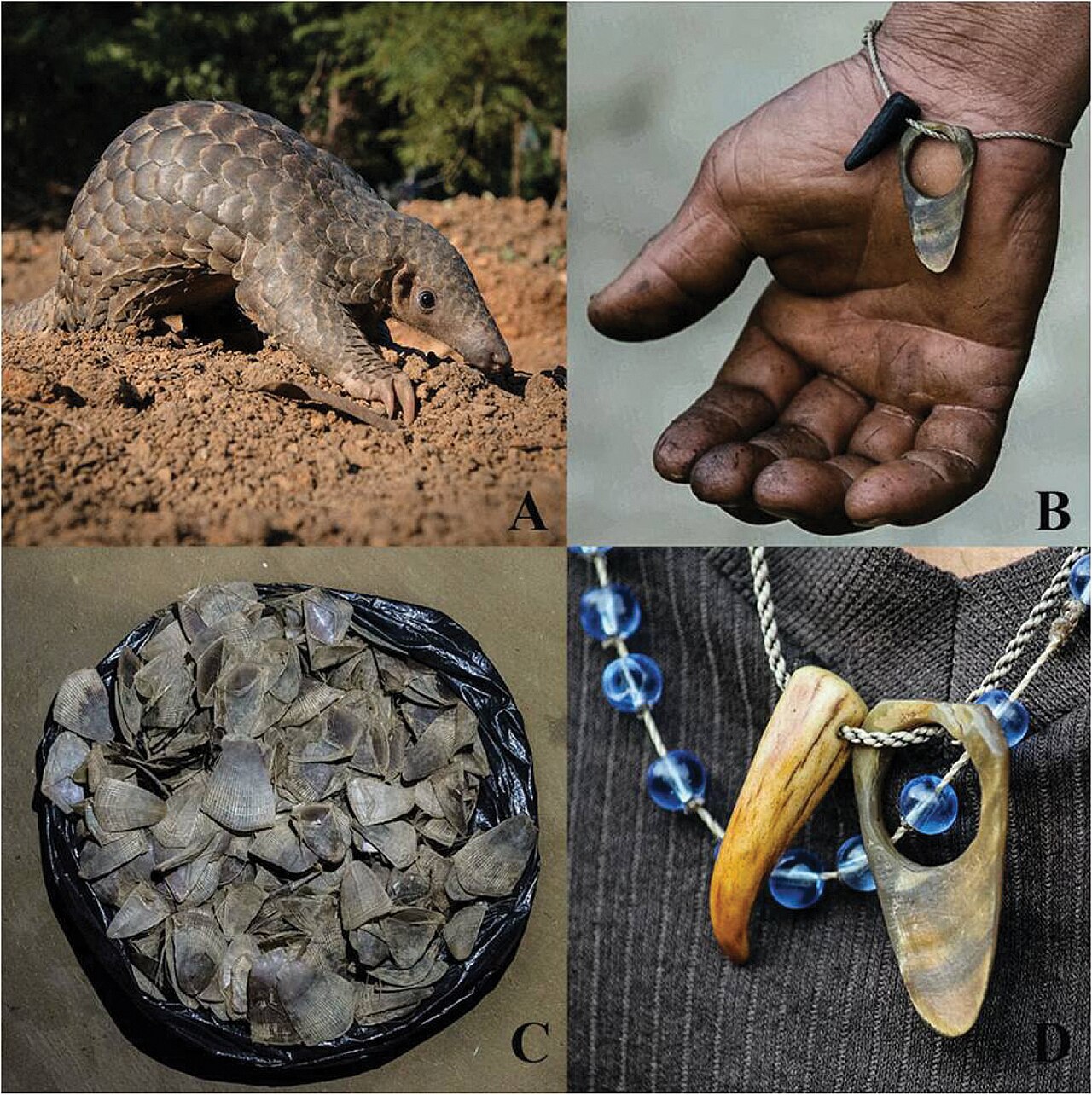
Pangolin scales are made of keratin, the same tough protein that forms human fingernails, horse hooves, and rhino horn. Each scale is a flattened, triangular plate that grows from the skin, and the plates overlap like roof shingles from the animal's head to the tip of its tail. A single pangolin can carry anywhere from a few hundred to well over a thousand scales, depending on the species and its size.
Unlike reptile scales, which are folds of the skin itself, pangolin scales are individual structures rooted in the epidermis. They are not shed all at once like a snake's skin; instead they grow continuously and wear at the edges over time. If a pangolin loses a scale to injury, it can regrow, though the replacement may be slightly irregular in shape.
Not Everything Is Covered
The armor is not quite complete. A pangolin's face, throat, belly, and the inner surfaces of its legs are covered in soft skin and sparse fur rather than plates. This is a crucial detail: the animal's underside is its weak point, which is why a threatened pangolin curls into a tight ball rather than standing its ground. The scales on the tail are especially thick and sharp-edged, and some species can swing the tail as a secondary weapon, slicing at anything that gets too close to the unrolled animal.
Why Pangolin Scales Make Sense: The Armored Truth
The short answer to why pangolins have scales is defense. Pangolins are slow-moving, largely nocturnal mammals with poor eyesight and no ability to run fast, climb quickly, or fight with claws and teeth. What they do have is patience, a low profile, and a body that can lock into an almost impenetrable ball. When threatened, a pangolin tucks its head under its tail, wraps its body around itself, and tenses powerful muscles along its back so the scales lock together. The edges of the tail scales overlap the back plates, sealing the gaps.
The result is a spiky sphere that is difficult to bite, difficult to swallow, and difficult to unroll. A leopard or a python may bat a curled pangolin around for a while, but getting a grip on a ball of overlapping keratin plates is a losing proposition. The scales also protect against the bites and stings of the ants and termites that make up the pangolin's diet, and they help shield the animal from abrasions as it digs into hard termite mounds and rocky soil.
Armor With Trade-Offs
The armored design is not free. All that keratin adds weight, and pangolins are not fast animals — a top speed of roughly 5 kilometers per hour (about 3 mph) is typical. The scales also make pangolins conspicuous to the one predator they cannot defend against: humans. A curled pangolin is easy to pick up, and its armor has no answer to a poacher's hands or a snare.
Meet the Pangolin Family: Eight Species, Two Continents
There are eight living pangolin species, split between Africa and Asia. They range in size from the tiny black-bellied pangolin (Phataginus tetradactyla) of West and Central Africa, which weighs around 2 to 3 kilograms (4.5 to 6.5 pounds) and has an extraordinarily long tail, to the Indian pangolin (Manis crassicaudata) and giant ground pangolin (Smutsia gigantea), which can reach 30 kilograms (66 pounds) or more and stretch over a meter in body length.
- Asian species: Indian pangolin, Chinese pangolin, Sunda pangolin, and Philippine pangolin.
- African species: Ground pangolin, giant ground pangolin, white-bellied pangolin, and black-bellied pangolin.
The Asian pangolins tend to be smaller and more arboreal, while several African species are ground-dwellers that dig burrows. All of them share the same basic body plan: a long snout, a sticky tongue, powerful front claws for digging, and that unmistakable coat of scales.
Tree Pangolins vs. Ground Pangolins
The arboreal species, such as the Sunda pangolin of Southeast Asia and the white-bellied pangolin of Africa, have prehensile tails that grip branches and help them climb. Ground pangolins, like the ground pangolin of southern and eastern Africa, have shorter tails, sturdier limbs, and a gait that looks almost like a two-legged waddle because they often walk on their hind legs with their front claws curled under. This odd posture keeps their digging claws sharp and protects them from wear.
Life Under the Scales: Diet, Habitat, and Behavior
Pangolins are myrmecophagous, meaning they eat ants and termites almost exclusively. A single pangolin can eat tens of thousands of ants and termites in a night, using a long, sticky tongue that can extend far beyond the length of its head. The tongue is anchored near the pelvis and retracts into a sheath in the throat when not in use. Pangolins have no teeth; instead, they grind their food in a muscular, gizzard-like stomach lined with keratinous spines and often swallow small stones to help break down insect exoskeletons.
Their front claws are formidable digging tools, used to tear open termite mounds and ant nests. Because these claws curl under the foot, pangolins walk on their knuckles or on the sides of their front feet. They have a keen sense of smell, which they use to locate insect colonies, and they are mostly solitary and nocturnal, spending their days in burrows or curled in tree forks.
Habitat and Range
Pangolins occupy a wide range of habitats, from tropical rainforests and mangrove swamps to savannas, grasslands, and even rocky hillsides. Asian species are found across South and Southeast Asia, from Pakistan and India through China, Myanmar, Thailand, Vietnam, and Indonesia. African species range across sub-Saharan Africa, from Senegal and Guinea in the west to Kenya, Tanzania, and South Africa in the east and south.
Reproduction and Lifespan
Pangolins are slow breeders. Females typically give birth to a single pup after a gestation of roughly four to five months, and the pup rides on its mother's tail or back for the first few weeks of life. Weaning takes several months, and sexual maturity may not be reached until the animal is one to two years old. In the wild, pangolins are thought to live around 10 to 20 years, though data are limited because they are difficult to study and rarely survive long in captivity.
The Dark Side of Pangolin Scales: Poaching and Trafficking
Here is the uncomfortable truth about pangolin scales: their greatest strength has become their greatest vulnerability. Because the scales are made of keratin, they have no proven medicinal value — yet pangolin scales are traded in enormous quantities for use in traditional medicine, and pangolin meat is considered a luxury food in some markets. The result is that pangolins are now among the most heavily trafficked wild mammals in the world.
All eight species are listed on Appendix I of CITES, which bans international commercial trade in wild-caught animals and their parts. Every pangolin species is classified as threatened on the IUCN Red List, with the Chinese pangolin and Sunda pangolin among the most critically endangered. Conservation groups estimate that hundreds of thousands of pangolins are poached each year, and seizures of scales — often measured in tonnes — are regularly reported across Asia and Africa.
Why the Armor Fails Against Humans
A curled pangolin is nearly predator-proof, but it is not poacher-proof. The animal's instinct to roll into a ball rather than flee makes it easy to pick up by hand, and its slow pace makes it easy to catch. Snares and dogs do the rest. Because pangolins are solitary and slow-breeding, populations cannot rebound quickly once they are hunted down.
Conservation: Can the Armored Truth Change?
There is some good news. Public awareness campaigns have made pangolins a symbol of the illegal wildlife trade, and several countries have strengthened penalties for trafficking. Rescue and rehabilitation centers in Asia and Africa care for confiscated animals, though releasing them safely is difficult because pangolins are highly territorial and stress easily. Protected areas and anti-poaching patrols remain essential, as does reducing demand for pangolin products through education.
Researchers are also learning more about pangolin ecology, which is crucial for effective protection. Camera traps and radio telemetry are revealing home range sizes, breeding patterns, and habitat needs that were previously unknown. For a species that is so hard to keep alive in captivity, protecting wild populations in their natural habitats is the only realistic path forward.
What You Can Do
- Never buy pangolin products, including scales, meat, or "medicines" claiming to contain them.
- Support organizations working on anti-trafficking and habitat protection.
- Report suspected wildlife crime to local authorities or conservation hotlines.
- Share accurate information — myths about pangolin scales are part of the problem.
Conclusion: A Marvel That Needs Protecting
Pangolin scales are a remarkable evolutionary solution: lightweight, overlapping keratin plates that turn a slow, toothless insect-eater into a walking fortress. They protect the animal from predators, from the bites of its prey, and from the rough edges of the burrows and termite mounds it calls home. But the same armor that makes a pangolin nearly invincible in the wild makes it painfully easy for humans to exploit. Understanding why pangolins have scales is not just a lesson in biology — it is a reminder that some of nature's best designs are also some of its most fragile, and that the armored truth is that these animals need our protection far more than they need our admiration.
❓ Frequently Asked Questions
💬 Are pangolin scales made of bone?
No, pangolin scales are made of keratin, the same protein that forms human fingernails, hair, and animal horns. They are not bone and contain no ivory.
💬 Do pangolin scales have any medical value?
There is no scientific evidence that pangolin scales cure or treat any illness, despite widespread traditional beliefs. Their chemical composition is essentially keratin, similar to chewing on your own fingernails.
💬 Can pangolins regrow their scales?
Pangolins can regrow scales over time if some are lost, similar to how nails regrow, but they cannot survive being stripped of their scales. The scales are also not shed like a snake's skin; they stay attached and grow with the animal.
💬 Why do pangolins roll into a ball instead of running away?
When threatened, pangolins curl into a tight ball so their sharp, overlapping scales face outward as armor, protecting their soft belly. This defense works well against most predators but sadly makes them easy for poachers to pick up.