- The Basics: What Exactly Is a Pangolin?
- Where Pangolins Live
- Diet and Lifespan
- Why Do Pangolins Roll Into a Ball? The Core Defense
- Muscles Built for Curling
- What Predators Do Pangolins Face?
- When Does a Pangolin Roll Into a Ball? Triggers and Timing
- How Long Can a Pangolin Stay Rolled Up?
- The Anatomy of the Ball: Scales, Muscles, and Tail
- The Scales
- The Tail
- The Belly
- Why the Roll-Up Is a Double-Edged Sword
- Real Examples of Trafficking
- Other Defensive Behaviors: Beyond the Ball
- What the Roll-Up Tells Us About Pangolin Conservation
- Conclusion: The Scaly Truth About a Remarkable Defense
- ❓ Frequently Asked Questions
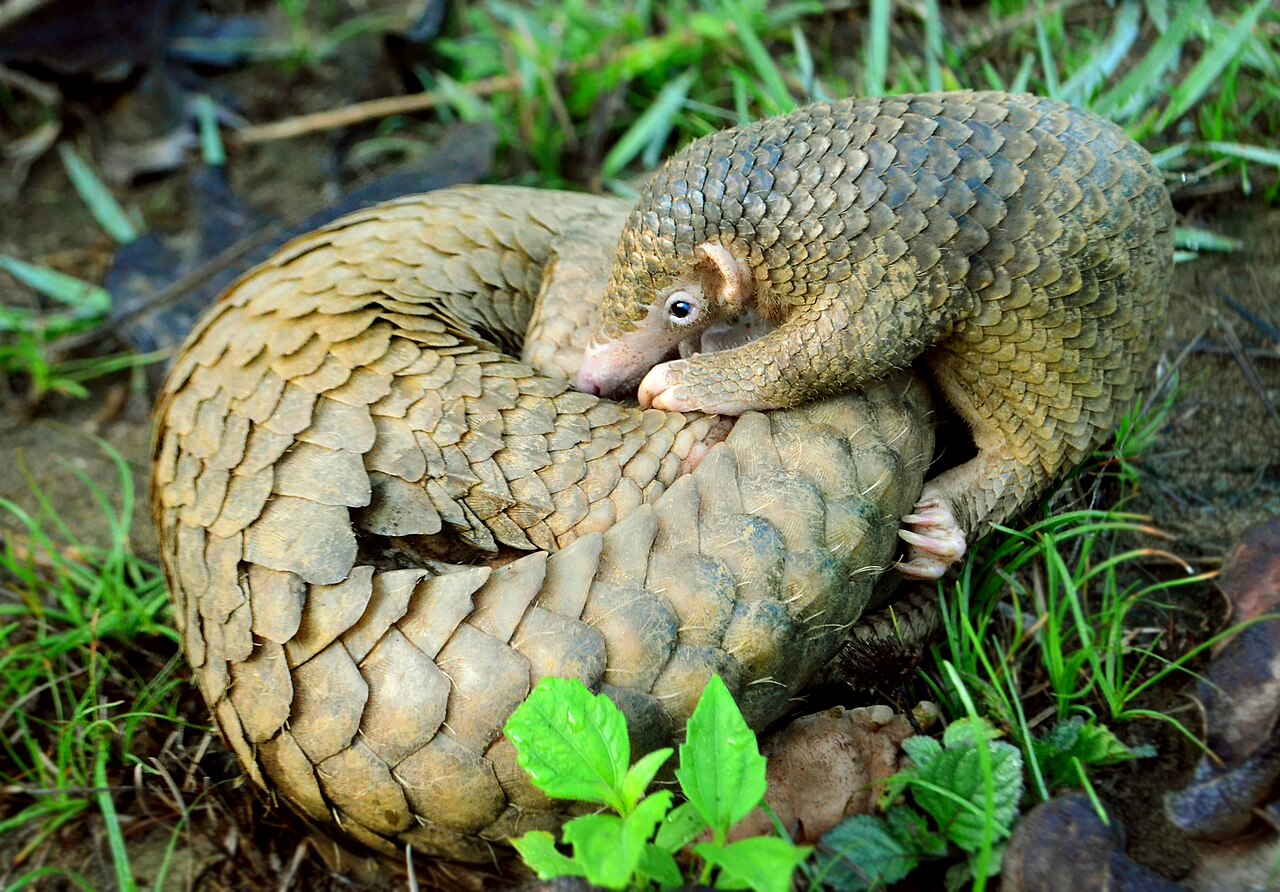
When a pangolin feels threatened, it does something remarkable: it will pangolin roll into ball-like shape, tucking its head under its tail and wrapping its body in a tight, armored sphere that few predators can pry open. This single defensive behavior has become the animal's signature move, and it is one of the most effective-and most exploited-adaptations in the animal kingdom. But the curled-up ball is only part of the story. Understanding why pangolins roll up requires a look at their anatomy, their predators, their strangely vulnerable biology, and the brutal realities of the illegal wildlife trade that has made them the most trafficked mammals on Earth.
The Basics: What Exactly Is a Pangolin?
Pangolins are mammals of the order Pholidota, and there are eight living species: four in Asia (Manis species) and four in Africa (Phataginus and Smutsia species). They are sometimes called "scaly anteaters," though they are not closely related to anteaters at all. Their closest living relatives are actually carnivores like cats, dogs, and bears, a relationship confirmed by genetic studies in the early 2000s.
Size varies considerably across species. The smallest, the African long-tailed pangolin, weighs around 1.5 to 2.5 kilograms (3 to 5.5 pounds) and measures roughly 60 to 90 centimeters (24 to 35 inches) including its tail. The largest, the African giant ground pangolin, can reach 30 to 40 kilograms (66 to 88 pounds) and stretch up to 1.8 meters (about 6 feet) from nose to tail tip. Asian species such as the Sunda pangolin generally fall in the middle, around 4 to 10 kilograms (9 to 22 pounds).
Every species shares the same basic body plan: a long snout, no teeth, a muscular tail, powerful front claws for digging, and a body covered in overlapping keratin scales. Those scales are made of the same material as human fingernails and rhino horn, and they form the armor that makes the rolled-up ball so effective.
Where Pangolins Live
Asian pangolins inhabit forests, grasslands, and plantations across China, India, Southeast Asia, and parts of Indonesia and the Philippines. African species range from Senegal and Ghana through the Congo Basin and down into southern Africa. All pangolins are nocturnal, solitary, and largely territorial. They sleep in burrows or tree hollows during the day and emerge at night to hunt for ants and termites.
Diet and Lifespan
A single pangolin can eat around 70 million insects per year, according to estimates from conservation groups such as the International Union for Conservation of Nature (IUCN). They use their long, sticky tongues-up to 40 centimeters (16 inches) in some species-to probe into termite mounds and ant nests. Because they lack teeth, they swallow small stones and sand to help grind food in their stomachs.
In the wild, pangolins are thought to live around 10 to 20 years, though precise data is scarce because they are difficult to study and rarely survive long in captivity. Most zoo attempts to keep pangolins have failed, largely because of their specialized diet and stress-sensitive nature.
Why Do Pangolins Roll Into a Ball? The Core Defense
The primary reason a pangolin rolls into a ball is self-defense. When threatened, the animal curls its head toward its stomach, wraps its tail around its body, and tightens its muscles so that the scales overlap like roof tiles. The result is a nearly impenetrable sphere roughly the size of a bowling ball or a large melon, depending on the species.
The scales themselves are the key. Each one is sharp-edged and overlapping, and when the animal curls up, the edges point outward. A predator trying to bite into the ball gets a mouthful of hard keratin rather than soft flesh. The pangolin can also tuck its vulnerable face, belly, and limbs inside the protected core, leaving nothing exposed.
There is a second layer to this defense: scale cutting. Some pangolins, particularly the African tree pangolins, have sharp, triangular scales along the edges of their tails. When curled, these scales can slice into a predator's mouth or paws. In at least one documented case, a leopard in Africa was observed with deep cuts around its muzzle after attempting to bite a curled pangolin.
Muscles Built for Curling
The pangolin's ability to roll up is powered by a specialized arrangement of muscles, particularly the musculus cutaneus trunci and the tail muscles. These muscles allow the animal to maintain the curled position for long periods, sometimes hours, without tiring. The tail itself is prehensile in tree-dwelling species, meaning it can grip branches, and it doubles as a locking mechanism when the pangolin curls up.
What Predators Do Pangolins Face?
In the wild, pangolins are preyed upon by lions, leopards, hyenas, wild dogs, pythons, and large eagles. Most of these predators will give up on a curled pangolin after a few failed attempts. However, some predators have learned to exploit the pangolin's one weakness: the ball can be rolled. A leopard or hyena may bat a curled pangolin around, trying to find a gap or roll it into water, where the pangolin must eventually uncurl to breathe.
Humans, of course, are the ultimate predator. A poacher does not need to pry the ball open; he simply picks it up and puts it in a sack. This is the tragic irony of the pangolin's defense: it works beautifully against lions and pythons, but it makes the animal almost trivially easy for humans to capture.
When Does a Pangolin Roll Into a Ball? Triggers and Timing
Pangolins do not roll up randomly. The behavior is triggered by specific stimuli, and understanding those triggers helps explain why the animal is so vulnerable to human capture.
The most common trigger is physical contact or sudden movement. A pangolin that feels a hand, a paw, or a stick touch its body will typically curl within one to three seconds. The response is reflexive and fast, which is why poachers can simply pick up a pangolin without much struggle.
Other triggers include:
- Loud noises or vibrations, such as footsteps or a vehicle engine
- Visual threats, such as a large shape moving toward the animal
- Being lifted off the ground, which removes the pangolin's sense of security
- Extreme stress, including capture, handling, or transport
Interestingly, pangolins do not always roll up when they see a threat from a distance. If they have time, they may try to escape by running, climbing, or digging. The roll-up is a last-resort defense, used when the threat is immediate and close. This is one reason why pangolins in the wild can sometimes be observed walking calmly past a human observer who stays still and quiet.
How Long Can a Pangolin Stay Rolled Up?
A pangolin can remain curled for several hours if the threat persists. In captivity, rescued pangolins have been observed staying rolled up for 10 to 12 hours after being handled, especially if they are injured or stressed. The animal will eventually uncurl to breathe more easily, move, or search for food, but it may re-curl at the slightest disturbance.
This prolonged curling has a cost. A pangolin that stays rolled up for too long can suffer from muscle fatigue, dehydration, and stress-related illness. Rescuers who work with confiscated pangolins often report that the animals take days or even weeks to uncurl and eat normally.
The Anatomy of the Ball: Scales, Muscles, and Tail
To understand why the pangolin roll into ball behavior is so effective, it helps to look at the anatomy in detail.
The Scales
Pangolin scales are made of keratin, the same protein found in human hair and nails. Each scale is attached to the skin and grows throughout the animal's life. The scales overlap in a pattern that resembles a pinecone or an artichoke. When the pangolin curls, the scales lock together, creating a rigid shell. The scales are also surprisingly light, which allows the pangolin to move quickly despite its armor.
Contrary to popular myth, pangolin scales are not impenetrable. They can be cut, broken, or pulled off, especially by human tools. But against the teeth and claws of most wild predators, they are highly effective.
The Tail
The tail is a critical part of the defense. In tree pangolins, the tail is longer than the body and is used for balance and gripping. When the pangolin curls up, the tail wraps around the body and tucks under the head, completing the sphere. The tail also contains strong muscles that help maintain the curl.
The Belly
The pangolin's belly is soft, with only sparse hair and no scales. This is the animal's most vulnerable area, and it is the reason the curl is so important. By tucking the belly inside the ball, the pangolin protects its softest parts. If a predator manages to flip the pangolin onto its back, the animal is in serious trouble.
Why the Roll-Up Is a Double-Edged Sword
The pangolin's defensive strategy is one of the most effective in nature against wild predators. Unfortunately, it is also one of the worst possible strategies against humans.
When a poacher finds a pangolin, the animal typically curls up instead of fleeing. This makes it easy to pick up, stuff into a bag, and transport. Unlike a deer or a monkey, which might run or fight, a pangolin simply becomes a ball. Conservationists estimate that more than 1 million pangolins were trafficked between 2000 and 2019, according to a 2020 report by the wildlife trade monitoring network TRAFFIC. The IUCN lists all eight species as threatened, with three critically endangered.
The demand comes from two main markets. In parts of Asia, pangolin scales are used in traditional medicine, despite no scientific evidence that they have any medicinal value. Pangolin meat is considered a delicacy in some countries. The scales are also sometimes used in fashion and jewelry. Because the pangolin rolls into a ball, it is easy to smuggle dozens of animals in a single shipment, often hidden in luggage, shipping containers, or even under car seats.
Real Examples of Trafficking
In 2019, authorities in Singapore seized 12.9 tonnes of pangolin scales, representing an estimated 17,000 pangolins. In 2020, Nigeria intercepted a shipment of 7.5 tonnes of scales. In 2023, Malaysian customs found 6 tonnes of scales hidden in a shipment of sawn timber. These are just the seizures that are detected; the actual number of trafficked pangolins is believed to be far higher.
Rescue centers in Vietnam, Thailand, and South Africa work to rehabilitate confiscated pangolins, but the survival rate is low. Many die from stress, dehydration, or injuries sustained during capture. Those that survive are often too habituated to humans to be released safely.
Other Defensive Behaviors: Beyond the Ball
Rolling up is not the pangolin's only defense. Depending on the species and situation, pangolins may also use the following tactics:
- Secretions: Pangolins have glands near their tails that produce a foul-smelling fluid. When threatened, they can spray this fluid, similar to a skunk, though the smell is less potent.
- Hissing and puffing: Some species hiss or puff up their scales to appear larger.
- Clawing: The front claws, used for digging, are sharp and strong. A pangolin may swipe at a predator if it is not fully curled.
- Tail whipping: Ground pangolins can swing their heavy tails like a club.
- Playing dead: In rare cases, a pangolin may remain completely still even when uncurled, possibly to discourage a predator.
These behaviors are secondary to the roll-up, but they show that pangolins are not entirely helpless. Against a human with a sack, however, none of these defenses make much difference.
What the Roll-Up Tells Us About Pangolin Conservation
The pangolin's defensive behavior is a perfect example of an evolutionary adaptation that works in one context and fails in another. For millions of years, rolling into a ball protected pangolins from lions, leopards, and pythons. Then humans arrived with guns, nets, and international shipping containers, and the same behavior became a liability.
Conservation efforts focus on several fronts. Anti-poaching patrols in Africa and Asia try to intercept traffickers before they reach markets. International agreements like CITES (the Convention on International Trade in Endangered Species) ban commercial trade in pangolins, though enforcement is uneven. Rescue and rehabilitation centers care for confiscated animals. Public education campaigns aim to reduce demand for pangolin products, particularly in China and Vietnam.
There is some good news. In 2016, CITES moved all eight pangolin species to Appendix I, the highest level of protection, which prohibits all commercial international trade. Some countries, including China, have increased penalties for pangolin trafficking. And in 2020, China removed pangolin scales from its official list of traditional medicines, a significant symbolic step.
But the illegal trade continues. Pangolins are still being captured, shipped, and sold. The roll-up that once kept them safe now makes them easier to catch. Until demand drops and enforcement improves, the pangolin will remain one of the most threatened mammals on the planet.
Conclusion: The Scaly Truth About a Remarkable Defense
The pangolin roll into ball behavior is one of nature's most elegant defensive adaptations. It uses overlapping keratin scales, powerful muscles, and a flexible tail to create a nearly impenetrable sphere that defeats most wild predators. It is a behavior shaped by millions of years of evolution, and it works beautifully in the forests and grasslands where pangolins live.
But the same behavior that protects pangolins from lions and pythons makes them easy targets for poachers. A curled pangolin does not run, does not fight, and does not escape. It simply waits, which is exactly what a trafficker wants. Understanding why pangolins roll into a ball is not just a matter of curiosity; it is a key to understanding why they are so vulnerable and what must be done to save them. The scaly truth is that the pangolin's greatest strength has become its greatest weakness, and only human action can change that.
❓ Frequently Asked Questions
💬 Why do pangolins roll into a ball?
Pangolins roll into a tight ball as a defense mechanism when they feel threatened. Their overlapping scales form a hard, armored shell that protects their soft belly and face from predators like lions, hyenas, and leopards.
💬 Are pangolins' scales strong enough to stop a predator bite?
The scales are made of keratin, the same material as human fingernails, and are sharp-edged and overlapping, which makes them hard for most predators to bite through. When curled up, the pangolin can also lash its sharp-scaled tail to deter attackers.
💬 Can a pangolin unroll itself after rolling into a ball?
Yes, a pangolin unrolls once the threat has passed and it feels safe again. If a predator keeps bothering it, the pangolin may stay curled for a long time, and some species can also spray a foul-smelling fluid from glands near the tail.
💬 Does rolling into a ball protect pangolins from humans?
Unfortunately, no. Poachers can simply pick up a curled pangolin by hand, which is one reason pangolins are among the most trafficked mammals in the world and are threatened with extinction.