- Why Pigs Love Mud: The Short Answer
- Built to Wallow: The Biology Behind Why Pigs Love Mud
- Few Sweat Glands, Lots of Heat
- Sunscreen and Insect Repellent
- Why Pigs Love Mud for Social and Behavioral Reasons
- Wallow Pits as Social Hubs
- Dominance and Status
- The Wild Boar Connection: Mud Is an Ancient Instinct
- Feral Pigs in the Real World
- What Pigs Actually Wallow In — And Why It's Not Just Mud
- Mud vs. Water: Why Not Just Swim?
- Common Myths About Pigs and Mud
- How Pigs Cool Down Without Mud
- Signs of Heat Stress in Pigs
- Why Pigs Love Mud: A Summary of the Science
- The Bottom Line
- ❓ Frequently Asked Questions
Ask anyone to picture a pig and chances are they'll imagine a pink snout poking out of a wallow of thick, dark sludge. The question of why pigs love mud has amused farmers, puzzled city dwellers, and inspired everything from idioms to cartoons. But the real answer is far more interesting than simple messiness. Mud is not a bad habit or a sign of laziness — it is a sophisticated survival tool that pigs have relied on for millions of years. In fact, mud may be one of the most important things in a pig's life.
Why Pigs Love Mud: The Short Answer
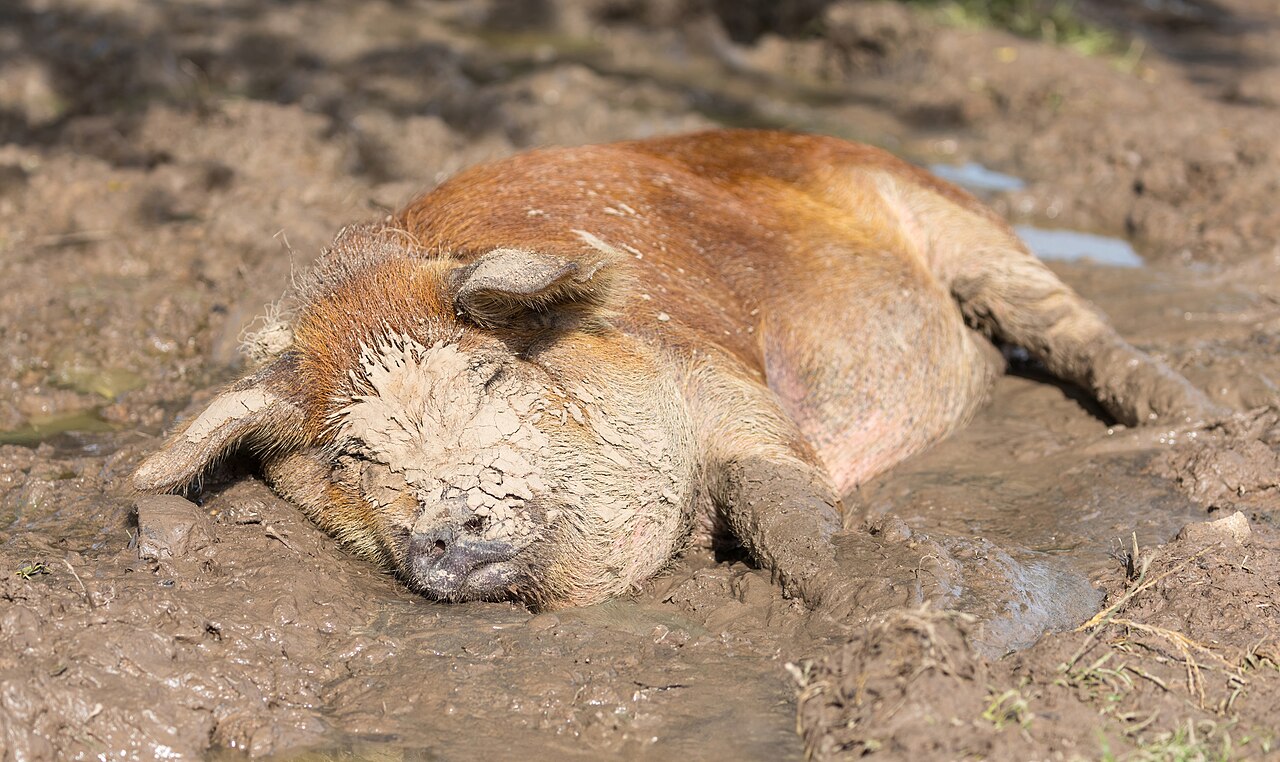
Pigs wallow in mud primarily to cool down. Unlike humans and many other mammals, pigs have very few functional sweat glands. They cannot perspire enough to regulate their body temperature on a hot day, so they need an external method of cooling. Mud does that job beautifully. When a pig coats itself in wet mud, the water in the mud evaporates slowly, pulling heat away from the skin in a process called evaporative cooling. Think of it as a natural, self-applied air conditioner that works for hours at a time.
But thermoregulation is only the beginning. Mud also protects pigs from the sun, from biting insects, and even from each other's teeth during dominance disputes. To understand the full picture, we have to look at pig biology, ancestry, and social behavior.
Built to Wallow: The Biology Behind Why Pigs Love Mud
Domestic pigs (Sus scrofa domesticus) descend from wild boars, which still roam forests and grasslands across Europe and Asia. Both wild and domestic pigs share a body plan that is poorly suited to sweating. Pigs do have some sweat glands, mostly on the snout, but they are nowhere near enough to cool a large, muscular body on a 35°C (95°F) day.
Few Sweat Glands, Lots of Heat
A pig's normal body temperature is around 38.5°C to 39.5°C (101.3°F to 103.1°F) — slightly higher than a human's. A commercial pig can weigh anywhere from 50 kg (110 lb) for a young feeder pig to over 300 kg (660 lb) for a mature sow or boar. Some large breeds, such as the Large White, can reach 350 kg (770 lb). That is a lot of body mass generating heat, and without efficient sweating, the animal overheats quickly.
Mud solves this because water is an excellent heat conductor. A layer of wet mud on the skin allows heat to move from the pig's body into the water, which then evaporates. The thicker the mud, the longer the cooling effect lasts. A pig that has dried into a crusty "mud suit" can stay comfortable for hours, even in direct sunlight.
Sunscreen and Insect Repellent
Pigs have pale skin under their sparse bristles, and pale skin burns easily. A dried mud layer acts as a physical sunscreen, blocking ultraviolet rays. It also forms a barrier against horseflies, stable flies, and mosquitoes, which can transmit diseases. Anyone who has watched a pig in a pasture will notice it wallows, dries, and then wallows again — constantly renewing its protective coating. This behavior is not random. It is a maintenance routine as predictable as a dog scratching its collar.
Why Pigs Love Mud for Social and Behavioral Reasons
Cooling and protection explain a lot, but pigs are highly social animals, and mud plays a role in their relationships too. Wild boars live in matriarchal groups called sounders, usually made up of related females and their young. Adult males tend to be more solitary. Within these groups, wallowing is often a shared activity.
Wallow Pits as Social Hubs
When several pigs wallow together, they are not just cooling off. They are communicating. Pigs have an excellent sense of smell — far better than humans — and mud carries scent. Rubbing against one another in a wallow spreads the group's scent, reinforcing social bonds. Researchers studying wild boar have observed that wallowing peaks in the hottest part of the day and often involves grooming behavior, with pigs nibbling mud off each other's backs.
Wallow pits also serve as a kind of neighborhood landmark. Wild boars return to the same pits season after season, deepening and enlarging them. A well-used wallow can become a small muddy crater several meters across, and other animals — deer, birds, and even insects — may use it too.
Dominance and Status
Among pigs, the best wallow spots are prized. Dominant animals often claim the deepest, coolest part of the pit, while lower-ranking pigs crowd the edges. This is a subtle but constant negotiation of hierarchy. A pig that controls access to a prime wallow is signaling its status without needing to fight. In this way, mud helps reduce outright aggression, because the pecking order can be expressed through who gets the best spot.
The Wild Boar Connection: Mud Is an Ancient Instinct
To really understand why pigs love mud, it helps to look at their wild relatives. The Eurasian wild boar is the direct ancestor of the domestic pig and still lives across Europe, Asia, and parts of North Africa. Wild boars are adaptable and have been introduced to places as far apart as Australia and the United States, where they are often called feral hogs.
Wild boars inhabit forests, marshes, and grasslands. They are omnivores and eat a wide range of foods: roots, tubers, acorns, nuts, insects, small rodents, carrion, and agricultural crops. They use their powerful snouts to root through soil, which is why a wild boar's face is often caked in dirt even when it is not deliberately wallowing. In this environment, mud is not optional. It is part of daily survival.
Feral Pigs in the Real World
Feral pigs in the southern United States, Australia, and parts of South America show the same wallowing behavior as their wild ancestors. In Texas alone, an estimated 2 to 3 million feral hogs cause millions of dollars in agricultural damage each year, partly by rooting up pastures and creating wallows that destroy crops. A single feral hog sounder can turn a pristine field into a muddy mess in a matter of days. This is a vivid, real-world demonstration that wallowing is deeply ingrained, not learned from humans.
Domestic pigs raised in indoor barns often lack access to mud, which is one reason animal welfare scientists argue for providing wallows or cooling systems. Pigs without a way to cool down show signs of stress: panting, reduced feeding, and in extreme heat, heat stroke and death. The instinct to wallow is so strong that pigs will use any available wet surface, including spilled water or manure, to cool off.
What Pigs Actually Wallow In — And Why It's Not Just Mud
People often assume a pig wallow is pure mud, but in reality it is a mixture of soil, water, urine, and feces. That sounds unappealing to humans, but for pigs it is functional. The organic matter in a wallow helps the mud cling to the skin and slows evaporation, making the cooling effect last longer. It also carries scent, which matters for social signaling.
Pigs are also surprisingly clean animals when given the chance. They will not normally defecate in their sleeping area, and they prefer to keep their food separate from their waste. A pig in a spacious pasture will designate one spot for sleeping, one for eating, and one for wallowing. The idea that pigs are "dirty" comes from the fact that they have no choice but to lie in mud to survive the heat — not from a love of filth itself.
Mud vs. Water: Why Not Just Swim?
Some pigs do swim, and feral pigs are known to cross rivers and even reach islands. But water alone is less effective than mud for cooling because it evaporates quickly and offers no lasting sun protection. Mud sticks. It stays on the skin, keeps working, and provides a physical barrier. That is why pigs choose mud over a clean pool whenever both are available.
Common Myths About Pigs and Mud
Plenty of misinformation surrounds pig behavior. Here are a few myths worth clearing up.
- Myth: Pigs are dirty animals. Pigs are actually quite fastidious. They keep their sleeping and eating areas clean when space allows and will walk some distance to defecate away from their resting spot.
- Myth: Pigs wallow because they like being messy. Wallowing is a cooling and protective behavior, not a preference for mess. Pigs in cool climates wallow far less than pigs in hot climates.
- Myth: Only domestic pigs wallow. Wild boars, warthogs, and other pig relatives wallow too. Warthogs in Africa use mud to control parasites and to cool down in the savanna heat.
- Myth: Pigs can't sweat at all. They can, but only minimally, mostly on the snout. It is not enough to regulate body temperature.
- Myth: Mud makes pigs sick. While wallows can harbor parasites and bacteria, healthy pigs with strong immune systems handle them well. In fact, some exposure to microbes may help build immunity.
Understanding these myths matters because they shape how people treat pigs. A farmer who thinks pigs are simply dirty may not provide proper cooling. A pet owner who thinks a mini pig is "supposed" to be muddy may miss signs of overheating.
How Pigs Cool Down Without Mud
When mud is not available, pigs rely on other strategies. They seek shade, lie on cool concrete or tile, pant, and spread their legs to increase surface area. Some pigs learn to use water sprinklers or misters. In hot climates, farmers often install wallows, shade structures, or evaporative cooling pads to keep pigs comfortable.
Mini pigs kept as pets need special attention. A 50 kg (110 lb) mini pig can overheat quickly in a warm apartment or backyard. Owners are advised to provide a shallow kiddie pool, a shaded area, and plenty of fresh water. Some pigs even enjoy a gentle hose-down on a hot day.
Signs of Heat Stress in Pigs
Recognizing heat stress can save a pig's life. Watch for:
- Heavy panting with an open mouth
- Lying flat and refusing to move
- Reduced appetite or refusal to eat
- Skin that feels hot to the touch
- In severe cases, staggering, vomiting, or collapse
If a pig shows these signs, move it to shade, wet its skin with cool water, and contact a veterinarian. Do not use ice-cold water, which can cause shock.
Why Pigs Love Mud: A Summary of the Science
Put simply, pigs love mud because it keeps them alive and comfortable. It cools them when they cannot sweat, shields them from the sun, repels biting insects, and helps them manage social relationships. The behavior is ancient, inherited from wild boars that needed every advantage to survive in forests and grasslands. It is also practical, because mud is usually available wherever pigs live.
Modern science has confirmed what farmers have known for centuries: pigs need a way to cool down, and mud is one of the most effective methods. Studies of pig welfare consistently show that access to wallows reduces stress hormones and improves overall health. In hotter parts of the world, wallowing is not a luxury — it is a necessity.
So the next time you see a pig happily covered in sludge, remember that it is not being lazy or messy. It is doing exactly what millions of years of evolution taught it to do. Mud is a pig's sunscreen, air conditioner, insect repellent, and social network, all rolled into one. That is the surprising truth behind why pigs love mud.
The Bottom Line
Pigs are intelligent, social, and surprisingly clean animals that have adapted to their environment in a clever way. Their love of mud is not a character flaw but a biological necessity. From wild boars rooting through European forests to feral hogs in Texas and pet mini pigs in backyard pools, the behavior is universal. By understanding why pigs love mud, we can treat them better — providing shade, water, and wallows so that these remarkable animals stay healthy, cool, and content.
❓ Frequently Asked Questions
💬 Why do pigs roll in mud?
Pigs roll in mud mainly to cool down, since they can't sweat effectively and have little fur to protect them from the sun. The mud also acts as a sunscreen and helps protect their skin from sunburn and insects.
💬 Is it true that pigs are dirty animals?
No, pigs are actually quite clean and will keep their sleeping and eating areas separate from where they defecate if given enough space. They roll in mud for temperature control and skin protection, not because they like being dirty.
💬 Do pigs get sunburned?
Yes, pigs can get sunburned because they have pale skin and sparse hair, especially lighter-colored breeds. Mud acts as a natural sunscreen and cooling layer, which is one reason they wallow so enthusiastically.
💬 Why don't pigs just sweat to stay cool?
Pigs have very few functional sweat glands, so sweating isn't an effective way for them to lose heat. Wallowing in mud or water is their main method of thermoregulation, which is why they seek it out on hot days.