- What the Platypus Glow UV Light Discovery Actually Found
- What the Glow Looks Like, and Where It Comes From
- Color, intensity, and location on the body
- The chemistry behind it
- Why Would a Platypus Glow? The Leading Theories
- 1. It might be a side effect, not an adaptation
- 2. Camouflage in a UV-rich world
- 3. Communication between platypuses
- 4. It might be invisible to platypuses entirely
- Why the Platypus Keeps Surprising Scientists
- How Widespread Is Biofluorescence in Mammals?
- Common Misconceptions About the Platypus Glow UV Light Story
- "Platypuses glow in the dark"
- "The glow helps them find mates"
- "Scientists discovered this in the wild"
- "It's the same as scorpions glowing"
- What Scientists Still Need to Find Out
- The Weird Truth, Summed Up
- ❓ Frequently Asked Questions
If you shine an ultraviolet torch on a platypus in a dark room, something strange happens: the animal's brown fur lights up with a soft blue-green glow. The platypus glow UV light phenomenon was discovered almost by accident, and it turned one of the world's strangest mammals into an even bigger scientific puzzle. This article unpacks what biofluorescence actually is, what the glow looks like, why platypuses might have evolved it, and why the honest answer to "why" is still more interesting than any simple explanation.
What the Platypus Glow UV Light Discovery Actually Found
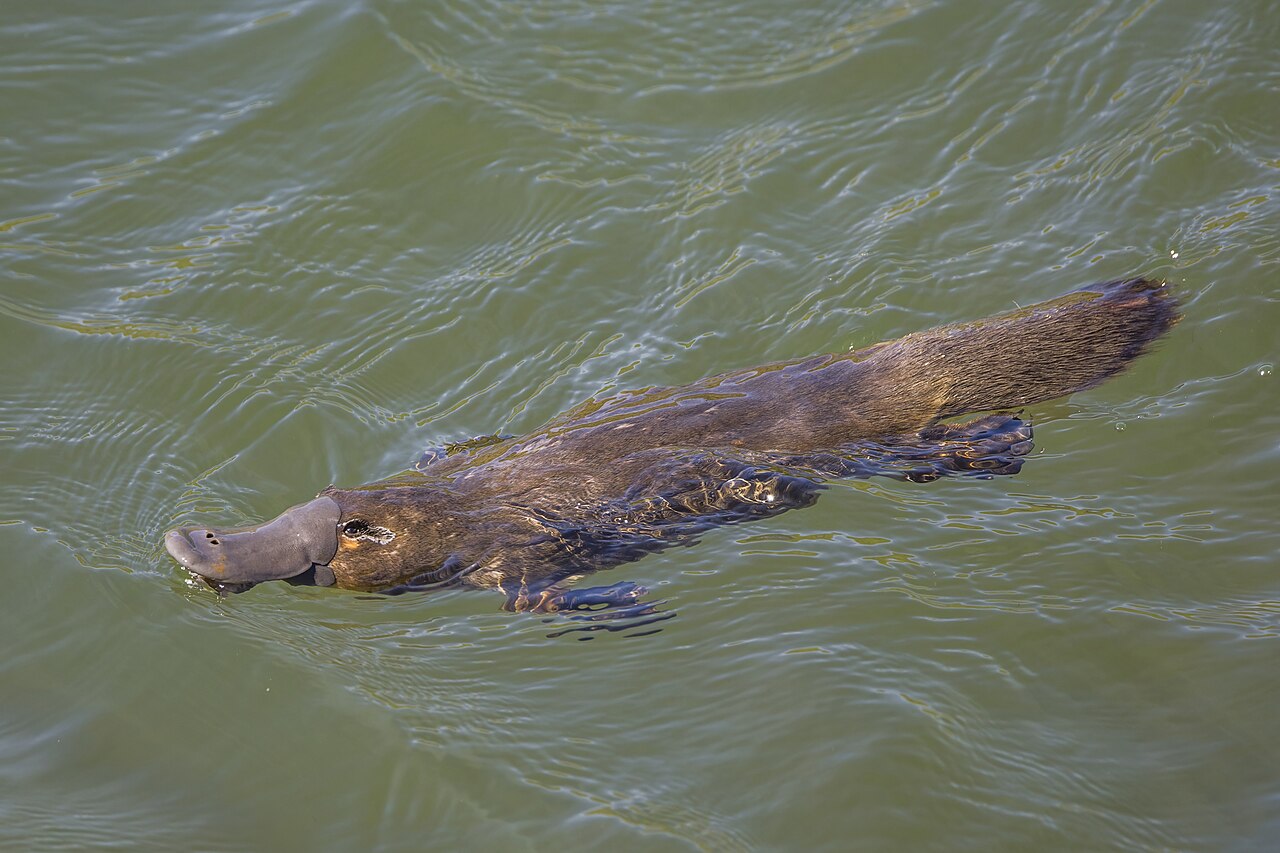
In 2020, a team of researchers at the Field Museum in Chicago and North Dakota State University were examining museum specimens under ultraviolet light. They were studying biofluorescence in mammals generally, and they decided to check a platypus skin in the collection almost as an afterthought. Under UV, the animal's normally dark brown fur glowed a distinct blue-green.
The discovery was published in the journal Mammalia in October 2020. The team, led by Paula Spaeth Anich, then tested more specimens and found the same result across multiple platypus skins. They also examined the closely related short-beaked echidna and found a much weaker glow, mostly on the face and feet. That contrast mattered: it suggested the trait was not some random artifact of museum preservation.
It is worth being precise here, because the difference matters scientifically:
- Biofluorescence means an organism absorbs light at one wavelength (usually UV or blue) and re-emits it at a longer wavelength, so it appears to glow. It requires an external light source.
- Bioluminescence means an organism produces its own light through a chemical reaction, like a firefly or an anglerfish. No external light needed.
The platypus is biofluorescent, not bioluminescent. Turn off the UV lamp and the glow disappears entirely. This is a crucial distinction that gets muddled constantly in viral social media posts claiming platypuses "glow in the dark."
What the Glow Looks Like, and Where It Comes From
Color, intensity, and location on the body
The fluorescence appears as a blue-green or cyan color. It is not uniform across the body. In the museum specimens, the strongest glow came from the fur on the back and the tail, while the belly and the famous duck-like bill showed weaker or no fluorescence. The tail is notable because it is thick, flat, and fatty — a major energy storage organ for the animal.
The intensity is modest. This is not a neon sign. Under a strong UV light in a darkened room, a platypus would look like it had been dusted with a faint glowing powder. In daylight, or under normal white light, the effect is completely invisible because the re-emitted light is swamped by reflected ambient light.
The chemistry behind it
Researchers believe the glow comes from compounds in the fur that absorb UV radiation and re-emit it at longer, visible wavelengths. Similar molecules — often porphyrins, flavins, or proteins in the keratin family — are responsible for fluorescence in other animals. In 2021, a follow-up study found that the fluorescence in platypus fur appears to be concentrated in the outer, coarser guard hairs rather than the fine underfur, which hints that the responsible molecules are deposited as the hair grows.
One important caveat: all of this work has been done on dead museum specimens, some collected more than a century ago. Museum preservation, chemical treatments, and simple aging can alter how fur behaves under UV. That does not mean the finding is wrong — the effect is strong and repeatable — but it does mean nobody has yet confirmed the exact brightness of a live platypus under natural UV.
Why Would a Platypus Glow? The Leading Theories
This is where the science gets genuinely unsettled, and where honest writers have to admit that nobody knows for certain. There are several competing hypotheses, and none has been proven.
1. It might be a side effect, not an adaptation
The most conservative explanation is that fluorescence is simply a byproduct of fur chemistry. Many biological molecules fluoresce incidentally. If the glow serves no function, it is not an adaptation at all — it is just what happens when certain pigments and proteins interact with UV. This hypothesis is unglamorous but entirely plausible, and it is the default assumption many biologists hold until evidence for a function emerges.
2. Camouflage in a UV-rich world
Platypuses are nocturnal and crepuscular, most active around dawn and dusk. At those hours, the sky is rich in UV light. Some researchers have suggested that absorbing UV and re-emitting it as visible blue-green could help break up the animal's outline against certain backgrounds, or reduce the contrast between the animal and its surroundings when viewed by predators with UV-sensitive vision. Birds of prey and some mammals can perceive UV wavelengths, so this is not as far-fetched as it sounds.
3. Communication between platypuses
Platypuses are largely solitary and highly territorial. They live along freshwater rivers and streams in eastern Australia, including Tasmania, and they defend stretches of waterway. If the fluorescence were visible to other platypuses, it could theoretically function as a subtle signal — a way of announcing presence without making noise or visible movement that would alert predators.
There is a problem with this idea, though. Platypuses have relatively poor vision, especially underwater where their eyes are closed much of the time. They navigate using electroreception — detecting the tiny electrical fields generated by the muscles of shrimp, insect larvae, and other prey — plus touch and smell. A visual signal would be a strange thing for an animal that barely uses vision.
4. It might be invisible to platypuses entirely
This is the hypothesis that undercuts most of the others. If platypuses cannot see UV or blue-green fluorescence well, then the glow cannot be a signal between them. It could still be a signal to other species, or it could be entirely non-functional. Determining what a platypus actually sees requires physiological studies of its retina that have not yet been done for this specific question.
Why the Platypus Keeps Surprising Scientists
To understand why this discovery caused such a stir, you need to appreciate just how odd the platypus already is. It is one of only five surviving species of monotreme — mammals that lay eggs instead of giving birth to live young. The other four are echidnas.
Here are the basics:
- Size: Adults typically run 38 to 60 centimeters (15 to 24 inches) in body length, with males larger than females. Males also have a venomous spur on each hind leg.
- Weight: Roughly 0.7 to 2.4 kilograms (1.5 to 5.3 pounds).
- Habitat: Freshwater rivers and streams in eastern Australia, from Queensland down through New South Wales and Victoria, plus all of Tasmania.
- Diet: Carnivorous. It eats insect larvae, freshwater shrimp, yabbies (a type of crayfish), worms, and small mollusks — often several hundred individual prey items in a single night.
- Feeding behavior: It dives for 30 to 60 seconds at a time, eyes and ears closed, sweeping its bill side to side to detect prey electrically.
- Lifespan: Around 10 to 17 years in the wild, with some individuals in captivity reaching their early twenties.
- Reproduction: Females lay one to three leathery eggs, incubate them for about ten days, and nurse the hatchlings with milk secreted through patches of skin rather than nipples.
- Venom: The male's hind-leg spur delivers venom that causes severe pain in humans and appears to be used in competition between males, peaking during breeding season.
This is an animal that has electroreceptors in its bill, ten sex chromosomes instead of the usual two, and a genome containing both reptilian and mammalian features. When you add "glows under UV" to that list, it fits a pattern rather than breaking one.
How Widespread Is Biofluorescence in Mammals?
The platypus was not the first mammal found to fluoresce, and it will not be the last. Once researchers started looking with UV lamps, they found the trait everywhere.
In the same 2020 study, the team reported fluorescence in the fur of several other mammals, including:
- Flying squirrels — a striking pink glow, documented in 2019, which is unusually vivid compared to most mammalian fluorescence.
- Opossums — a pinkish fluorescence across the body.
- Wombats and bilbies — Australian marsupials that also glow.
- Echidnas — the platypus's closest relatives, with weak fluorescence on the face and feet.
Springhares, armadillos, rabbits, and even domestic cats and dogs have since shown some degree of fluorescence. In 2021 and 2022, researchers documented it in additional mammal groups, and a 2023 study found fluorescence in the fur of various bats and rodents.
The pattern suggests that biofluorescence in mammal fur is common — possibly the rule rather than the exception. That is a strong argument for the "incidental byproduct" hypothesis. If nearly every mammal glows under UV, then glowing is probably not a special adaptation that each lineage evolved independently for a specific purpose.
Common Misconceptions About the Platypus Glow UV Light Story
"Platypuses glow in the dark"
False. They fluoresce, which requires an external UV light source. In total darkness, a platypus looks like a platypus: dark, furry, and invisible.
"The glow helps them find mates"
Unproven. It is a popular claim online, but no study has demonstrated that platypuses perceive the fluorescence or respond to it. Platypuses rely heavily on electroreception and smell, and their visual system is not well suited to long-range visual signaling.
"Scientists discovered this in the wild"
Not yet. Every documented case so far has been on museum specimens. Field studies with UV cameras and live animals have not been published. Until they are, we cannot say how the glow appears under natural conditions — or whether it appears at all in the same way.
"It's the same as scorpions glowing"
Mechanically similar, chemically different. Scorpions fluoresce due to compounds in their exoskeleton, and the effect is much brighter and better studied. The platypus glow is subtler and its chemistry is still being worked out.
What Scientists Still Need to Find Out
The honest state of the science is this: we know platypuses fluoresce, we know roughly what color and where on the body, and we do not know why. Several specific questions remain open.
First, does the fluorescence occur in live animals under natural UV conditions? This requires field research with controlled lighting and careful handling, which is difficult given that platypuses are shy, nocturnal, and protected under Australian law.
Second, what is the exact molecule responsible? Identifying it would allow researchers to test whether it is a pigment with another primary function, or something with no obvious purpose at all.
Third, can platypuses see their own glow? This requires detailed study of the cone cells in their retinas. If their eyes lack sensitivity to the relevant wavelengths, the whole "communication" hypothesis collapses.
Fourth, is there a seasonal or sex-based pattern? If males glow more during breeding season, that would support a signaling function. If the glow is identical year-round and across sexes, it points toward a byproduct.
The Weird Truth, Summed Up
The platypus glow UV light discovery is real, repeatable, and genuinely strange — but the strangest part is how little it changes our understanding of the animal. The platypus was already a mammal that lays eggs, senses prey with electricity, carries venom in its heels, and has ten sex chromosomes. A faint blue-green glow under ultraviolet light is just one more entry on a very long list.
What the finding really reveals is how much we still do not know about ordinary animals. Biofluorescence in mammals went largely unnoticed for decades because nobody thought to look. Once researchers pointed UV lamps at museum drawers, the glow turned up in squirrels, opossums, wombats, and dozens of other species. The platypus may not be uniquely fluorescent at all — it may simply be the most famous example of a phenomenon that is quietly widespread across the mammal family tree.
So the next time you see a headline claiming platypuses "glow in the dark," you can correct it with confidence. They do not glow in the dark. They glow under ultraviolet light, in a soft blue-green that nobody has yet explained, on an animal that has been confusing scientists since 1799 — when the first specimen sent to Britain was widely assumed to be a hoax stitched together by a taxidermist. Two centuries later, the platypus is still the animal that refuses to be ordinary.
❓ Frequently Asked Questions
💬 Do platypuses really glow under UV light?
Yes. In 2020, researchers reported that platypus fur fluoresces a blue-green color when exposed to ultraviolet light. The glow comes from the fur itself, not from anything the animal does deliberately.
💬 Why does platypus fur glow under UV light?
The fur contains chemical compounds that absorb UV light and re-emit it as visible blue-green light, a phenomenon called biofluorescence. Scientists aren't yet sure what purpose it serves, though it may relate to camouflage or communication.
💬 Is biofluorescence the same as bioluminescence?
No. Bioluminescence is when an animal produces its own light through a chemical reaction, while biofluorescence is when an animal's body absorbs UV or blue light and re-emits it in a different color. The platypus is biofluorescent, not bioluminescent.
💬 Do other animals glow under UV light too?
Yes, biofluorescence has been found in many animals, including some frogs, scorpions, corals, and even other mammals like flying squirrels and opossums. The platypus is notable because it was one of the first egg-laying mammals confirmed to glow.