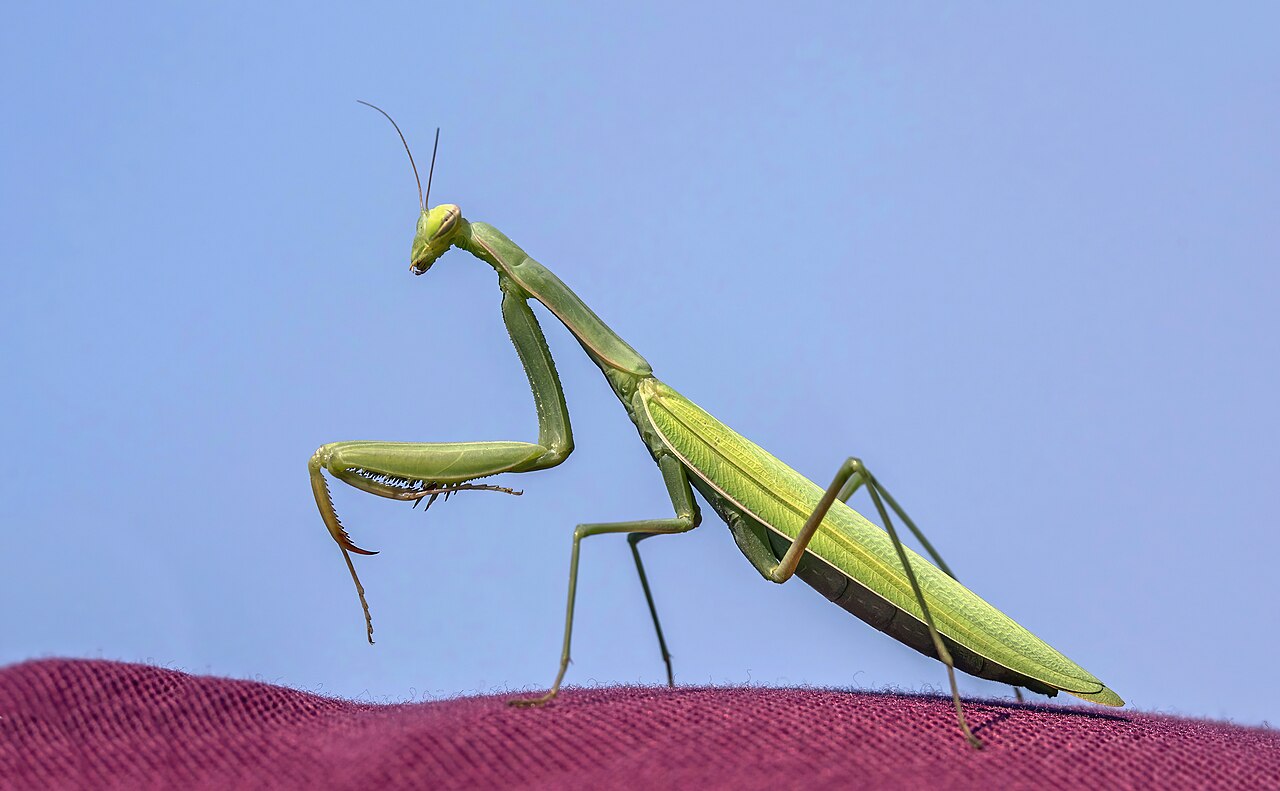
- Praying Mantis Mating: Separating Fact from Fiction
- How a Mantis Mating Actually Unfolds
- Why Do Female Mantises Eat Their Mates?
- Hunger, Not Hatred
- The "Better Sperm" Hypothesis
- What Really Happens During Praying Mantis Mating in the Wild
- Species Where It Rarely Happens
- Mantis Biology: Diet, Habitat, and Lifespan
- Sexual Dimorphism and the Size Gap
- Do Males Ever Get Away? Courtship and Escape Tactics
- The Role of the Female's Receptivity
- Common Myths and Misconceptions
- Why the Legend Persists
- Conclusion: The Real Story of Praying Mantis Mating
- ❓ Frequently Asked Questions
Few moments in the insect world are as famous—or as misunderstood—as praying mantis mating. The image of a female calmly devouring her partner mid-act has become a cultural shorthand for sexual cannibalism, inspiring everything from horror films to internet memes. But how often does this actually happen? Is it a routine part of mantis romance or a rare, circumstance-dependent event? The truth, as entomologists have discovered through decades of observation in both the lab and the field, is far more nuanced than the popular legend suggests. In this article, we'll separate fact from folklore, explore why sexual cannibalism occurs at all, and examine what the praying mantis's notorious mating behavior really tells us about evolution, risk, and reproduction.
Praying Mantis Mating: Separating Fact from Fiction
The first thing to understand is that praying mantises are not a single species but an entire order of insects—Mantodea—containing roughly 2,400 described species spread across the warmer regions of every continent except Antarctica. They range from the tiny, ant-mimicking mantises of the tropics to the formidable Chinese mantis (Tenodera sinensis), which can reach 11 centimeters (about 4.3 inches) in length. With such diversity comes enormous variation in behavior, and that includes mating.
The myth that females always eat their mates is simply false. In many species, cannibalism during mating is rare or has never been observed at all. In others, it happens occasionally—perhaps in a quarter to a third of matings under laboratory conditions, and considerably less often in the wild. The most-cited figure comes from classic studies of the European mantis (Mantis religiosa), where researchers found that roughly 30 percent of captive matings ended with the female consuming her partner. Under natural conditions, with abundant food and room to escape, the rate appears to be much lower.
So where did the legend come from? Largely from early laboratory observations, where hungry females were placed in confined spaces with males who had nowhere to run. Those conditions maximized the odds of cannibalism—and those observations, repeated in textbooks and documentaries, became the story everyone remembers.
How a Mantis Mating Actually Unfolds
Courtship in mantises is a cautious, deliberate affair. A male approaches a female slowly, often swaying or freezing in place, antennae twitching as he picks up chemical cues. He typically comes from behind or above, avoiding her powerful grasping forelegs—the same spiked raptorial limbs she uses to seize prey. If she is receptive, he mounts her back and attaches a spermatophore, a small packet of sperm, to her abdomen. Copulation can last anywhere from a few minutes to several hours depending on the species.
The male's strategy is essentially one of risk management. He wants to pass on his genes without becoming a meal. In many species, males approach cautiously, mount quickly, and dismount even faster, leaping away the moment the transfer is complete. Some males have even been observed trembling or abruptly releasing their grip and dropping to the ground to escape. This behavior alone tells us something important: mating is genuinely dangerous for a male mantis, but it is not a guaranteed death sentence.
Why Do Female Mantises Eat Their Mates?
The question at the heart of the legend has a surprisingly practical answer. Female mantises are voracious predators with fast metabolisms, and reproduction is expensive. A female preparing to produce an egg case—called an ootheca—needs an enormous amount of energy and protein. An ootheca can contain anywhere from a few dozen to several hundred eggs, and she may produce multiple cases over a single season. Building that much reproductive tissue requires fuel, and a male mantis, arriving at close range, is essentially a protein delivery service.
From an evolutionary standpoint, the calculation is stark. If a female is hungry and a male presents himself, eating him provides immediate nutrition that can be invested directly into eggs. Studies on species such as the Chinese mantis have suggested that females who consume their mates may produce larger or more numerous eggs, though results vary between studies and species. The benefit is real but not universal—it depends heavily on how well-fed the female already is.
Hunger, Not Hatred
Crucially, cannibalism during praying mantis mating is strongly linked to hunger rather than aggression or malice. Well-fed females in laboratory settings often tolerate males without attacking them. Food-deprived females are far more likely to strike. This makes intuitive sense: a mantis is an opportunistic ambush predator that responds to movement, and a male climbing onto her back is, to a hungry female's sensory system, a large moving object within striking distance.
Researchers have also found that males can sometimes reduce their risk through courtship displays, careful approach angles, and quick retreats. Some males even appear to "freeze" when the female turns toward them, waiting until her attention shifts before continuing. These subtle tactics suggest that the male's survival is a genuine evolutionary consideration—not an afterthought.
The "Better Sperm" Hypothesis
There is a second, more controversial explanation for sexual cannibalism: the idea that being eaten may actually improve a male's reproductive success. In some mantis species, researchers observed that males whose heads were removed (or who were consumed) continued copulating for longer periods, transferring more sperm. The severed head doesn't immediately stop the body's mating reflexes, and without the head's inhibitory signals, copulation can continue longer.
This has led to the proposal that cannibalism might benefit the male by increasing sperm transfer and by providing his offspring with a nutritional head start—a form of "paternal investment" through his own body. However, most scientists treat this hypothesis cautiously. A male who survives can potentially mate again, so dying is only advantageous under specific conditions. The current consensus is that cannibalism is primarily driven by the female's nutritional needs, with any benefit to the male being incidental or secondary.
What Really Happens During Praying Mantis Mating in the Wild
Field observations paint a very different picture from the lab. In natural settings, male mantises are wary and mobile, and females are often surrounded by alternative prey. Studies of wild populations have reported cannibalism rates well below laboratory figures—sometimes as low as a few percent. The male's approach is also more elaborate outdoors, where he can use vegetation, wind, and distance to his advantage.
It's also worth noting that male mantises face other dangers. They are smaller than females in most species and are themselves potential prey for birds, lizards, and larger insects. Their short adult lives—often just a few weeks to a couple of months—are spent largely on finding mates. For the male, the calculus of approaching a female involves balancing the risk of being eaten against the imperative to reproduce before he dies of old age.
Species Where It Rarely Happens
Not all mantises are created equal in this regard. In some species, such as certain flower mantises that live in dense tropical vegetation, males and females may interact with far less drama. In others, including some small bark-dwelling species, cannibalism has never been documented. The popular image is drawn disproportionately from a handful of large, well-studied species that happen to be common in labs and gardens—especially the European mantis and the Chinese mantis, both of which are widely kept and observed.
This species-level variation is a useful reminder: when people ask "do praying mantises eat their mates?" the honest answer is "some do, sometimes, under certain conditions." Treating the behavior as a universal rule is a bit like assuming all birds migrate or all mammals are monogamous.
Mantis Biology: Diet, Habitat, and Lifespan
To understand the mating behavior, it helps to understand the animal. Praying mantises are generalist predators that eat virtually any insect they can overpower—flies, crickets, grasshoppers, moths, bees, and even other mantises. Large species have been known to take down small frogs, lizards, and hummingbirds, though such events are rare. Their hunting style is classic ambush: they sit motionless among foliage, blending in, and strike with their raptorial forelegs in a fraction of a second.
Mantises are found worldwide in warm and temperate regions, with the greatest diversity in the tropics. They inhabit gardens, meadows, scrubland, and forest edges. Their camouflage is extraordinary—species mimic leaves, bark, twigs, flowers, and even ants. Lifespan varies by species, but most live about one year from egg to adult, with the adult stage lasting only weeks to a few months. In temperate regions, adults typically appear in late summer and die with the first frosts, leaving behind their egg cases to overwinter.
Sexual Dimorphism and the Size Gap
In many mantis species, females are noticeably larger and heavier than males—sometimes by 30 percent or more. This size difference, called sexual dimorphism, matters for mating. A larger female is a more formidable predator, and a smaller male is more vulnerable. It also means the female has more to gain nutritionally from consuming a mate, since she needs more resources to produce eggs. The size gap helps explain why cannibalism is more common in species where females substantially outweigh males.
Do Males Ever Get Away? Courtship and Escape Tactics
Male mantises are not passive victims. Their courtship is a careful negotiation of risk, and successful males employ a range of tactics to survive the encounter. Understanding these behaviors helps complete the picture of praying mantis mating as a dynamic interaction rather than a one-sided tragedy.
- Approach from behind or above: Males often mount from the female's rear, staying out of reach of her grasping forelegs.
- Freeze and sway: Sudden movements can trigger a female's predatory strike, so males move in slow, deliberate increments.
- Quick dismount: After sperm transfer, many males immediately leap or drop away to safety.
- Chemical signaling: Females release pheromones that attract males from a distance, allowing males to assess receptivity before approaching.
- Timing: Some males approach while the female is occupied with prey or another male.
These tactics are not always successful, but they demonstrate that males have evolved in response to the risk of cannibalism. In species where cannibalism is common, males tend to be more cautious and faster to retreat; in species where it's rare, courtship may be more leisurely.
The Role of the Female's Receptivity
Female mantises are not always hungry or aggressive toward males. A well-fed, recently mated female may be entirely tolerant of a male's approach. Some females signal receptivity through posture or pheromone release, and males appear able to detect these cues. This is another reason the "femme fatale" stereotype is misleading: female mantises are not indiscriminate killers of males, but complex animals whose behavior depends on their nutritional state, reproductive status, and environment.
Common Myths and Misconceptions
The praying mantis has attracted more than its share of folklore, and several myths deserve correction. Here are the most persistent ones:
- Myth: Females always eat the male. Reality: Cannibalism occurs in some species, sometimes, and is far from universal.
- Myth: The male "sacrifices" himself willingly. Reality: Males attempt to escape; any benefit from being eaten is incidental at best.
- Myth: Mantises are protected by law everywhere. Reality: Some species are protected in certain regions, but this varies widely and is unrelated to mating.
- Myth: Mantises are pests. Reality: They are beneficial predators that help control insect populations in gardens.
- Myth: Mantises bite humans. Reality: They can deliver a pinch if handled roughly, but they are not dangerous to people.
Correcting these myths matters because they shape how people perceive and treat these insects. A gardener who believes mantises are vicious killers might destroy them, when in fact they are valuable allies against pests.
Why the Legend Persists
The staying power of the praying mantis mating legend says as much about human psychology as it does about insect biology. Sexual cannibalism is dramatic, transgressive, and easy to anthropomorphize. It fits neatly into narratives about dangerous femininity and sacrifice, and it makes for unforgettable nature documentary footage. A single well-filmed sequence of a female mantis consuming her mate can circulate for decades, reinforcing the impression that this is what always happens.
Scientists have pushed back against this framing for years, emphasizing variability and context. But the myth persists because it is more memorable than the nuanced reality. The truth—that cannibalism is a context-dependent behavior driven largely by hunger and nutritional need—is less sensational but far more interesting once you understand the evolutionary logic behind it.
Conclusion: The Real Story of Praying Mantis Mating
Praying mantis mating is neither the routine bloodbath of popular legend nor a harmless courtship. It is a complex, variable behavior shaped by hunger, size differences, species-specific traits, and the high stakes of reproduction. Some females do eat their mates, especially when food is scarce or space is confined, and the nutritional payoff can be real. But many matings end with the male escaping unharmed, and in some species cannibalism is essentially unknown. The male's cautious approach and quick retreat are evidence that evolution has equipped him to manage the risk. So the next time you see a mantis in the garden, you can appreciate it for what it truly is: a remarkable predator with a fascinating—and frequently exaggerated—love life.
❓ Frequently Asked Questions
💬 Do female praying mantises always eat the male after mating?
No. Sexual cannibalism occurs in some species and situations but is not universal, and in many cases the male escapes unharmed. It is most common in captive settings or when the female is very hungry, and in the wild it happens far less often than the popular image suggests.
💬 Why does the female eat the male's head during mating?
In some species, removing the male's head can trigger or intensify the mating movements controlled by nerve centers in his abdomen, helping him transfer more sperm. However, this is not required for reproduction, and most matings proceed without any cannibalism.
💬 Does the male benefit from being eaten?
Being eaten can increase the number of eggs the female produces, since the male's body provides her with nutrients, which may indirectly increase his own reproductive success. But because the male dies and cannot mate again, it is only advantageous under specific conditions, and males often try to escape.
💬 Is it true the male can't mate unless the female bites his head off?
That is a myth. Most praying mantis males mate successfully with their heads fully intact, and decapitation is neither necessary nor typical. The head-biting behavior seen in some accounts reflects particular species and circumstances, not the norm for mantises overall.