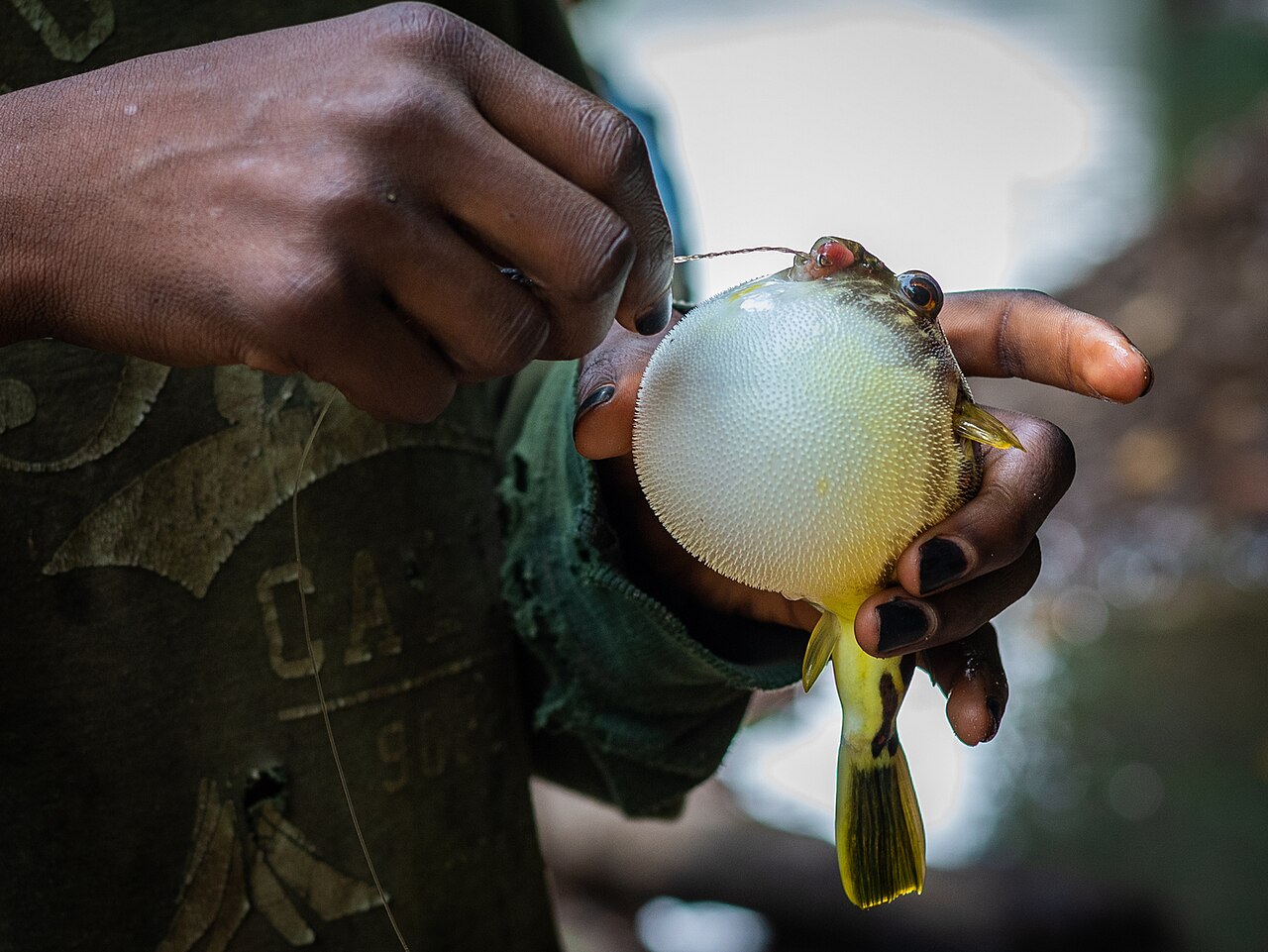
- Why Do Pufferfish Puff Up? The Instant Defense Mechanism
- A Split-Second Response
- The Mechanics of Inflation: How Pufferfish Puff Up
- The Elastic Stomach
- Water Is Their Weapon
- Independent Eyes and Precision Movement
- The Real Reason Pufferfish Puff Up: More Than Just Looking Big
- The Physics of Being Unswallowable
- Sudden Shape and Texture Changes
- The High Cost of Puffing: When Inflation Backfires
- Air Is a Killer
- When Puffing Is Not Enough
- Beyond Puffing: The Pufferfish's Other Defenses
- Tetrodotoxin: A Chemical Apocalypse
- Beak-Like Teeth Built for Crushing
- Pufferfish Species: Sizes, Habitat, Diet, and Lifespan
- From One Inch to Three Feet
- Habitat Preferences
- What Do Pufferfish Eat?
- Lifespan and Behavior
- Can You Keep Pufferfish as Pets? The Puffing Paradox
- Why Pet Pufferfish Rarely Puff
- Conclusion: The Remarkable Reality of the Pufferfish Puff Up
- ❓ Frequently Asked Questions
Few sights in the animal kingdom are as instantly recognizable—or as endlessly memed—as the moment a pufferfish puff up into a rigid, spiky ball. It is one of the most dramatic physical transformations in nature, transforming a slow, round, seemingly harmless fish into a bizarre, balloon-like sphere that appears impossible to swallow. But despite how charming or cartoonish this behavior looks on a screen, it is no party trick. The ability to puff up is a life-or-death survival strategy developed over millions of years of evolution. So why do pufferfish puff up? The real reason is a fascinating combination of anatomy, physics, and predator psychology, and once you understand it, you will never look at this quirky fish the same way again.
Why Do Pufferfish Puff Up? The Instant Defense Mechanism
The simplest and most honest answer to the question of why pufferfish puff up is self-defense. Pufferfish are not fast swimmers, and they lack the sleek, muscular bodies of tuna or the sharp teeth of barracuda. When a predator like a shark, eel, dolphin, or large grouper approaches, a pufferfish cannot easily outswim the threat. Instead, it deploys a rapid, involuntary survival reflex: it inflates its body to roughly two to three times its normal size.
This expansion does more than just make the fish look bigger. It dramatically changes the pufferfish's physical profile. Many species of pufferfish, such as the porcupinefish (which belongs to the family Diodontidae, a closely related group), are covered in tiny, sharp spines that lie flat against the skin when the fish is relaxed. When the fish inflates, those spines erect and point outward in every direction, transforming a mouthful of soft flesh into a dangerous, bristling spiked ball that can tear the inside of a predator's mouth and throat.
A Split-Second Response
The inflation response is remarkably fast. Research and observation of pufferfish in both aquariums and the wild show that the entire puffing process can occur in under one second once the fish decides to trigger its defense. This speed is essential, as predators often strike with lightning-fast lunges. The pufferfish does not have time to reason through its options; it simply reacts. This defensive reflex is so hardwired into the fish's biology that even gently touching a pufferfish or flashing a shadow over it in an aquarium can cause it to puff, much to the delight of aquarium owners.
The Mechanics of Inflation: How Pufferfish Puff Up
Understanding why pufferfish puff up requires looking inside the fish at an anatomy that is completely unlike any other vertebrate. Pufferfish do not have an expandable rib cage like a balloon animal. In fact, they have essentially no ribs at all. The family Tetraodontidae, which contains the true pufferfish, is unique in that its members have evolved to lack several bones that other fish rely on, including the pelvic bones and, crucially, the ribs. This lack of a hard, inflexible skeleton allows the body wall to stretch outward like elastic.
The Elastic Stomach
At the heart of the puffing mechanism is a remarkable, highly elastic stomach. In a relaxed pufferfish, this stomach is small, folded, and sits at the front of the body cavity. When the fish decides to puff, it performs a rapid series of powerful gulps, sucking water in through its mouth and forcing that water down into the stomach. The stomach then unfolds and expands enormously, filling the entire body cavity and pushing the internal organs tightly against the underside of the skin. This expansion is so extreme that the skin must stretch to accommodate the sudden influx of water, which is why pufferfish skin is famously loose, wrinkled, and covered in tiny, flexible plates called dermal ossicles.
Water Is Their Weapon
While many people have seen videos of pufferfish puffing up when lifted out of water, this is actually an unnatural and highly dangerous situation. In their natural environment, pufferfish fill their stomachs with water, not air. Water is denser and creates a firmer, more solid shape that is genuinely difficult for a predator to grip or bite. Using water also makes the pufferfish heavier, which may help it sink quickly away from an attacking predator in some situations. Air, on the other hand, is a last-resort emergency inflator only used when the fish is accidentally pulled to the surface or attacked in very shallow water.
Independent Eyes and Precision Movement
One often-overlooked detail of the puffing behavior is that the pufferfish remains fully aware of its surroundings while inflated. Its large, expressive eyes are located high on its head and can move independently of one another. While bloated into a ball, a pufferfish can still scan for danger, track the predator, and monitor whether the threat has moved on. This ability means the fish knows precisely when it is safe to deflate and resume normal swimming.
The Real Reason Pufferfish Puff Up: More Than Just Looking Big
If you watch a pufferfish puff up, it is easy to assume the purpose is purely to make itself look intimidating. But scientists who study these fish know the real reason pufferfish puff up is a sophisticated suite of effects that works together to stop an attack before it can begin. The goal is not just to look big; it is to become impossible to eat.
The Physics of Being Unswallowable
Predators like grouper, snapper, barracuda, and even marine mammals typically swallow their prey whole. They open their mouths and use suction or a forward lunge to pull the victim in. When a pufferfish inflates, it crosses a critical threshold: its inflated diameter becomes larger than the predator's mouth opening. An adult southern pufferfish, for instance, can inflate to a circumference that makes it impossible for a typical grouper to fit between its jaws. Even if the predator manages to get the pufferfish into its mouth, it cannot pass through the throat, and the predator is forced to spit it out—if it can. Many a predator has likely suffered a frustrating and painful experience attempting to swallow a fully inflated, spine-covered pufferfish.
Sudden Shape and Texture Changes
Another crucial component of why the pufferfish puff up works so well is the element of surprise. Predators are used to prey that feels soft, squishy, or muscular. The pufferfish suddenly transforms into a hard, perfectly spherical, spiky object that does not resemble normal fish flesh at all. This totally unexpected change in texture and shape can cause a predator to simply let go in confusion. Combined with the erected spines that poke the soft tissues of a predator's mouth, the pufferfish sends a clear message: I am not a meal.
The High Cost of Puffing: When Inflation Backfires
But the pufferfish puff up is not free. Unlike a lizard dropping its tail or a squid releasing ink, inflation is physically exhausting and cannot be maintained for long periods. The muscle contractions required to pump water into the stomach and then hold it there are powerful and demanding. A pufferfish that inflates too frequently, or stays inflated for too long, can exhaust itself to the point of death. In the wild, pufferfish typically only remain inflated for a few minutes, just enough time for the predator to lose interest and swim away.
Air Is a Killer
This is why it is incredibly important for anyone keeping pufferfish as pets to never lift them out of the water. When a pufferfish puffs up with air instead of water, it faces a serious problem. Air is compressible, which means the inflated fish is less stable, and more critically, the pufferfish often struggles to release the trapped air. The stomach valves that open easily to let water in do not easily let air out. A pufferfish that inflates with air while being handled can become permanently bloated, unable to swim properly, and may float helplessly at the surface until it starves or dies of stress. Fishermen who catch pufferfish know this all too well and handle them with extreme care to keep them underwater during release.
When Puffing Is Not Enough
Inflation also slows the pufferfish down. A deflated pufferfish can swim relatively normally, using its dorsal and anal fins for propulsion and steering with its tail. Once inflated, the fish loses much of its agility and becomes a virtually immobile ball. If the predator is determined and immune to the pufferfish's spines, an inflated pufferfish has no way to flee. Some predators, such as sharks and certain large dolphins, have been documented tearing inflated pufferfish apart anyway. The strategy is incredibly effective, but it is not a guarantee of survival.
Beyond Puffing: The Pufferfish's Other Defenses
One of the most fascinating facts about pufferfish is that puffing up is only the first line of defense in a three-part survival trilogy. The pufferfish puff up is a visual and physical deterrent, but the fish also carries two chilling backup weapons.
Tetrodotoxin: A Chemical Apocalypse
Most pufferfish species contain a lethal neurotoxin called tetrodotoxin (TTX) in their skin, liver, ovaries, and intestines. This poison is one of the most toxic substances found in nature—far deadlier than cyanide. A single small pufferfish contains enough tetrodotoxin to kill dozens of adult humans. Interestingly, the pufferfish does not produce this toxin itself; it accumulates it from the bacteria and algae it consumes in its diet. This is why farm-raised pufferfish raised on a controlled, toxin-free diet are often safe to eat while wild pufferfish are deadly.
For a predator, the chemical defense means that even if it manages to overcome the spiky balloon, the meal may cause paralysis, sickness, or death. This powerful chemical deterrent is precisely why humans must go to such extremes to eat pufferfish. In Japan, the delicacy known as fugu can only be prepared by highly trained, licensed chefs who know exactly which parts are safe to serve.
Beak-Like Teeth Built for Crushing
The family name Tetraodontidae translates roughly to "four teeth," and those teeth are worth respecting. Pufferfish have four large teeth that are fused together to form a beak-like structure, similar to a parrot's beak. This beak is incredibly strong and is used to crush hard-shelled prey like clams, crabs, sea urchins, snails, and barnacles. If a predator grabs a pufferfish incorrectly, the pufferfish will bite and can inflict a serious wound. For divers and underwater photographers, this bite is one of the few reasons to keep a respectful distance from these seemingly cute animals.
Pufferfish Species: Sizes, Habitat, Diet, and Lifespan
Understanding why pufferfish puff up becomes even more fascinating when you consider the incredible diversity within the group. There are more than 120 species of pufferfish in the family Tetraodontidae, and they are found in nearly all tropical and subtropical oceans worldwide, as well as in many freshwater rivers and lakes. This adaptability has produced some remarkable extremes.
From One Inch to Three Feet
The smallest pufferfish species, such as the dwarf pufferfish or pea puffer (Carinotetraodon travancoricus), lives in the freshwater rivers of southwestern India and grows to barely one inch (2.5 cm) long. Despite their tiny size, dwarf puffers are fierce predators of snails, worms, and small crustaceans, and they puff up with the same determination as their giant relatives.
At the other extreme, the giant freshwater pufferfish (Tetraodon mbu) of the Congo River Basin can grow to more than 26 inches (67 cm) long and weigh up to 14 pounds (6 kg). These enormous puffers are known for their intelligence, curiosity, and strikingly patterned skin, and their powerful beaks can crack open the largest snails in their river. Between these extremes, species like the porcupinefish (Diodon hystrix) roam tropical reefs and can reach 36 inches (90 cm) in length, covered in thick, permanent spines that lie flat until they puff up.
Habitat Preferences
Pufferfish occupy three main habitat types depending on the species. Marine puffers live on coral reefs, among seagrass beds, and in coastal rock pools. Brackish-water puffers, such as the popular figure-eight puffer (Dichotomyctere ocellatus), live in mangrove estuaries and river mouths where saltwater meets freshwater. Freshwater puffers, including the dwarf and giant puffers, live in rivers, lakes, and floodplains in South America, Southeast Asia, and Africa. No matter where they live, they all share a relatively blunt, boxy shape and a swim bladder that allows them to float at any depth.
What Do Pufferfish Eat?
Nearly all pufferfish are carnivorous, with a diet that consists of snails, worms, clams, mussels, small crabs, shrimp, and other bottom-dwelling invertebrates. Some large marine species also eat slow-moving fish, and others graze on algae and sponge tissue. Their incredible teeth are adapted for crushing, not slicing. A pufferfish's beak grows continuously throughout its life, which is why wild puffers grind them down constantly on hard shells. In captivity, pet puffers must be given hard-shelled foods or spare cuttlebone to wear down their growing teeth, or their beaks can overgrow and prevent them from eating.
Lifespan and Behavior
Pufferfish are generally long-lived for their size. Small freshwater puffers live around 4 to 6 years, while medium marine species like the blue-spotted puffer (Canthigaster solandri) can live 6 to 10 years with good care. Large species like the giant freshwater puffer can live 10 to 15 years or even longer. In the wild, puffers are typically solitary and territorial, and they use their beaks not only for feeding but also for defending their own personal hunting grounds.
Can You Keep Pufferfish as Pets? The Puffing Paradox
Because of their bright colors, expressive faces, and quirky personalities, pufferfish are popular aquarium pets. However, they are not beginner fish. They have complex dietary needs, aggressive temperaments, and produce a high biological waste load. They also need plenty of space, which is why a one-inch dwarf puffer still needs at least a 5-gallon tank to itself and why a giant puffer requires a huge aquarium of several hundred gallons.
Why Pet Pufferfish Rarely Puff
In a well-maintained aquarium, a pufferfish rarely puffs up. This is actually a sign of good health and comfort. A pufferfish only puffs when it feels severely threatened, which should never happen in a safe home aquarium. A puffer that puffs frequently in a tank is likely stressed, being chased by tankmates, or being frightened by sudden shadows or loud noises. Experienced aquarists understand that seeing a pufferfish puff up is an alarm bell, not an adorable behavior to encourage. It takes a significant amount of the fish's energy and can shorten its lifespan if it happens too often.
It is also almost universally recommended to keep pufferfish in a species-only tank. Despite their adorable appearance, puffers are opportunistic and will bite the fins and limbs of tankmates. With their beak-like teeth and readiness to defend themselves, they are not a safe addition to a community aquarium.
Conclusion: The Remarkable Reality of the Pufferfish Puff Up
So why do pufferfish puff up? In the end, it is a brilliant, multi-layered survival strategy. The pufferfish puff up transforms a slow, soft-bodied, vulnerable fish into a spiky, oversized, unpalatable sphere that predators cannot swallow, cannot hold onto, and will quickly lose interest in. Combined with a lethal body toxin and a crushing bite, the puffing reflex makes this small fish one of the most defensively sophisticated creatures in the ocean. The next time you watch a pufferfish inflate in a video or at an aquarium, take a moment to appreciate the extraordinary anatomy and millions of years of evolution behind that single, dramatic gasp of water. It is not just a cute trick—it is a masterpiece of natural engineering.
❓ Frequently Asked Questions
💬 Why do pufferfish puff up?
Pufferfish puff up as a defense mechanism to make themselves look too large and spiky for a predator to swallow. When threatened, they rapidly gulp water (or air, if out of water) into their highly elastic stomach, turning into a round, spiny ball that is difficult to bite and swallow.
💬 Is puffing up a voluntary or involuntary action for pufferfish?
Puffing up is a voluntary response that pufferfish control, but they only do it when they perceive a real threat. It is a last-resort behavior because it causes stress and takes time to deflate, leaving them exhausted and vulnerable.
💬 Does puffing up hurt the pufferfish?
Puffing up is stressful and can be harmful, especially if the fish inhales air instead of water. Drawing in air can trap the pufferfish at the surface, damage its internal organs, and even cause death, which is why you should never force a pet pufferfish to puff up.
💬 Do pufferfish puff up with water or air?
In their natural underwater habitat, pufferfish puff up by sucking in water to expand their bodies. If they are out of the water, they can inhale air instead, but this is dangerous and can cause serious health problems or death, so it should never be induced.