- Meet the Puffins: Three Species, One Famous Face
- What Makes a Puffin Colorful Beak So Vivid?
- The Grooved Orange "Culmen"
- The Yellow-Ridged Lower Mandible
- The Blue-Grey Base and Rosette
- What About the Eye?
- Why the Puffin Colorful Beak Appears and Disappears Every Year
- The Summer Bill: A Breeding Adornment
- The Winter Shed: A Smaller, Duller Bill
- Why Shed the Color?
- What the Colors Communicate: Courtship, Status, and Pair Bonds
- Courtship and Pair Formation
- Honest Advertising
- Colony Life and Individual Recognition
- The Beak Is Also a Precision Fishing Tool
- Diet and Hunting
- The Famous "Fish Carry"
- Bill Shape and Strength
- Puffin Life: Habitat, Breeding, and Lifespan
- Where Puffins Live
- Breeding Season
- Lifespan
- Conservation: Why the Colors Matter Beyond Beauty
- The Clown Truth: More Than a Pretty Face
- ❓ Frequently Asked Questions
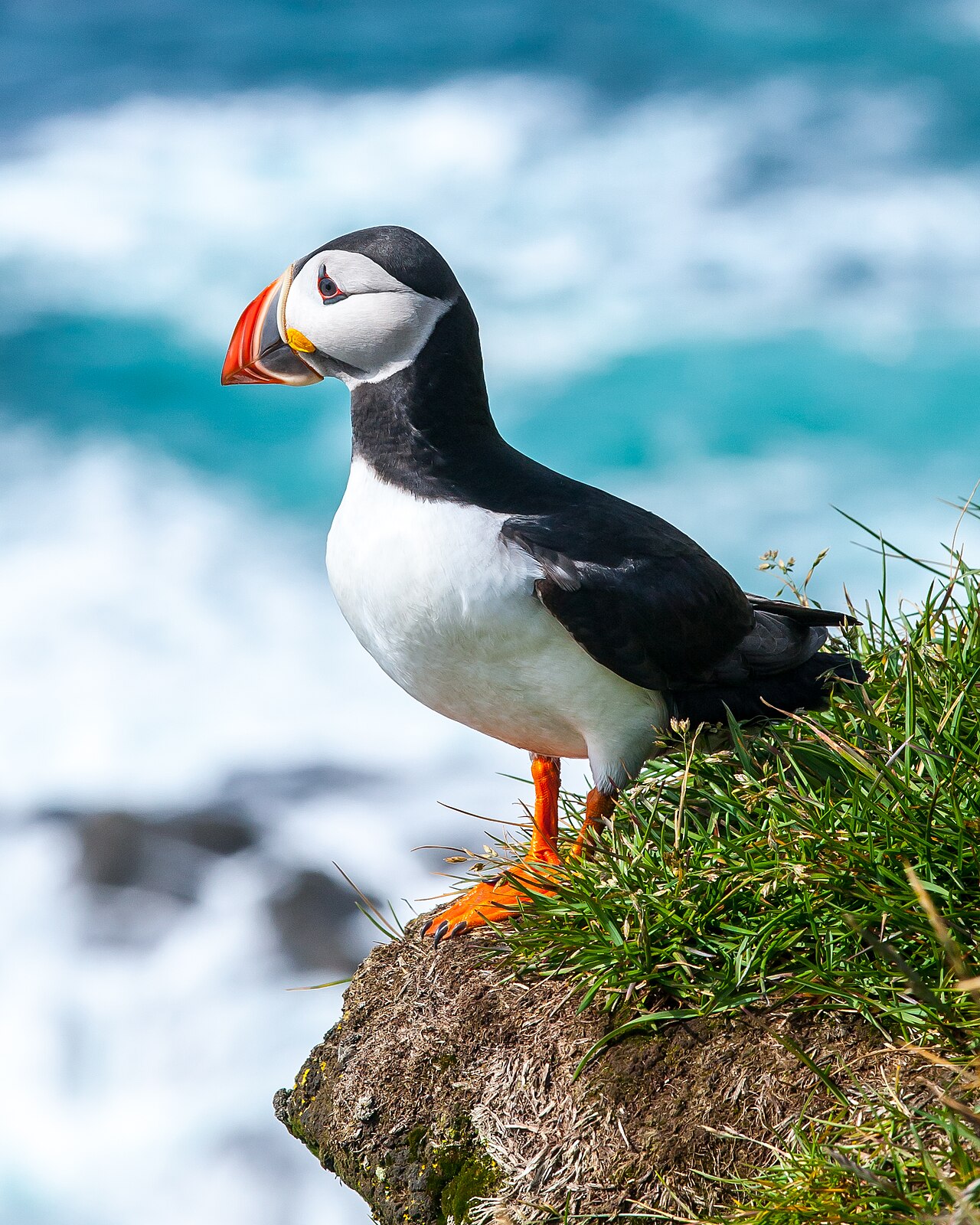
The puffin colorful beak is one of the most recognizable features in the bird world—a striking mosaic of orange, yellow, and slate-blue that has earned these seabirds the nickname "sea parrots" and "clowns of the sea." But that painted bill is far more than a pretty face. It is a seasonal signal, a fishing tool, a social badge, and a scientific puzzle all rolled into one. In this article, we'll unpack the real story behind the puffin's famous colors: what creates them, why they appear and vanish each year, what they communicate to other puffins, and why the "clown" label, while affectionate, sells these hardy North Atlantic seabirds a little short.
Meet the Puffins: Three Species, One Famous Face
Before diving into the beak itself, it helps to know who we're talking about. The puffin family (Fratercula, a name that means "little friar," a nod to their black-and-white "robed" look) contains three living species, all found in the cold waters of the North Atlantic and North Pacific.
- Atlantic puffin (Fratercula arctica): The species most people picture. It breeds on cliffs and islands from Maine and Newfoundland across Iceland, Norway, the UK, and Ireland to France. Adults stand about 26–29 cm (10–11 inches) tall and weigh roughly 400–500 grams (14–18 ounces)—about the size of a pigeon with better tailoring.
- Horned puffin (Fratercula corniculata): A North Pacific species breeding in Alaska, Siberia, and Japan, named for the fleshy "horn" above each eye.
- Tufted puffin (Fratercula cirrhata): Also North Pacific, famous for the long golden plumes that sweep back from its head during the breeding season.
All three share the essentials: black-and-white plumage, a stocky build, wings adapted for underwater "flight," and a large, laterally flattened bill that is far more colorful in summer than in winter. The Atlantic puffin is the best-studied of the three, so most of what follows centers on it—though the underlying biology applies broadly across the family.
What Makes a Puffin Colorful Beak So Vivid?
The colors on a puffin's bill are not pigment in the way a flamingo's pink comes from food. They are structural and hormonal, produced by living tissue that grows, brightens, and is shed on an annual cycle. Several distinct parts of the bill each contribute their own color.
The Grooved Orange "Culmen"
The upper ridge of the bill—the culmen—is a deep, almost lacquered orange. Its surface is marked by three or four grooves, which are growth lines of the keratin plates (called rhamphotheca) that sheath the bone. These grooves are one of the few reliable ways researchers age adult puffins in the hand.
The Yellow-Ridged Lower Mandible
The lower mandible carries a bright yellow-orange plate with a distinctive ridged or "corrugated" texture. This is the largest and most eye-catching section of the bill in summer, and it is also the most temporary: much of it is a seasonal adornment that is shed after breeding.
The Blue-Grey Base and Rosette
At the base of the bill, where it meets the face, sits a slate-blue to greyish band, and at the corner of the mouth is a small, fleshy yellow rosette. These cooler tones frame the warm oranges and yellows, creating the contrast that makes the whole bill "pop."
What About the Eye?
The clown effect isn't only the bill. During the breeding season, puffins develop a thin, bright orange-yellow ring around the eye, plus a small fleshy rosette at the gape. In winter, these fade too. The full summer face—orange bill, orange eye-ring, black-and-white plumage—is a package deal.
Why the Puffin Colorful Beak Appears and Disappears Every Year
Here is the fact that surprises most people: a puffin's bill is not permanently colorful. The brilliant summer bill is a seasonal structure, and each year the bird grows it and then sheds it. This annual cycle is one of the most remarkable transformations in the bird world.
The Summer Bill: A Breeding Adornment
As spring arrives and puffins return to their breeding colonies, hormones—particularly rising levels of testosterone and other reproductive hormones—trigger the growth of the outer bill plates. The keratin layers thicken, the colors intensify, and the bill visibly enlarges. This process takes several weeks and coincides with the birds coming ashore after months at sea.
The Winter Shed: A Smaller, Duller Bill
After the breeding season ends in late summer, puffins undergo a post-nuptial molt. The bright outer plates of the bill are shed—often in large flakes—leaving a smaller, duller, mostly grey-and-black bill for the winter. At sea, where puffins spend the colder months, this low-profile bill is less conspicuous and presumably less costly to maintain. When spring returns, the cycle begins again.
Why Shed the Color?
Colorful bill plates are made of keratin and are metabolically expensive to grow and maintain. Shedding them after breeding may reduce wear and tear on the bill during the months when the bird needs it purely as a fishing tool, not a billboard. In simple terms: the puffin wears its "dress uniform" for the breeding season and its "work clothes" the rest of the year.
What the Colors Communicate: Courtship, Status, and Pair Bonds
Why invest so much energy in a bill you're going to throw away? Because in the crowded, noisy world of a seabird colony, that bill is a billboard—literally and figuratively.
Courtship and Pair Formation
Puffins are generally monogamous over long periods, often returning to the same mate and the same burrow year after year. During courtship, pairs perform a distinctive behavior called billing: they face each other and rapidly tap or rub their bills together, sometimes while swinging their heads side to side. The bright bill acts as a visual anchor for these displays. A vivid, well-formed bill signals that a bird is mature, healthy, and in prime breeding condition.
Honest Advertising
In evolutionary terms, the bill is thought to function as an "honest signal"—a trait that is costly to produce and therefore hard to fake. A bird with a bright, symmetrical, well-grown bill is likely to be in good body condition, well-fed, and free of heavy parasite loads. Studies of Atlantic puffins have found links between bill brightness and individual quality, supporting the idea that the ornament reflects real health, not just decoration.
Colony Life and Individual Recognition
Puffin colonies are dense, chaotic places—thousands of birds packed onto cliff ledges and grassy slopes. The bill, along with the eye-ring and facial rosette, helps birds recognize each other at close range. Because pairs reunite at the same burrow each season, quick visual identification matters.
The Beak Is Also a Precision Fishing Tool
The clownish bill is not just for show. It is a highly specialized tool for catching small fish in cold coastal waters, and its shape and surface features have real functional jobs.
Diet and Hunting
Puffins feed mainly on small schooling fish: sandeels, capelin, herring, and sprat, supplemented by zooplankton such as krill. They hunt by "flying" underwater—stroking with their wings to pursue fish at speeds of up to about 20 km/h (roughly 12 mph)—and can dive to depths of 30 meters (about 100 feet) or more, staying under for 20–30 seconds on a typical dive.
The Famous "Fish Carry"
Puffins are famous for carrying astonishing numbers of small fish crosswise in their bills at once. The record, well documented in the UK, is 62 sandeels carried by a single Atlantic puffin. How do they do it? The secret is a combination of a strongly hooked bill tip and rows of small, backward-pointing spines on the tongue and palate. Each fish is wedged in place, spines holding it while the bird catches the next. This lets a parent deliver a large meal to its single chick (called a puffling) in one trip.
Bill Shape and Strength
The bill is also used for digging. Puffins excavate nesting burrows in turf and soil—often 1–2 meters long—using their bills and feet. The strong, deep bill is an effective shovel, and the seasonal reduction in bill size may help reduce strain during the winter months.
Puffin Life: Habitat, Breeding, and Lifespan
Understanding the bill's role makes more sense against the backdrop of a puffin's life history.
Where Puffins Live
Atlantic puffins breed on rocky islands and coastal cliffs across the North Atlantic. Major colonies include Iceland (which hosts roughly 60% of the world population), the Faroe Islands, Norway, Scotland (notably St Kilda and the Isle of May), Ireland, Wales (Skomer), Newfoundland, and Maine (Machias Seal Island and Eastern Egg Rock). They winter far out at sea, often ranging into the open North Atlantic and sometimes as far south as the Mediterranean.
Breeding Season
Puffins return to colonies in spring, typically March to May depending on latitude. Pairs usually lay a single white egg in a burrow or rock crevice. Incubation lasts about 36–42 days, shared by both parents. The chick fledges at roughly 38–44 days and heads to sea alone, usually at night, to avoid predators.
Lifespan
Puffins are long-lived for small birds. Atlantic puffins can live 20 years or more, and the oldest known wild Atlantic puffin—banded as a chick on the Isle of May in Scotland—reached at least 41 years old. That longevity is one reason the annual bill cycle is so notable: a single bird may grow and shed that colorful bill dozens of times in its life.
Conservation: Why the Colors Matter Beyond Beauty
Puffin populations face real pressures: warming seas that shift fish stocks, overfishing of sandeels and other forage fish, marine pollution, and predation by introduced species such as rats and mink on breeding islands. Because puffins depend on reliable, energy-rich prey to raise a chick, changes in fish availability show up quickly in breeding success.
This is where the bill becomes more than a curiosity. Because bill brightness and size are linked to body condition, researchers can use bill measurements and color as one indicator of colony health. A population where many adults return with dull, small bills may be struggling. In this way, the puffin colorful beak is not just a natural wonder—it's a barometer. Conservation efforts focused on protecting forage fish, reducing bycatch, and safeguarding breeding islands are essential to keeping both the birds and their colors on the cliffs.
The Clown Truth: More Than a Pretty Face
The nickname "clown of the sea" captures the puffin's comic waddle, its oversized bill, and its busy, bustling colonies. But the clown truth is that every one of those colors is doing serious work. The bill is a seasonal ornament grown under hormonal control, an honest signal of health and breeding readiness, a tool for courtship and recognition, and a precision instrument for carrying dozens of fish at once. It appears each spring and is shed each autumn, marking the rhythm of a life spent between cliff and open ocean.
So the next time you see a puffin portrait, look past the paint. What you're seeing is a hard-working seabird in its breeding best—advertising its fitness, wooing a mate, and preparing to feed a chick—all with a beak that is, quite literally, built for the job and then packed away for winter. That is the real story behind the puffin colorful beak: not a costume, but a carefully engineered, endlessly renewable piece of evolutionary engineering.
❓ Frequently Asked Questions
💬 Why do puffins have colorful beaks?
The bright orange, yellow, and blue plates on a puffin's beak are mainly a courtship display, signaling health and breeding readiness to mates. The colors come from carotenoid pigments in the puffin's diet and are most vivid during the breeding season.
💬 Do puffins lose their colorful beaks in winter?
Yes. After breeding, puffins shed the outer colorful layers of the bill, leaving a smaller, duller beak for winter. The full bright colors regrow before the next breeding season.
💬 Does the colorful beak mean a puffin is a clown?
No—the 'clown of the sea' nickname comes from the beak's comic look, but the colors are serious biology. They advertise fitness to mates and are linked to diet and breeding condition, not entertainment.
💬 Are puffin beaks colorful all year round?
No, the vivid colors peak during the breeding season in spring and summer. In winter, the beak is noticeably smaller and duller because the colorful outer plates are shed.