- Why Do Raccoons Wash Their Food? The Short Answer
- It's About Touch, Not Hygiene
- The Myth of the Clean Raccoon: Where "Washing" Comes From
- What Early Observers Got Wrong
- Those Little Hands: A Closer Look at Raccoon Paws
- Built for Feeling, Not Just Grabbing
- Raccoons Wash Their Food: The Science Behind the Behavior
- What Experiments Have Shown
- Beyond Washing: The Raccoon's Remarkable Senses and Intelligence
- A Diet That Rewards Curiosity
- Raccoon Basics: Size, Habitat, and Lifespan
- Solitary by Nature, Social When It Pays
- Do Raccoons Really Need Water to "Wash"?
- What to Do If You See It
- The Bottom Line on Raccoons and Their Little Hands
- ❓ Frequently Asked Questions
Few animal behaviors are as charming—or as misunderstood—as the sight of a raccoon dunking its food in a stream or water bowl. People have watched raccoons wash their food for centuries, and the behavior has become so famous that it gave the animal its scientific name, Procyon lotor, which translates roughly to "washing bear." But here's the twist: raccoons don't actually wash anything. There's no soap, no scrubbing, and often no water at all. What looks like hygiene is something far stranger and more fascinating—a quirk of how the raccoon's extraordinary hands and brain interact with the world. In this article, we'll dig into the real science behind the behavior, explore what those little hands are actually doing, and separate the myths from the facts about one of North America's most adaptable and intelligent mammals.
Why Do Raccoons Wash Their Food? The Short Answer
The truth is that raccoons wash their food not to clean it, but to feel it. Raccoons are intensely tactile animals, and their front paws are packed with nerve endings that make them exquisitely sensitive to touch—more so than almost any other part of their body. When a raccoon dunks a piece of food in water, the water softens and moistens the skin on its paws, which dramatically increases the sensitivity of those nerve endings. In other words, water acts like a magnifying glass for touch.
Researchers who have studied the behavior describe it as "dousing" rather than washing. The raccoon is not removing dirt or bacteria; it is manipulating the object, turning it over, and essentially reading it with its hands. In experiments, raccoons have been observed going through the same dousing motions even when no water is available—rubbing food between their paws in midair as if phantom water were present. That's a strong clue that the behavior is about sensory processing, not cleanliness.
It's About Touch, Not Hygiene
If you've ever watched a raccoon at a birdbath or pet water bowl, you've probably noticed how deliberate the movements are. The animal doesn't just splash the food around; it rolls it, presses it, and tests it from every angle. This is a raccoon doing what raccoons do best: gathering detailed information about an object through its hands. The behavior is so automatic that it persists even when the water is freezing cold or when the food is something that obviously doesn't need rinsing, like a piece of candy or a dry cracker.
It's also worth noting that raccoons don't wash everything. They tend to douse food more often when they're near water and when the food is unfamiliar or interesting to them. A raccoon eating a familiar meal in a dry setting will often just eat it. The behavior is context-dependent, which fits the sensory-exploration explanation far better than the cleanliness one.
The Myth of the Clean Raccoon: Where "Washing" Comes From
The idea that raccoons are fastidious little cleaners is a human projection, and a persistent one. The behavior is so distinctive that early naturalists assumed it must serve a hygienic purpose, and the notion stuck in popular culture. Children's books, cartoons, and even some nature writing have reinforced the image of the tidy raccoon scrubbing its dinner before eating.
But the reality is messier—literally. Raccoons are opportunistic omnivores that will happily eat carrion, garbage, insects, and just about anything else they can find. They are not picky about cleanliness, and they don't have the kind of germ-avoidance instincts that would make washing food worthwhile. What they do have is a powerful drive to explore and manipulate objects, and water happens to be a fantastic medium for that.
What Early Observers Got Wrong
Early accounts of raccoon behavior often described the animals "washing" their food in streams, and the observation was accurate even if the interpretation wasn't. The raccoons really were dunking and rubbing their food in water. What the observers missed was the purpose. Without an understanding of raccoon neuroanatomy—specifically the dense concentration of mechanoreceptors in the paws—it was natural to assume the animal was cleaning its meal. Modern behavioral science has a different story to tell.
Those Little Hands: A Closer Look at Raccoon Paws
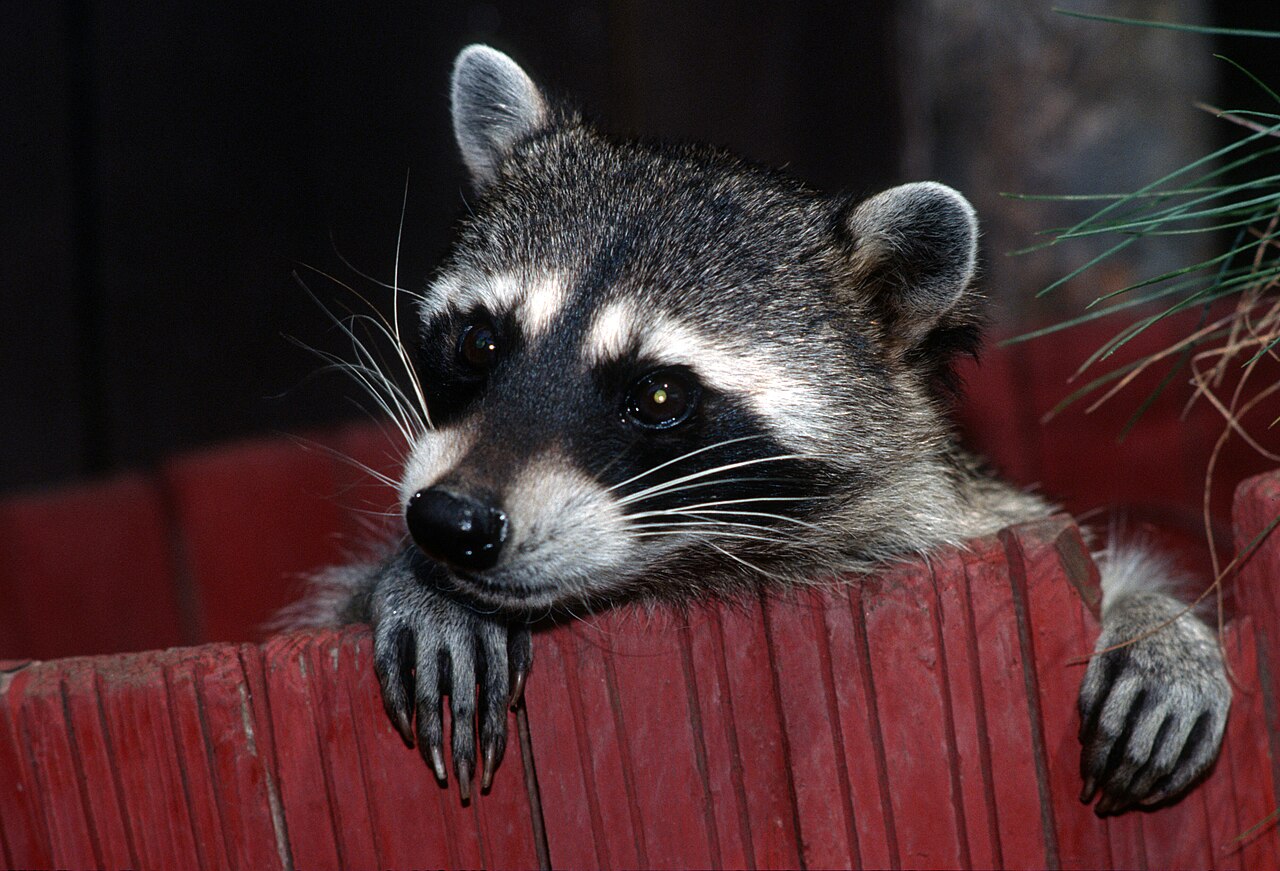
Raccoon front paws are among the most remarkable appendages in the animal kingdom. They have five long, flexible fingers with sharp, non-retractable claws, and they can rotate and manipulate objects with a dexterity that rivals a human's. The paws are hairless on the underside, and the skin there is covered in tiny ridges and an enormous number of nerve endings.
Studies of raccoon neurology have found that a disproportionately large area of the animal's brain is devoted to processing touch signals from the front paws. This is similar to how humans have a large cortical representation for our hands and fingers. In raccoons, the paws function almost like a second set of eyes. When a raccoon is exploring something new, it often looks away or even closes its eyes while handling the object, relying entirely on touch to understand it.
Built for Feeling, Not Just Grabbing
That sensitivity serves raccoons well in the wild. They are nocturnal and often forage in dark, cluttered environments—under logs, in shallow water, inside crevices. Being able to identify food by touch alone is a major advantage. A raccoon can probe a muddy stream bed and distinguish a crayfish from a rock without ever seeing it. The dousing behavior is an extension of this tactile lifestyle: water enhances the paw's ability to detect texture, shape, and temperature.
- Five flexible fingers with sharp claws for gripping and tearing
- Hairless, ridged palms packed with touch-sensitive nerve endings
- Enlarged brain regions dedicated to processing paw sensations
- Ability to identify food by touch in complete darkness
Raccoons Wash Their Food: The Science Behind the Behavior
So what exactly happens when a raccoon douses its food? The leading explanation involves the interaction between moisture and tactile sensitivity. The outer layer of skin on a raccoon's paw, like human skin, becomes softer and more pliable when wet. This allows the nerve endings to respond more acutely to pressure and texture. The raccoon is essentially "turning up the volume" on its sense of touch.
Behavioral studies have supported this idea. When researchers offered raccoons food in dry conditions and in wet conditions, the animals spent more time handling the food when water was involved. They also manipulated the food more thoroughly—turning it, pressing it, and rolling it between their paws. The behavior looks like washing, but it functions like a detailed inspection.
What Experiments Have Shown
One classic observation is that raccoons will perform dousing motions even with objects that aren't food. They'll dunk small toys, stones, and other items, which makes no sense if the goal were cleaning a meal. The behavior appears to be a general exploratory response triggered by interesting objects and the presence of water. It's the raccoon equivalent of a human running their fingers over a new piece of fabric to feel its texture.
Another telling detail: raccoons don't always eat what they douse. Sometimes they'll inspect an object in water and then discard it. That's not washing—that's investigation.
Beyond Washing: The Raccoon's Remarkable Senses and Intelligence
Raccoons are among the smartest mammals in North America, and their intelligence is closely tied to their hands. They are skilled problem-solvers, capable of opening latches, unscrewing jars, and navigating complex obstacles. In laboratory settings, raccoons have demonstrated the ability to remember solutions to puzzles for years. Their brain-to-body ratio is comparable to that of some primates.
Their sensory toolkit is impressive across the board. Raccoons have excellent night vision, a keen sense of smell, and acute hearing. But touch is arguably their signature sense. The combination of sensitive paws and a curious, exploratory mind makes them relentless investigators of their environment—and explains why a raccoon will spend minutes dousing and examining a single piece of food.
A Diet That Rewards Curiosity
Raccoons are omnivores with an extraordinarily varied diet. In the wild, they eat fruits, nuts, seeds, insects, crayfish, frogs, fish, bird eggs, small mammals, and carrion. In urban areas, they raid garbage cans, compost piles, and pet food bowls. This dietary flexibility is a big part of why raccoons are so successful. It also means they encounter a huge variety of food shapes, textures, and smells—giving their tactile sense plenty of work to do.
- Wild diet: crayfish, insects, fruits, nuts, frogs, eggs, small animals
- Urban diet: garbage, pet food, compost, garden produce
- Foraging style: nocturnal, opportunistic, highly tactile
Raccoon Basics: Size, Habitat, and Lifespan
Raccoons (Procyon lotor) are medium-sized mammals native to North America, though they have been introduced to parts of Europe and Asia. Adults typically weigh between 10 and 30 pounds (4.5 to 13.5 kilograms), with males generally larger than females. Body length ranges from about 16 to 28 inches (40 to 70 centimeters), not counting the tail, which adds another 8 to 16 inches (20 to 40 centimeters).
Their natural habitat is remarkably broad. Raccoons thrive in forests, marshes, prairies, and coastal areas, and they have adapted exceptionally well to cities and suburbs. They den in tree hollows, brush piles, storm drains, attics, and chimneys. In the wild, raccoons typically live only two to three years, but in captivity they can reach 20 years or more. In urban settings, where food is abundant and predators are fewer, many raccoons live longer than their rural counterparts.
Solitary by Nature, Social When It Pays
Raccoons are generally solitary, though they may gather in groups where food is plentiful. They are primarily nocturnal, spending their days resting in dens and emerging at dusk to forage. Females raise kits alone, and young raccoons stay with their mother for several months, learning foraging skills—including, presumably, the fine art of dousing.
Do Raccoons Really Need Water to "Wash"?
No. Raccoons can and do perform the dousing motion without water, and they eat plenty of food without any dunking at all. The behavior is flexible and opportunistic. When water is available and the raccoon is in an exploratory mood, dousing is likely. When it isn't, the raccoon simply eats. This flexibility is one more piece of evidence that the behavior is about sensory processing rather than a fixed hygiene routine.
It's also worth noting that raccoons in captivity sometimes develop repetitive dousing behaviors, which may be a sign of boredom or stress. In the wild, the behavior is more varied and context-driven.
What to Do If You See It
If a raccoon visits your yard or birdbath and starts dousing its food, enjoy the show—but keep your distance. Raccoons are wild animals and can carry diseases, including rabies and raccoon roundworm. Never attempt to hand-feed or handle one, and make sure pets are vaccinated and supervised. The behavior is harmless and fascinating to watch from a safe distance.
The Bottom Line on Raccoons and Their Little Hands
Raccoons don't wash their food—they feel it. The behavior we've all marveled at is really a window into one of the animal kingdom's most sophisticated tactile systems. Those little hands, with their dense nerve endings and remarkable dexterity, allow raccoons to explore the world in a way few other mammals can. Water simply makes that exploration richer. So the next time you see a raccoon dunking a crust of bread in a puddle, you'll know exactly what's happening: it's not doing laundry. It's reading the world with its fingertips.
❓ Frequently Asked Questions
💬 Do raccoons actually wash their food before eating it?
Not really—the motion looks like washing, but raccoons aren't cleaning their food. They're manipulating it in water to get a better feel for it, and they often eat it wet or dry without any true washing step.
💬 Why do raccoons dunk their food in water?
Their front paws are packed with nerve endings and become far more sensitive when wet, so dunking food helps them feel texture, size, and edibility. It's essentially a way of 'seeing' with their hands.
💬 Do raccoons wash their food because they're clean animals?
No—the behavior isn't about hygiene. Raccoons are opportunistic feeders, and the dunking is sensory exploration; they'll happily eat unwashed food and sometimes dunk non-food objects too.
💬 Why do pet raccoons seem to wash their food more than wild ones?
Captive raccoons often have constant access to water bowls, so the dousing behavior is easier to perform and more visible. Wild raccoons do it too, especially near streams and ponds, but water isn't always available.