- The Red-Eyed Tree Frog’s Famous Feature: More Than Just a Pretty Color
- The Science of the “Flash”
- The Role of Habitat in Shaping the Red-Eyed Tree Frog’s Eyes
- Camouflage and the Canopy
- Nocturnal Life and Pupil Shape
- Beyond the Eyes: The Complete Arsenal of the Red-Eyed Tree Frog
- Defense Mechanisms: Toxic Skin and the “Duck”
- Size, Diet, and Lifespan
- The Life Cycle and Reproduction of the Red-Eyed Tree Frog
- From Leaf to Tadpole: A Risky Journey
- The Metamorphosis
- Myth-Busting: Common Misconceptions About Red-Eyed Tree Frogs
- The “Sleeping” Eye Myth
- Conservation Status and the Future of the Red-Eyed Tree Frog
- Captive Breeding and Pet Trade
- Conclusion: A Masterpiece of Evolutionary Design
- ❓ Frequently Asked Questions
The red-eyed tree frog (Agalychnis callidryas) is arguably the most recognizable amphibian on the planet, and its striking crimson eyes are the very feature that catapulted it to internet fame. But those vivid scarlet orbs are far more than a pretty face; they are a sophisticated survival tool honed by millions of years of evolution. In this article, we’ll dive deep into the science behind those iconic eyes, separating fact from myth, and exploring the fascinating life of this tropical icon.
The Red-Eyed Tree Frog’s Famous Feature: More Than Just a Pretty Color
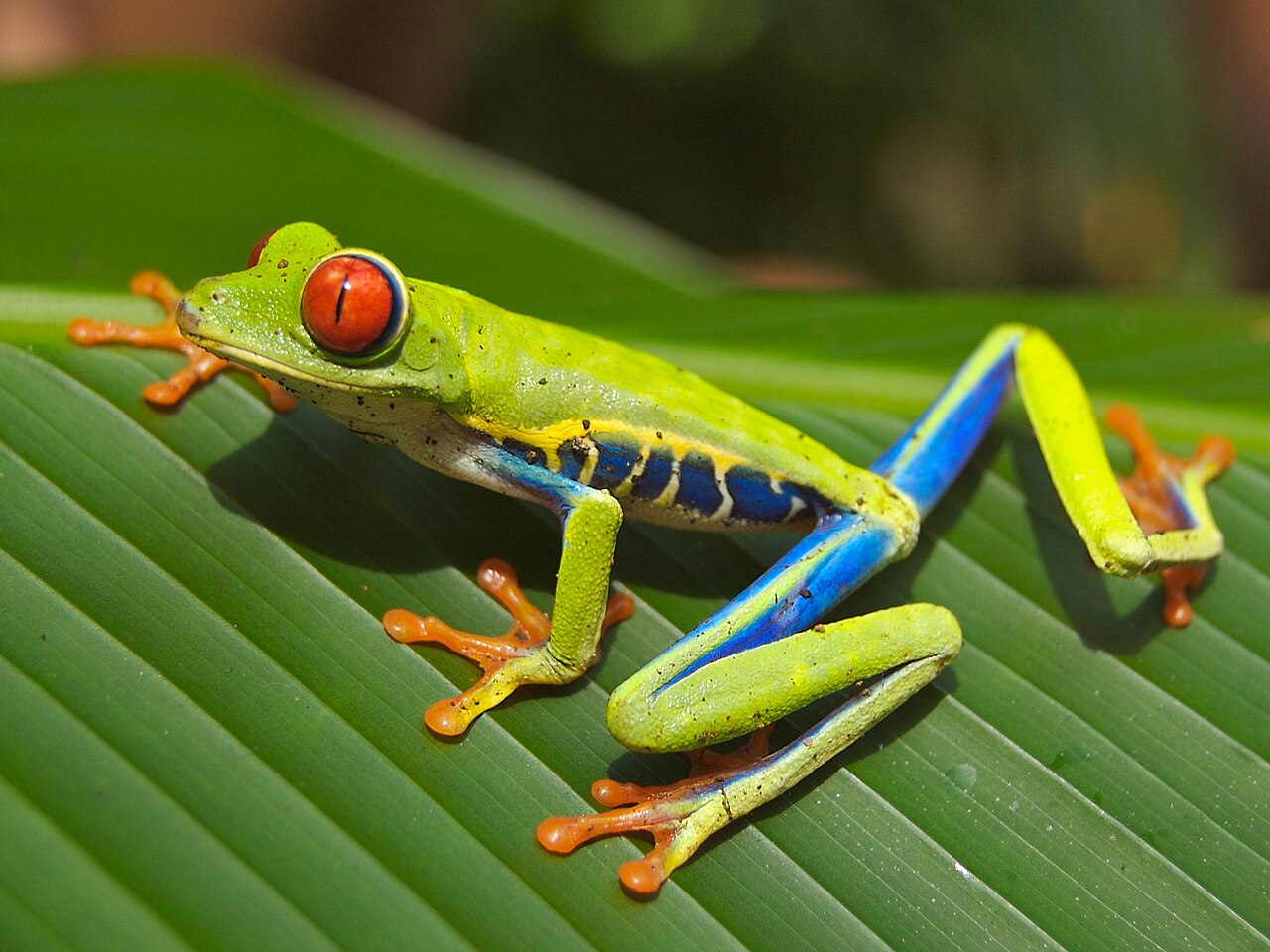
At first glance, the bright red iris with its vertical, slit-shaped pupil seems like a bold fashion statement, but in the animal kingdom, such conspicuous coloration is rarely accidental. The red-eyed tree frog’s eyes are a classic example of a phenomenon called startle coloration (or deimatic behaviour). This strategy relies on surprising a predator at the critical moment of attack, giving the frog a precious split second to escape. When the frog is at rest, its brilliant red eyes are completely hidden by its translucent eyelids, which are patterned with a golden, web-like mesh. The frog blends seamlessly into the green foliage, appearing as just another leaf.
If a predator—say, a snake or a bird—manages to find the frog and approaches, the frog will suddenly snap open its eyes. The sudden flash of bright red against a dark, green background is visually jarring. It momentarily confuses the predator, causing it to hesitate or flinch. In that instant, the frog leaps from its perch and disappears into the canopy. This is not a warning signal like a poison dart frog’s colors; it’s a last-resort defense mechanism designed to break the predator’s focus.
The Science of the “Flash”
Why red specifically? Research suggests that many predators, particularly snakes and birds, are highly sensitive to the contrast between red and green. In the dim, dappled light of the rainforest understory, red wavelengths stand out dramatically against the surrounding chlorophyll-rich greens. The eye’s vertical slit pupil also allows for excellent depth perception and low-light vision, crucial for a nocturnal hunter that needs to judge distances when leaping between branches. So, the red is not just for show—it’s a highly effective, high-contrast alarm signal that leverages the predator’s visual system against it.
The Role of Habitat in Shaping the Red-Eyed Tree Frog’s Eyes
The red-eyed tree frog’s entire life, from its bright green back to its orange feet and, of course, its red eyes, is a direct response to its specific habitat. These frogs are native to the lowland and mid-elevation tropical rainforests of Central America, stretching from southern Mexico through Panama and into parts of Colombia. They are strictly arboreal, meaning they live almost exclusively in the trees and vegetation above the forest floor.
Camouflage and the Canopy
During the day, these frogs are completely inactive. They find a leaf in the sun-dappled canopy, flatten their bodies against it, and tuck their bright orange feet and blue-and-yellow flanks underneath them. The green back provides perfect camouflage against the leaves. The closed eyelids, with their golden reticulation, mimic the texture and light patterns of the leaf surface, breaking up the frog’s outline. This is a masterclass in passive camouflage. The red eyes are only revealed when this camouflage fails. In this light, the red eye isn't a signal, but a hidden weapon—a secret that’s only drawn when the frog is cornered.
Nocturnal Life and Pupil Shape
At night, the frog becomes active, hunting for insects. The vertical slit pupil, like a cat’s, is perfectly adapted for a nocturnal lifestyle. It can dilate dramatically to let in maximum light in the dark, while also constricting to a tiny slit in bright light, protecting the frog’s highly sensitive retina. This allows for a remarkable range of vision, from near-total darkness to the bright flashes of daylight. So, the red iris is not just a passive color; it’s the housing for a highly specialized optical system built for a life in the shadows. The red coloration itself is thought to be caused by a combination of pigment cells (chromatophores) and light-scattering structures in the iris, which together create that vivid, saturated red.
Beyond the Eyes: The Complete Arsenal of the Red-Eyed Tree Frog
While the red eyes are the star of the show, they are just one component of a multi-layered defense system. When the frog is fully extended, its entire body becomes a warning. The bright orange or red feet flash as it leaps, and the blue-and-yellow stripes along its sides become visible. This sudden, full-body color change is often called a “flash coloration” display. The combination of red eyes, orange feet, and blue flanks is a chaotic burst of color that is highly confusing to predators. It’s the difference between a simple startle and a full-blown sensory overload.
Defense Mechanisms: Toxic Skin and the “Duck”
It’s important to note that while the red-eyed tree frog is not as toxic as the poison dart frogs of South America, it is not completely defenseless. Its skin secretes a mild toxin that is unpalatable to many predators. The bright colors may also serve as a form of Batesian mimicry, where a harmless species mimics the warning signals of a more dangerous one. The frog also employs a behavior known as “ducking,” where it flattens its body and tucks its head down, exposing its back to a predator, hoping to appear like a dead leaf.
Size, Diet, and Lifespan
These frogs are relatively small, with adult females typically reaching about 2.5 to 3 inches (6-7.5 cm) in length, while males are slightly smaller, averaging around 2 inches (5 cm). Their diet consists entirely of insects and other small invertebrates. In the wild, they are known to eat crickets, moths, flies, and even smaller frogs. In captivity, they are usually fed a diet of gut-loaded crickets and fruit flies. Their lifespan in the wild is estimated at around 5 years, but they can live significantly longer in captivity, with some individuals reaching 10 or even 12 years old under proper care.
The Life Cycle and Reproduction of the Red-Eyed Tree Frog
The red-eyed tree frog’s life is intrinsically tied to the seasonal rains of the rainforest. Breeding typically occurs during the rainy season, from May to November. Males will gather near ponds and slow-moving streams and call to attract females with a distinctive “chack” sound. The calls are often a mix of a clucking and a low, guttural sound, which can be heard from a surprising distance.
From Leaf to Tadpole: A Risky Journey
After mating, the female lays her eggs on a leaf that hangs over the water. A single clutch can contain 20 to 40 eggs, which are initially a pale, jelly-like mass. The eggs are a fascinating adaptation: they are laid on the underside of a leaf to protect them from sun and rain, but they are also vulnerable to predators like snakes and wasps. The eggs hatch after about six to seven days. The tadpoles, however, don't just drop into the water immediately. They are programmed to wait for a specific cue—usually the vibration of a predator or a heavy rainstorm—before hatching. This allows them to hatch at the most opportune moment, often dropping into the water when a predator is nearby, or when the pond has enough water.
The Metamorphosis
Once in the water, the tadpoles are herbivorous, feeding on algae and plant matter. They undergo a remarkable metamorphosis over the next few weeks, developing legs, losing their tails, and growing the iconic red eyes and green back. The entire process, from egg to froglet, takes about 70 to 80 days. The young frogs leave the water and begin their arboreal life, where they will face a host of new challenges, from finding food to avoiding becoming a meal for a snake or a bird.
Myth-Busting: Common Misconceptions About Red-Eyed Tree Frogs
Given their popularity, it’s no surprise that several myths have grown up around these frogs. One of the most common is that they are highly poisonous. As mentioned, they have a mild skin toxin that can cause irritation to humans but is not lethal. It’s a deterrent, not a deadly weapon. Another misconception is that their red eyes are used for seeing in the dark. While their eyes are excellent for night vision due to the pupil’s shape, the red color itself serves no direct visual function. It’s the shape and structure, not the color, that enhances their night vision.
The “Sleeping” Eye Myth
Another popular myth is that the frog closes its eyes to sleep. While they do close their eyes during the day, they are not in a deep sleep. They are in a state of torpor, a period of inactivity to avoid the heat and conserve energy. The closed eyelids are not just for rest; they are a critical part of the camouflage strategy. The pattern on the eyelid is designed to mimic the leaf surface, and the frog will often angle its body to ensure the light patterns on its back and eyelids blend seamlessly with the surrounding foliage. This is a form of active camouflage, not just passive resting.
Conservation Status and the Future of the Red-Eyed Tree Frog
Currently, the red-eyed tree frog is listed as Least Concern by the International Union for Conservation of Nature (IUCN). This is good news, but it doesn’t mean the species is without threats. The primary threat is habitat loss due to deforestation, agricultural expansion, and human development. As their rainforest home is cleared, the frogs are forced into smaller, fragmented pockets of forest, which can lead to inbreeding and reduced genetic diversity. Climate change is also a growing concern, as it alters rainfall patterns and can lead to prolonged droughts, which are disastrous for a species that depends on seasonal ponds for breeding.
Captive Breeding and Pet Trade
Their popularity in the exotic pet trade has also had an impact. While captive-bred populations are increasingly common, many are still taken from the wild, which can disrupt local populations. It’s crucial for potential owners to purchase from reputable breeders who can guarantee captive-bred animals. In captivity, they require a humid, tropical environment with plenty of climbing space and a diet of live insects. They are not a “beginner” pet, but with the right setup, they can thrive and live for over a decade, providing a fascinating glimpse into the world of a true rainforest gem.
Conclusion: A Masterpiece of Evolutionary Design
The red-eyed tree frog’s red eyes are not a random quirk of nature; they are a finely tuned evolutionary adaptation that perfectly complements its arboreal, nocturnal lifestyle. They are a hidden weapon, a flash of brilliant color designed to startle and confuse predators, giving this small amphibian a crucial edge in the survival of the fittest. From its camouflaged back to its hidden red eyes and toxic skin, every aspect of its anatomy is a testament to the power of natural selection. So, the next time you see a picture of this iconic frog, remember that those beautiful red eyes are not just for show—they are a silent, dramatic scream for survival in the vibrant, dangerous world of the rainforest.
❓ Frequently Asked Questions
💬 Why do red-eyed tree frogs have red eyes?
The red eyes are a form of startle coloration, or deimatic behavior. When the frog is resting, it hides its bright colors by closing its eyes, but if a predator approaches, it suddenly opens them, revealing the startling red, which confuses the predator and gives the frog a moment to escape.
💬 Are red-eyed tree frogs born with red eyes?
No, they are not. Tadpoles and newly metamorphosed froglets have brown or golden eyes, and the red coloration develops gradually as they mature into adults, typically within a few months.
💬 Do red-eyed tree frogs use their red eyes for camouflage?
Yes, indirectly. While the red eyes are not camouflage themselves, they are part of a camouflage strategy: during the day, the frog sleeps with its eyes closed, blending into green leaves, and the sudden flash of red only appears when it is disturbed, breaking its camouflage to startle predators.
💬 Can red-eyed tree frogs see well with red eyes?
Yes, their vision is excellent. The red color comes from pigments in the iris, not the lens or retina, so it does not impair their ability to see. In fact, they have large, forward-facing eyes that provide good depth perception for catching insects at night.