- What Is a Saiga Antelope?
- Physical Characteristics
- The Saiga Antelope Nose: Nature's Air Conditioning
- A Filter for Dust and Debris
- A Heater for Winter Air
- Why Did the Saiga's Nose Get So Big?
- The Fossil Evidence
- Beyond Breathing: The Saiga Antelope Nose in Social Life
- A Chilling Side Effect for Males
- Female Saigas and the Nose
- Life on the Steppe: Habitat, Diet, and Migration
- Diet and Feeding
- Water Needs
- Reproduction and the Race Against Time
- Mass Calving
- Conservation: A Fragile Future for a Bizarre Survivor
- The Poaching Crisis
- Mass Mortality Events
- Why We Should Care
- Conclusion: A Nose That Tells a Bigger Story
- ❓ Frequently Asked Questions
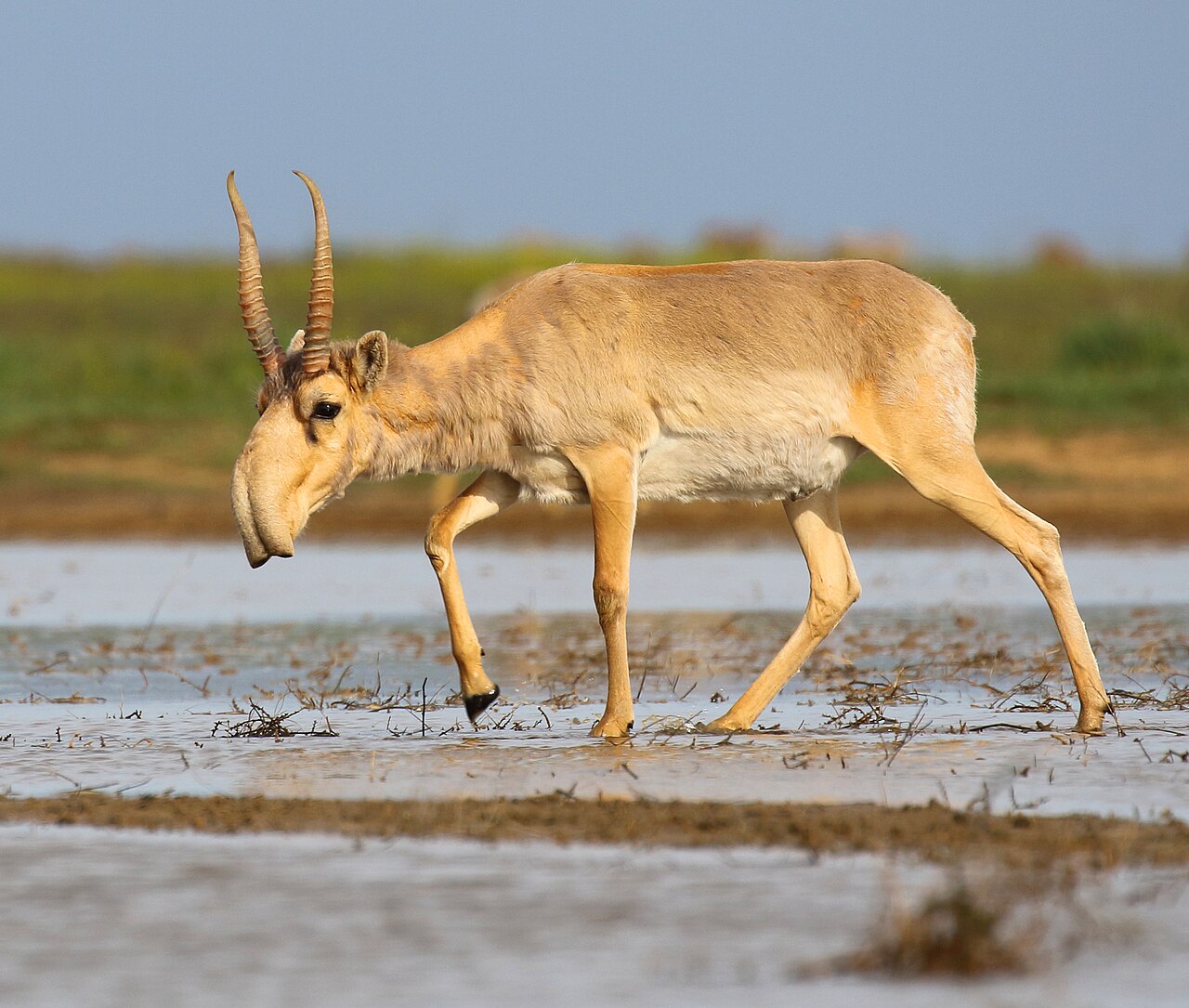
The saiga antelope nose is one of the most striking and puzzling adaptations in the entire animal kingdom. With its oversized, bulbous, trunk-like snout that droops over the mouth, the saiga (Saiga tatarica) looks less like a typical antelope and more like a creature from a speculative evolution project. For decades, biologists have marveled at this bizarre facial feature, and the more they study it, the more remarkable it proves to be. Far from an evolutionary oddity, this specialized nose is a multi-purpose survival tool that has allowed the saiga to thrive in one of the harshest environments on Earth.
What Is a Saiga Antelope?
Before diving into the anatomy of its famous snout, it is worth understanding the animal behind it. The saiga is a medium-sized antelope that roams the vast, treeless steppes and semi-deserts of Central Asia, including Kazakhstan, Mongolia, Russia, Uzbekistan, and Turkmenistan. It is a true survivor of a prehistoric era, having shared the landscape with woolly mammoths and saber-toothed cats during the last Ice Age. Today, it is one of the last remaining links to that ancient megafauna world.
Physical Characteristics
Saigas are relatively small for antelopes. Standing around 60 to 80 centimeters at the shoulder, males weigh between 35 and 60 kilograms, while females are lighter at 25 to 40 kilograms. They have slender legs built for speed, capable of galloping up to 80 kilometers per hour. Their coats change seasonally: a thin, sandy-colored coat in summer and a thick, pale, almost white coat in winter to provide insulation against the brutal Central Asian cold.
Perhaps their most striking feature, besides the nose, is their unusual head shape. Their eyes are set high on the skull, which gives them a wide field of vision to spot predators like wolves and steppe eagles across open plains. The males carry a pair of translucent, amber-colored, lyre-shaped horns that can reach up to 40 centimeters in length — horns that have tragically fueled poaching for traditional medicine.
The Saiga Antelope Nose: Nature's Air Conditioning
So, what exactly does the saiga antelope nose do? The answer begins with the extreme climate of the Eurasian steppe, where temperatures can swing from a scorching 45°C in summer to a brutal minus 40°C in winter. The steppe also brings powerful winds that whip up fine dust and grit. For any animal, breathing in such conditions is a challenge. The saiga's nose is a brilliant solution.
A Filter for Dust and Debris
In the summer, the dry steppe turns to a powder. Dust storms can reduce visibility to nearly zero, and every breath is laden with abrasive particles. The saiga's enlarged nasal cavity is lined with specialized mucous membranes and hairs that act as an efficient filter. As air rushes through the long, winding passages of the proboscis, dust particles are trapped in sticky mucus, preventing them from reaching the delicate tissues of the lungs. This allows saigas to feed and migrate even during heavy dust storms, when other animals are forced to hunker down.
A Heater for Winter Air
Arguably even more important is the nose's role as a heat exchanger. When a saiga inhales freezing winter air, the blood-rich tissues lining its nasal passages warm the air before it reaches the lungs. This prevents cold shock to the respiratory system and helps the antelope retain body heat. On the exhale, the nose recovers moisture and heat that would otherwise be lost, functioning much like the nasal turbinates found in camels and Arctic foxes. In essence, the saiga carries its own personal central heating and air-conditioning unit on its face. This remarkable thermoregulation is one of the key reasons the saiga antelope nose is considered a masterclass in evolutionary engineering.
Why Did the Saiga's Nose Get So Big?
Evolution rarely produces such an exaggerated feature without a strong selective pressure. The saiga's proboscis did not simply appear overnight; it developed over millions of years as a response to the changing environment of Central Asia. As the climate shifted toward hotter, drier summers and colder winters, saigas with slightly larger, more efficient noses were better equipped to handle the extreme conditions. They survived longer, stayed healthier, and produced more offspring. Over generations, the nose grew larger and more specialized.
The Fossil Evidence
Paleontologists have found fossil remains of ancient saiga relatives dating back to the Pleistocene epoch, and these early forms show the gradual development of the proboscis. Early relatives had modestly enlarged nasal bones, but modern saigas take it to an extreme. The nasal bones of the saiga are so enlarged that they form a distinctive dome on the top of the skull. The soft tissue of the nose is highly flexible and mobile, drooping down over the mouth like a miniature elephant trunk.
Interestingly, the saiga's nose is not just a passive filter. It is packed with muscles that allow the animal to control its shape. The nostrils can be narrowed or widened at will, and the entire nose can be redirected to some extent. This flexibility allows the saiga to adjust airflow depending on whether it is sprinting from a predator, grazing calmly, or inhaling frost-laden air at dawn.
Beyond Breathing: The Saiga Antelope Nose in Social Life
The saiga antelope nose is not only about surviving the elements; it also plays a crucial role in communication and reproduction. During the mating season, or rut, which occurs in December, males undergo a dramatic transformation. Their noses swell and enlarge further, becoming more prominent and colorful. The males use their proboscis to produce a loud, guttural bellow that echoes across the frozen steppe. This call is amplified by the resonant nasal cavity, much like a musical instrument's soundbox.
A Chilling Side Effect for Males
This heightened social function comes at a cost. The enlarged nasal passages, combined with the intense physical exertion of the rut and the reduced feeding that accompanies it, make males more susceptible to respiratory infections. This vulnerability plays a grim role in the mass mortality events that occasionally devastate saiga populations, where respiratory bacteria can sweep through herds, striking down weakened males first. The very organ that helps them secure a mate can also contribute to their downfall.
Female Saigas and the Nose
Females also possess the distinctive proboscis, though it is somewhat smaller and less exaggerated than in males. They use it in the same way for filtering and thermal regulation, and they too produce vocalizations, though at a higher pitch and lower volume. The fact that both sexes have the nose confirms that its primary function is environmental survival, with the social and sexual enhancements in males being a secondary evolutionary bonus.
Life on the Steppe: Habitat, Diet, and Migration
Understanding the saiga's nose requires understanding its world. The saiga is a migrant of the open steppe, covering astonishing distances in search of food and water. Some populations migrate more than 1,000 kilometers in a single year, following the seasonal growth of vegetation. These journeys are undertaken in enormous herds that once numbered in the hundreds of thousands. Historical accounts describe seas of saigas stretching to the horizon, their strange noses sniffing the air as they moved together like a living river.
Diet and Feeding
Saigas are herbivores with a broad and opportunistic diet. They feed on a wide range of steppe plants, including grasses, flowering herbs, lichens, and even some shrubs that are toxic to other livestock. Their ability to digest rough, fibrous vegetation is remarkable, and their specialized lips allow them to select the most nutritious parts of plants. During the harsh winter, when snow covers the ground, saigas use their hooves and noses to dig through the snow layer to reach dried grasses below.
Water Needs
Saigas are also surprisingly tolerant of arid conditions. They can obtain much of their moisture from the plants they eat, but they will readily travel long distances to reach waterholes and rivers. Their efficient kidneys conserve water, and their nasal passages also reduce water loss by recapturing moisture from exhaled breath — another critical function of the saiga antelope nose in the water-scarce summer months.
Reproduction and the Race Against Time
The saiga's life cycle is closely tied to the rhythms of the steppe. The rut occurs in late autumn and early winter, and after a gestation period of about five months, females give birth in May. This timing is no accident; it ensures that calves are born when fresh vegetation is abundant, giving them the best chance of survival.
Mass Calving
One of the most spectacular wildlife events is the saiga mass calving. Pregnant females gather in enormous aggregations and synchronize their births, with many calves arriving within a few days of each other. Within hours of birth, the calves are light enough to outrun predators, and they stay close to their mothers, feeding on rich milk that helps them gain weight rapidly.
The survival rate of calves is closely linked to the health of the mothers, and this is where the nose matters once again. A female saiga suffering from respiratory stress, perhaps due to an exceptionally dusty spring or a bacterial infection, will produce weaker calves with lower survival odds. The efficiency of her nasal passages directly influences her ability to feed, maintain body condition, and raise a healthy offspring.
Conservation: A Fragile Future for a Bizarre Survivor
Despite having survived the Ice Age and outlasted many of its contemporaries, the saiga is now on the brink of extinction. The species is currently listed as Critically Endangered by the International Union for Conservation of Nature (IUCN). Several factors have driven this alarming decline, and the saiga's own biology has, tragically, made it more vulnerable.
The Poaching Crisis
The male saiga's horns are a primary target for poachers. They are sold illegally for use in traditional Chinese medicine, where they are purported to treat various ailments, despite no scientific evidence supporting these claims. Because males are disproportionately killed, the sex ratio of populations has become severely skewed, with some herds having as few as one male for every fifty females. This dramatically reduces reproductive success and threatens the viability of the entire species.
Mass Mortality Events
In 2015, the world watched in horror as more than 200,000 saigas died in Kazakhstan within just a few weeks — roughly half of the global population at the time. Scientists determined the cause was a combination of a respiratory bacterium called Pasteurella multocida and unusual environmental conditions. While the bacterium is naturally present in saiga nasal passages, it became lethal under specific weather circumstances. The saiga's sensitive respiratory system, so perfectly adapted to normal conditions, proved to be its Achilles' heel in an environment changed by climate stress.
Conservation efforts are now underway across Central Asia. Anti-poaching patrols, protected reserves, and international cooperation have helped some populations stabilize and even recover. The Mongolian saiga (Saiga tatarica mongolica), a separate subspecies, has shown encouraging signs of growth thanks to targeted protection. However, the species still faces threats from habitat fragmentation, infrastructure development, and climate change.
Why We Should Care
The saiga is more than a curious animal with a funny nose. It is a keystone species of the steppe ecosystem, shaping the vegetation through its grazing and serving as prey for wolves, eagles, and other predators. Its massive seasonal migrations also help distribute nutrients across vast landscapes. Losing the saiga would not just be a tragedy in itself; it would destabilize one of the world's great grassland ecosystems.
Conclusion: A Nose That Tells a Bigger Story
Few animals embody the marvels of evolutionary adaptation as vividly as the saiga antelope. Its bizarre nose, with its ability to filter, warm, cool, and amplify sound, is a testament to how life can solve seemingly impossible problems. Yet it also serves as a reminder of fragility. A species that conquered the ice ages and roamed ancient grasslands in the millions is now hanging by a thread, not because of its biology, but because of the pressures we have placed on its world. The saiga antelope nose is a wonder of the natural world — and ensuring that this peculiar antelope continues to raise its snout into the steppe winds for generations to come is a responsibility we all share.
❓ Frequently Asked Questions
💬 Why do saiga antelopes have such weird noses?
The saiga's large, trunk-like nose, called a proboscis, helps warm and humidify the cold, dry air it breathes during harsh winters. It also filters out dust raised during summer migrations and may amplify their calls for communication.
💬 What purpose does the saiga antelope's nose serve?
The nose acts like an air-conditioner: it warms cold air in winter and cools hot air in summer, while trapping dust and moisture. This adaptation helps saigas survive extreme continental climates with temperatures ranging from -40°C to 50°C.
💬 How does the saiga's proboscis help it run fast?
The swollen nose increases the surface area of the nasal passages, allowing more efficient oxygen intake during high-speed running. This extra oxygen supports their stamina when fleeing predators like wolves across open steppe.
💬 Does the saiga antelope's nose filter dust and sand?
Yes, the internal hairs and mucus-lined passages in the saiga's nose trap dust and sand kicked up by migrating herds. This prevents fine particles from damaging their lungs during seasonal movements over dusty plains.