- Why Do People Say Sea Turtles Cry Salt?
- What the "Tears" Actually Are
- How Sea Turtles Cry Salt: The Biology of the Salt Gland
- Why the Eyes and Not the Kidneys?
- What Sea Turtles Actually Drink — And Why It Matters
- The Freshwater Question
- Do Sea Turtles Cry Salt for Other Reasons, Too?
- What About the "Crying" Legend?
- Sea Turtles Cry Salt: A Survival Strategy Shared Across the Ocean
- How Researchers Study Turtle Tears
- Common Myths About Sea Turtle Tears
- The Bigger Picture: Why the Salt Gland Matters for Conservation
- What You Can Do
- The Salty Truth, Summed Up
- ❓ Frequently Asked Questions
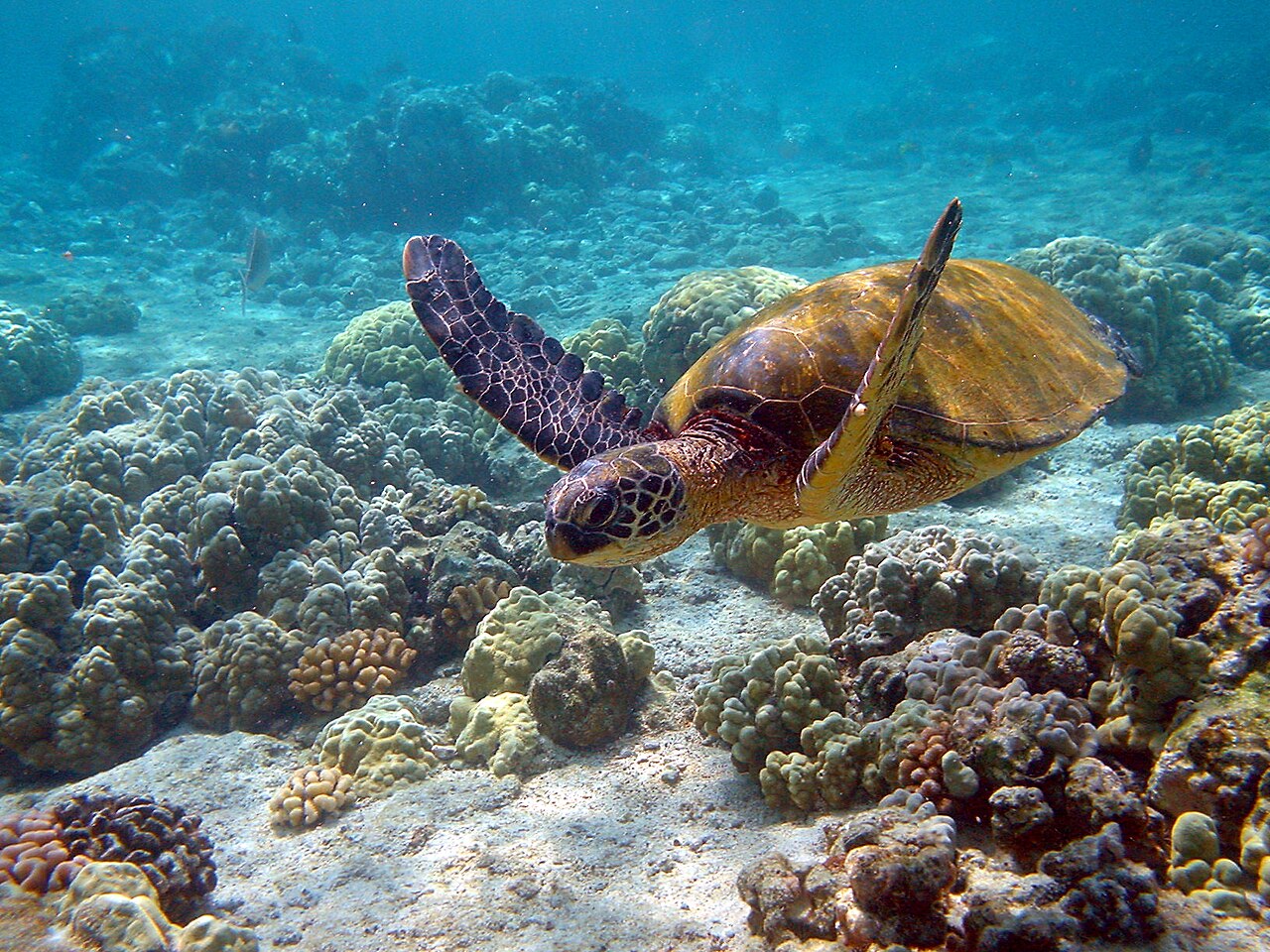
It looks for all the world like heartbreak: a female green sea turtle heaves herself onto a moonlit beach, digs a nest with her rear flippers, drops around a hundred eggs, and then — as she drags herself back to the surf — her eyes stream with what seem to be tears. The image is so striking that it has become a conservation cliché, and it's the reason people say sea turtles cry salt water. But the truth behind those glistening eyes is stranger, older, and arguably more impressive than any sentimental story we could invent. Those "tears" are not tears at all in the emotional sense. They are the visible output of one of the most elegant filtration systems in the animal kingdom — a biological desalination plant that lets a reptile live its entire life in the ocean while drinking what is, by human standards, undrinkably salty water.
Why Do People Say Sea Turtles Cry Salt?
The phrase is a piece of folk biology that happens to be half right. Sea turtles really do release a salty fluid from their eyes, and they really do it most conspicuously when they are on land, which is where humans usually see them. During nesting, a female turtle is out of the water for an hour or more, often in hot, dry conditions. She has been at sea for two or three years since her last nesting season, and her body is carrying a significant salt load. The gland that handles that load is working hard — and because its duct opens near the corner of the eye, the overflow looks exactly like crying.
There's a second reason the "crying" gets noticed. Turtles that are handled by researchers or rescuers often weep copiously, which led to the old belief that the animals were weeping from fear or pain. In reality, stress and exertion increase blood flow and metabolic activity, and the salt gland responds by ramping up its output. The turtle isn't sad. It is, quite literally, desalinating itself under pressure.
What the "Tears" Actually Are
Chemically, the fluid is not tear fluid. Tears are produced by lacrimal glands to lubricate and protect the eye; they are dilute, roughly matching the saltiness of blood plasma. The fluid a sea turtle releases is a hypertonic secretion — far saltier than the turtle's own body fluids. In some species the concentration of sodium in the secretion can be higher than that of seawater itself, which is the whole point: to expel salt in the smallest possible volume of water. The gland doing the work is the salt gland, also called the lachrymal or orbital gland, a specialized organ that sits in the head, behind and around the eye, and drains through a duct near the eye's corner.
How Sea Turtles Cry Salt: The Biology of the Salt Gland
To understand why the gland exists, you have to appreciate the problem it solves. Sea turtles are reptiles, and their closest relatives — freshwater turtles, tortoises, lizards — have kidneys built for a freshwater or terrestrial life. Reptilian kidneys are efficient at conserving water, but they are poor at getting rid of excess salt: they can only produce urine that is moderately concentrated. A marine reptile that swallows seawater with its food, or that absorbs salt across its skin, faces a chemical trap. Its kidneys cannot excrete salt faster than the salt comes in, so without another route, the animal would slowly poison itself.
Sea turtles solved the problem by outsourcing salt excretion to their heads. The salt gland is a compact, lobed organ packed with secretory cells arranged around a network of tiny ducts. Blood flows through the gland, and the cells actively pump sodium and chloride ions out of the blood and into the duct system, drawing water along with them by osmosis. The result is a concentrated brine that flows out through a duct opening near the eye. In green turtles, this gland is enormous relative to body size — a reminder of how central it is to survival. The gland is not a backup system. It is a primary organ of osmoregulation, as essential to the turtle as its lungs or its heart.
Why the Eyes and Not the Kidneys?
There are two reasons the eye is a good exit point. First, the head is close to the brain and to the blood supply that serves it, and the gland can act quickly. Second, and more practically, the gland needs a route to the outside that doesn't interfere with feeding, breathing, or swimming. The corner of the eye is a convenient drain. The same solution evolved independently in other marine animals — sharks and rays have a rectal gland, marine birds have salt glands above their eyes, and marine iguanas sneeze salt out of nasal glands — which is a classic case of convergent evolution: different lineages arriving at the same chemical answer.
What Sea Turtles Actually Drink — And Why It Matters
Here's the counterintuitive part: sea turtles do drink seawater. They have to. A marine reptile living in the open ocean has no access to fresh water except the occasional rain lens floating on the surface, and most of the time it simply drinks the sea. Green turtles, which are largely herbivorous as adults, graze on seagrass and algae that are themselves salty. Loggerheads and other species eat jellyfish, crabs, and mollusks, all of which carry seawater with them. Every meal and every drink adds salt.
The salt gland is what makes this lifestyle possible. A sea turtle can drink seawater, absorb the water it needs, and dump the excess salt back out through its eyes. The gland is so effective that the animal can, in effect, drink the ocean and stay in water balance. Researchers studying the secretion have measured flow rates that vary with the salt load: a turtle that has just eaten a salty meal or been out of the water for hours will produce more than one resting quietly in clean water.
The Freshwater Question
Some sea turtles do seek out fresh water when they can get it. Green turtles in some regions have been observed drinking from freshwater seeps and rain lenses, and hatchlings may drink the less-salty surface layer. But fresh water is a bonus, not a requirement. The salt gland gives sea turtles the freedom to range across entire ocean basins — from the nesting beaches of Costa Rica and Florida to feeding grounds thousands of kilometers away — without ever needing a reliable freshwater source. That freedom is a big part of why they are among the most widely traveled reptiles on Earth.
Do Sea Turtles Cry Salt for Other Reasons, Too?
Yes — and this is where the story gets more interesting. The salt gland is the main source of the visible fluid, but sea turtles also produce ordinary tears from ordinary tear glands, and their eyes are subject to the same irritants as any animal's. Sand, salt crystals, and tiny marine debris can bother the eye, and the turtle responds with lubrication. When a nesting female is digging in dry sand, some of the moisture around her eyes may be a mix of salt-gland secretion and normal tear fluid.
There is also a behavioral dimension. Hatchlings emerging from the nest at night face a gauntlet of sand, predators, and artificial lights. Their eyes stream, and some of that is salt-gland output triggered by the stress of the journey. None of this is evidence of emotion in the human sense. It's evidence of a body managing its chemistry under difficult conditions — which, frankly, is a more remarkable thing to witness.
What About the "Crying" Legend?
The legend that turtles weep for their eggs or their young is persistent because it's emotionally satisfying, and because the visual is so powerful. But sea turtles have no parental care: a female lays her clutch, covers it, and returns to the sea, and the hatchlings dig out and run for the water on their own. There is no bond to mourn. The "crying" is chemistry, not grief. That doesn't make the sight any less moving — it just makes the animal's biology more impressive than the myth.
Sea Turtles Cry Salt: A Survival Strategy Shared Across the Ocean
The salt gland is not unique to sea turtles, and comparing it across species shows how finely tuned it is. The seven living species of sea turtle — green, loggerhead, hawksbill, olive ridley, Kemp's ridley, flatback, and leatherback — all possess salt glands, but their relative size and output vary with diet and habitat. The leatherback, which ranges into cold temperate waters and feeds almost entirely on jellyfish, has a salt gland proportionally smaller than the green turtle's, consistent with its different osmoregulatory demands. The green turtle, which grazes on salty plants in warm shallow seas, has one of the largest.
Marine birds offer a useful comparison. A gull's salt gland can secrete a solution roughly twice as salty as seawater, and the bird can drink seawater and remain in water balance. Sea turtles achieve a similar feat with a gland that drains through the eye rather than the nose. The shared logic — active ion pumping, a duct to the outside, and a fluid saltier than the environment — is one of the great recurring solutions in marine vertebrate evolution.
How Researchers Study Turtle Tears
Scientists have collected salt-gland secretions from nesting females and from captive turtles to measure ion concentrations and flow rates. Because the fluid is easy to sample — a turtle handled on a beach will often produce a visible droplet at the eye — it has become a useful window into the animal's physiological state. Studies have looked at how secretion changes with dehydration, with diet, and with the stress of capture. The findings consistently support the same conclusion: the gland is a dynamic, responsive organ, not a passive leak.
Common Myths About Sea Turtle Tears
Because the image is so memorable, a number of misconceptions have grown up around it. Here are the main ones, corrected:
- Myth: Turtles cry because they are sad. Reality: the fluid is a salt secretion from a specialized gland, not an emotional response. Sea turtles do not form the kind of social bonds that would produce grief-driven tears.
- Myth: The tears are ordinary tears. Reality: the secretion is far saltier than blood plasma and, in some cases, saltier than seawater. Ordinary tears are dilute and serve the eye, not the body's salt balance.
- Myth: Turtles only "cry" on land. Reality: the gland works at sea too; the secretion is simply less visible when the turtle is swimming and the fluid washes away.
- Myth: The tears mean the turtle is sick or injured. Reality: secretion is normal and continuous. A turtle that never secreted salt would be in serious trouble.
- Myth: Sea turtles need fresh water to survive. Reality: they can drink seawater and excrete the excess salt through the gland, though they will take fresh water when it is available.
The Bigger Picture: Why the Salt Gland Matters for Conservation
Understanding the salt gland changes how we think about sea turtle conservation. These animals are built for a specific chemical environment, and anything that disrupts their water balance is a threat. Oil spills, coastal runoff, and plastic ingestion all interact with the same physiology. A turtle that swallows plastic may feel full and stop eating, and it may also take in less water; a turtle in polluted water may absorb contaminants across its skin and gills. The salt gland is a reminder that sea turtles are not just charismatic swimmers — they are finely tuned marine machines, and their tolerance for disturbance is not unlimited.
Climate change adds another layer. Nesting beaches are warming, and sand temperature determines the sex of hatchlings — warmer sand produces more females. Rising seas and stronger storms threaten nests. And shifts in ocean temperature can move the seagrass beds and jellyfish populations that different species depend on. None of this directly breaks the salt gland, but all of it stresses the animals that rely on it. A turtle that is dehydrated, malnourished, or exhausted has less capacity to keep its internal chemistry in balance.
What You Can Do
If you're lucky enough to see a nesting turtle, the best response is distance and darkness: keep lights off, stay back, and let her finish. If you find a stranded or injured turtle, call a local rescue hotline rather than handling it yourself. Supporting organizations that protect nesting beaches, reduce plastic pollution, and monitor turtle populations helps keep the species — and their remarkable salt glands — functioning in the wild. And the next time someone tells you that sea turtles cry because they're sad, you can offer the better story: they are drinking the ocean and filtering it, one tear-shaped droplet at a time.
The Salty Truth, Summed Up
Sea turtles cry salt because they have to. Their kidneys cannot keep up with the salt they take in from seawater and salty food, so evolution gave them a dedicated desalination organ in their heads. The salt gland pulls sodium and chloride out of the blood, concentrates them into a brine far saltier than the turtle's own tissues, and drains that brine through a duct near the corner of the eye. What looks like weeping is really the visible exhaust of a life-support system — one that lets a reptile roam entire oceans, drink the sea, and come ashore only to lay eggs. The next time you see a photograph of a nesting turtle with shining eyes, you'll know the truth: she isn't heartbroken. She's remarkable.
❓ Frequently Asked Questions
💬 Why do sea turtles cry salt water?
Sea turtles have special salt glands near their eyes that filter excess salt from their blood and release it as a concentrated salty tears-like fluid. This lets them drink seawater while getting rid of the salt they don't need.
💬 Are sea turtles actually crying or sad when they release salt water?
No, it isn't crying in the emotional sense—it's a biological process for removing salt. The fluid comes from salt glands, not from sadness or pain.
💬 Do all sea turtles have salt glands, and where are they located?
Yes, all sea turtle species have salt glands, but in most species they sit near the eyes, so the salty fluid looks like tears. These glands are a key adaptation for life in the ocean.
💬 Can sea turtles drink salt water safely?
They can drink seawater because their salt glands remove the excess salt that their kidneys can't handle. Even so, they get most of their water from food and only drink seawater when needed.