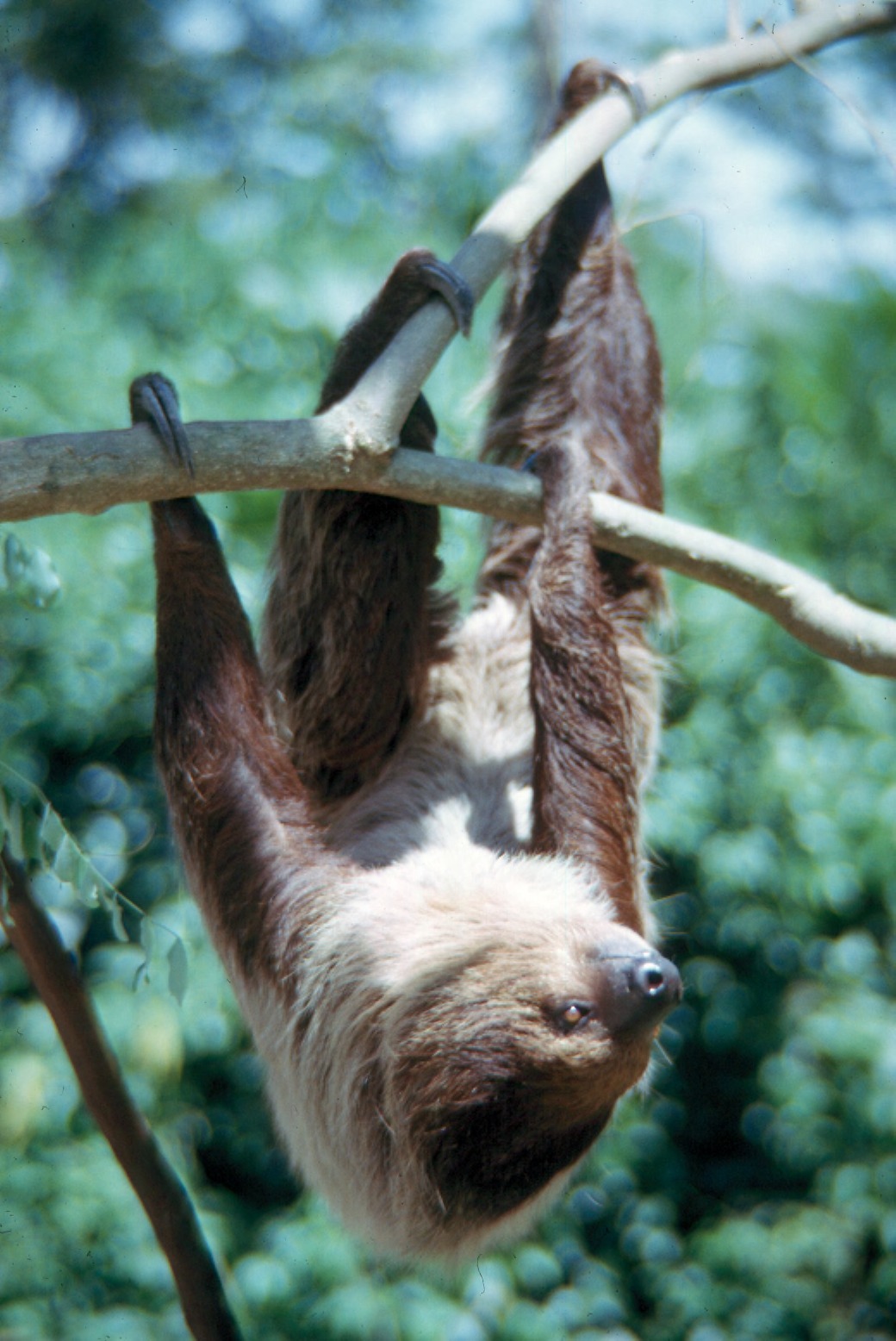
- Meet the Sloths: Two Very Different Genera
- Why Do Sloths Move Slowly? The Energy Equation
- A Diet With Almost No Fuel
- Low Metabolism, Low Body Temperature
- Built for Hanging, Not Hurrying: The Anatomy of Slowness
- Muscles That Trade Speed for Endurance
- Long Arms and Hook-Like Claws
- A Neck That Rotates Like a Owl's
- Why Being Slow Is Actually a Survival Superpower
- Invisibility Through Stillness
- Camouflage That Grows on Their Backs
- Hiding in Plain Sight — and in the Water
- How Slow Is Slow? Sloth Speed by the Numbers
- Common Myths About Sloth Slowness
- Myth: Sloths Are Lazy
- Myth: Sloths Sleep All Day
- Myth: Sloths Are Stupid
- Myth: Sloths Are Related to Monkeys
- Threats: When Slow Becomes Dangerous
- Frequently Asked Questions About Sloth Speed
- Can a sloth move fast if it has to?
- Do sloths ever fall from trees?
- Why do sloths poop only once a week?
- The Lazy Truth: Slow Is Smart
- ❓ Frequently Asked Questions
If you have ever watched a sloth on a wildlife documentary and wondered why do sloths move slowly, you are not alone — it is one of the most common questions about any animal on Earth. A sloth can take a full minute just to drag itself a few feet along a branch, and its top "sprint" speed on the ground is roughly 0.15 miles per hour (about 0.24 kilometers per hour), making it the slowest mammal alive. Yet this famous lethargy is not laziness, illness, or a design flaw. It is one of the most finely tuned survival strategies in the animal kingdom, shaped by millions of years of evolution, an unusual diet, a strange metabolism, and a life spent hanging upside down in the rainforest canopy. In this article, we will unpack the real science behind sloth slowness — from their low-calorie leaf diet and slow-burning muscles to their remarkable camouflage, their once-a-week bathroom trips, and the very real reason a fast sloth would probably be a dead sloth.
Meet the Sloths: Two Very Different Genera
Before diving into the physiology, it helps to know who we are talking about. There are six living sloth species, divided into two very different groups: the three-toed sloths (genus Bradypus) and the two-toed sloths (genus Choloepus). Despite the names, all sloths have three toes on their hind limbs; the difference is in the number of claws on their front limbs.
Three-toed sloths include the brown-throated sloth (Bradypus variegatus), the pale-throated sloth, the maned sloth, and the critically endangered pygmy three-toed sloth, which lives only on a tiny island off Panama and numbers fewer than a few hundred individuals. Two-toed sloths include Linnaeus's two-toed sloth and Hoffmann's two-toed sloth.
Size varies by species. Brown-throated three-toed sloths typically weigh 2.5 to 5.5 kilograms (5.5 to 12 pounds) and measure around 50 to 70 centimeters (20 to 28 inches) from head to tail stub. Two-toed sloths are generally larger and heavier, sometimes reaching 8 to 9 kilograms (about 18 to 20 pounds). They live in the tropical forests of Central and South America, from Honduras and Nicaragua down through the Amazon basin to northern Argentina.
In the wild, sloths typically live 20 to 30 years, and in captivity some individuals have reached their early 40s. They spend almost their entire lives in the canopy, coming down to the ground only rarely — usually to defecate or to move to a new tree when the forest floor is safe enough to cross.
Why Do Sloths Move Slowly? The Energy Equation
The single biggest reason sloths move slowly comes down to calories. Sloths are arboreal folivores — tree-dwelling leaf-eaters — and leaves are one of the poorest-quality foods available to a mammal.
A Diet With Almost No Fuel
Leaves are packed with cellulose, a tough structural carbohydrate that most mammals cannot digest without help. They are also low in fat, low in protein, and often laced with toxic compounds that plants produce to deter herbivores. Sloths eat leaves from dozens of tree species, including Cecropia, and they supplement their diet with buds, tender shoots, and occasionally fruit or insects. Two-toed sloths are slightly more flexible and will eat fruit, eggs, and small prey more readily than three-toed sloths, which are almost strict leaf-eaters.
To extract energy from this difficult food, sloths rely on a large, multi-chambered stomach and a community of symbiotic bacteria that ferment the leaves — much like a cow's rumen. This fermentation is slow. A single meal can take anywhere from several days to more than two weeks to pass completely through a sloth's digestive tract, making it one of the slowest digestion rates of any mammal.
Low Metabolism, Low Body Temperature
Because their food provides so few calories, sloths have evolved an exceptionally low metabolic rate — roughly 40 to 45 percent lower than what would be expected for a mammal of their size. Their body temperature is also unusually variable, ranging from about 30 to 34 degrees Celsius (86 to 93 degrees Fahrenheit), compared with the tightly controlled 37 degrees Celsius of humans. A sloth's body temperature can swing by several degrees over the course of a day, and it drops further at night.
This has a direct consequence: sloths are essentially ectotherm-like in their energy habits. When it is cool, they become even slower. When the sun warms them, they perk up a little. A mammal that runs on such a thin energy budget simply cannot afford the fuel cost of fast, powerful movement.
Built for Hanging, Not Hurrying: The Anatomy of Slowness
Sloth bodies are engineered for a life spent upside down, and that engineering reinforces their slow pace.
Muscles That Trade Speed for Endurance
Sloths have relatively little muscle mass compared with other mammals of similar size — roughly 25 to 30 percent of body weight, versus 40 percent or more in many active mammals. What muscle they do have is dominated by slow-twitch fibers, which contract slowly but resist fatigue. Fast-twitch fibers, the kind that power sprinting and quick escapes, are scarce. The result is an animal that can hang from a branch for hours without tiring but cannot generate a burst of speed.
Long Arms and Hook-Like Claws
Sloths have disproportionately long forelimbs and curved, hook-shaped claws that lock over branches. Hanging this way requires almost no muscular effort — the claws do most of the work, and the tendons in the limbs can hold the body in place passively. This is wonderfully efficient, but it is not a posture built for rapid locomotion. On the rare occasions a sloth travels on the ground, it must drag itself forward with its front claws, which is awkward, exhausting, and dangerously slow.
A Neck That Rotates Like a Owl's
One of the sloth's most remarkable adaptations is its flexible neck. Three-toed sloths have nine cervical vertebrae instead of the usual seven found in almost all other mammals, allowing them to rotate their heads up to about 270 degrees. This lets a sloth hang motionless while scanning in nearly every direction for predators, without wasting energy turning its whole body.
Why Being Slow Is Actually a Survival Superpower
It is tempting to assume that slow equals vulnerable. In the sloth's world, the opposite is often true. Slowness is camouflage, and camouflage is safety.
Invisibility Through Stillness
Sloths are hunted by jaguars, ocelots, harpy eagles, and spectacled owls, among others. Their main defense is not fighting or fleeing — it is not being noticed at all. Their fur is grooved and hosts algae, giving it a greenish tint that blends with the canopy. Motion is what betrays prey to predators, and a sloth that barely moves is extraordinarily hard to spot against a backdrop of leaves and shadows. A sloth that sprinted through the trees would be advertising its location to every eagle in the forest.
Camouflage That Grows on Their Backs
Sloth hair has a unique structure with extra grooves that trap moisture, allowing algae to grow directly on the fur. This greenish growth provides additional camouflage and may even give sloths a nutritional boost — some researchers believe sloths occasionally groom the algae off their fur and eat it. The algae also helps mask the animal's scent, making it harder for predators to detect by smell.
Hiding in Plain Sight — and in the Water
Sloths are surprisingly good swimmers. They can move through water about three times faster than they can crawl on land, using their long arms in a dog-paddle motion. This skill lets them cross rivers and flooded forest during the rainy season, and it may also help them escape predators. In the water, their slow, steady movements attract far less attention than a panicked splash would.
How Slow Is Slow? Sloth Speed by the Numbers
To appreciate just how leisurely a sloth's life is, it helps to look at the actual figures.
- On the ground: about 0.15 miles per hour (0.24 km/h), moving roughly 1 meter (3 feet) per minute.
- In the trees: slightly faster, around 0.15 to 0.6 miles per hour (0.24 to 1 km/h) depending on the species and the situation.
- Sleeping: wild sloths sleep about 9 to 10 hours a day, though captive sloths sleep considerably more, sometimes 15 to 20 hours.
- Digestion: food can take days to weeks to pass through the digestive system.
- Bathroom breaks: sloths descend from the canopy to defecate roughly once every 4 to 8 days — a rare and risky journey.
- Reproduction: gestation lasts about 6 months in three-toed sloths and up to 11 or 12 months in two-toed sloths. A baby sloth clings to its mother's chest for the first few weeks, then rides on her back for up to 6 to 9 months.
These numbers add up to an animal that does almost everything at a fraction of the speed of its peers — and thrives because of it.
Common Myths About Sloth Slowness
Sloths have collected more than their share of misconceptions. Here are a few of the most persistent ones, corrected.
Myth: Sloths Are Lazy
Sloths are not lazy in any meaningful sense — they are metabolically constrained. Given their diet and physiology, their activity level is exactly what it needs to be. Calling a sloth lazy is like calling a camel stingy with water; it is simply adapted to a scarce resource.
Myth: Sloths Sleep All Day
Wild sloths sleep around 9 to 10 hours per day, which is comparable to many humans. They spend much of the rest of their time resting quietly, digesting, and scanning for danger, but they are not asleep. The "sleeps 20 hours a day" figure comes from captive animals in stressful or unnatural conditions.
Myth: Sloths Are Stupid
There is no evidence that sloths are unintelligent. They navigate complex rainforest canopies, remember tree locations, and time their risky bathroom trips carefully. Their slow reactions are a product of slow metabolism, not slow wits.
Myth: Sloths Are Related to Monkeys
Sloths are not primates. They belong to the order Pilosa, alongside anteaters, and their closest living relatives include armadillos. Their extinct cousins, the giant ground sloths, were enormous — some species reached the size of elephants and lived in the Americas until roughly 10,000 years ago.
Threats: When Slow Becomes Dangerous
Slowness works beautifully in an intact forest. It becomes a liability when humans change the landscape.
Habitat loss is the greatest threat to sloths. Deforestation in Central and South America fragments forests and forces sloths to cross roads and open ground, where their slow pace makes them easy victims of vehicle strikes and dog attacks. Power line electrocution is a serious problem in parts of Costa Rica and Brazil, where sloths mistake lines for branches. The illegal pet trade also takes a toll; sloths are sometimes captured for tourists, and because they stress easily and have specialized dietary needs, many die in captivity.
Conservation efforts include wildlife bridges over roads, sloth crossing signs, rescue and rehabilitation centers, and protected reserves. The pygmy three-toed sloth, restricted to Isla Escudo de Veraguas in Panama, is listed as critically endangered, with a population estimated in the low hundreds.
Frequently Asked Questions About Sloth Speed
Can a sloth move fast if it has to?
Only briefly and only in water. On land and in trees, sloths have no fast gear. Their muscles and metabolism are simply not built for bursts of speed.
Do sloths ever fall from trees?
Yes, though it is rare. Sloths are strong and their grip is secure, but they do occasionally fall, especially young animals or during fights. A fall can be serious, and sloths may die from injuries or from being stranded on the ground.
Why do sloths poop only once a week?
Their extremely slow digestion means waste accumulates slowly. Descending to the ground is dangerous, so sloths minimize the number of trips by holding waste for days at a time. Some research suggests the trip may also play a role in mating communication, since females in estrus may visit the same sites.
The Lazy Truth: Slow Is Smart
The question of why do sloths move slowly has a satisfying answer: because slow is what works. A leaf-based diet provides so little energy that sloths had to become living models of efficiency. They cut their metabolism, dropped their body temperature, replaced fast muscle with fatigue-resistant muscle, and turned stillness itself into armor. In return, they gained a life of relative safety, long lifespan, and a niche no faster animal can occupy. The sloth is not lazy — it is one of evolution's most elegant energy savers, and its unhurried pace is the whole point.
❓ Frequently Asked Questions
💬 Are sloths lazy, or is there a real reason they move so slowly?
It's not laziness — sloths have an extremely low metabolic rate, so they simply don't generate much energy to spend on movement. Their slow pace is an energy-saving adaptation that matches their low-calorie leaf diet.
💬 How slow do sloths actually move?
On the ground, sloths crawl at roughly 2 meters (6.5 feet) per minute, while in trees they travel even more slowly. They typically move only about 30 to 40 meters (100–130 feet) per day.
💬 Why don't sloths just eat more to get more energy?
Leaves are low in calories and hard to digest, so sloths get little energy from each meal no matter how much they eat. They also have large, slow-digesting stomachs that can take days or weeks to process a single meal.
💬 Does moving slowly help sloths survive?
Yes — moving slowly helps them avoid detection by predators like jaguars and harpy eagles, since sudden motion attracts attention. Their sluggish metabolism also lets them survive on very little food and go long stretches without descending from the trees.