- What Exactly Are Star-Nosed Mole Tentacles?
- Why Do Star-Nosed Moles Have Tentacles? The Sensory Superpower
- The Limits of a Swampy Nose
- The Secret Weapon: Eimer’s Organs
- The Brain's Remarkable Mapping
- The Fastest Forager in the Animal Kingdom
- Life in the Swamp: Habitat, Diet, and Behavior
- Where to Find Them
- A Voracious Appetite
- Social Habits and Lifespan
- The Odd Truth About Star-Nosed Mole Tentacles
- ❓ Frequently Asked Questions
The star-nosed mole tentacles are one of the most bizarre and misunderstood adaptations in the animal kingdom, often evoking equal parts curiosity and revulsion. At first glance, the star-nosed mole (*Condylura cristata*) looks like a science experiment gone wrong, with a fleshy, pink flower blooming from its snout. But this unsettling facial structure is not a vestigial oddity or a mutation; it is, in fact, the most exquisitely efficient tactile sensory organ ever discovered in a mammal. The "odd truth" is that these tentacles have absolutely nothing to do with smell. They are a hyper-specialized, lightning-fast touch system that allows a small, nearly blind rodent to dominate one of the most competitive, food-rich environments on Earth. To understand the tentacles is to understand a masterclass in evolutionary engineering.
What Exactly Are Star-Nosed Mole Tentacles?
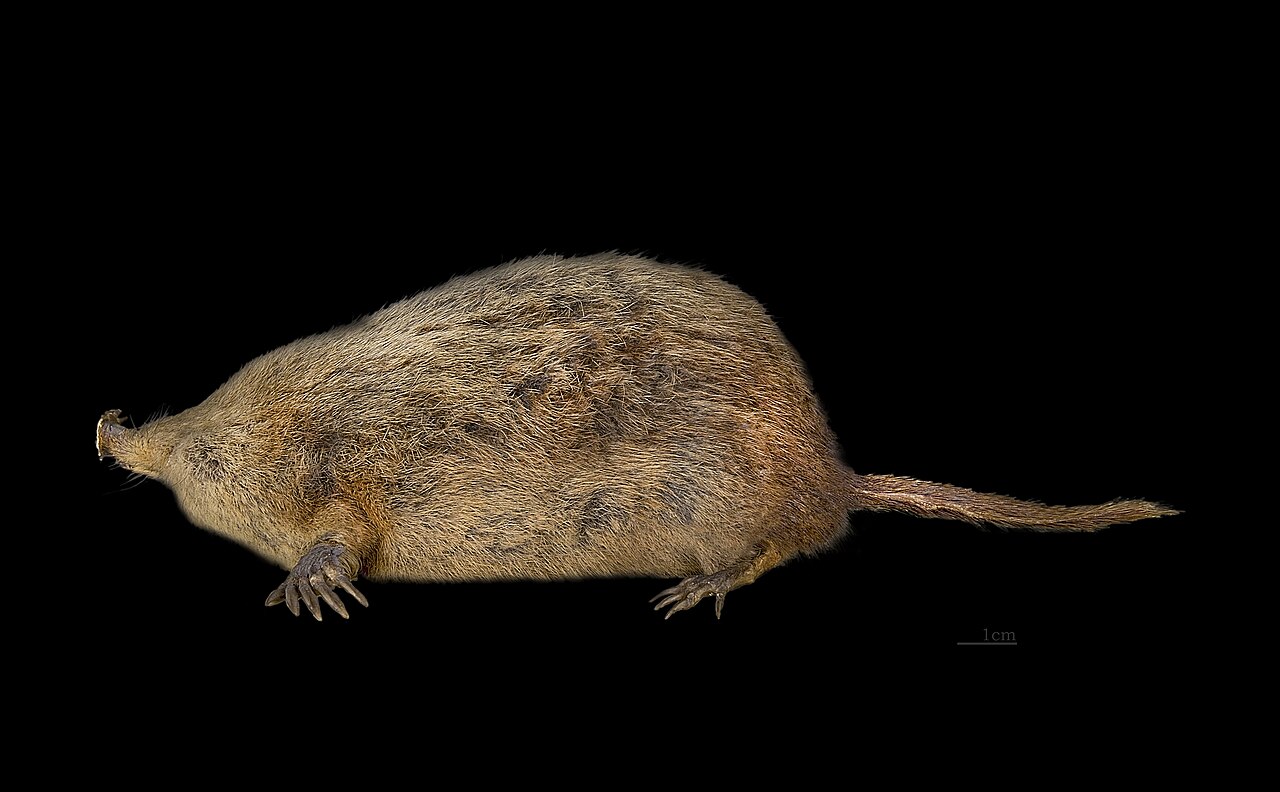
Contrary to the common misconception, the star-nosed mole does not have multiple noses. The star is a ring of fleshy, mobile appendages encircling its nostrils. In total, the star consists of 22 individual tentacles—11 on each side of the nose. These tentacles are covered in scales and are constantly in motion, twitching and probing the environment like a tiny, frenetic sea anemone. The entire star measures roughly one centimeter in diameter, which is smaller than a human fingertip, yet it contains an astronomical density of nerve endings.
In their natural habitat—the marshy, swampy lowlands of eastern North America—the star-nosed mole relies on this structure to navigate a world of absolute darkness. The mole is functionally blind; its tiny eyes are buried deep within its fur and can only distinguish between light and dark. The tentacles, therefore, act as its eyes, hands, and map. When the mole digs through saturated mud or tunnels through soft soil, the tentacles constantly brush against the walls of the burrow, gathering microscopic vibrations and textural information.
Interestingly, the tentacles are not arranged randomly. The two central tentacles, positioned directly above the mouth, are shorter than the others and serve a highly specific purpose. Biologists refer to these as the tactile fovea. In human anatomy, the fovea is the tiny pit in the retina responsible for our sharpest, color-rich central vision. In the star-nosed mole, these two central tentacles serve the exact same purpose, acting as a focused "high-resolution" zone. When the mole hits a potential food item, it swings it toward these central tentacles for a final, decisive inspection before swallowing.
Why Do Star-Nosed Moles Have Tentacles? The Sensory Superpower
The core question—why do star-nosed moles have tentacles—comes down to a combination of extreme environmental pressure and the limitations of traditional mammalian senses. To appreciate the answer, you have to place yourself in the mole's webbed feet. Its home is a network of flooded, waterlogged tunnels in swamps, bogs, and stream banks. These tunnels are perpetually dark, murky, and filled with mud, making vision utterly useless. But more importantly, the environment is oxygen-poor.
Regular moles, like the eastern mole or common mole, have relatively simple, stubby snouts equipped with standard touch receptors. They hunt by rooting through the soil and occasionally using their sense of smell. However, the star-nosed mole's territory—the wetland—is flooded. Water fills the tunnels, diluting airborne scent molecules and rendering the sense of smell far less effective. When a mole dives into muddy water to chase prey, it cannot simply rely on odor trails the way a fox or a domestic dog might.
In this chaotic, three-dimensional aquatic- and soil environment, the star-nosed mole encountered a brutal reality: its prey, consisting of rapidly darting aquatic insect larvae, tiny fish, and worms, could disappear in milliseconds. To survive, the mole needed a sensor that could operate with equal efficiency in pitch-black mud and murky water, and that could process information faster than the speed of its prey's escape. The solution was not to make the eyes bigger, nor to make the ears sharper, but to completely co-opt the nose into a lightning-fast tactile scanner.
The Limits of a Swampy Nose
We need to bust a prevailing myth: the star-nosed mole tentacles are not for smell. If you were to remove the star, the mole would still have a working nose buried beneath it. The star is purely a touch organ. Each tentacle is covered in a unique sensory receptor called an Eimer's organ, named after the German zoologist Theodor Eimer. These organs are microscopic, dome-shaped structures packed onto the surface of the tentacles. While other moles have a few Eimer's organs on their snouts, the star-nosed mole has an almost incomprehensible abundance of them.
It is estimated that the star-nosed mole possesses over 25,000 Eimer's organs on its star. This gives it a sensory resolution that is unmatched in any known mammal of its size. To put this into perspective, a human fingertip, which is considered incredibly sensitive, has a fraction of these touch receptors per square millimeter. The Eimer's organs detect texture, pressure, and vibration. The central tentacles, with their tactile fovea, possess an even higher density of these organs, allowing the mole to discern whether a minute object is an inedible pebble or a nutritious grub within a fraction of a second.
The Secret Weapon: Eimer’s Organs
To truly understand why these tentacles are so effective, we must zoom in on the microscopic level. The Eimer's organs themselves function like a biological radar array. Each organ consists of a dome-shaped protrusion containing a cluster of highly specialized cells. At the very apex of the dome sits a layer of flattened epithelial cells, beneath which lies a collection of Merkel cell-neurite complexes—the cells responsible for sustained pressure sensing. Beneath these are free nerve endings that detect rapid changes in pressure or vibration.
This layered arrangement provides the mole with two distinct "modes" of touch. The first is a steady-state sensing of texture, allowing it to discern the hardness of a surface. The second is a high-frequency vibration detection, which likely picks up the faint, rhythmic muscle twitches of an earthworm embedded in the mud ahead. When you combine these thousands of microscopic sensors with the mole's constant twitching movements, the star-nosed mole effectively builds a rapid 3D model of its environment in its brain without ever seeing it.
The Brain's Remarkable Mapping
Evolution has adapted the mole’s brain to handle this massive influx of data. In the somatosensory cortex—the part of the brain that processes physical touch—nearly 30 percent of the entire processing power is dedicated to the star. Given that the star itself is a minuscule fraction of the mole's total body surface area, this allocation is astonishing. In neuroscience, this is known as cortical magnification. The representation of the star in the mole's brain is heavily distorted, blown up to enormous proportions to process the delicate signals coming from those 22 tentacles. The central tentacles, the tactile fovea, boast an even larger brain representation, reinforcing their crucial role in decision-making.
The Fastest Forager in the Animal Kingdom
The functional result of having star-nosed mole tentacles is speed—unprecedented, record-breaking speed. The mole is widely recognized by animal behaviorists as the fastest known eater in the animal kingdom. It holds the record for the fastest time between detecting prey and deciding to eat it: an astonishing 25 milliseconds. A human blink takes roughly 150 milliseconds, meaning the mole can touch, identify, and decide to eat a piece of food six times faster than you can blink an eye.
A great deal of this research has been conducted by the neuroscientist Kenneth Catania at Vanderbilt University. Using high-speed video cameras, Catania captured extremely rapid micro-movements of the star-nosed mole. He observed that as the mole forages, its star probes the ground at a dizzying rate, scanning upward of 13 distinct spots per second. The tentacles do not simply touch the ground; they rapidly tap, slide, and retract, gathering tactile "snapshots."
If the star touches an object that is obviously prey—like a small worm—the mole immediately directs it to its mouth. If it's questionable, the object is passed to the tactile fovea for a high-resolution check. This entire sequence of touch, decision, capture, and swallow can happen in less than 200 milliseconds. In the wild, this speed is not a luxury; it is a survival necessity. Their prey, such as rapidly swimming mayfly larvae or small fast-moving fish, has highly evolved escape responses. The mole's tentacles give it a decisive ambush advantage, allowing it to strike a moving target before the target's nervous system can even initiate a flight response.
Life in the Swamp: Habitat, Diet, and Behavior
Away from the microscope and the high-speed cameras, the star-nosed mole is a fascinating animal in its own right, occupying a very specific ecological niche.
Where to Find Them
Star-nosed moles are native to the humid, wet lowlands of eastern North America. Their range extends from the provinces of Newfoundland and Nova Scotia in Canada, across the Great Lakes region, down through the Appalachian states, and along the Atlantic coast into the southeastern United States. They are habitat specialists, showing a profound preference for environments where the soil is consistently saturated—such as marshes, wet meadows, and the banks of slow-moving streams. They are excellent swimmers, and their large, scaled front feet, which resemble tiny paddles tipped with claws, are just as effective underwater as they are in soil.
A Voracious Appetite
Their diet is as diverse as their wetland home. While they hunt earthworms, their true specialties are aquatic invertebrates. They consume a wide variety of insects, including the larvae of caddisflies, stoneflies, and dragonflies. They also eat freshwater crustaceans like amphipods and isopods. When the opportunity arises, they will hunt small fish and amphibians, using their tentacles to locate them beneath the mud. They are nearly insatiable, and they have a high metabolic rate to sustain their frenetic hunting pace, requiring them to find food constantly throughout the day and night.
Social Habits and Lifespan
Unlike most mole species, which are strict loners, star-nosed moles exhibit a surprising degree of social tolerance. They often construct shared tunnel networks, and individuals have been observed foraging in the same underwater stretch without conflict. Their breeding season is short, occurring in late winter or early spring. After a gestation period of roughly 45 days, the female gives birth to a litter of 2 to 7 young in a dry chamber deep within the tunnel system. These young grow rapidly, opening their eyes at around 3 weeks and venturing out on their own shortly after weaning. In the wild, they typically live for 3 to 4 years, though they can survive longer in protected conditions.
The Odd Truth About Star-Nosed Mole Tentacles
The odd truth about star-nosed mole tentacles is that they represent one of the most extreme examples of sensory specialization in all of biology. The tentacles are not a grotesque joke of nature; they are a practical, ruthless solution to the complex challenge of living in a dark, wet, and fast-moving world. They are the byproduct of millions of years of evolution, perfecting the art of touching the world with incredible precision and responding at speeds that outpace almost every other mammal on the planet. The mole sacrificed conventional vision and standard olfaction in favor of a physical, high-bandwidth connection to its environment. So, while they look like a cluster of raw spaghetti attached to a furry burrito, the tentacles are, in fact, a stunning testament to nature's ability to solve the toughest survival puzzles. They are not just oddities; they are the most elegant hunting laser ever evolved in the mammalian family tree.
❓ Frequently Asked Questions
💬 What are the tentacles on a star-nosed mole used for?
The tentacles are highly sensitive touch organs used to detect and identify prey by feel. They contain thousands of nerve endings called Eimer's organs, allowing the mole to rapidly sense and consume food in muddy, dark tunnels.
💬 How many tentacles does a star-nosed mole have?
It has 22 pink, fleshy tentacles arranged in a star pattern around its snout. These tentacles are not for smelling or grabbing, but for tactile sensing.
💬 Are star-nosed moles blind?
They have small eyes and can detect light, but their vision is very poor. They rely almost entirely on their tentacles to navigate and find food underground.
💬 How fast can a star-nosed mole eat with its tentacles?
It can identify and eat prey in as little as 120 milliseconds, making it one of the fastest eaters in the animal kingdom. Its tentacles touch multiple potential food items per second, letting it decide what to eat almost instantly.