- Tarantula Hairs Are Not Really Fur
- Ordinary Tarantula Hairs: The Spider's Sensory Network
- Touch and Vibration Detection
- Chemical Sensing
- Airflow and Predator Detection
- Urticating Tarantula Hairs: The Real Defensive Weapon
- How the Flicking Works
- Four Types of Urticating Hairs
- Why Do Tarantulas Have Hairs? The Evolutionary Logic
- Tarantula Hairs and Humans: What Keepers Should Know
- Common Symptoms
- Practical Precautions
- Hair Loss, Molting, and the Bald Abdomen
- Common Myths About Tarantula Hairs
- The Bottom Line on Tarantula Hairs
- ❓ Frequently Asked Questions
Tarantula hairs are one of the most misunderstood features of one of the world's most misunderstood animals. Ask the average person what they know about tarantulas and you'll likely hear about fangs, size, and a vague sense that the whole spider is somehow "furry." That furriness is the subject of this article, and the truth is far more interesting than simple insulation. Tarantulas are covered in several distinct types of hair, each with its own job, and some of those hairs are among the most sophisticated defensive tools in the entire animal kingdom.
Tarantula Hairs Are Not Really Fur
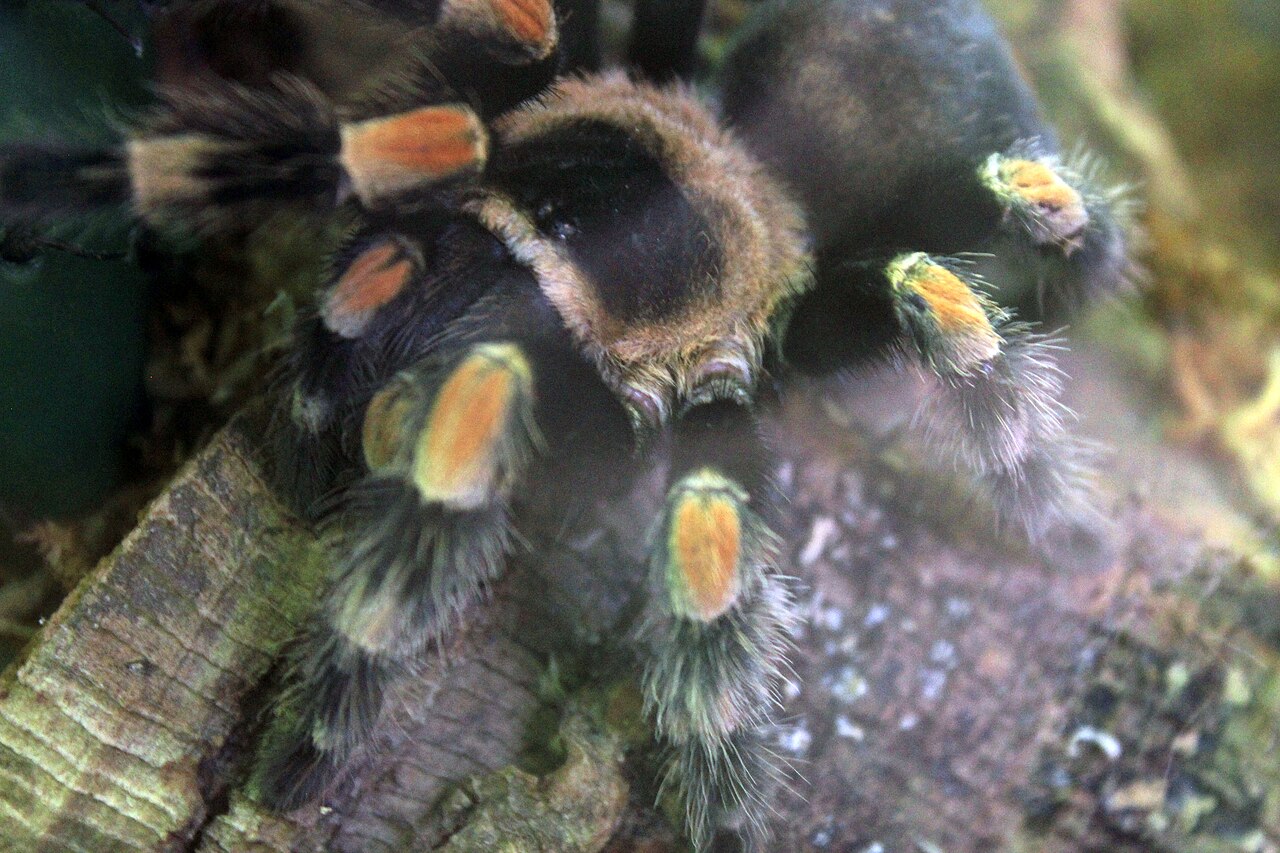
The first thing to understand is that the fuzzy coating on a tarantula is not fur or hair in the mammalian sense. Mammal hair is made of keratin, the same protein found in your fingernails. Tarantula hairs are made of chitin, the tough material that forms the spider's exoskeleton. Each hair is a hollow, rigid outgrowth of the outer shell, produced by a single specialized cell called a trichogen cell. When the spider molts, it sheds its old hairs along with the rest of its exoskeleton and grows a fresh set underneath.
Because these structures are technically called setae by arachnologists, some scientists prefer to avoid the word "hair" entirely. In practice, keepers and researchers alike use the terms interchangeably, and "tarantula hairs" has stuck in popular usage. What matters is that these setae come in several different forms, and arachnologists divide them into two broad categories: ordinary setae that serve as sensory organs, and specialized defensive setae known as urticating hairs.
Tarantulas belong to the family Theraphosidae, which contains roughly 1,000 described species spread across every continent except Antarctica. They range in leg span from the tiny Typhochlaena seladonia of Brazil, which barely reaches 2 centimeters, to the goliath birdeater (Theraphosa blondi) of northern South America, whose legs can span 28 centimeters or more. Across that enormous size range, the basic hair toolkit stays remarkably consistent, though the details vary by species and region.
Ordinary Tarantula Hairs: The Spider's Sensory Network
Most of the hairs on a tarantula's body and legs are sensory. A spider has no ears in the conventional sense and its eyesight, while adequate for detecting motion and light levels, is poor in detail. Instead, it reads the world through touch and vibration, and the setae are its instruments.
Touch and Vibration Detection
Every one of a tarantula's eight legs is densely packed with tactile setae that respond to the slightest physical contact. When a cricket walks across the substrate in a tarantula's enclosure, the vibrations travel through the ground and up the spider's legs, where thousands of these hairs pick up the signal. The tarantula can determine the direction and approximate distance of the disturbance without seeing anything at all. This is why many tarantulas sit motionless with their legs splayed outward — they are essentially listening with their feet.
Chemical Sensing
Some setae are chemosensitive, meaning they detect airborne molecules. A male tarantula searching for a mate relies heavily on these hairs to follow the pheromone trail left by a female's silk. He will tap the ground with his front legs and pedipalps, sampling the surface chemistry as he goes. Researchers have shown that males of species like Aphonopelma hentzi, the Texas brown tarantula, can track a female's silk dragline across considerable distances during the autumn breeding season.
Airflow and Predator Detection
Specialized trichobothria — extremely fine, long hairs that sway in the faintest air current — give tarantulas an early warning system against approaching predators. A wasp, bird, or rodent moving through the air displaces it, and the tarantula reacts within milliseconds, often before the threat is visible. These hairs are so sensitive that they respond to air movements far too faint for a human to feel.
Urticating Tarantula Hairs: The Real Defensive Weapon
Here is where things get genuinely remarkable. Tarantulas native to the Americas — the so-called New World species — have evolved a second category of hair that exists purely for defense. These are the urticating hairs, and they are the reason this article is titled "the itchy truth."
Urticating hairs are not attached to the spider in the same way as ordinary setae. They sit loosely in a patch on the top of the tarantula's abdomen, and the spider can deliberately flick them into the air using its hind legs. The hairs are microscopic, barbed, and incredibly lightweight, so they drift like dust. When they contact the skin or mucous membranes of a would-be predator, the barbs lodge in the tissue and cause intense irritation, itching, and in some cases a burning sensation that lasts for hours or even days. If they reach the eyes or are inhaled, the effects can be serious.
How the Flicking Works
Not all tarantulas flick their hairs into the air. Species are generally divided into those that do, called "flickers" or "hair kickers," and those that instead press their abdomen directly against an attacker, transferring hairs on contact. The Brazilian salmon pink birdeater (Lasiodora parahybana) is a notorious flicker, and keepers report that just opening its enclosure can leave a fine cloud of irritating hairs in the air. The Mexican red knee (Brachypelma hamorii), one of the most popular pet tarantulas in the world, is also a ready flicker, which is worth knowing before you handle one.
Four Types of Urticating Hairs
Arachnologists classify urticating hairs into several types based on their shape and where they are found on the spider:
- Type I: Relatively short and slender, found in species such as those in the genus Avicularia. These are held on the abdomen and pressed onto attackers rather than flicked.
- Type II: Intermediate in form, also generally used by direct contact, common in genera like Lasiodora and Grammostola.
- Type III: Long, barbed, and easily airborne, the classic flicking hairs of Brachypelma, Theraphosa, and Nhandu species. These are the ones most likely to cause a cloud of irritation.
- Type IV: Short, stout, and highly barbed, used by the goliath birdeater and its relatives. These are particularly effective at penetrating skin and are considered the most irritating of the group.
Old World tarantulas — those from Africa, Asia, and Australia — lack urticating hairs entirely. Instead, they tend to be faster, more defensive, and rely on potent venom and a threat posture rather than a chemical cloud. This is a useful distinction for anyone considering a pet tarantula, because Old World species are generally not recommended for beginners.
Why Do Tarantulas Have Hairs? The Evolutionary Logic
The short answer is that tarantula hairs solve three problems at once: sensing the environment, communicating with other tarantulas, and surviving attacks from predators. A tarantula is a large, slow-moving, protein-rich animal that cannot run particularly fast or jump. It has no armor beyond its exoskeleton and no ability to regenerate a lost limb quickly. Its hairs are its first line of defense, and they work remarkably well.
Consider the threats a wild tarantula faces. In the Americas, the most dangerous predator is often the tarantula hawk wasp, a large parasitoid insect that hunts tarantulas to provision its nests. A female wasp will sting a tarantula, paralyze it, drag it into a burrow, and lay a single egg on its body. The larva then consumes the still-living spider from the inside. Urticating hairs offer some protection against this fate, since a face full of barbed setae can deter even a determined wasp. Skunks, coatis, rodents, and birds also prey on tarantulas, and all of them are vulnerable to the irritation.
The hairs also serve a social function. When a male approaches a female's burrow, he taps and strokes the silk and the ground with his legs and pedipalps. The female responds with her own signals, and the pair negotiates a mating that could otherwise end with the male being eaten. Sensory hairs make this chemical and tactile conversation possible.
Tarantula Hairs and Humans: What Keepers Should Know
For anyone keeping tarantulas as pets, the urticating hairs are the single most important practical consideration after venom and escape-proofing. Reactions vary enormously between individuals. Some keepers handle their tarantulas for years with no more than a mild itch. Others develop a sensitivity after repeated exposure, and a reaction that was once trivial can become severe over time.
Common Symptoms
- Intense itching and redness on the hands, arms, and face
- A burning or prickling sensation that can persist for hours
- Rash that may take days to fade
- Eye irritation, tearing, and pain if hairs reach the eyes
- Respiratory irritation if hairs are inhaled, especially in confined spaces
Practical Precautions
Experienced keepers treat hair-flicking species with respect. Sensible habits include wearing long sleeves and nitrile gloves when working in an enclosure, keeping the face well away from the spider during maintenance, and never blowing on a tarantula to move it. If hairs do contact the skin, washing with cool water and mild soap helps remove the barbs, though sticky tape is often more effective at lifting them off dry skin. If hairs reach the eyes, flushing with water and seeking medical attention is the right move — do not rub.
It is also worth noting that shed tarantula hairs remain irritating long after the spider has molted. A dried exuvium, or molted skin, can still carry a full load of urticating hairs, so it should be handled with the same care as the living animal.
Hair Loss, Molting, and the Bald Abdomen
One of the most common concerns among new tarantula keepers is a bald patch on the spider's abdomen. This is almost always normal. When a tarantula flicks its urticating hairs, it is physically removing them from its own body, and a large or repeated flick can leave a visible bare spot. The hairs are replaced at the next molt, which is why a tarantula that has been kicking a lot may look patchy for weeks before suddenly appearing fully "furry" again.
Molting itself is a vulnerable period. A tarantula preparing to molt will often refuse food for days or weeks, seal itself into its burrow, and lie on its back to shed the old exoskeleton. During this process, every hair, claw, and even the lining of the stomach is replaced. If the molt goes wrong — a condition called a mismolt — the spider can lose legs or die. Humidity and temperature control matter enormously at this stage, which is why responsible keepers monitor their enclosures carefully.
Common Myths About Tarantula Hairs
Several persistent myths deserve correction. The first is that all tarantulas are dangerous to handle. In reality, most New World species are docile, and their venom is mild compared to that of many true spiders. The hairs, not the venom, are usually the bigger issue for keepers.
The second myth is that urticating hairs are venomous. They are not. The irritation is purely mechanical — the barbs lodge in tissue and cause a physical reaction, not a toxic one. This is why the effects are localized and why washing the area helps.
The third myth is that tarantulas are aggressive. A tarantula that flicks its hairs is not attacking; it is defending itself from what it perceives as a threat. Given the choice, almost every tarantula would rather retreat into its burrow than confront a human hand.
The Bottom Line on Tarantula Hairs
Tarantula hairs are a beautiful example of evolutionary multitasking. The same basic structure — a chitinous outgrowth of the exoskeleton — has been adapted into vibration sensors, chemical detectors, airflow monitors, courtship instruments, and, in New World species, a genuinely effective chemical defense. A tarantula is not a furry pet in the mammalian sense; it is a walking sensory array with a built-in deterrent, and understanding that changes how you see the animal.
For keepers, the practical takeaway is simple: respect the hairs. Wear gloves, keep your face back, wash up after handling, and never assume that a mild reaction today means a mild reaction tomorrow. For everyone else, the next time you see a tarantula's fuzzy silhouette, remember that the fuzz is doing far more than keeping the spider warm. It is listening, tasting, feeling the air, and, when necessary, fighting back — one microscopic barb at a time.
❓ Frequently Asked Questions
💬 Are tarantula hairs dangerous to humans?
For most people they are not dangerous, but the urticating hairs some species flick off can cause itching, rashes, and eye or airway irritation. Serious reactions are rare and usually linked to sensitive skin or hairs getting in the eyes.
💬 What should I do if I get tarantula hairs on my skin?
Wash the area with soap and water, then use tape to lift off remaining hairs rather than rubbing them in. A cool compress or antihistamine can ease itching, but see a doctor if hairs reach your eyes or you have trouble breathing.
💬 Do all tarantulas have urticating hairs?
No. Urticating hairs are found mainly in New World tarantulas, while most Old World species lack them and rely on speed, venom, or threat displays instead. Even among New World tarantulas, the hairs vary in type and how readily they are flicked.
💬 Why do tarantulas flick hairs at threats?
They rub their back legs against their abdomen to release a cloud of barbed hairs that irritate a predator's skin, eyes, or nose. This gives the tarantula a chance to escape without having to bite or use venom.