- The Fundamental Science Behind Tarantula Molting
- The Role of Fluid and Pressure
- Recognizing the Signs of Tarantula Molting
- The Molting Mat and Substrate Needs
- The Molting Process: A Step-by-Step Shedding
- Post-Molt Recovery and the “New” Spider
- Regeneration and Repair: The Hidden Benefit of Molting
- Common Molting Problems and How to Avoid Them
- The Dangers of the "Death Curl" vs. Molting
- Feeding and Care During the Molting Cycle
- Lifespan and Molting Frequency
- Conclusion: Respecting the Shed
- ❓ Frequently Asked Questions
Tarantula molting is the single most important biological process in a spider’s life, a risky yet essential shedding of the exoskeleton that allows for growth, regeneration, and survival. For any keeper or enthusiast, understanding this dramatic event is not just fascinating—it is the key to ensuring a healthy, long-lived pet. While a tarantula’s hard outer shell provides excellent protection, it is also a rigid prison that cannot expand, forcing the spider to periodically shed its entire skin in a process that is both awe-inspiring and fraught with peril.
The Fundamental Science Behind Tarantula Molting
Unlike humans, whose skeletons grow with them, a tarantula’s skeleton is on the outside. This external armor, called the exoskeleton, is composed of a tough protein called chitin, hardened with minerals. Because this shell has zero give, the tarantula cannot simply grow larger between meals. Instead, it must periodically replace the entire suit of armor with a newer, larger model. This process is scientifically known as ecdysis, but every keeper simply calls it molting.
The trigger for tarantula molting is not just age but a combination of growth hormones and physical size. A juvenile tarantula that is eating well will molt frequently—sometimes every few weeks—because it is actively outgrowing its skin. An adult female, however, may only molt once a year or even every 18 months, as her growth rate slows dramatically. In some slow-growing species, like the Brazilian Black (Grammostola pulchra), a spiderling might take seven years to reach maturity, molting dozens of times, while a mature male may perform a final “mature molt” and then never molt again, dedicating his remaining life to reproduction.
The Role of Fluid and Pressure
Molting is not a dry, cracking event. It is a hydraulic process. In the days leading up to the shed, the tarantula’s body begins producing a molting fluid that is secreted between the old exoskeleton and the new, soft skin forming underneath. This fluid contains enzymes that digest the inner layer of the old shell, separating it from the new one. At the same time, the tarantula will often drink heavily, increasing its internal blood pressure. This hydrostatic pressure is crucial; it is the force that will eventually split the old carapace open like a hatch.
Recognizing the Signs of Tarantula Molting
Knowing the pre-molt signs is critical for any owner. Interrupting a tarantula during this vulnerable state can cause injury or death. The most obvious sign is a sudden, dramatic loss of appetite. A tarantula that was a voracious feeder will suddenly refuse crickets or roaches, sometimes for weeks. This is a clear signal that the internal machinery is shifting toward shedding.
Another classic indicator is a change in appearance. The spider’s abdomen will often look darker, almost shiny and bald, especially in New World species. This occurs because the new skin underneath is pushing against the old, thinning it out. The spider may also become lethargic, spending more time standing still or pressing its body low against the substrate. Some tarantulas, particularly arboreal species, will weave a thick mat of webbing on the ground or across the top of their enclosure. This molting mat is not for catching food; it provides a secure anchor point for the spider to grip during the strenuous process of pulling itself free.
Finally, the most reliable sign is the tarantula flipping onto its back. This is colloquially known as a “death curl” by panicked new owners, but in reality, it is the standard molting position. Once on its back, with legs tucked in, the tarantula is ready to begin the actual exit.
The Molting Mat and Substrate Needs
Providing the correct substrate is vital for a successful molt. A terrestrial tarantula needs at least four to six inches of moist, packed substrate (like coconut fiber or peat moss) to dig a burrow if it wishes. The substrate must hold humidity, as a dry environment can cause the old exoskeleton to stick to the new skin, leading to a fatal molt. For arboreal species, the molting mat is often constructed on the vertical cork bark, but a humid hide at the bottom is still essential.
The Molting Process: A Step-by-Step Shedding
The actual tarantula molting process is a marathon, not a sprint. Once the spider is on its back, it will remain motionless for hours, sometimes a full day, building up internal pressure. This is a time of extreme vulnerability, and any disturbance can cause the spider to abort the process, often with lethal consequences.
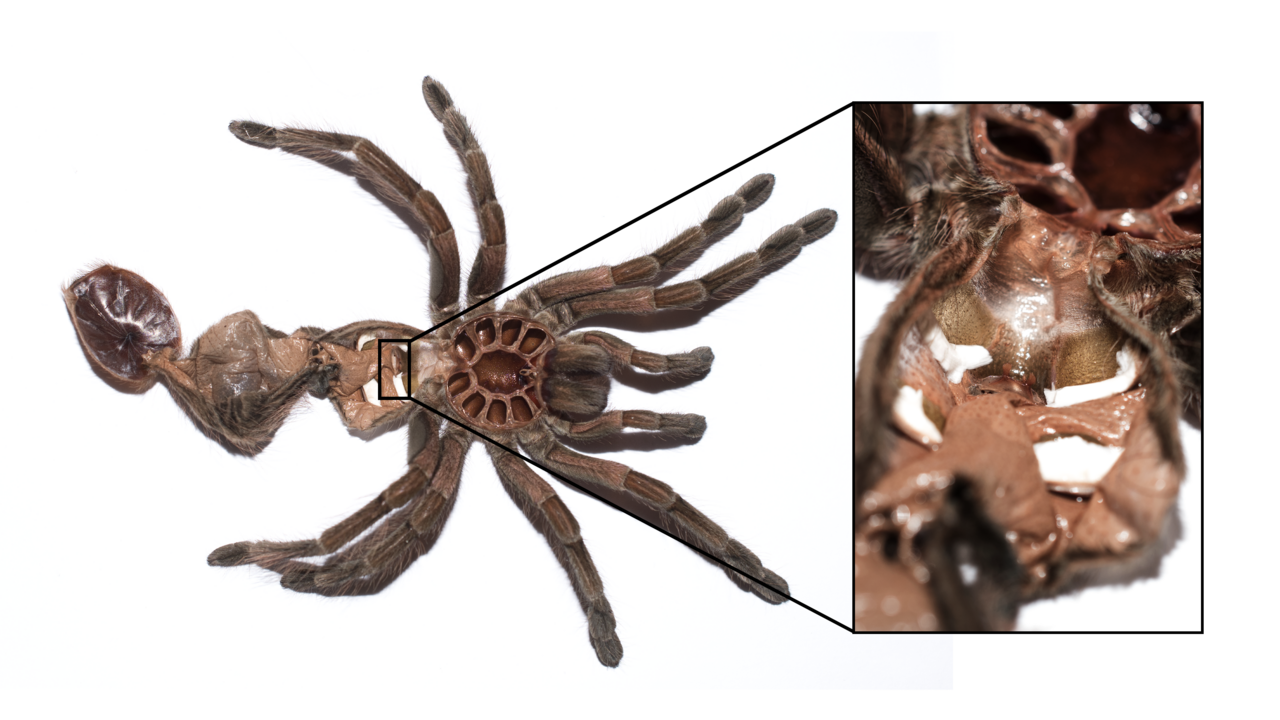
When ready, the tarantula begins to pump fluid into its cephalothorax (the front body part). This pressure causes the carapace—the shield on top—to pop open, much like a trapdoor. The tarantula then begins to slowly wiggle and pull its legs free from the old skin. It is a delicate dance of extraction. The legs are pulled out one by one, like removing tight gloves. The pedipalps (the shorter, arm-like appendages near the mouth) come next, followed by the chelicerae and fangs.
Once the front half is free, the tarantula rests. It must then extract its massive abdomen and the delicate book lungs. This is the most dangerous phase; if the old skin tears improperly, the spider can bleed out. Finally, the spider pulls its legs free from the old leg casings, leaving behind a perfect, hollow replica of itself, complete with fangs, claws, and even tiny hairs.
Post-Molt Recovery and the “New” Spider
Immediately after emerging, the tarantula is not a pretty sight. It is pale, soft, and wrinkled, resembling a ghostly version of itself. Its fangs are white and rubbery, incapable of piercing prey. At this stage, the tarantula is completely defenseless and relies entirely on its burrow or hide for protection. It will lie on its back or side, pumping fluid into its new limbs to expand them to their full size. This is why a tarantula often appears significantly larger after a molt—it has literally stretched its new skin like a balloon.
This hardening process, called sclerotization, takes time. A small spiderling may harden within 48 hours, but a large adult female will require a week or more to become fully rigid. The new exoskeleton starts white and gradually darkens to its natural species coloration over several days. The spider’s appetite will not return until the fangs turn black and hard. Feeding a tarantula too soon after a molt is a common and deadly mistake, as a soft-fanged spider cannot subdue prey, and a cricket or roach can easily injure or kill the recovering animal.
Regeneration and Repair: The Hidden Benefit of Molting
Beyond simple growth, tarantula molting serves a miraculous second purpose: regeneration. If a tarantula has lost a leg or a pedipalp in a fight with prey or an accident, the molt is its chance to regrow it. During the pre-molt phase, a small bud of tissue forms at the site of the amputation. When the spider sheds, this bud emerges as a new, smaller leg.
This regenerated limb is initially shorter and often misshapen, but it is fully functional. Over the next two or three molts, the replacement leg will grow larger with each shed until it matches the original size. This ability is a testament to the incredible evolutionary success of spiders. A tarantula can survive losing up to three legs and still recover fully through successive molts, a feat no vertebrate could match.
Additionally, molting allows the tarantula to replace worn-out sensory hairs and urticating hairs (the irritating bristles on New World species used for defense). It also clears out any build-up of dirt or parasites on the exoskeleton, effectively giving the spider a complete internal and external reset.
Common Molting Problems and How to Avoid Them
While molting is natural, it is not without risk. A “bad molt” or a “stuck molt” is a serious emergency. The most common cause of molting failure is low humidity. If the air is too dry, the molting fluid cannot properly dissolve the inner layer of the old shell, causing the old skin to adhere to the new one. This often results in the spider becoming stuck, usually with its abdomen or legs trapped in the old exoskeleton. If not resolved, the spider will die from exhaustion or rupture.
Another issue is physical disturbance. A tarantula that is startled during a molt may kick or thrash, causing internal damage or tearing of the new, fragile skin. It is absolutely vital to never touch, feed, or handle a tarantula during pre-molt, molt, or post-molt until the new exoskeleton is fully hardened. Loud vibrations, bright lights, or even a cricket wandering into the enclosure can be fatal.
Dehydration is also a silent killer. A tarantula needs ample water to build the hydraulic pressure required for shedding. Always ensure a clean, shallow water dish is available, and mist the enclosure lightly if the species requires higher humidity. If a tarantula becomes stuck, some keepers attempt rescue with a fine paintbrush and distilled water to gently moisten the old skin. However, this is a high-risk intervention that often does more harm than good, and prevention through proper husbandry is always the best medicine.
The Dangers of the "Death Curl" vs. Molting
It is crucial to distinguish between a molting spider (on its back) and a dying spider (in a death curl). A molting spider is usually on its back with legs curled loosely inward, and its body appears soft and pliable. A dying spider, however, is often on its belly with its legs curled tightly underneath its body—a position that looks like a tight fist. If you see your tarantula on its back, do not panic. Leave it alone. If you see it curled tightly on its belly and it does not move when gently touched, it may be dead or dying. The distinction is a matter of life and death for the spider, as well-meaning owners have accidentally killed molting tarantulas by trying to “save” them from the death curl.
Feeding and Care During the Molting Cycle
Proper nutrition is the foundation of a healthy tarantula molting cycle. A well-fed spider has the energy reserves to endure the strenuous process of shedding. Juvenile tarantulas should be fed appropriately sized prey (crickets, roaches, mealworms) every 5-7 days. Adults can be fed every 10-14 days. The key is to observe the abdomen size; if the abdomen looks overly large and shiny, the spider is likely approaching a molt and will refuse food.
Once a tarantula refuses food, remove any uneaten prey immediately. Crickets are notorious for chewing on a molting spider. The enclosure should be kept clean, and humidity levels should be bumped up slightly in preparation for the shed. After the molt is complete and the spider has hardened (usually after one to two weeks), you can offer a small, soft-bodied prey item, such as a pre-killed cricket or a small roach, to test its appetite. If it strikes and eats, you are back on track. If it shows no interest, wait another few days and try again.
Lifespan and Molting Frequency
The frequency of tarantula molting is directly tied to lifespan. Male tarantulas have significantly shorter lifespans than females. A male will typically live 3-6 years and will stop molting once it reaches sexual maturity. After its ultimate (mature) molt, its pedipalps will have developed bulbous tips used for mating, and it will spend the rest of its life searching for a female.
Females, however, are the champions of longevity. A female Mexican Red Knee (Brachypelma hamorii) can live 20-30 years in captivity, molting regularly throughout her life, albeit with decreasing frequency as she ages. Some species, like the Goliath Birdeater (Theraphosa blondi), can reach leg spans of 11 inches, and these giants often have slower molting cycles due to their sheer size. The largest tarantulas may take up to three months to complete a single molt cycle, while a tiny sling (spiderling) might molt every two weeks if kept warm and well-fed.
Conclusion: Respecting the Shed
Tarantula molting is a testament to the resilience and wonder of the natural world. It transforms a fragile, soft-bodied creature into a formidable predator, allows for the regrowth of lost limbs, and facilitates decades of growth in some species. For the keeper, the most profound lesson is patience. The molting process demands absolute stillness and respect. By understanding the signs of pre-molt, providing the correct humidity and substrate, and resisting the urge to interfere, you can ensure that your tarantula successfully navigates this dangerous rite of passage. The next time you see your spider lying on its back, do not fear—simply observe, wait, and appreciate the incredible, silent drama of the shedding truth unfolding before your eyes.
❓ Frequently Asked Questions
💬 How often do tarantulas molt?
Young tarantulas molt frequently—sometimes every few weeks—as they grow rapidly, while adults may molt only once a year or even less often. The frequency depends on species, age, and feeding schedule.
💬 How can I tell if my tarantula is about to molt?
Signs include reduced appetite, lethargy, increased web production (for some species), and a darkened or shiny bald spot on the abdomen. You may also see the spider lying on its back or side, which is normal pre-molt behavior.
💬 Should I feed my tarantula during molting?
No, never feed a tarantula during or right before molting, as live prey can injure or kill the vulnerable spider. Wait at least a week after the molt before offering food, and remove any uneaten prey immediately.
💬 Why do tarantulas sometimes die during molting?
Molting is a high-risk process where the spider is soft and fragile; deaths can occur due to dehydration, improper humidity, injury, or getting stuck in the old exoskeleton. Ensuring proper moisture levels and not disturbing the spider during this time greatly reduces the risk.