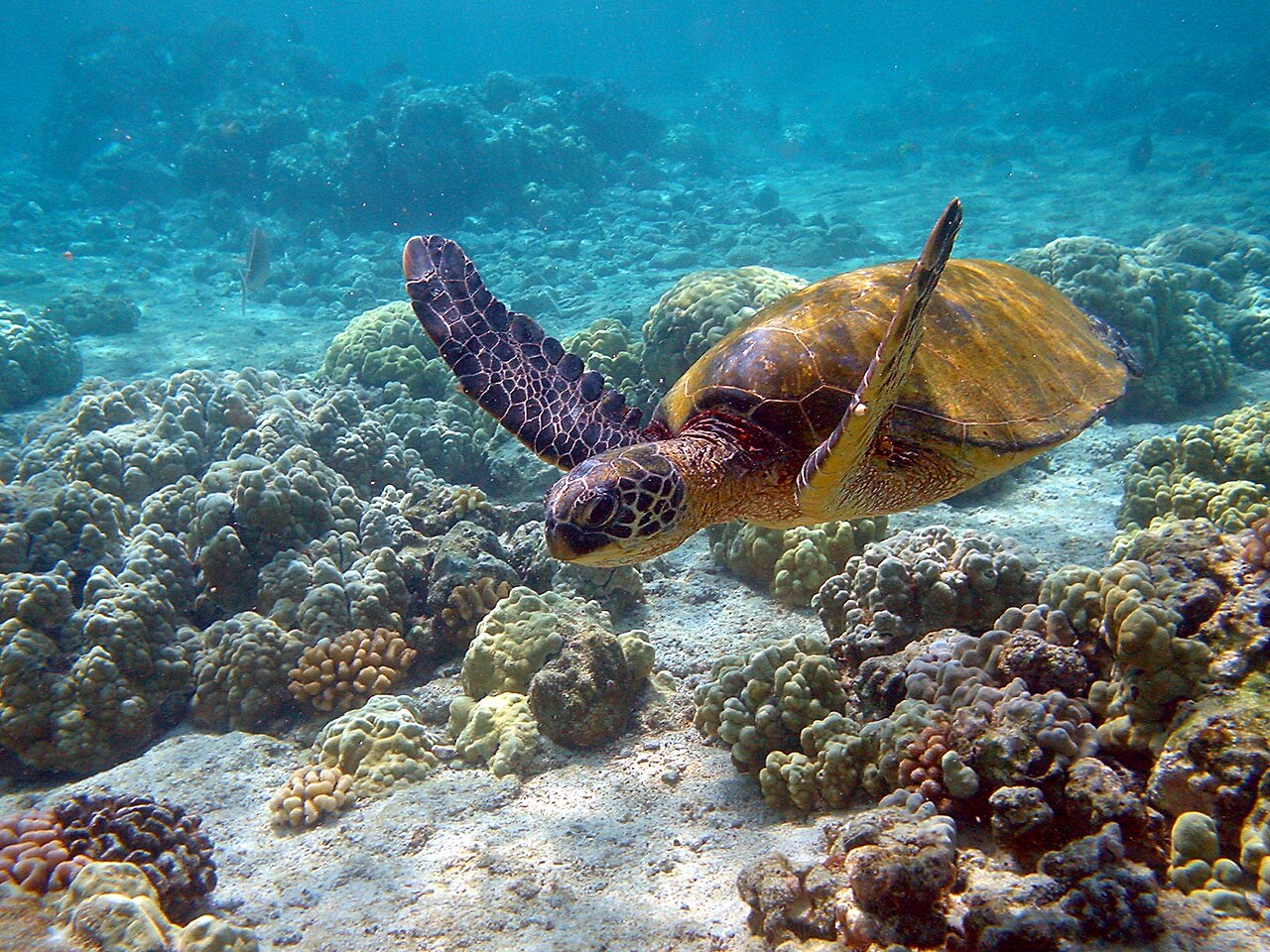
- Why Do Turtles Have Shells? The Core Answer
- Armor That Grew From the Inside Out
- Why Do Turtles Have Shells? The Evolutionary History
- What Drove the Change?
- How the Shell Actually Works
- Structure and Strength
- The Shell Is Alive
- What the Shell Protects Against
- Predators
- Environment and Weather
- Camouflage and Communication
- The Shell in Daily Life: Diet, Habitat, and Behavior
- Diet
- Habitat
- Lifespan and Behavior
- Common Myths and Misconceptions About Turtle Shells
- Why the Shell Matters for Conservation
- The Armored Truth
- ❓ Frequently Asked Questions
If you have ever watched a turtle pull its head and legs inside its shell and effectively vanish from the world, you have witnessed one of nature's most effective survival tricks — and you may have wondered why do turtles have shells in the first place. The short answer is that a turtle's shell is not a house it carries around; it is its skeleton, fused to its spine and ribs, and it evolved as armor against predators, protection against the environment, and even a tool for surviving droughts and fires. The longer answer is a 200-million-year story of evolutionary engineering, and it is far stranger and more fascinating than most people realize.
Why Do Turtles Have Shells? The Core Answer
At its most fundamental level, a turtle has a shell because it works. The shell is a defensive structure that protects the animal from predators, buffers it against temperature extremes and physical injury, and in some species helps with buoyancy, camouflage, or even courtship. But the shell is not something a turtle grew on top of its body — it is part of the body itself.
A turtle's shell is made of two main sections: the carapace (the top) and the plastron (the belly). Both are formed from bone — more than 50 bones in many species — covered by plates called scutes, which are made of keratin, the same material as human fingernails and rhinoceros horns. Crucially, the turtle's ribs and backbone are fused into the carapace. This means a turtle literally cannot crawl out of its shell, and if the shell is badly damaged, the turtle is seriously injured.
Armor That Grew From the Inside Out
Most animal armor — the plates of an armadillo, the scales of a pangolin — sits on the outside of the body. The turtle's shell is different because it is endoskeletal: it formed from the inside, by widening and flattening the ribs and vertebrae over millions of years. The shoulder and hip bones of turtles sit inside the rib cage rather than outside it, a unique arrangement among vertebrates. This is why the shell is so strong and so intimately tied to the animal's anatomy.
Why Do Turtles Have Shells? The Evolutionary History
The fossil record gives us a remarkable window into how the shell came to be. The earliest known turtle relative, Eunotosaurus africanus, lived about 260 million years ago in what is now South Africa. It had broad, flattened ribs but no true shell — it looked more like a stout lizard with unusually wide backbones. Paleontologists interpret these broad ribs as an early stage of shell evolution, possibly for burrowing or for stiffening the body.
A more famous transitional fossil is Odontochelys semitestacea, described in 2008 from about 220-million-year-old rocks in China. It had a fully developed plastron (belly shell) but only the beginnings of a carapace, and it still had teeth — modern turtles have no teeth at all. Then came Proganochelys quenstedti, from roughly 210 million years ago in Germany, which had a complete shell and looked recognizably like a turtle, though it also retained teeth and had a spiked tail club.
What Drove the Change?
Scientists debate the exact selection pressures. Leading hypotheses include:
- Predator defense: The shell provided a portable fortress against large predatory reptiles that shared the turtles' world.
- Burrowing: Broadened ribs may have helped early turtle relatives dig and stabilize their bodies underground.
- Aquatic life: Some evidence suggests shell development was linked to life in water, where a rigid, streamlined body aids swimming.
- Thermoregulation and water retention: A bony covering reduces water loss and buffers temperature swings.
The likely truth is a combination of these pressures acting over tens of millions of years. What is certain is that the shell was such a successful design that turtles survived the asteroid impact that wiped out the non-avian dinosaurs 66 million years ago and have since diversified into more than 350 living species.
How the Shell Actually Works
The shell is a marvel of lightweight engineering. Despite being made of bone, it is often surprisingly light because the bones are thin and supported by a lattice-like internal structure. The keratin scutes on top add hardness and can be replaced or repaired over time.
Structure and Strength
The carapace typically consists of a ring of marginal scutes around the edge, a series of vertebral scutes down the middle, and costal scutes on either side. The pattern varies by species — softshell turtles have a leathery covering instead of hard scutes, while the alligator snapping turtle has a heavily ridged, almost prehistoric-looking shell. The shell can withstand enormous crushing forces; a large sea turtle's carapace can resist the bite of a shark, though it is not invincible.
The Shell Is Alive
Because the shell contains living bone and blood vessels, it can feel pain and can heal from minor damage. Turtles can also suffer from shell rot, a bacterial or fungal infection, and from pyramiding — abnormal shell growth caused by poor diet or husbandry in captivity. This is why handling a wild turtle's shell roughly, or drilling into it, is harmful.
What the Shell Protects Against
The shell's defensive value is obvious, but it does more than stop teeth and claws.
Predators
When threatened, most turtles retract their head, limbs, and tail into the shell, sealing the openings as tightly as possible. Species with hinged plastrons — such as box turtles and the mud turtles of the genus Kinosternon — can close up like a clamshell, leaving almost no gap. This defense works against raccoons, foxes, birds of prey, and even large fish. Some turtles, like the snapping turtles, have reduced the ability to retract but compensate with powerful jaws and aggressive displays.
Environment and Weather
The shell helps turtles survive harsh conditions. During droughts, many species aestivate — a state of dormancy similar to hibernation — buried in mud, with the shell helping retain moisture and protect against desiccation. The shell also shields against brush fires, which are common in the habitats of species like the gopher tortoise of the southeastern United States.
Camouflage and Communication
Shell coloration is often cryptic: the patterned carapace of a painted turtle blends with pond bottoms, while the mossy, algae-covered shell of an older snapping turtle is nearly invisible in murky water. In some species, shell markings play a role in mating — the bright yellow and red patterns of the European pond turtle, for example, may help individuals recognize one another.
The Shell in Daily Life: Diet, Habitat, and Behavior
Because the shell is part of the skeleton, it shapes nearly everything a turtle does. Turtles cannot expand their rib cages to breathe the way mammals do; instead, they use specialized abdominal muscles to pump air in and out. This is one reason turtles tire quickly during strenuous activity and why they are generally slow, deliberate animals.
Diet
Turtle diets are remarkably varied. Green sea turtles are largely herbivorous, grazing on seagrass and algae. Box turtles are omnivores, eating earthworms, insects, berries, and mushrooms. Alligator snapping turtles are ambush predators that lure fish with a worm-like appendage on their tongue. The shell does not directly determine diet, but it does influence foraging style — heavily armored species tend to be slower and more defensive, while softshell turtles are fast, active hunters.
Habitat
Turtles occupy an extraordinary range of habitats: oceans, freshwater rivers and ponds, deserts, forests, and grasslands. The shell is adapted to each. Sea turtles have flattened, streamlined carapaces for swimming; tortoises have domed, heavy shells for protection on land; softshell turtles have flattened, leathery shells that reduce drag in water. The matamata of South America has a rough, ridged shell that helps it blend into leaf litter on the river bottom.
Lifespan and Behavior
The shell contributes to the turtle's famously long life. Many species live for decades: box turtles can exceed 50 years, and some tortoises, like the Aldabra giant tortoise, live over 100 years. The shell provides protection that allows turtles to survive into old age, and their slow metabolism and low predation rates as adults support that longevity. Sea turtles, which cannot retract into their shells, rely instead on size and speed; a leatherback sea turtle can grow to over 2 meters (6.5 feet) and weigh 900 kilograms (nearly 2,000 pounds).
Common Myths and Misconceptions About Turtle Shells
Despite their familiarity, turtle shells are widely misunderstood. Here are some of the most persistent myths, corrected.
- Myth: Turtles can leave their shells. False. The shell is fused to the skeleton; a turtle without its shell would be a dead turtle.
- Myth: The shell is dead material like a fingernail. False. It contains living bone, blood vessels, and nerves, and it can feel pain.
- Myth: All turtles can retract fully into their shells. False. Sea turtles and snapping turtles cannot retract their heads and limbs completely.
- Myth: A turtle's shell is always hard. False. Softshell turtles have leathery, pliable shells, and some species have reduced or partially ossified shells.
- Myth: Shells are indestructible. False. They can crack, rot, and deform, especially under poor conditions or from trauma.
Why the Shell Matters for Conservation
Understanding why turtles have shells also helps us understand why they are so vulnerable. Because the shell is part of the skeleton and cannot be replaced, any damage is permanent and potentially fatal. Turtles are also slow to reproduce — many species take a decade or more to reach sexual maturity and lay relatively few eggs — so populations recover slowly from losses.
Habitat loss, road mortality, pollution, and the illegal wildlife trade have pushed many species toward extinction. The International Union for Conservation of Nature lists a large proportion of turtle species as threatened. Sea turtles face additional pressures from bycatch in fishing gear and plastic pollution. Conservation efforts focus on protecting nesting beaches, reducing bycatch, and combating poaching, but the turtle's own biology — a shell that cannot be shed, a slow life history — makes every individual valuable.
The Armored Truth
Why do turtles have shells? Because the shell is one of evolution's most successful and enduring inventions: a living skeleton that doubles as armor, insulation, camouflage, and a portable refuge. It is not a separate object a turtle carries but the turtle itself, grown outward over 200 million years from the ribs of a broad-backed ancestor. That design has allowed turtles to survive mass extinctions, colonize oceans and deserts, and live for a century or more. The next time you see a turtle, look closely at the shell — you are not looking at a house, but at a remarkable piece of anatomy that has been quietly perfecting itself since before the dinosaurs.
❓ Frequently Asked Questions
💬 Can a turtle leave its shell?
No. A turtle's shell is part of its skeleton, fused to its spine and ribs, so it can never crawl out of it like a hermit crab leaves a borrowed shell. The shell grows with the turtle throughout its life.
💬 What is a turtle's shell made of?
The shell is bone covered by plates called scutes, with the upper part (carapace) and lower part (plastron) joined at the sides. The outer scutes are made of keratin, the same material as human fingernails.
💬 Why do turtles need shells?
The shell is a built-in suit of armor that protects turtles from predators, since they are slow-moving and cannot run away. It also helps with camouflage, stores minerals, and in some species aids buoyancy and temperature regulation.
💬 Do all turtles have hard shells?
Not all. Softshell turtles have leathery, flexible shells, and some species like the pancake tortoise have flatter, lighter shells for squeezing into crevices. Sea turtles have flatter, streamlined shells that reduce drag in the water.