- The Surprising Evolutionary Origins of Turtle Shells
- Key Fossil Evidence: From Burrower to Shield
- How Turtle Shells Are Living, Growing Structures
- Shell Composition and Strength
- The Many Functions of Turtle Shells Beyond Defense
- Thermoregulation and Buoyancy
- Camouflage and Communication
- How Turtle Shells Adapt to Different Diets and Habitats
- Terrestrial Tortoises: Heavy and Dome-Shaped
- Aquatic Turtles: Streamlined and Lightweight
- Specialized Diets and Shell Modifications
- Common Myths About Turtle Shells Debunked
- The Role of Turtle Shells in Conservation and Culture
- Conclusion: The Shell as a Blueprint for Survival
- ❓ Frequently Asked Questions
When you picture a turtle, the first thing that likely comes to mind is its iconic, dome-shaped home. But the question "why do turtles have shells?" is far more complex than you might think. These remarkable structures are not just protective gear; they are living, breathing extensions of the turtle's skeleton, and their evolution holds surprising truths that challenge everything we thought we knew about these ancient reptiles. From their origins as ribbed burrowers to their role in modern survival, turtle shells are a masterpiece of biological engineering.
The Surprising Evolutionary Origins of Turtle Shells
For decades, scientists debated how turtle shells evolved. The prevailing theory was that they developed as a protective shield against predators. However, recent fossil discoveries and genetic studies have painted a far more nuanced picture. The earliest turtle ancestors, like the 260-million-year-old Eunotosaurus, did not have a complete shell. Instead, they had broad, flattened ribs that were fused together. This suggests the shell's initial purpose was not defense, but rather something else entirely: digging.
These proto-turtles likely used their wide ribs to anchor themselves in burrows, providing stability while they excavated soil. Over millions of years, this rib expansion continued, eventually fusing with the spine and forming a bony carapace. The plastron (bottom shell) evolved later from the turtle's clavicles (collarbones) and gastralia (belly ribs). This means a turtle's shell is a modified ribcage and spine—a fact that makes them unique among vertebrates. You cannot remove a turtle from its shell any more than you can remove a human from their ribcage.
Key Fossil Evidence: From Burrower to Shield
The fossil record provides critical clues. Odontochelys semitestacea, a 220-million-year-old fossil from China, had a fully developed plastron but only partial carapace. This indicates the belly shell evolved first, possibly to protect the turtle while it swam in shallow, predator-filled waters. Meanwhile, Proganochelys, a later terrestrial species, had a complete shell but could not retract its head or limbs. This suggests that early turtle shells were rigid, and the ability to withdraw into the shell evolved separately, as a later adaptation.
How Turtle Shells Are Living, Growing Structures
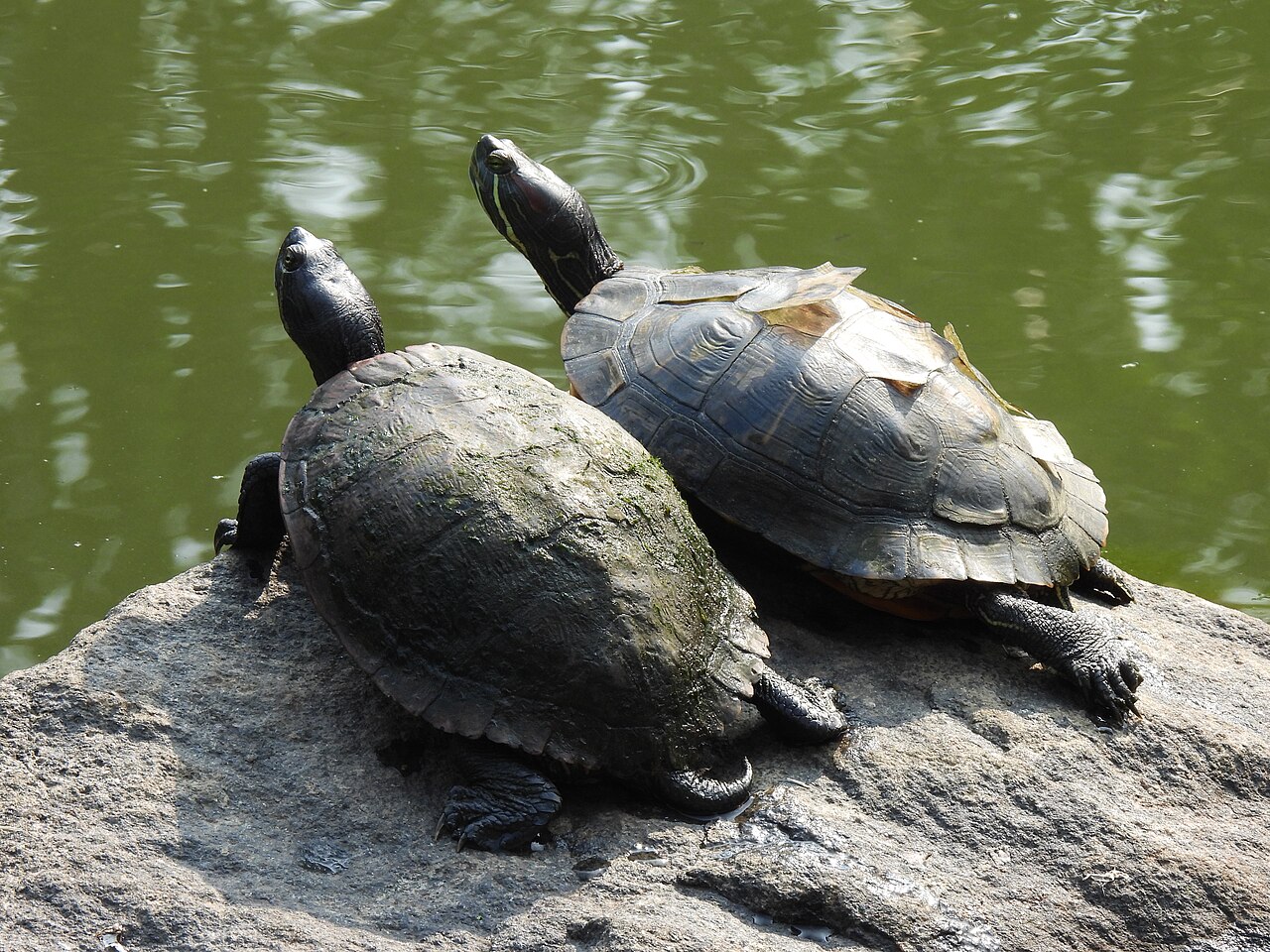
One of the most surprising truths about turtle shells is that they are alive. A turtle shell is made of bone covered by scutes—plates of keratin, the same protein found in human fingernails and hair. These scutes are not just a coating; they are a living tissue that grows along with the turtle. As a turtle ages, its scutes may shed or develop growth rings, much like tree rings. These rings can help estimate a turtle's age, but they are not always accurate because growth slows with age and environmental conditions.
The shell also contains blood vessels and nerves. If a turtle's shell is injured, it can bleed and feel pain. This is why shell cracks or infections are serious medical emergencies for turtles. The shell's ability to heal is remarkable: bone can regenerate, and keratin can grow over wounds, but deep fractures often require veterinary intervention. For aquatic turtles, like the green sea turtle (Chelonia mydas), the shell is more streamlined and hydrodynamic, reducing drag in water. For terrestrial tortoises, like the Galápagos giant tortoise (Chelonoidis niger), the shell is heavy and dome-shaped, providing protection from predators and sun.
Shell Composition and Strength
A turtle's shell is composed of approximately 60% bone and 40% organic material. The carapace (top) and plastron (bottom) are connected by a bridge of bone. The scutes are arranged in a specific pattern that varies by species. For example, the hawksbill sea turtle (Eretmochelys imbricata) has overlapping scutes, while the box turtle (Terrapene carolina) has a hinged plastron that allows it to close its shell completely. The strength of turtle shells is impressive: some species can withstand pressures of up to 200 times their own body weight—enough to survive being run over by a car in some cases.
The Many Functions of Turtle Shells Beyond Defense
While protection from predators is a primary function, turtle shells serve many other critical roles. They are multifunctional organs that have evolved to meet the demands of diverse habitats and lifestyles.
Thermoregulation and Buoyancy
Turtles are ectothermic (cold-blooded), meaning they rely on external heat to regulate their body temperature. Their shells act as solar panels. Dark-colored shells absorb heat faster, helping turtles warm up in the morning sun. Lighter shells reflect heat, preventing overheating in hot climates. In aquatic species, the shell also affects buoyancy. Sea turtles can adjust their lung volume to control buoyancy, but the shell's shape influences how they swim. Flat, streamlined shells (like those of the leatherback sea turtle, Dermochelys coriacea) reduce drag, while domed shells (like those of the snapping turtle, Chelydra serpentina) provide stability on the muddy bottom.
Camouflage and Communication
Many turtles have shells that blend with their environment. The eastern box turtle's shell is mottled with yellow and orange patterns that mimic leaf litter, making it nearly invisible on the forest floor. Conversely, the bright, patterned shells of some tropical tortoises may serve as warning coloration to predators. Shells also play a role in social communication. Male turtles often use their shells to ram rivals during mating disputes, and the vibrations can signal dominance. In some species, like the red-eared slider (Trachemys scripta elegans), females may choose mates based on the size and condition of their shells.
How Turtle Shells Adapt to Different Diets and Habitats
The shape and thickness of turtle shells are directly influenced by a species' diet and environment. This is a perfect example of evolutionary adaptation.
Terrestrial Tortoises: Heavy and Dome-Shaped
Land-dwelling tortoises, such as the African spurred tortoise (Centrochelys sulcata) or the Galápagos giant tortoise, have thick, domed shells. These shells provide protection from large predators (like foxes or birds of prey) and from the intense sun. The dome shape also helps them right themselves if flipped over—though this is not always successful. Their shells are heavy, often weighing up to 30% of their total body mass. The Galápagos giant tortoise can live over 100 years, and its shell continues to grow slowly throughout its life, with scutes becoming thicker and more worn over time.
Aquatic Turtles: Streamlined and Lightweight
Sea turtles and freshwater turtles have lighter, flatter shells that reduce drag in water. The leatherback sea turtle, the largest turtle species (reaching up to 2.2 meters and 900 kg), has a unique shell made of a rubbery, leather-like material instead of hard scutes. This allows it to dive to depths of over 1,200 meters, where pressure would crush a rigid shell. Freshwater turtles, like the painted turtle (Chrysemys picta), have relatively flat, smooth shells that help them swim quickly to catch fish or escape predators. Their shells are also more flexible, allowing them to squeeze into tight spaces between rocks or logs.
Specialized Diets and Shell Modifications
Some turtles have shells that directly aid in feeding. The alligator snapping turtle (Macrochelys temminckii) has a shell covered in algae and mud, which acts as camouflage while it lures fish with a worm-like tongue. The mata mata turtle (Chelus fimbriata) has a shell that resembles a pile of dead leaves, helping it ambush prey in murky Amazonian waters. Conversely, herbivorous tortoises like the red-footed tortoise (Chelonoidis carbonarius) have smoother shells that don't impede their slow, grazing lifestyle.
Common Myths About Turtle Shells Debunked
Despite their fame, many misconceptions persist about turtle shells. Let's set the record straight.
- Myth: Turtles can leave their shells. This is completely false. A turtle's shell is fused to its spine and ribs. Removing it would kill the animal. The shell is an integral part of the turtle's skeleton.
- Myth: A turtle's shell is just dead bone. As discussed, the shell is living tissue with blood vessels and nerves. It can feel touch, pressure, and pain.
- Myth: Shells are indestructible. While strong, turtle shells can crack, fracture, or be punctured by predators (like raccoons, dogs, or crocodiles) or by human activities like road traffic. Shell injuries are serious and often fatal without treatment.
- Myth: A turtle's age can be determined solely by shell rings. While growth rings (annuli) can give an estimate, they are not reliable for older turtles because growth slows, and rings can wear off or become indistinct. Shell condition is a better indicator of age in many species.
- Myth: All turtles can retract into their shells. Only some species—like box turtles and pond turtles—can fully retract their heads and limbs. Sea turtles, snapping turtles, and softshell turtles cannot fully retract due to the shape and size of their shells.
The Role of Turtle Shells in Conservation and Culture
Turtle shells have been valued by humans for millennia, but this has led to severe conservation challenges. The hawksbill sea turtle, with its beautiful "tortoiseshell" pattern, has been hunted to near extinction for its shell, used to make combs, jewelry, and ornaments. Despite international trade bans (CITES Appendix I), illegal poaching continues. Similarly, the radiated tortoise (Astrochelys radiata) of Madagascar is critically endangered due to poaching for its striking yellow-and-black shell.
On the positive side, turtle shells are now central to conservation efforts. Scientists use shell measurements to assess population health, track individual turtles via notching or tagging, and study migration patterns. In many cultures, the turtle shell is a symbol of longevity, wisdom, and protection. The ancient Chinese used turtle shells for divination (oracle bones), and in Hindu mythology, the world rests on the back of a giant turtle. Today, the shell remains a powerful icon of resilience and adaptation.
Conclusion: The Shell as a Blueprint for Survival
So, why do turtles have shells? The surprising truth is that these structures are not just simple shields. They are dynamic, living organs that evolved from a need for stability and digging, not just defense. Turtle shells are critical for thermoregulation, buoyancy, camouflage, and even social interaction. They are adapted to the specific diets and habitats of each species, from the heavy domes of terrestrial tortoises to the lightweight, streamlined shells of sea turtles. Understanding the shell's true nature—as a fused, living part of the turtle's body—helps us appreciate these ancient creatures even more. As we work to protect turtles and their habitats, we must remember that their shells are not just armor; they are the very blueprint of their survival, shaped by millions of years of evolution. Whether you see a box turtle crossing a forest path or a sea turtle gliding through the ocean, know that its shell is a marvel of nature, and a story waiting to be told.
❓ Frequently Asked Questions
💬 Can a turtle survive without its shell?
No, a turtle cannot survive without its shell because the shell is fused to its skeleton and spine, containing vital nerves and blood vessels, and it also protects internal organs.
💬 Is a turtle shell made of bone or keratin?
A turtle shell is made of both: an inner layer of bone fused to the turtle's skeleton and an outer layer of keratin, the same material as human fingernails.
💬 Do turtles feel pain if their shell is damaged?
Yes, turtles feel pain if their shell is damaged because the shell contains nerve endings and blood vessels, making cracks or injuries very painful.
💬 Why did turtles evolve to have shells?
Turtles evolved shells primarily for protection from predators, but evidence also suggests early shells helped them burrow underground to escape harsh environments.