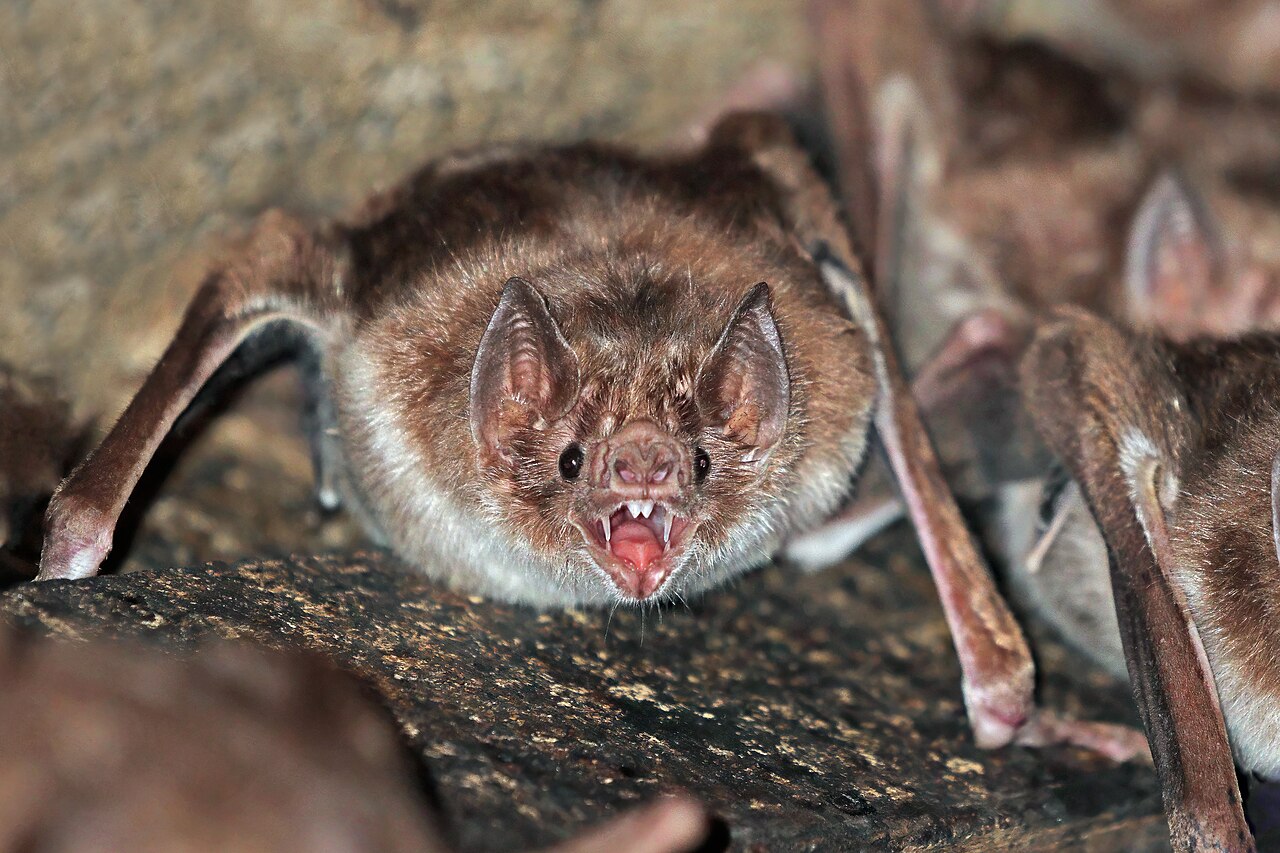
- Meet the Real Vampire Bats
- Why Did Vampire Bats Drink Blood? The Evolutionary Answer
- Blood is a strange food choice
- From blood-licking to blood-drinking
- How Vampire Bats Drink Blood Without Being Noticed
- A stealthy approach on the ground
- The chemistry that makes it possible
- Why Blood Alone Is a Nutritional Nightmare — and How Bats Cope
- The Social Life of Vampire Bats: Blood-Sharing and Bonds
- Do Vampire Bats Drink Blood From Humans?
- Vampire Bats and Disease: A Double-Edged Story
- Frequently Asked Questions About Vampire Bats
- Are vampire bats dangerous to humans?
- Do vampire bats drink blood from other bats?
- Can vampire bats survive without blood?
- How much blood does one bat drink?
- The Surprising Truth About Vampire Bats
- ❓ Frequently Asked Questions
When people imagine a creature that survives entirely on blood, they usually picture a Transylvanian count or a Hollywood monster — but the only mammals on Earth that truly live on a blood-only diet are the three species of vampire bats, and the reasons vampire bats drink blood come down to a remarkable story of evolution, chemistry, and survival. Far from being supernatural, these small, warm-blooded animals have evolved a set of biological tricks so extreme that scientists study them for clues about everything from blood clotting to how brains respond to hunger. This article takes a close look at what vampire bats really are, why blood became their only food, and why the truth is far stranger — and more fascinating — than the legend.
Meet the Real Vampire Bats
The word "vampire" gets attached to many bats, but only three species out of more than 1,400 actually feed on blood. All three live in Latin America, and they belong to the family Phyllostomidae, the leaf-nosed bats.
- Common vampire bat (Desmodus rotundus) — the most widespread and best studied. It prefers the blood of mammals, especially cattle and horses, and it is the species most often seen in documentaries.
- Hairy-legged vampire bat (Diphylla ecaudata) — a specialist that feeds mainly on the blood of birds such as chickens and wild birds.
- White-winged vampire bat (Diaemus youngi) — also a bird specialist, with pale wingtips and a gentler temperament than its relatives.
These bats are small. The common vampire bat weighs only about 30 to 40 grams (roughly one to 1.4 ounces) — about the same as a large strawberry — with a body around 7 to 9 centimeters long and a wingspan of roughly 30 to 35 centimeters. They are not the giant monsters of folklore. They are delicate, agile fliers roughly the size of a small mouse with wings.
Their habitat stretches from northern Mexico down through Central America and across much of South America, including Brazil, Argentina, and Chile. They roost in caves, hollow trees, abandoned buildings, mines, and even wells, usually in dark, humid places where temperatures stay mild. In the wild, a common vampire bat may live around nine years, and in captivity some individuals have reached their early twenties — a long life for such a small mammal.
Why Did Vampire Bats Drink Blood? The Evolutionary Answer
Blood is a strange food choice
From a nutritional standpoint, blood looks like an odd menu. It is about 80 percent water, rich in protein, but almost completely lacking in fat and carbohydrates — the two fuels most animals rely on for quick energy. It also carries very little in the way of vitamins, and it is loaded with iron, which is toxic in large amounts. On top of all that, blood is a liquid that clots: any wound a bat opens will start to seal itself within minutes.
So why would any animal specialize in it? The answer is that blood is a resource almost nothing else wants. In the forests and grasslands where vampire bats evolved, fruit, nectar, insects, and small vertebrates were already being eaten by countless other species. Blood, by contrast, was largely uncontested — available in huge quantities from the large mammals and birds that roamed the landscape. Evolution does not reward animals for choosing the nicest food; it rewards them for choosing food they can actually get. For an ancestor of today's vampire bats, blood was a niche waiting to be filled.
From blood-licking to blood-drinking
Fossils and DNA studies suggest that the ancestors of vampire bats were fruit- and insect-eaters, and that blood-feeding evolved only once, roughly 26 million years ago. The transition probably began with bats landing on large animals to drink from wounds or to lap up blood around insect bites. Over many generations, the bats that could find and access blood most efficiently survived, and their bodies gradually reshaped around that single food source. The result is one of the most specialized diets of any mammal on the planet.
How Vampire Bats Drink Blood Without Being Noticed
A stealthy approach on the ground
Unlike most bats, vampire bats are comfortable on the ground. Their strong forelimbs and thumbs let them crawl, hop, and even leap short distances, which is how they approach sleeping prey. The common vampire bat typically targets the lower legs, hooves, or the base of the tail, where skin is thin and blood vessels lie close to the surface.
The bite itself is not a bite in the usual sense. Using razor-sharp upper incisors, the bat makes a small, shallow cut — usually just a few millimeters deep — that often goes unnoticed by the sleeping animal. The bat does not suck the blood out like a syringe. Instead, it laps it up with a grooved tongue while the wound bleeds freely, helped by an anticoagulant in its saliva that keeps the blood flowing. A single feeding session lasts about 20 to 30 minutes, during which a bat may take in roughly 20 to 30 milliliters of blood — a substantial meal for an animal that weighs only 30 to 40 grams.
The chemistry that makes it possible
Vampire bat saliva is a pharmacological toolkit. It contains compounds that prevent blood from clotting, widen blood vessels to increase flow, and reduce pain and inflammation at the bite site. One of these, a protein called desmoteplase, has been studied as a potential treatment for human stroke because of its ability to break down clots. The bat's stomach is also unusually narrow and tube-like, adapted to hold a large volume of liquid. Its kidneys are extremely efficient at removing excess water and urea quickly, so the bat can drink far more than its body weight in blood without drowning its own system.
Why Blood Alone Is a Nutritional Nightmare — and How Bats Cope
Living on blood means solving several problems at once, and vampire bats have evolved solutions for each of them.
- No fat or carbohydrate fuel: Vampire bats burn the protein in blood for energy, but they also rely on a clever trick — they start metabolizing the blood meal while it is still in the stomach, and they use amino acids from the protein to power their muscles almost immediately after feeding.
- Too much iron: Blood is rich in iron, which can poison tissues. Vampire bats handle this with specialized gut cells and an iron-binding protein that safely stores and transports the mineral.
- Too much water: A bat can drink more than 60 percent of its own body weight in a single meal. Its kidneys go into overdrive within minutes, producing large volumes of dilute urine to shed the excess.
- Blood clotting: The saliva anticoagulants keep the meal liquid long enough for the bat to feed, and the bat's own blood-clotting system is tuned to handle the anticoagulants it swallows.
- Little room for error: Because blood provides so little stored energy, a vampire bat that misses two nights of feeding in a row can starve. This makes every meal a matter of life and death.
This constant hunger is the reason vampire bats have developed one of the most unusual social behaviors in the animal kingdom: food sharing.
The Social Life of Vampire Bats: Blood-Sharing and Bonds
Vampire bats live in colonies that can range from a few dozen individuals to several thousand, depending on the roost. Within these colonies, they form tight social bonds, and they do something that seems almost human: they share food.
A bat that has fed well will regurgitate a portion of its blood meal into the mouth of a roost-mate that failed to find food. This is not random charity. Researchers have found that bats preferentially share with relatives and with unrelated bats that have shared with them in the past — a system of reciprocal altruism that has been documented in detail by biologists such as Gerald Wilkinson. A well-fed bat can keep a hungry neighbor alive for a night, and that neighbor may return the favor weeks later. Over time, these exchanges build social networks that look remarkably like friendships.
Grooming is another key part of colony life. Vampire bats spend long periods licking and grooming one another, which strengthens bonds and helps control parasites. Mothers care for their single pup intensively, nursing it for several months and carrying it during early flights. Young bats learn the colony's roost sites and feeding routes from their mothers, and they may stay in the same group for years.
Vampire bats are also highly intelligent by bat standards. They can recognize individual roost-mates by voice and scent, learn new feeding locations, and even follow trained companions to food — a form of social learning that scientists have observed in experiments. In one well-known study, common vampire bats learned to associate a sound with a food reward and then passed that knowledge on to roost-mates that had never been trained.
Do Vampire Bats Drink Blood From Humans?
This is the question most people really want answered. The short answer is: it happens, but it is rare, and it is not the bat's preferred meal.
Common vampire bats strongly prefer the blood of livestock — cattle, horses, pigs — and of wild mammals like tapirs and deer. Human bites do occur, especially in rural areas of Latin America where people sleep in open or poorly screened dwellings near livestock. Most bites are on the toes or feet of people sleeping uncovered. The bites themselves are usually painless, but they carry a serious risk: vampire bats can transmit rabies, and rabies from vampire bat bites causes human deaths in parts of Latin America every year. This is one reason public health programs in affected regions vaccinate livestock and, in some cases, people at high risk.
It is worth stressing what vampire bats do not do. They do not drink human blood on a regular basis, they cannot survive on it indefinitely, and they do not "drain" a person. A feeding takes only a small amount of blood — a few tablespoons at most — and the animal usually leaves before the host wakes up.
Vampire Bats and Disease: A Double-Edged Story
Vampire bats are the only bats known to transmit rabies to humans with any regularity, and they are a genuine agricultural concern. In Brazil, Mexico, and other countries, vampire bat rabies kills thousands of cattle each year, costing the livestock industry millions of dollars. Control measures include vaccinating cattle, treating roosts with anticoagulant pastes (a controversial practice), and educating communities about sleeping under bed nets or in screened rooms.
At the same time, vampire bats are not villains. They are a natural part of their ecosystems, and their saliva has given medicine some of its most promising anticoagulant molecules. They also help control insect populations indirectly by competing with other predators, and they are a source of scientific insight into how brains and bodies handle extreme nutritional stress. Like most wildlife, they become a problem mainly when human activities — clearing forests, expanding cattle ranching, and building homes near roosts — bring them into closer contact with people.
Vampire bats are also vulnerable themselves. Habitat loss, roost destruction, and deliberate culling have reduced populations in some areas. Because they reproduce slowly — a single pup per year — they recover poorly from heavy losses. Conservationists argue that managing the diseases they carry is more effective than trying to exterminate them.
Frequently Asked Questions About Vampire Bats
Are vampire bats dangerous to humans?
They can be, mainly because of rabies. But attacks on humans are uncommon, and the bats are small and generally avoid people when livestock or wild prey is available. The greatest risk comes from sleeping unprotected in areas where rabid bats are present.
Do vampire bats drink blood from other bats?
No. They feed on mammals and birds, not on each other. Food sharing happens through regurgitation, not biting.
Can vampire bats survive without blood?
Not for long. Their entire digestive and metabolic system is built around a liquid, protein-rich diet. In captivity they are fed defibrinated blood, and they cannot be switched to fruit or insects.
How much blood does one bat drink?
A common vampire bat typically takes about 20 to 30 milliliters per feeding — roughly a tablespoon or two — once a day, usually at night.
The Surprising Truth About Vampire Bats
The real reason vampire bats drink blood is not horror but opportunity: blood was an untapped food source, and evolution equipped these small, social, ground-crawling bats to exploit it with astonishing precision. Their saliva prevents clotting, their kidneys flush out excess water, their stomachs stretch to hold a liquid feast, and their colonies share meals so that no member starves. They are not monsters, and they are not supernatural. They are one of the most specialized mammals on Earth — a living lesson in how far evolution will go when a niche is left open. Understanding why vampire bats drink blood does not make them less strange; it makes them more remarkable.
❓ Frequently Asked Questions
💬 Do vampire bats drink human blood?
Yes, but rarely. They strongly prefer livestock like cattle and horses, and human bites are uncommon and usually happen when people sleep outdoors or in rural areas.
💬 Are vampire bats dangerous or do they kill their victims?
They don't kill their hosts, since they need them alive to feed again. The main danger is disease: their bites can transmit rabies and other viruses, so livestock and exposed people are sometimes vaccinated.
💬 How much blood does a vampire bat drink?
A vampire bat typically drinks about one to two tablespoons of blood per night. That's roughly half its body weight, and it needs the meal within about two days or it will starve.
💬 Why don't vampire bats drink blood from other bats?
They feed on mammals and birds, and other bats are not a practical blood source. Interestingly, vampire bats do share regurgitated blood with hungry roostmates, which is how they help each other survive missed meals.