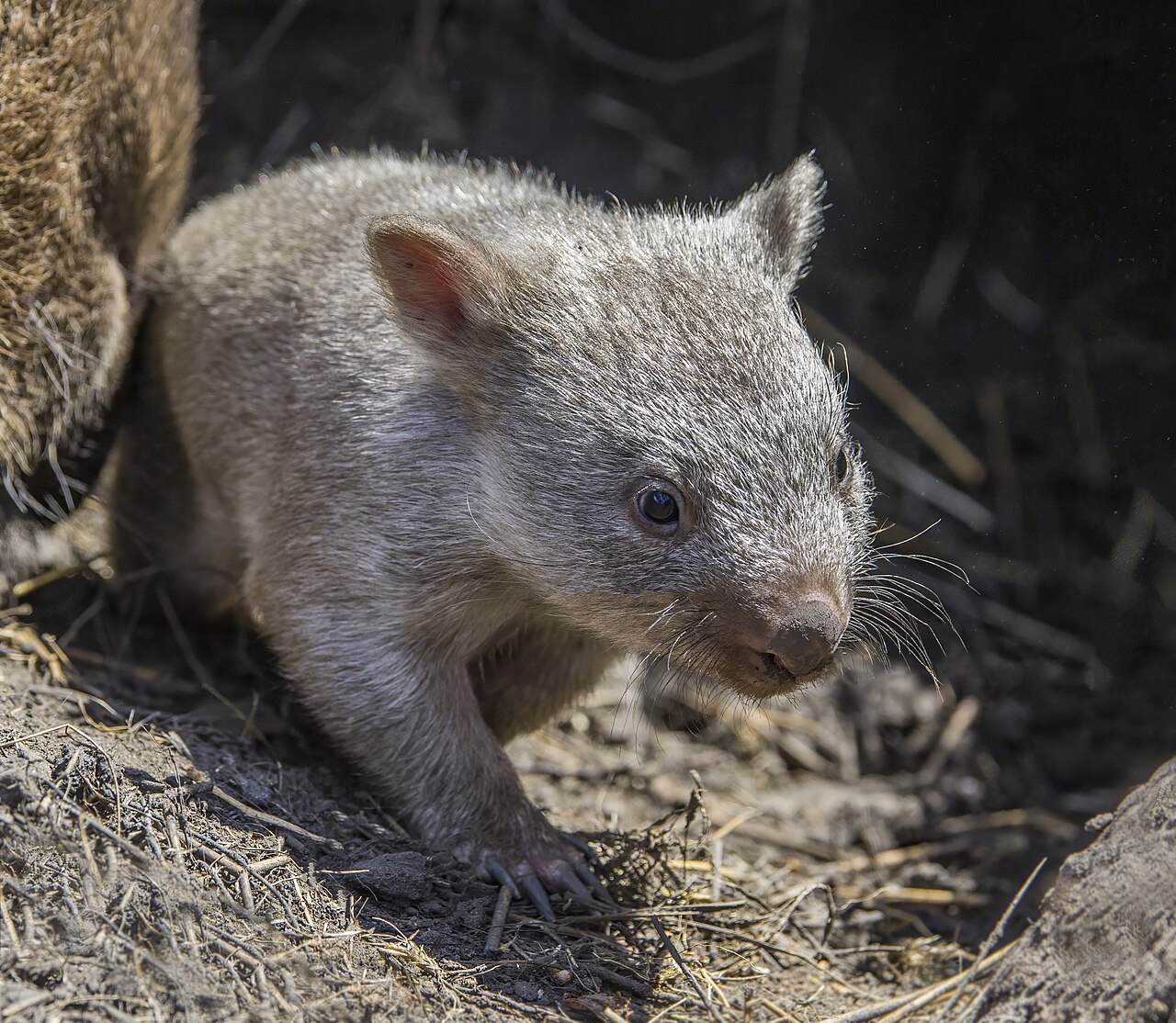
- The Mystery of Cube-Shaped Poop: A Top Wombat Fun Fact
- The Unique Digestive Process
- The Role of the Intestine
- Wombat Fun Facts: Size, Habitat, and Lifespan
- Physical Characteristics
- Where Wombats Live
- How Long They Live
- Wombat Behavior and Diet: More Wombat Fun Facts
- What Wombats Eat
- Burrowing Habits
- Social Behavior
- The Wombat's Unique Posterior: Anatomy Behind the Cubes
- Intestinal Elasticity
- Cube Formation Process
- Why Cube-Shaped Poop Matters: Ecological Role
- Scent Marking
- Preventing Rolling
- Wombat Fun Facts: Conservation and Threats
- Predators and Dangers
- Conservation Status
- Conclusion: The Wonder of Wombat Poop
- ❓ Frequently Asked Questions
Wombats are undeniably one of Australia's most endearing marsupials, but they also produce one of the most peculiar biological phenomena in the animal kingdom: cube-shaped poop. This extraordinary fact is just one of many that make these burrowing herbivores so fascinating, and we are about to dive into a treasure trove of wombat fun facts that will change the way you think about digestion, anatomy, and evolution. From their cube-shaped droppings to their powerful hindquarters and surprisingly complex social lives, wombats are full of surprises.
The Mystery of Cube-Shaped Poop: A Top Wombat Fun Fact
Perhaps the most frequently asked question about wombats is why their feces emerge as neat, cube-like pellets. For decades, scientists and wildlife enthusiasts speculated wildly, but recent research has finally uncovered the answer. The secret lies not in a magic trick, but in the unique structure of the wombat's intestine.
The Unique Digestive Process
Wombats are hindgut fermenters, meaning they digest tough plant materials like grasses, roots, and bark in a large, elongated colon. The digestion process takes a long time—anywhere from 14 to 18 days—because the cellulose is broken down by bacteria in the cecum. During this slow transit, the colon absorbs as much water as possible from the food matter, leaving behind a very dry, fibrous mass. This extreme water absorption is the first step toward producing those famous cubes.
The Role of the Intestine
In 2018, a team of researchers from the University of Tasmania and Georgia Institute of Technology used CT scans and dissections to examine the wombat's lower intestine. They discovered that the final section of the colon has a series of alternating stiff and flexible regions. The stiff areas act like a mould, forcing the faecal matter into a cubic shape as it passes through. The flexible parts allow the material to move along, but the rigid sections create corners and flat faces. The result? A dry, stable cube that holds its shape even after being deposited. This is a brilliant example of biological engineering—and a prime wombat fun fact to share at your next dinner party.
Wombat Fun Facts: Size, Habitat, and Lifespan
Beyond the poop, wombats are fascinating creatures in their own right. They belong to the family Vombatidae, which includes three species: the common wombat (Vombatus ursinus), the southern hairy-nosed wombat (Lasiorhinus latifrons), and the critically endangered northern hairy-nosed wombat (Lasiorhinus krefftii). Let's look at their physical dimensions, where they live, and how long they can survive.
Physical Characteristics
Common wombats are the largest of the three, weighing between 20 and 35 kilograms and measuring 90 to 115 centimetres in length. Their stout, bear-like bodies are built for digging, with powerful claws and strong forelimbs. They have a thick, coarse fur that ranges from grey to brown, and a large, bald nose. The southern hairy-nosed wombat is slightly smaller, typically weighing 18 to 32 kilograms, with a softer, silkier coat and a hairy snout—hence the name. The northern hairy-nosed wombat is the rarest and the largest of the hairy-nosed species, but individuals are still smaller than the common wombat, at around 25 kilograms. All wombats have a backward-facing pouch to prevent dirt from entering while they dig.
Where Wombats Live
Wombats are native only to Australia. The common wombat is found in the cooler, wetter regions of southeastern Australia, including Tasmania, Victoria, and New South Wales. They prefer forests, woodlands, and alpine meadows. The southern hairy-nosed wombat inhabits the drier, semi-arid regions of South Australia and Western Australia, where they dig extensive burrow systems to escape the heat. The northern hairy-nosed wombat, critically endangered, is now restricted to a single location—Epping Forest National Park in central Queensland, where only about 300 individuals remain. Their habitats are often dominated by grasses and forbs, which form the bulk of their diet.
How Long They Live
In the wild, wombats typically live for 15 to 20 years, though some individuals have been recorded reaching over 30 years in captivity. Their lifespan is influenced by food availability, predation, and disease. The main natural predators are dingoes and Tasmanian devils (on Tasmania), but introduced species such as foxes, dogs, and cars are significant threats. Thanks to their strong burrows, adult wombats have few natural enemies once they reach full size, but young wombats (joeys) are vulnerable.
Wombat Behavior and Diet: More Wombat Fun Facts
Understanding what wombats eat and how they behave gives us even more reasons to admire them. They are not just simple herbivores; their habits are finely tuned to their environment.
What Wombats Eat
Wombats are strict herbivores. Their diet consists mainly of native grasses, sedges, roots, and bark. They are selective feeders, preferring young, nutritious growth when available. They have a slow metabolism, which helps them survive on low-quality food during the dry season. In fact, a wombat can take up to two weeks to fully digest a meal, making their digestive system one of the slowest among mammals. This slow digestion contributes to the extreme dryness of their faeces, which aids in the formation of cubes. A single wombat can produce between 80 and 100 cube-shaped pellets per night—a truly astonishing number when you consider the consistency.
Burrowing Habits
Wombats are supremely adapted diggers. Their burrows can be up to 30 metres long and contain multiple chambers and entrances. They use their strong claws to excavate soil and their tough rumps to push it out of the way. The burrow provides shelter from predators and extreme weather. Wombats are nocturnal, spending the day sleeping in their burrows and emerging at night to feed. They are solitary animals, though multiple individuals may share a large burrow system, especially in the southern hairy-nosed species. Interestingly, wombats are known to defend their burrows aggressively, using their powerful legs and hard backsides to block entrances or even crush an intruder against the roof of the tunnel.
Social Behavior
Despite their solitary nature, wombats do have social interactions. They communicate through scent marking, using their cube-shaped droppings as territorial markers. The cubes are placed on prominent objects like rocks, logs, and tussocks. Because the cubes are flat-sided, they tend to stay in place and don't roll away, making them excellent scent posts. This is a crucial wombat fun fact that ties directly back to the shape of their poop. Males also use scent from a gland near their tail. Mating season occurs around spring and summer, and after a gestation period of about 20 to 22 days, a single joey is born. The joey stays in the pouch for six to eight months and remains with its mother for another year.
The Wombat's Unique Posterior: Anatomy Behind the Cubes
Now that we've seen the behaviour, let's delve deeper into the anatomical marvel that is the wombat's back end. It's not just the intestine that does the work; the entire posterior is built for producing these shapely deposits.
Intestinal Elasticity
Research using dissected intestinal tracts has shown that the wombat's colon is not uniform. The final part, the distal colon, is where the magic happens. It is divided into two distinct sections: one with thin, flexible walls and one with thick, rigid walls. The flexible sections stretch to accommodate the faecal matter, while the rigid sections compress it into a square profile. The alternating pattern creates the cube shape at regular intervals. The process is akin to forcing soft clay through a square tube—once the material is compressed, it retains the shape as it dries further.
Cube Formation Process
As the semi-solid faeces moves through the colon, the flexible areas allow it to become somewhat flattened, and the rigid areas cut the cube corners. The cubes are not perfectly symmetrical—they are approximately 2 centimetres across with slightly rounded edges. Because the faecal matter is already very dry (only about 20% water content), it holds its shape even after being deposited. Outside the body, the pellets continue to dry and harden, making them even more stable. This is a remarkable adaptation that serves a specific purpose: preventing the droppings from rolling off the elevated platforms where wombats like to defecate. By leaving cubes on termite mounds, logs, and hillocks, wombats create a lasting territorial signal.
Why Cube-Shaped Poop Matters: Ecological Role
The unique shape of wombat droppings is not just a biological curiosity—it has real ecological functions that benefit the animal and its environment.
Scent Marking
Wombats have a keen sense of smell, and they use their droppings to communicate with other wombats. By placing cube-shaped pellets on elevated spots, they ensure that the scent doesn't wash away easily in rain and is detectable from a distance. The cubes act like little flags, broadcasting a message that says, "This territory is occupied." Because the cubes stay put, they last longer than round pellets would. This is especially important in the wombat's nocturnal world, where visual signals are less effective. Scientists have observed that wombats often sniff these cubic posts when passing through an area, gathering information about the identity, sex, and reproductive status of the neighbouring wombat.
Preventing Rolling
The most obvious advantage of a cube over a sphere is stability. A round pellet on a slope will roll downhill, but a cube tends to stay in place due to its flat sides. This allows wombats to place their droppings precisely on top of rocks, fallen logs, and other landmarks. The female wombat also uses droppings to signal her availability to males. In a study conducted in Tasmania, researchers found that wombats consistently defecated on the highest available point in their territory—sometimes even on top of snowdrifts. The cube shape ensures that these scent stations remain exactly where they were left. This is yet another wombat fun fact that highlights the elegance of evolution.
Wombat Fun Facts: Conservation and Threats
While wombats are beloved icons of Australia, they face serious challenges. Knowing their conservation status and the threats they encounter is essential for appreciating the full picture.
Predators and Dangers
Adult wombats have few natural predators thanks to their powerful build and burrowing lifestyle. However, young wombats are preyed upon by dingoes, eagles, and Tasmanian devils. Invasive predators like foxes and feral dogs also take a toll. The most significant danger to wombats today is human activity: road vehicles kill thousands of wombats each year. Wombats are also susceptible to diseases such as sarcoptic mange, a parasitic infection that causes severe skin irritation, hair loss, and eventually death if untreated. In Tasmania, mange has decimated local wombat populations in some regions. Conservation groups are working on treatment programs and road-safety measures.
Conservation Status
Among the three species, the common wombat is listed as Least Concern by the IUCN, though populations are declining in some areas due to habitat loss. The southern hairy-nosed wombat is also considered Least Concern, but it is subject to fluctuating numbers due to drought. The northern hairy-nosed wombat is Critically Endangered, with only a single population remaining. Intensive management, including supplementary feeding, predator fencing, and habitat restoration, has helped stabilize its numbers, but the species remains at high risk. Efforts to establish a second population in a protected area are underway. Supporting wombat conservation means protecting their natural habitats and reducing road mortality through wildlife crossings and speed limits.
Conclusion: The Wonder of Wombat Poop
From cube-shaped droppings that don't roll away to backward-facing pouches and powerful digging abilities, wombats are truly one-of-a-kind animals. The reason behind their cubic faeces is a perfect blend of anatomy, digestion, and ecology—a reminder that even the most mundane bodily functions can be extraordinary when viewed through the lens of evolution. These wombat fun facts show us that nature is full of surprises, and that sometimes the smallest details—like the shape of a poop—can reveal the most remarkable stories. So the next time you see a picture of a wombat, remember that beneath that fluffy exterior lies a masterpiece of biological engineering, one cube at a time.
❓ Frequently Asked Questions
💬 Why is wombat poop cube-shaped?
Wombats have an unusually long and textured digestive tract that molds their droppings into cubes. This shape prevents the poop from rolling away, helping wombats mark their territory on rocks and logs.
💬 How do wombats produce cube-shaped feces?
The last section of the wombat's intestine has varying elasticity and muscle contractions that shape the poop into cubes. The process takes 8-18 days from digestion to final formation.
💬 Are all wombat droppings perfectly cube-shaped?
Yes, all three species of wombat produce cube-shaped feces. However, the cubes vary slightly in size and can appear more rounded when the wombat is dehydrated.
💬 What do wombats use their cube-shaped poop for?
Wombats use their cubed droppings as a territorial marker. The shape keeps the poop in place on elevated surfaces, making scent markings more visible and long-lasting.