- The Wolf Inside the Working Dog: Why Do Dogs Herd at All?
- Predatory sequence versus herding sequence
- Selection pressure, not training, built the instinct
- How Herding Instinct Actually Works in the Dog's Brain
- The role of "eye" and stalking
- Pressure, flight zones, and balance
- Barking, nipping, and the "grip"
- Why Do Dogs Herd Different Animals? Sheepdogs, Cattle Dogs, and Drovers
- Gathering breeds
- Driving and heeling breeds
- Guardian breeds are not herders
- Real Breeds, Real Numbers: A Working Dog Snapshot
- Why Do Dogs Herd Things That Aren't Sheep?
- Children, cats, and cars
- Shadow chasing and other redirected behaviors
- Training, Work, and Welfare: Meeting the Instinct Halfway
- Instinct testing and herding trials
- Enrichment for non-working dogs
- Health and longevity considerations
- The Instinctive Truth About Herding Dogs
- ❓ Frequently Asked Questions
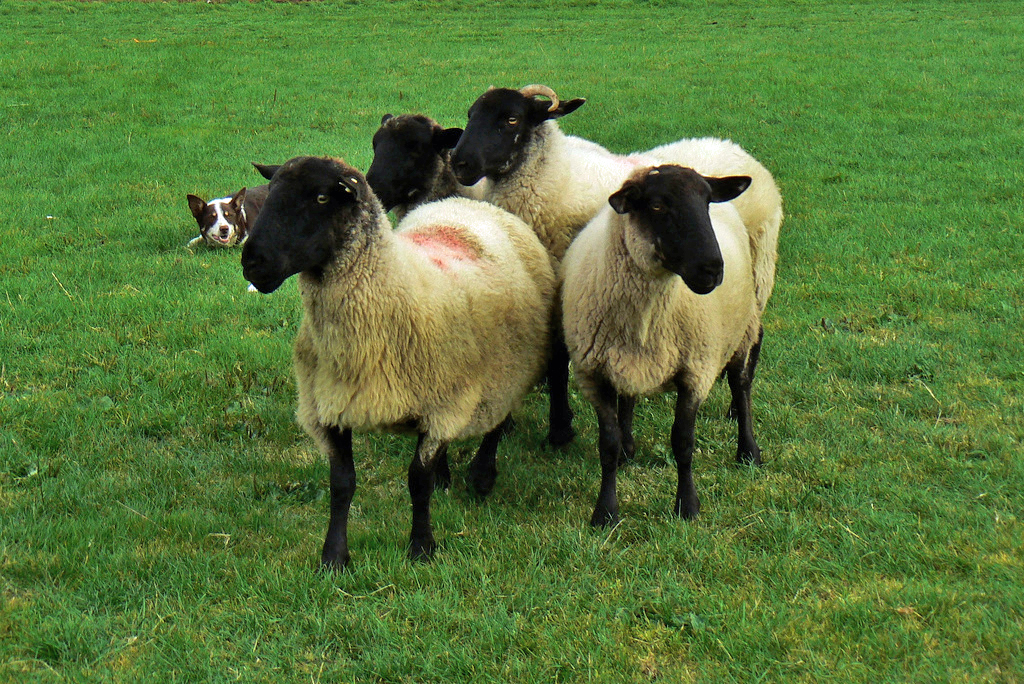
If you have ever watched a border collie flatten itself to the ground and creep toward a flock of sheep with laser focus, you have probably wondered: why do dogs herd? The answer is not simply that they were trained to do it. Herding is a deep, inherited behavior pattern rooted in the predatory sequence of the wolf, reshaped over thousands of years by human selection into something that looks like work but feels, to the dog, like a modified hunt. Understanding that truth explains why a kelpie nips at heels, why a Great Pyrenees would rather guard than gather, and why your Australian shepherd tries to corral the family cat.
The Wolf Inside the Working Dog: Why Do Dogs Herd at All?
Every herding dog carries the behavioral blueprint of its ancestor, the gray wolf (Canis lupus). Wolves hunt cooperatively, and their hunting behavior follows a predictable sequence: orient, stalk, chase, bite, kill, and consume. Domestication did not delete this sequence from the dog's brain. Instead, humans selectively bred dogs that could perform the early stages of the sequence — orienting, stalking, and chasing — while suppressing the final stages of biting, killing, and eating the livestock.
That is the core of herding: a hunt that never finishes. A working sheepdog is essentially a predator running a hunt loop with the brakes permanently on. The sheep trigger the orient-and-stalk response, the dog's chase drive kicks in, but the "grab and kill" endpoint has been genetically dampened or redirected into controlled pressure. The dog gets the neurological reward of the chase without the payoff of a kill, and the handler's commands become the substitute reward system.
Predatory sequence versus herding sequence
Behaviorists often describe herding as a fragmented or truncated predatory motor pattern. Different breeds retain different fragments, which is why herding styles vary so dramatically. A breed that keeps a strong eye-stalk component works at a distance and controls stock with presence. A breed that keeps a strong chase-grip component works close and moves animals by pressure and contact. The exact mix is what makes a border collie and a cattle dog feel like completely different tools even though both are "herders."
Selection pressure, not training, built the instinct
Humans began managing livestock roughly 10,000 years ago, and dogs were assisting with that management long before written records. Over centuries, shepherds kept the dogs that showed useful instinct and culled or retired those that chased stock to exhaustion, killed lambs, or ignored commands. Generation after generation of that filtering produced animals that reliably display herding behavior with little or no formal instruction. A puppy raised in a city apartment can still drop into a stalk the first time it sees sheep — proof that the behavior is inherited, not learned.
How Herding Instinct Actually Works in the Dog's Brain
Herding behavior is driven by a combination of drives and sensory systems working together. The most important are prey drive, eye (the intense visual fixation on stock), and biddability (the willingness to take direction from a handler). A dog with enormous prey drive but no biddability is dangerous around livestock. A dog with biddability but no eye cannot control animals at a distance. The best working dogs sit at a precise balance point.
The role of "eye" and stalking
Eye is the hard, unblinking stare a collie fixes on sheep. It is not aggression; it is a compressed stalk. In wild canids, a prolonged stalk freezes prey in place and lets the pack close distance. In herding, that same freeze response becomes a steering tool. Sheep move away from the pressure of the stare, so the dog can push a flock in a chosen direction simply by positioning itself and looking. Border collies are famous for extreme eye, which is why they can move sheep hundreds of meters with almost no barking.
Pressure, flight zones, and balance
All herding relies on the flight zone — the invisible bubble of space around an animal that, when entered, causes it to move away. A skilled dog learns to work the edge of that bubble, applying just enough pressure to move stock without panicking it. The concept of balance means the dog positions itself directly opposite the handler relative to the stock, so that the handler's presence and the dog's presence push the animals in the desired direction. This is why a trained dog will instinctively circle to the far side of a flock when the handler walks forward.
Barking, nipping, and the "grip"
Not all herding is silent. Heelers and cattle dogs use bark, body block, and a controlled nip — called a grip — to move stubborn cattle that will not respond to eye alone. This is still herding, not attacking, because the behavior is directed, interruptible, and stops when the animal moves. A true grip is measured: enough to get a reaction, never enough to injure. Dogs that lose control of that measure are removed from stock work because they create panic and injury.
Why Do Dogs Herd Different Animals? Sheepdogs, Cattle Dogs, and Drovers
Herding breeds were developed for specific livestock, terrain, and climates, and their working styles reflect those jobs. Understanding the categories helps explain why your dog behaves the way it does.
Gathering breeds
Gathering dogs bring stock to the handler. They cast out wide, circle behind the flock, and drive animals forward. Border collies are the classic example, capable of working several hundred meters away on whistle commands. Other gathering breeds include the Australian shepherd, the Belgian shepherd varieties (Malinois, Tervuren, Groenendael), and the bearded collie.
Driving and heeling breeds
Driving dogs push stock away from the handler, often over long distances to market. Heelers work at the rear of cattle, biting at the heels to keep them moving. The Australian cattle dog, also called the blue heeler or Queensland heeler, is the benchmark — a compact, muscular dog typically 17 to 20 inches tall and 35 to 50 pounds, built to withstand kicks from cattle and heat that would exhaust other breeds. The Welsh corgi, despite its short legs, is a legitimate heeler developed to nip at the heels of cattle in Wales.
Guardian breeds are not herders
It is important to separate herding dogs from livestock guardian dogs. Breeds like the Great Pyrenees, Anatolian shepherd, and Maremma sheepdog live with the flock and protect it from predators. They do not gather or drive. A guardian's instinct is territorial defense, not predatory chase, and confusing the two categories leads to real problems on farms.
- Gathering: border collie, Australian shepherd, bearded collie
- Driving: Australian cattle dog, kelpie, Bouvier des Flandres
- Heeling: Australian cattle dog, corgi, Lancashire heeler
- Guardian (not herding): Great Pyrenees, Maremma, Anatolian shepherd
Real Breeds, Real Numbers: A Working Dog Snapshot
Herding breeds vary widely in size, energy, and lifespan, and those numbers matter for anyone considering one. The border collie typically stands 18 to 22 inches at the shoulder and weighs 30 to 55 pounds, with a lifespan of about 12 to 15 years. Australian shepherds run slightly larger at 40 to 65 pounds. Kelpies are lean and athletic, 30 to 45 pounds, and are legendary for working in Australian heat — they can cover 60 kilometers or more in a single day moving sheep across open range.
Australian cattle dogs are remarkably long-lived for their size, often reaching 12 to 16 years, and are known for their stamina and pain tolerance. Corgis weigh 22 to 30 pounds and live 12 to 15 years. Belgian Malinois, now widely used in military and police work, weigh 55 to 75 pounds and need an extraordinary amount of physical and mental exercise to stay balanced.
Diet for these dogs is not exotic. They are ordinary carnivorous omnivores and thrive on high-quality commercial or home-prepared diets with adequate protein — generally 22 to 30 percent protein for active working dogs — plus fat for endurance. Working dogs on active duty may need two to three times the calories of a sedentary pet of the same size. Fresh water access is critical, especially for dogs working in heat.
Why Do Dogs Herd Things That Aren't Sheep?
This is the question every owner of a herding breed eventually asks. The answer is that the instinct is triggered by movement and by the shape of a group, not by species recognition. Anything that moves in a herd-like way — children running in a playground, bicycles on a path, cars on a road, other dogs at a park — can activate the same predatory sequence.
Children, cats, and cars
A border collie that nips at the heels of running children is not being mean. It is doing exactly what its genes tell it to do when it sees a fleeing group. This behavior is a genuine safety concern because a nip meant for a sheep's woolly flank can break a child's skin. The same applies to chasing bicycles, cars, and joggers, which is why herding breeds need early, consistent training and secure fencing.
Shadow chasing and other redirected behaviors
When herding drive has no outlet, it can spill into compulsive behaviors: chasing shadows, staring at reflections, spinning, or fixating on lights. These are not harmless quirks. They are signs that the dog's needs are unmet and can escalate into genuine obsessive-compulsive disorder. Providing real work — even simulated work like treibball, herding trials, or structured fetch — is the most effective prevention.
Training, Work, and Welfare: Meeting the Instinct Halfway
Owning a herding breed is a commitment to managing a powerful instinct. These dogs are not content with a short walk around the block. Their minds need problems to solve and their bodies need sustained exercise, ideally an hour or more of vigorous activity daily, plus training sessions that engage their problem-solving ability.
Instinct testing and herding trials
Farmers and breeders use formal instinct tests to evaluate young dogs. In a typical test, a dog is introduced to a small group of sheep in a controlled pen, and an evaluator watches for natural balance, eye, and responsiveness to the handler. Dogs that show promise go on to training. Herding trials, such as those sanctioned by national sheepdog societies, test outrun, lift, fetch, drive, and penning — a structured simulation of real farm work that also serves as a genetic showcase for breeding stock.
Enrichment for non-working dogs
Most herding breeds live as pets, not farm dogs, and that is fine as long as owners substitute appropriate outlets. Options include:
- Dog sports: agility, flyball, dock diving, rally obedience, and treibball
- Structured fetch and frisbee with clear rules and a defined end
- Puzzle feeders and scent games to tire the brain, not just the body
- Herding lessons with a qualified instructor and calm, dog-broke stock
- Daily obedience or trick training in short, frequent sessions
It is also worth noting that not every herding breed puppy should be put on livestock. A dog with low biddability or high aggression toward stock can be injured or can injure the animals. Responsible trainers assess temperament before introducing a dog to sheep or cattle, and they never force a dog that clearly has no aptitude.
Health and longevity considerations
Herding breeds carry some inherited health risks worth knowing. Border collies can be affected by collie eye anomaly and hip dysplasia. Australian cattle dogs may develop progressive retinal atrophy and deafness, particularly in merle-patterned dogs. Belgian Malinois are prone to hip and elbow dysplasia. Regular veterinary checkups, genetic testing of breeding dogs, and appropriate joint care extend working lives and improve quality of life. With good care, most herding breeds remain active well into their senior years, and many still work part-time at 10 or 11 years old.
The Instinctive Truth About Herding Dogs
Why do dogs herd? Because humans took a predator's hunting sequence and, over thousands of years, sculpted it into a partnership. The stalk became eye, the chase became the outrun, the grip became a controlled nip, and the kill was replaced by the handler's whistle. What remains is a dog that is not confused about its purpose — it is doing precisely what generations of selection prepared it to do. The truth is that herding is not a trick these dogs learn. It is a conversation between an ancient instinct and a human voice, and when it works, it is one of the most remarkable collaborations in the animal kingdom. Give a herding dog real work, or a worthy substitute, and you will see the instinct settle into something calm, focused, and deeply satisfied.
❓ Frequently Asked Questions
💬 Is herding instinct the same as prey drive?
Herding is essentially a modified, controlled form of prey drive in which the dog stalks and moves the flock but suppresses the final chase-and-kill sequence. Breeds selected for herding have this inhibition strengthened while still retaining the stalking and chasing motor patterns.
💬 Which dog breeds are most likely to herd?
Classic herding breeds include Border Collies, Australian Shepherds, Shetland Sheepdogs, Belgian Malinois, Corgis, and Old English Sheepdogs. Even mixed-breed dogs with these ancestries can show herding behavior, and any dog may chase moving objects without true herding instinct.
💬 Why does my dog herd children, cars, or other pets?
Herding dogs often redirect their instinct toward anything that moves, treating kids, bikes, or cats as flock members to be gathered and controlled. This is usually frustration-driven and can become nipping or chasing, so it is best managed with training, exercise, and outlets like herding lessons or flirt poles.
💬 Can herding instinct be trained or reduced?
True instinct is inherited and cannot be created or erased, but it can be shaped and channeled through training and appropriate outlets such as sheepdog trials or structured fetch games. Without an outlet, the behavior often intensifies and may turn into obsessive chasing, barking, or nipping.