- The Purpose of Okapi Stripes: Camouflage and Communication
- Forest Camouflage
- Social Signaling and Individual Identification
- Thermoregulation Theory
- The Unique Patterns of Okapi Stripes: A Closer Look
- Individual Variation
- Comparison with Zebras and Giraffes
- The Okapi’s Habitat and Behavior
- Preferred Environment
- Diet and Foraging
- Solitary Nature and Social Life
- Physical Characteristics Beyond Stripes
- Size and Weight
- Prehensile Tongue and Ears
- Lifespan and Reproduction
- Conservation Status and Threats
- Poaching and Habitat Loss
- Conservation Efforts
- Understanding the Surprising Truth: Conclusion
- ❓ Frequently Asked Questions
The Purpose of Okapi Stripes: Camouflage and Communication
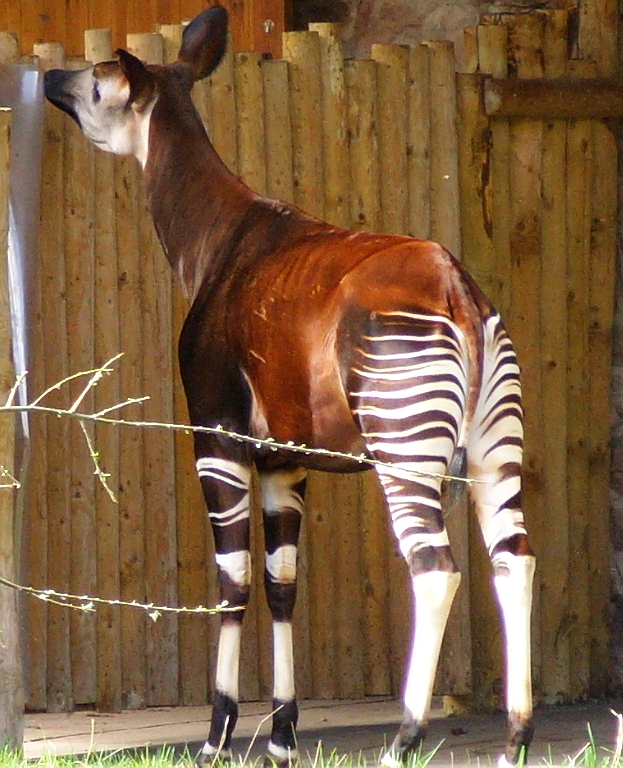
When you think of okapi stripes, your mind might immediately jump to zebras, but the truth is far more fascinating. The okapi’s striped legs serve a primary purpose: camouflage in the dense, sun-dappled understory of the Ituri Rainforest in the Democratic Republic of Congo. The vertical white stripes break up the animal’s silhouette, mimicking the shafts of light that filter through the canopy. This disruptive coloration makes it extraordinarily difficult for predators—primarily leopards—to spot a stationary okapi among tree trunks and ferns. Yet camouflage is just one part of the story. Recent research suggests that the unique pattern of an okapi’s stripes may also function as a social signal, allowing individuals to recognize one another in low-light conditions, and possibly even helping calves follow their mothers through the forest. In other words, the stripes are not just a passive disguise; they are an active tool for communication and survival.
Forest Camouflage
Unlike the open savannah where zebras graze, the okapi’s home is a thick tropical rainforest with a closed canopy that lets only about two percent of sunlight reach the ground. This creates a complex mosaic of bright patches and deep shadows. The alternating dark brown and white bands on the okapi’s hindquarters and legs perfectly replicate the dappled light filtering through leaves. When the okapi stands still, its body virtually disappears against the background of tree trunks and sunspots. Zoologists have noted that the stripes align vertically, echoing the vertical orientation of tree trunks, further enhancing the disruption effect. This form of camouflage, known as disruptive coloration, is far more effective in low-contrast environments than a plain, single-colored coat would be.
Social Signaling and Individual Identification
Because okapis are solitary for most of their lives, they rely on scent marking and vocalizations to communicate. However, when mother and calf reunite after a foraging separation, the calf uses the distinctive pattern of its mother’s stripes as a visual cue. Each okapi possesses a unique stripe arrangement—akin to a human fingerprint—that remains consistent throughout its life. Studies in captive populations at zoos such as the Antwerp Zoo have shown that calves can pick out their mother from a group using only visual cues, and that the stripes are the most prominent feature they focus on. This individuality likely also plays a role in territorial displays between males, where the boldness of the stripes may signal age, health, or dominance.
Thermoregulation Theory
Another lesser-known hypothesis is that the stripes assist in thermoregulation. Although the rainforest is humid, the okapi’s dark body can absorb significant heat under the occasional direct sun. The white stripes may reflect sunlight and create airflow channels that aid in cooling. While this theory has been debated for zebras, it remains plausible for okapis given their need to regulate body temperature in a warm, moist environment where they often move through clearings. Controlled experiments using thermal imaging on captive okapis have provided some supporting evidence that striped surfaces can have a slight cooling effect compared to dark surfaces.
The Unique Patterns of Okapi Stripes: A Closer Look
A single okapi will typically have between 10 and 15 distinct stripes on its hindquarters and legs, with the pattern on the front legs often differing from the hind legs. Some individuals exhibit additional markings on the throat and neck, though these are much fainter. The okapi stripes on the lower legs tend to be horizontal and ring-like, while those on the upper thigh are more vertical and irregular. This variation is not random—it is genetically determined and shows a wide range of expression across the population. For example, in the northern part of their range, stripe density tends to be higher, possibly an adaptation to more heavily forested areas with deeper shade.
Individual Variation
Researchers have catalogued over 200 wild okapi individuals in the Okapi Wildlife Reserve using camera traps, and each one could be identified solely by its stripe pattern. The stripes can be narrow or wide, continuous or broken into spots, and may even taper into points. In some older males, the stripes become less distinct as the coat darkens, but they never disappear entirely. Calves are born with stripes already visible, though they are fainter and become more defined as the animal grows. This individuality helps field biologists track movements, estimate population size, and study social dynamics without the need for invasive tagging.
Comparison with Zebras and Giraffes
It is a common misconception that okapis inherited their stripes from some ancestral zebra. In fact, the okapi’s closest living relative is the giraffe, and together they share a common ancestor that lived about 16 million years ago. The giraffe evolved a long neck and a spotted coat for browsing in open woodlands, while the okapi retained a more compact body and developed stripes for life in the dense forest. Unlike zebras, whose stripes are believed to deter biting flies and confuse predators in a group, okapi stripes are primarily an individual survival tool in a solitary lifestyle. The giraffe pattern, on the other hand, is thought to aid in social signaling and camouflage among tall trees. Thus, the three groups—zebras, giraffes, and okapis—each evolved distinct marking strategies that reflect their specific ecological niches.
The Okapi’s Habitat and Behavior
Understanding the function of the stripes requires an appreciation of the animal’s environment. The okapi is found only in the tropical rainforests of the Democratic Republic of Congo, particularly the Ituri, Maiko, and northern forests of the Congo Basin. These forests receive over 2000 mm of rainfall annually and have a dense understory of ferns, shrubs, and young trees. The okapi is a browser, feeding on more than 100 different plant species, including leaves, buds, fruits, fungi, and even clay and charcoal for essential minerals. An adult okapi consumes around 18 to 20 kilograms of vegetation daily. Its long, flexible, prehensile tongue—which can reach up to 45 cm—is used to strip leaves from branches and to clean its eyes and ears.
Preferred Environment
Okapis are extremely secretive and inhabit areas with good cover and abundant food. They are rarely seen in the open, and they prefer primary forest with a thick canopy. Home ranges vary between 4 and 13 km², with males having larger territories that often overlap those of several females. The animals are solitary except during mating or when a mother is accompanied by a calf. They use a system of well-worn trails through the forest, and they mark their trails with scent glands on their feet. Observations from radio-collared individuals show they can travel up to 5 km per day while foraging, always staying within the forest’s protective cover.
Diet and Foraging
The okapi’s diet is highly selective. Using its acute sense of smell and sharp hearing, it identifies the most nutritious leaves and fruits. In addition to green leaves, okapis consume fungi—particularly those rich in iodine—and occasionally eat charcoal from burned trees, which helps neutralize toxins from certain plants they ingest. They also visit natural salt licks and termite mounds for minerals. This specialized diet means that okapis play a crucial role in seed dispersal and forest regeneration. The stripes, by keeping them hidden while they feed, increase the time they can safely spend foraging at ground level.
Solitary Nature and Social Life
Okapis are mostly solitary, with only mother and calf pairs forming strong bonds. Males and females meet only to mate, and after a gestation of about 430 days, a single calf is born. The calf is able to stand within 30 minutes and begins to nurse within a few hours. For the first few weeks, the mother hides the calf in dense vegetation while she forages, and the calf’s stripes provide excellent camouflage during this vulnerable period. The mother and calf communicate using low-frequency sounds that are inaudible to humans, similar to the infrasound communication used by giraffes. After about six months, the calf begins to follow its mother regularly, using her stripe pattern as a visual guide.
Physical Characteristics Beyond Stripes
While the okapi stripes are the most visually striking feature, the okapi is a remarkable animal in many other ways. Both males and females have horns called ossicones, like those of giraffes, though they are smaller and covered in skin. Males use these ossicones in neck-fighting rituals to establish dominance. The animal’s coat is short, dense, and oily, providing excellent protection against rain and insect bites. Its large, flexible ears can swivel independently, capturing sounds from up to a kilometer away. The okapi also has excellent hearing and a strong sense of smell, which compensates for relatively poor eyesight.
Size and Weight
Adult okapis stand between 1.5 and 1.8 meters at the shoulder and measure about 2.5 meters from head to tail, with a tail length of 30 to 42 centimeters. Females are slightly larger than males. Body weight ranges from 200 to 300 kilograms, with the largest recorded males reaching 350 kg. Despite their size, okapis can move silently through the forest, partly due to the soft pads on their hooves and their careful, deliberate steps. Their powerful hindquarters, which bear the most prominent stripes, allow them to run quickly when threatened, although they prefer to freeze and rely on camouflage.
Prehensile Tongue and Ears
The okapi’s tongue is one of its most impressive adaptations. It is not only long enough to wrap around branches and pull leaves into its mouth, but it is also extremely muscular and rough, allowing it to grasp and strip even tough vegetation. The tongue is blue-black in color, similar to a giraffe’s, and can reach up to 45 cm in length. Okapis also use their tongue to groom themselves, cleaning their ears and eyes with extraordinary precision. The ears, each about 15 cm long, are highly mobile and can point forward or backward independently, helping the animal locate the source of any sound. These acute senses, combined with the camouflage of their stripes, make the okapi a master of stealth in the rainforest.
Lifespan and Reproduction
In the wild, an okapi’s lifespan is estimated to be about 20 years, though individual longevity data is limited. In captivity, okapis can live into their early 30s; the oldest recorded captive okapi lived to 33 years. Females reach sexual maturity at about two years, while males mature later, at around three to four years. The breeding season occurs year-round, but births tend to peak during the wetter months when food is abundant. Calves weigh about 16 to 20 kilograms at birth and nurse for about six months, though they may start sampling solid food as early as three months. The mother protects her calf fiercely, and the young okapi will stay with her for up to a year before becoming fully independent.
Conservation Status and Threats
The okapi is currently listed as Endangered on the IUCN Red List. The global population is estimated at fewer than 10,000 mature individuals, and numbers are declining. The primary threats are habitat loss due to deforestation from logging and mining, and poaching for bushmeat. The okapi’s stripes, which once provided excellent camouflage, are now proving a liability: poachers specifically target okapis because their meat is prized and their skin, with its beautiful pattern, is illegally traded. The civil conflict in the Democratic Republic of Congo has also destabilized protected areas, making conservation efforts extremely difficult.
Poaching and Habitat Loss
Despite being protected by law, okapis are hunted with snares, traps, and firearms. In 2012, armed poachers attacked the Okapi Conservation Project’s headquarters in Epulu, killing several people and slaughtering 14 okapis in a raid linked to illegal ivory and gold mining. This tragic event highlighted the severe threats the species faces. Habitat conversion for small-scale agriculture and commercial logging reduces the forest area available and fragments remaining populations. As the forest shrinks, okapis are forced into smaller pockets where inbreeding becomes a risk.
Conservation Efforts
The Okapi Conservation Project, established in 1987, works closely with the Congolese government to manage the Okapi Wildlife Reserve, a UNESCO World Heritage site covering 13,726 km² of rainforest. The project employs local rangers, runs anti-poaching patrols, and engages communities in sustainable livelihoods such as beekeeping and ecotourism. Additionally, captive breeding programs in zoos around the world (about 100 okapis in accredited zoos) serve as an insurance population. These programs also support research on okapi health, genetics, and behavior. One key area of study is the role of individual markings, including the exact role of okapi stripes in population monitoring through camera-trap identification, which provides critical data without disturbing the animals.
Understanding the Surprising Truth: Conclusion
The okapi stripes are not just a beautiful curiosity; they are a masterful adaptation to a life in the shadows of the Congo rainforest. They serve as camouflage, as a social fingerprint, and potentially as a temperature regulator. The surprising truth is that this pattern, which at first glance resembles a zebra, evolved completely independently—convergent evolution driven by a shared need for concealment, but shaped by the unique demands of the forest environment. The okapi itself is a living link between the familiar giraffe and the ancient forest ecosystems of Africa. Yet this gentle, secretive creature is under severe threat from human activities. Protecting the okapi means protecting its entire rainforest home, and by understanding why its legs are striped, we also grasp the delicate interdependence of form, function, and survival. The next time you see a photo of an okapi, remember that each stripe tells a story of evolution, adaptation, and a species fighting to hold its place in the wild.
❓ Frequently Asked Questions
💬 Why do okapis have striped legs?
Okapis have striped legs to help them camouflage in the dense rainforest, where the alternating light and dark stripes mimic shafts of sunlight filtering through the trees.
💬 Are okapi stripes similar to zebra stripes?
While both have striking patterns, okapi stripes serve a different purpose: they break up the animal's outline in dappled forest light, whereas zebra stripes primarily confuse predators and regulate heat.
💬 Do okapi stripes help them communicate?
Yes, okapi stripes likely help calves follow their mother through the underbrush, as the bold pattern on the hindquarters is easy to spot in low light.
💬 Why are okapi stripes only on their legs and not their body?
Okapi stripes appear only on the legs and rump because those areas are most exposed to the dappled sunlight coming through the forest canopy, maximizing the camouflage effect where it's needed most.